Joe.
Part I: Bradford Boy (1936 & 1937).
Jamie Barras.
I have no fears about the infield or the batting, and I am hoping that Joe Dalton will make still further progress this time. He is already the best native English hurler. Dalton, of course, is the former Bradford City outside left, and last season played for Shrewsbury.[1]
Joseph “Joe” Dalton (1915–1984) was the Bradford boy who first picked up a baseball in 1936 and, in just three years, became the “best native English hurler” in British baseball. The only starting pitcher in the top tier who had learned his baseball in Britain, he was the future the game imagined for itself if war had not intervened.
Joe came to the game via Association football. He saw baseball as a way to stay fit in the close season. This was just the sort of player that the Liverpool-based National Baseball Association (NBA) was looking for. In 1934, the NBA had set out to kick-start an American baseball scene in Britain. To do this, it bet the farm on bringing in experienced players from North America to generate interest in the game. However, it knew that the scene would wither and die if these imported players weren’t supplemented and eventually replaced by native-born players. Until boys in Britain grew up playing baseball, athletes like Joe Dalton represented the NBA’s best hope of producing players who could hold their own against imported professionals.
Joe’s journey to the top tier of the game in England followed another element of the NBA baseball blueprint. He got his start in the Thornbury Trojans, a team that cut its teeth playing against a team of American Mormons in the Leeds Amateur League. The NBA needed tentpole teams for its lower tiers that were good enough to present a challenge, but not so good that they lay waste to all before them. Good-but-not-great Mormon nines were just that. They didn’t crush their opponents; they raised their game.
They certainly raised the game of the Trojans: within a year of their formation, they made it all the way to the final of the National Amateur Cup. Alas, despite this, things did end well for them. But that is part of the Joe Dalton story, too. I present that story here to show what could have been and to celebrate one of the players who could have made it happen.
(Second Division.) Bradford City and Burnley met at Valley Parade this afternoon in warm weather before 8,000 people. Dalton, a local youth, was making his first home appearance for Bradford City, at left half[…][2]
Joe Dalton was Bradford, born and bred. His father, Joe Snr, was the manager of the local co-op coal depot, but he died when Joe was just 16. After his death, Joe continued living in the family home in the Tysersal district of Bradford. It is also likely that Joe had already left school and started work by the time of his father’s death. We know that, during the 1938/39 football season, while playing for Shrewsbury Town in the semi-professional Midland League, he worked as a fitter at a Shrewsbury tank works.[3]
Bradford City A.F.C. yesterday announced that Harold Peel had been engaged as player coach. Peel has had several seasons with City[...]In addition, two players who have assisted them as amateurs—J. Dalton (Bradford Rovers), and L. Scott—have been offered and have accepted professional terms[…][4]
Joe’s football career began with Bradford Rovers when he was still a teenager. Rovers played in the West Riding Amateur League; their home ground was Greenfield in Bradford’s Dudley Hill district, a greyhound stadium that they shared with rugby league, athletics, and, from 1936 to 1939, baseball. However, Dalton’s time with Rovers was short; on 8 May 1935, still only 19, he signed with Bradford City. He made his professional debut on the left wing for City in an away game at Leicester on 16 September 1935.[5]
By the 1935/36 season, Bradford City were a club in decline. They had spent the first decade of the twentieth century in the First Division, the top tier of the game. However, by 1927, they had slipped all the way down to the Third Division. They clawed their way back up to the Second Division the following season, but by the time that Dalton joined them, their revival was running out of steam. They would be relegated once more at the end of the 1936/37 season, and this time the relegation would stick. Across Dalton’s time at the club, during which he made 17 league appearances, manager Dick Ray tried in vain to find a formula to turn things around. But it was a tale as old as time: strapped for cash, anytime Ray found a good player, the club’s directors forced him to sell him to keep the club afloat. He had to make do with the best of the rest. It didn’t help that City had a local rival in Bradford Park Avenue AFC: divided loyalties meant lower gates.[6]
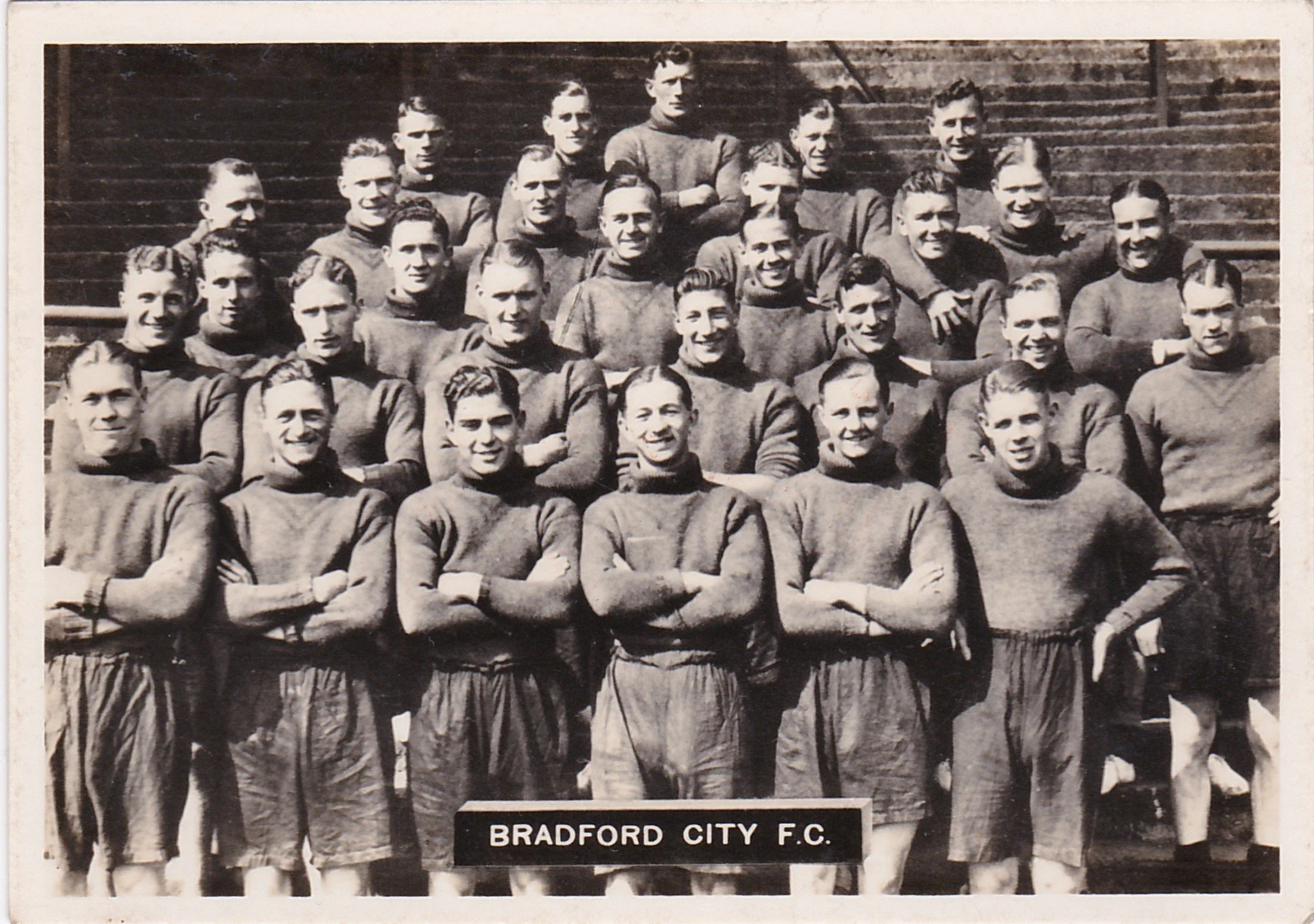
The 24 August 1936 edition of the Bradford Observer gives us our first physical description of Joe Dalton: 5’ 8” and 10 st 7 lb. That same year, he was pictured with his City teammates on an Ardath Tobacco Co football card (Yorkshire Football Teams Series, No. 16). The image (see gallery below) shows a bright, smiling youth, thrilled to be living every working-class boy’s dream.
By the time the photograph was taken, he had already made his baseball debut.
AMATEUR BASEBALL. Leeds League Ready to Start[…]Two clubs from Bradford have been admitted to the League, Thornbury and Bradford “M Men”, and at the moment there are six teams attached to the competition, although it is expected to add two more in the next few days.[7]
American baseball had come to Bradford in 1935 when the Bradford Northern club joined the NBA’s flagship North of England League (covering Yorkshire and Lancashire). Bradford Northern was an offshoot of the rugby league club of the same name and played its games at the rugby club’s Odsal Stadium. That same year, another rugby league club, Salford, also took the plunge. This represented a regional variation of an old dream of American baseball proponents in Britain: Association Football clubs adopting the game as a close-season pursuit. The problem with this dream was that football clubs (Association and Rugby) had a close season for a reason: tired grounds needed a rest. Both Bradford Northern and Salford would bow out of the North of England League after a single season, citing the need to use the close season to returf their pitches.[8]
One might suspect that this was just an excuse: Salford had performed only middling well; the gate receipts no doubt reflected this. However, Bradford had the services of Canadian Sid Bissett, probably the best pitcher in England in 1935, and finished second in the table. The truth is perhaps somewhere in between: if the gate receipts had been stellar, both clubs might have rescheduled their groundwork; as it was, even at its peak, interest in baseball did not provide enough of a return to football clubs, either Association or Rugby, to risk their pitches. This was the fundamental flaw with the Football–Baseball, Winter–Summer model. As we will see, this would lead the NBA to opt to partner with Greyhound Stadiums instead.[9]
Despite the loss of Bradford Northern, Salford, and a third club, Hyde, at the end of the 1935 season, the NBA came back strong in 1936, with interest in its top tier so great that it was able to split the North of England League into Lancashire and Yorkshire Sections and add a second-tier league to the Lancashire section. Two new Bradford teams, the Greenfield Giants and City Sox (Bradford), joined the new Yorkshire Baseball League. Greenfield, as the name suggests, played out of the greyhound stadium of the same name that was home to Bradford Rovers FC. The City Sox played out of the City (Greyhound) Stadium on Legrams Lane. Both teams were owned by the companies that operated the stadiums. They were just two examples of the move into baseball in 1936 by greyhound racing interests spearheaded by the Greyhound Racing Association and its Canadian chairman, Alfred Critchley. In another expansion of the game, the NBA also began to recruit women’s baseball teams in Yorkshire.[10]
That year, the NBA also increased the number of amateur leagues, especially in Yorkshire. This was clear evidence that the sport was catching on outside its heartland of Liverpool and Lancashire. In addition to the two new Bradford teams in the top-tier Yorkshire Baseball League, two Bradford-based clubs applied to join the new Leeds Amateur Baseball League.
One of the new Bradford-based amateur teams was the Bradford M Men, a Mormon team formed of members of the Mormon equivalent of the YMCA, the Young Men’s Mutual Improvement Association (YMMIA). The M Men (Mutual Men) were in charge of Mormon efforts to use softball to attract recruits. The M Men baseball teams, of which there were several, were formed of a mix of American Mormon missionaries, M Men with experience playing baseball back in the States, and British players, not always converts, who had come up through the Mormon softball programmes.[11]
The Bradford M Men would, as might be expected, prove dominant, remaining undefeated all the way up to the final of the Yorkshire Amateur Baseball Cup. However, they then lost that final to the other Bradford team, Joe Dalton’s team, the Thornbury Trojans.[12]
YORKS. BASEBALL CUP. Bradford "M" Men, champions of the Leeds Amateur Baseball League, and Thornburg Trojans, the runners-up, met at the Greenfield Stadium, Bradford, last night in the final of the Yorkshire Amateur Cup.[13]
We have a roster for the Trojans from the 1937 season, their second and last in the game:[14]Joe Dalton (1915–1984), pitcher; Arthur Lawson (1915–1981), catcher; Harry Abbott (1914—1977), first base; Charlie Raynor (1915–1985), second base; Harry Sugden (1914–1995), shortstop; Cliff Stephenson (1914–1978), third base, Ben Birkinshaw (1914–1975), left field; Jack Rushby (1915–1956), centre field; and John Brady (1913–1986), right field. We also know that Bradford Park Avenue AFC player Sam Doran (1912–1995) played for the club in at least one game in the 1936 season. These men were Bradford-born-and-bred—most of them would spend their whole lives living in the city. They were all working class: skilled manual labourers in Bradford’s heavy industries and worsted mills. And they were all complete novices at the game of baseball.[15]
The club’s uniforms were white shirts with red lettering and light grey “pants”. The Trojans were a “free lance team”, not affiliated with a company, sports club, or sports ground. This meant the club was self-financing, which would play a role in its story.[16]
The club secretary was another Bradford man, Charles Henry Butterfield (1897–1950), who also served as the Yorkshire Amateur League representative in the Yorkshire County Baseball Association. Butterfield worked as a machinist for a subsidiary of English Electric. Unbelievably, he underwrote the £110 that the club spent on purchasing uniforms and equipment. As we will see, this loan, amounting to nearly a year’s salary for Butterfield, would cost both Butterfield and his club dear.[17]
LEEDS AMATEUR LEAGUE. Thornbury Trojans 44, Burley 14; Carlton Cubs 29, Malvern Greys 5; Black Giants 13, Bradford "M" Men 40.[18]
Alas, there are very few records available for the Leeds Amateur League. We know that bad weather led to the postponement of quite a few games in the 1936 season. The Trojans opened their campaign on Saturday, 8 May 1936, with a 40–13 drubbing of Burley. They had their own rude awakening at the hands of the M Men the following week, losing 23–9. They would lose again to the M Men on 13 June, but by a far narrower margin, 27–23. The only other result we have for them in the league is a second drubbing of Burley, 45–2, on 19 June.[19]
The Trojans finished the season second in the league and took on league winners, the M Men, in the Yorkshire Amateur Baseball Cup final on Monday, 7 September 1936, at Greenfield Stadium. In yet another game affected by the weather, a combination of rain and poor light made for a runners’ game, with most of the runs coming from base stealing. This turned out to be to the Trojans’ advantage, and when a halt was called to the game after the seventh inning, they were 11–9 in front and were declared the winner. Two weeks earlier, they had been knocked out of the National Amateur Cup by Liverpool-based team Littlewoods. In that game, played at Wavertree in Liverpool, they were without the services of Joe Dalton, who was on football duty for Bradford City.[20]
The Trojans, a Bradford Club, are so far this year undefeated in any competition game, having scored 133 runs against seven in league games and 59 runs against 13 in cup ties. The only time they have lost this season was when they met the full Leeds Oaks side in a friendly, the result being 7–0. The Trojans won the Yorkshire section of the competition last year, but finally lost by three runs to Littlewood's at Liverpool.[21]
The 1937 season was to prove the high-water mark for the NBA and American baseball in Britain. The NBA ran three top-tier leagues, one each in Lancashire, Yorkshire, and London, and innumerable amateur leagues. New for the 1937 season was the Bradford and District Amateur League. The Bradford M Men signed up to play in the new league, but the Trojans, for sound strategic reasons, opted to stay in the Leeds Amateur league.[22]
The strategy paid off: the Trojans would go on to have an undefeated run in the league and cup competitions. An early triumph in cup competitions was a 13–1 trouncing of their old adversaries, the Bradford M Men, in the Yorkshire district playoffs for the National Amateur Baseball Cup. This is the game in which Joe Dalton came into his own as a pitcher. And people took notice.
These Thornbury Trojans have got some good ball players—and if Joe Dalton cannot guarantee for himself a first-team place at Valley Parade, this Bradford City wing half can "do his stuff" at pitching and base running in this class. Dalton is good. He hasn't much further to go—if he is not already good enough—to be receiving invitations to go into Yorkshire League sides.[23]
Prophetic words. Two weeks later, in the first round of the National Amateur Cup, Joe went even further, striking out 20 players of the Hull-based Rank Green Sox in a 21–4 rout. This put the Trojans in the quarterfinals of the Cup. Their opponents in the quarterfinals were the Rochdale M Men, another Mormon nine, this one the reserve side of the top-tier Rochdale Greys. Alas, I cannot find a report for this game, but we know that the Trojans triumphed, as on Wednesday 11 August, they met Liverpool-based team Formby at Nelson, on the Lancashire–Yorkshire border, in the semi-final of the Cup.[24]
This game was the first of three games central to the story of the Thornbury Trojans. It was an evening game and started half an hour late due to the Formby team’s late arrival. This led to the umpire having to call the game in the middle of the eighth inning due to bad light (the final two innings were said to have been played “in darkness”). This handed the Trojans the victory, by 10–9. This was despite NBA rules stating that any game that went over five innings had to be played to the finish. Formby protested, but the NBA stood by the result. Thanks to Dalton’s pitching (13 strikeouts) and Formby's late arrival, the Trojans, in only their second season in the game, were now in the National Amateur Challenge Cup final.[25]
Two weeks later, the Trojans faced yet another Mormon team, the Hull M Men, in their second successive final of the Yorkshire Amateur Baseball Cup. The game took place in Hill, and this time, it was the Trojans who arrived late. In a decision clearly made with the Nelson debacle in mind, the umpire called the game after four and a half innings, bringing it in under the five-inning red line. By this time, the Trojans were leading 12–1, so no one protested. Joe Dalton’s pitching again played a major role in the Trojans’ victory.[26]
An English nine claiming yet another emphatic victory against an American nine, albeit in strange circumstances, was just what the NBA needed in this stage of its campaign. Joe Dalton and the Thornbury Trojans were living proof that American baseball in Britain was more than just a game for ex-patriates. However, this was also the second game in a row in which the late arrival of one of the teams led to the game being called early in the Trojans’ favour.
As strange as that was, things would only get stranger, as the Trojans’ next victory, on Saturday, 28 August 1937, in the final of the National Amateur Cup, would come because the other team didn’t turn up at all. This non-game was where the Trojans’ troubles began. Or, at least, where they became public.
TELEGRAM HOAX LOST TEAM CUP. A BOGUS telegram has caused the Durex (Birmingham) baseball team to lose the National Amateur Cup. Durex, the Cup holders, had left by motorcoach for Bradford, where they were to meet Thornbury Trojans in the final, when the club secretary received a wire stating that the match had been cancelled. It purported to come from Mr. A. McGraw, the Yorkshire and Birmingham areas secretary of the Baseball Association. Police and A.A. scouts were telephoned along the route. The coach was stopped at Ashby-de-la-Zouch and the party broke up. Meanwhile, in their absence, the match and cup was awarded to the Thornbury Trojans. Mr. McGraw has handed the bogus telegram to the police.[27]
Once is happenstance, twice is coincidence; the third time, it’s enemy action. Durex was the best amateur team in the country, largely because it was amateur in name only. It was the idea of Birmingham businessman Donald Kelso of the Durex Abrasives Company. Kelso, an American, following the Industrial League blueprint from back home, had loaded his team with ringers by putting the best baseball players he could find on the company books. The heart of the team was Canadian Sid Bissett, formerly of Bradford Northern. Although no longer the best pitcher in the country by 1937, Bissett was still in the top five, and easily the best pitcher in the “amateur” game. Thanks largely to Bissett, by the time of the 1937 Amateur Cup final, in its three years in existence, Durex had lost only one game, to a top-tier London team, the Romford Wasps.[28]
It was, in short, the odds-on favourite to retain its National Amateur Baseball title, a sure thing.
When Durex failed to turn up at Greenfield for the 28 August final, the umpire called the game for the Trojans. A result few would have predicted. The Trojans were declared the National Amateur Champions and presented with their trophies. Then, as a thank you to the spectators who had paid to see a game, they played a friendly against a scratch team of professionals who happened to be in the crowd. The spectators were also gifted tickets to the next game to be played at Greenfield, between Greenfield and Sheffield’s women’s baseball teams. Meanwhile, a frantic exchange of phone calls between Donald Kelso and Al McGraw, the purported sender of the telegram, revealed the hoax.[29]
Publicly, at least, the only outcome of the subsequent police investigation was the discovery that the hoax telegram had been sent from Leeds. The conclusion seems to have been that it was simply a malicious prank. Kelso, of course, protested the decision to award the game to the Trojans. On 3 September, NBA officials decided that, in the circumstances, the result should be voided and the game rescheduled for the start of the following season.[30]
That game never took place. Instead, in March 1938, it was announced that the Thornbury Trojans had disbanded and the title would go to Durex by default.[31]
THORNBURY MAN GETS ‘DISCHARGE’ WITH ‘PLEASURE’. “It is a pleasure for me to grant the discharge,” commented Judge Neal in Bradford County Court yesterday after he had heard the Official Receiver[…]review the case of a tramway cleaner, Charles Henry Butterfield[…]Butterfield had, in 1936, accepted responsibility for debts totalling £110 for equipment in respect of the formation of a baseball team called the “Thornbury Trojans”, which did not receive the support expected. Butterfield, secretary of the club, filed his petition in 1938.[32]
Charlie Butterfield’s rash decision to underwrite the Trojans debts had come back to haunt both him and the club. As an independent outfit, the club had no owner to cover costs; its only income came from subscriptions and gate fees, and, while gates of several thousand were common in top-tier games, at the amateur level, they were usually a tenth of that. The semi-final between Formby and the Trojans, arguably the biggest game of the season for both clubs up to that point, attracted a crowd of only several hundred. The Trojans' share of the gate probably didn’t even cover the cost of the coach hire.[33]
Things came to a head in March 1938, when, with nowhere left to turn, Butterfield filed for bankruptcy. Of course, it would have been a long time coming by then, since at least the end of the 1937 season. And that’s where things turn murky.
Loath as I am to cast suspicion on a man who is no longer around to defend himself, it is impossible to ignore the fact that the immediate effect of the hoax telegram of 28 August 1937 was that it handed an against-all-odds victory to a club led by a man with money troubles. Betting on baseball was illegal in Britain, but it would be foolish to assume that this meant it didn’t happen. Discussions about what would happen if a team failed to turn up for a game would have formed part of the conversation around the late arrival of teams in the two games the Trojans had played immediately before the 28 August final.
Yes, the result was overturned within a few days, and it can be argued that anyone who thought for more than a second would have realised that this was the likely outcome. But desperate men do desperate things. And Charlie Butterfield was a desperate man.
We will likely never know the truth of the hoax telegram incident. What we can say is that going bankrupt had a devastating effect on Charlie Butterfield’s life. A skilled machinist by trade, by 1939, he was reduced to working as a cleaner on the Bradford trams.[34] We can only imagine what effect his bankruptcy had on his personal reputation and standing in the local community. Whether Charlie Butterfield sent the hoax telegram or not, ultimately, he was the man who paid the price.
AMATEUR FINAL AT THE SHAY. Halifax people have an opportunity to-morrow of assessing the standard of amateur baseball in the West Riding when the final of the West Yorkshire Cup Competition takes place at the Shay, commencing at 7 p.m[...]To-morrow's finalists are Carlton, of Leeds, and Tyersal, of Bradford.[...]Tyersal were formerly known as Thornbury Trojans and have all last year's players, with the exception of Joe Dalton, who now plays for Greenfield Giants in the Major League[...]This season, in the cup-ties, they have beaten Bradford M Men 22–18, Grey Giants 23–7, Sedberg Royals 11–6, and Bolton Woods 31–9.[35]
By the start of the 1938 baseball season, the wheels had well and truly come off the NBA’s attempts to popularise American baseball in Britain. Thisbrought big changes to both the former Thornbury Trojan players and the NBA. I will detail the latter in part two of this story.
The bulk of the Trojans banded together to form a new team, Tyersal Tigers, and joined the Bradford Amateur League for the 1938 season. While the fact that the new name had the same initials as the old name may simply have been a tribute to the original, one has to suspect that the new team inherited the old team’s uniforms and equipment, as well as its players, and “TT” was the logo on the uniforms.
The new team enjoyed almost the same success as the old, dominating the Bradford league and making it to the final of the West Yorkshire Amateur Cup, beating the Bradford M Men once again along the way. Alas, it lost in the final to its old Leeds Amateur League rivals, the Carlton Cubs. The Tigers applied to join the league for its 1939 season. However, based on what few results we have from the 1939 season of the Bradford Amateur League, it seems that it was not admitted. While it is likely that the members of the Tigers found places in other Bradford teams, this marked the effective end of the Thornbury Trojans story.[36]
One player who did not make the transition from Trojan to Tiger was Joe Dalton. This was because, at the start of the 1938 season, the top tier came calling. While, given his talent, this was inevitable, as we will see in part two of the Joe Dalton story, it also reflected major changes that had come to the American baseball scene in Britain.
Jamie Barras, May 2026
Back to Joe
[1] T.T. Dickinson, ‘Shay Baseball Chat’, Halifax Evening Courier, 13 May 1939.
[2] ‘Bradford C. v Burnley’, Halifax Evening Courier, 28 September 1935.
[3] Biographical information assembled from the following: entries for Joseph Dalton, Ada Dalton, Phyllis Cook, and Joseph Dalton, 1921 England Census, Bradford district; entry for Joseph Dalton, 1939 England Register, Shrewsbury district; entry for Frank Simpson, Phyllis Simpson, and Ada Dalton, 1939 England Register, Pudsey district; all ancestry.co.uk. Ancestry.com Inc. (Operations), accessed 28 April 2026. Death year for Joseph Dalton Snr and marriage year for Phyllis Dalton, search of Births, Marriages, and Deaths, https://www.freebmd.org.uk/cgi/search.pl, accessed 29 April 2026. It is not clear if “tank works” refers to water tanks or the military variety.
[4] ‘Bradford City Players’, Leeds Mercury, 8 May 1935.
[5] Bradford Rovers: https://bradfordsporthistory.com/2017/11/24/compendium-of-bradford-sports-club-names-2/, accessed 29 April 2026. Dalton in Rovers lineup: ‘West Riding Amateur Cup’, Colne Valley Guardian, 19 April 1935. City debut: ‘Bradford City Stalwarts’, Leeds Mercury, 17 September 1935.
[6] This account is taken from: John Dewhirst, ‘Bradford City AFC, 1903–2023: What Would the Founders Say?’, https://bradfordsporthistory.com/2023/05/21/bradford-city-afc-1903-2023-what-would-the-founders-say/, accessed 29 April 2026. Dalton’s Bradford City stats: https://bantamsheritage.com/, accessed 29 April 2026.
[7] ‘Amateur Baseball’, Yorkshire Evening Post,21 March 1936.
[8] ‘Baseball at Odsal’, Yorkshire Post and Leeds Intelligencer, 23 May 1935; ‘No Baseball at Odsal’, Yorkshire Post and Leeds Intelligencer, 17 April 1936. Salford out: ‘Baseball News’, Evening Dispatch, 6 December 1935. It is worth noting that in 1936, a London-based rugby league club, Streatham and Mitcham, home to Maori rugby great, George Nepia, also made a brief attempt to introduce baseball into its summer schedule: ‘Nepia as Baseball Star’, Daily Mirror, 10 January 1936.
[9] Information on seasons taken from Mick Harrop’s research, archived here: https://projectcobb.org.uk/research.html#mhn, accessed 29 April 2026. Sid Bissett: https://www.ishilearn.com/sid-bissett, accessed 30 April 2026. Bissett played for both Bradford Northern and Durex (Birmingham) in the 1935 season: ‘Baseball Feat in London’, Daily Express, 9 September 1935.
[10] ‘Baseball in Yorkshire’, Yorkshire Post and Leeds Intelligencer, 28 March 1936. City Sox at Legrams Lane (City Stadium): ‘City Sox in Form’, Bradford Observer, 25 June 1936. Critchley and baseball in Britain: ‘Baseball Catches on in the Land of Its Birth’, Windsor Star (Windsor, ON), 8 June 1936. Women’s baseball in Yorkshire: ‘Baseball for Women’, Bradford Observer, 11 April 1936. It should be noted that women’s baseball in Britain was a decade old by this time, with women’s leagues in the competing English code beginning in South Wales in 1926, and the Kodak Company works at Harrow, north of London, starting women’s softball in 1928. I tell those stories here: https://www.ishilearn.com/diamond-lives-health-friendship-and-baseball-part-iii, https://www.ishilearn.com/diamond-lives-typists-factory-girls-and-clerks, accessed 30 April 2026. There had been women’s rounders leagues in Liverpool for even longer: https://www.ishilearn.com/diamond-lives-a-kind-of-bumblepuppy, accessed 30 April 2026.
[11] I tell the story of the M Men teams here: https://www.ishilearn.com/diamond-lives-beyond-the-saints-and-greys, accessed 30 April 2026.
[12] ‘Yorks. Baseball Cup’, Bradford Observer, 8 September 1936.
[13] See Note 12 above.
[14] ‘Ranks Green Sox Well Beaten’, Hull Daily Mail, 26 June 1937; ‘Baseball: Hull “M” Men v. Thornbury Trojans’, Hull Daily Mail, 21 August 1937.
[15] Biographical information based on search of 1921 England Census and 1939 England Register records for the Bradford district, cross-referenced with Births, Marriages, and Deaths; ancestry.co.uk, Ancestry.com Inc. (Operations), https://www.freebmd.org.uk/cgi/search.pl, accessed 30 April 2026. It must be acknowledged that, other than Dalton and Doran, these identifications are tentative. However, except for Dalton, who was in Shrewsbury in 1939, these are all men who are present in Bradford in both the 1921 Census (as children) and the 1939 Register (as working adults). Doran playing for Thornbury: ‘National Amateur Baseball Cup, Liverpool Daily Post, 17 August 1936. Doran played four seasons with Bradford Park Avenue before moving to Reading for a single season, then signing for Halifax Town: ‘Doran Returns to Yorkshire’, Leeds Mercury, 4 August 1939.
[16] “Free lance team”: ‘Rank’s Cup Exit’, Hull Daily Mail, 3 July 1947. Uniforms: ‘Amateur Baseball’, Yorkshire Evening Post, 27 March 1936.
[17] Butterfield profession and years of birth and death: search of 1921 England Census records and 1939 England Register, Bradford district, cross-referenced with Births, Marriages, and Deaths; ancestry.co.uk, Ancestry.com Inc. (Operations), https://www.freebmd.org.uk/cgi/search.pl, accessed 30 April 2026. Rep for league in YCBA: ‘Baseball: Schoolboy Scheme’, Yorkshire Post and Leeds Intelligencer, 26 November 1936. £110: ‘Thornbury Man Gets ‘Discharge’ with ‘Pleasure’’, Bradford Observer, 15 July 1944.
[18] ‘Leeds Amateur League’, Leeds Mercury,11 May 1936.
[19] Inclement weather: ‘These Baseball Cups’, Bradford Observer, 18 July 1936; ‘Only One Baseball Game’, Leeds Mercury, 15 June 1936. Results: see Note 18 above, and ‘Leeds Amateur League’, Bradford Observer,18 May 1936; ‘Leeds Amateur League’, Bradford Observer,15 June 1936; ‘Leeds Amateur League’, Leeds Mercury,22 June 1936.
[20] See Note 12 above. Littlewoods game: ‘Baseball: National Association Amateur Cup’, Liverpool Daily Post, 24 August 1936.
[21] ‘Baseball: A Cup Tie’, Hull Daily Mail,25 June 1937.
[22] Thornbury stay in Leeds league: ‘Yorkshire’s Baseball Strength’, Leeds Mercury, 26 January 1937.
[23] George M. Thompson, ‘Amateurs Show How’, Bradford Observer,15 June 1937.
[24] Rank Green Sox game: See Note 14, above, first reference. Drawn against Rochdale M Men: ‘Baseball Cup Draw’, Evening Dispatch (Birmingham), 17 July 1937.
[25] ‘Semi-Final Tie’, Nelson Leader, 13 August 1937; ‘Darkness Won’, Bradford Observer, 12 August 1937.
[26] ‘Baseball: Yorks. Amateur Cup’, Hull Daily Mail, 24 August 1937. Five-inning rule: see Note 25 above, second reference.
[27] ‘Telegram Hoax Lost Team Cup’, Daily Mirror,30 August 1937.
[28] See Note 10 for links to the Durex and Sid Bissett story.
[29] ‘Team Failed to Arrive’, Bradford Observer, 30 August 1937.
[30] ‘Ball Hoax Decision’, Daily Mirror, 3 September 1937.
[31] ‘Durex Amateur Champions’, Evening Dispatch (Birmingham), 4 March 1938.
[32] See Note 17 above, final reference.
[33] Several hundred: See Note 25 above, first reference. It has to be acknowledged that 2000 turned out to see the Trojans beat Rank Green Sox at Craven Park, Hull; see Note 14, above, first reference.
[34] Butterfield’s occupation is given in his entry in the 1939 England Register and is also mentioned in the newspaper account of the 1944 County Court case. See Note 17 above.
[35] T.T. Dickinson, ‘Amateur Final at the Shay’, Halifax Evening Courier, 1 July 1938.
[36] Loss to Cubs: ‘Baseball Cup Presentation’, Halifax Evening Courier, 9 July 1938. Tigers and Athletic: ‘Bradford Baseball’, Bradford Observer, 3 March 1939; ‘Baseball Results’, Yorkshire Post and Leeds Intelligencer, 12 June 1939.
Joe Dalton (second row, fourth from left), Bradford City FC, 1936. Ardath Photo Card (Yorkshire teams series, No. 16). Author's own collection.
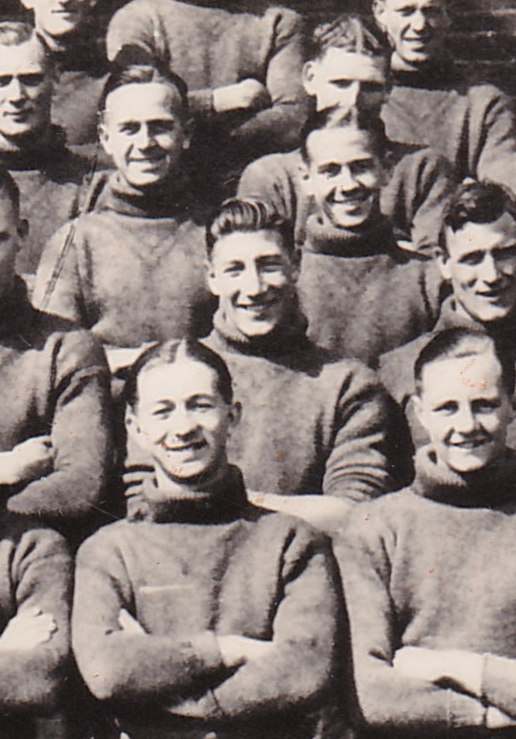
Joe Dalton (centre), Bradford City FC, 1936. Ardath Photo Card (Yorkshire teams series, No. 16). Author's own collection.
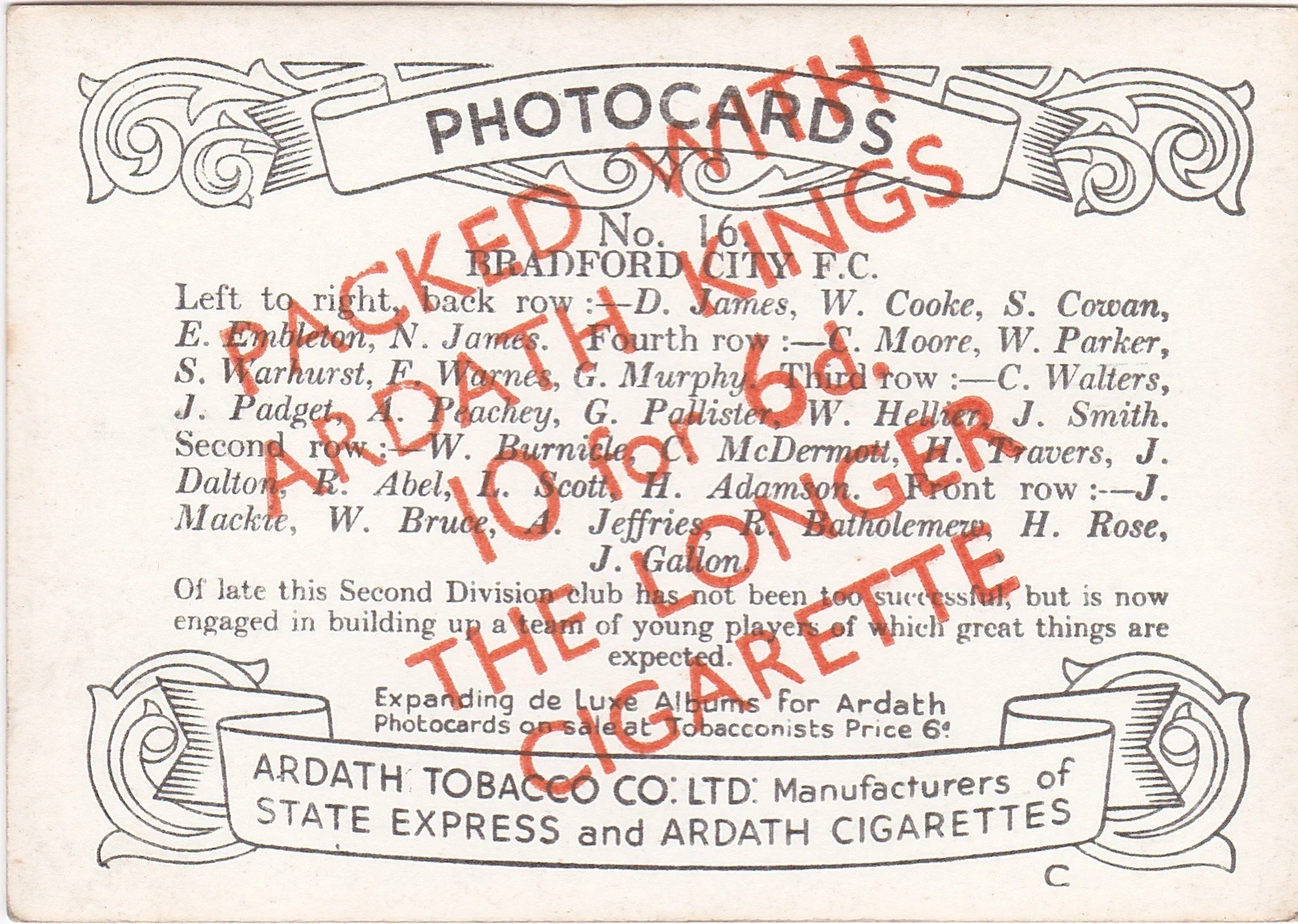
Ardath Photo Card (Yorkshire teams series, No. 16). Author's own collection.
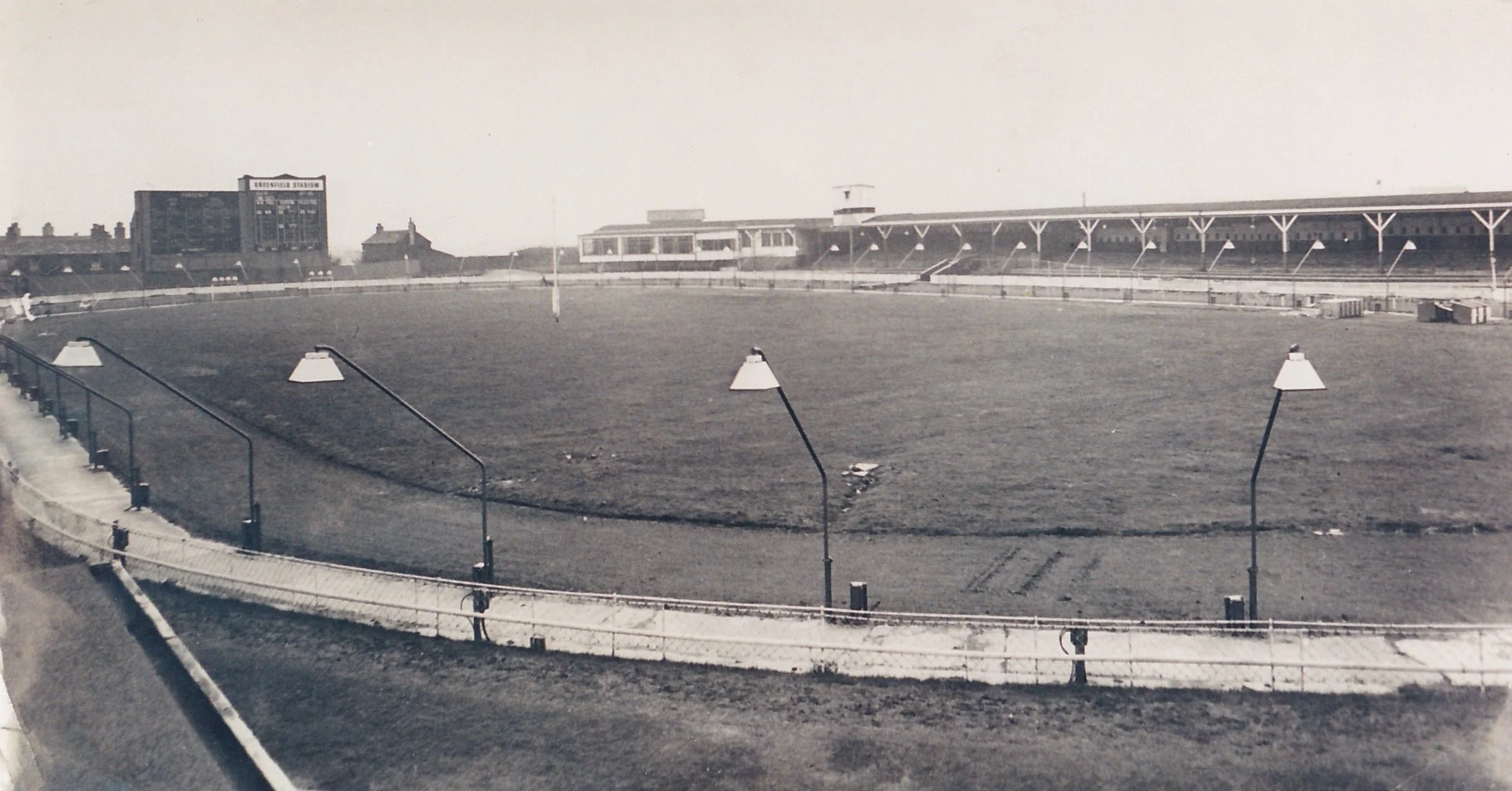
Greenfield Greyhound Stadium, Bradford. Image created by wikipedia. Public domain.
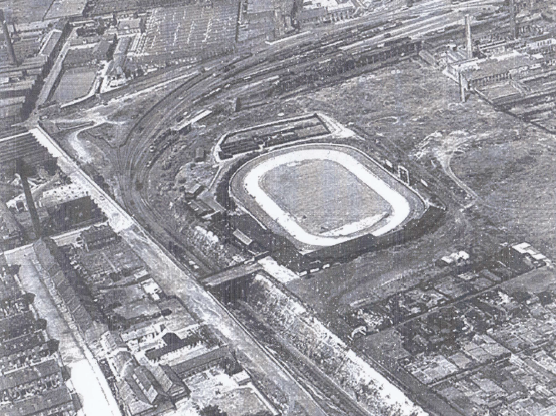
City Greyhound Stadium, Bradford. Image created by wikipedia. Public domain.
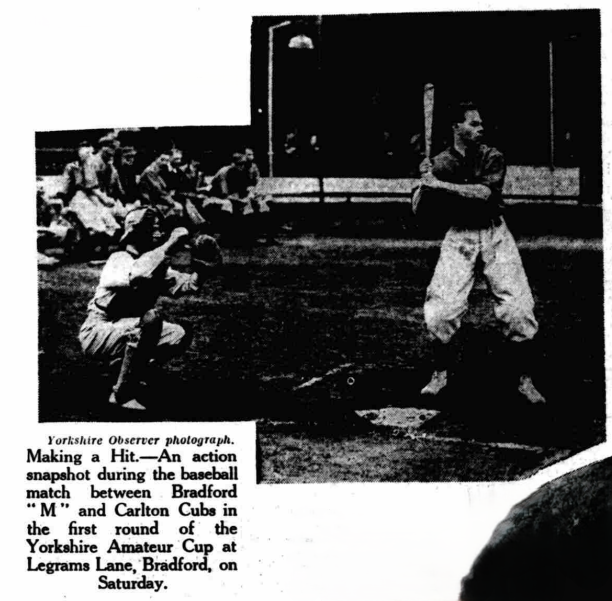
A Bradford M Men player at bat. Bradford Observer, 8 June 1936. Image created by British Library Board. No known copyright holder.
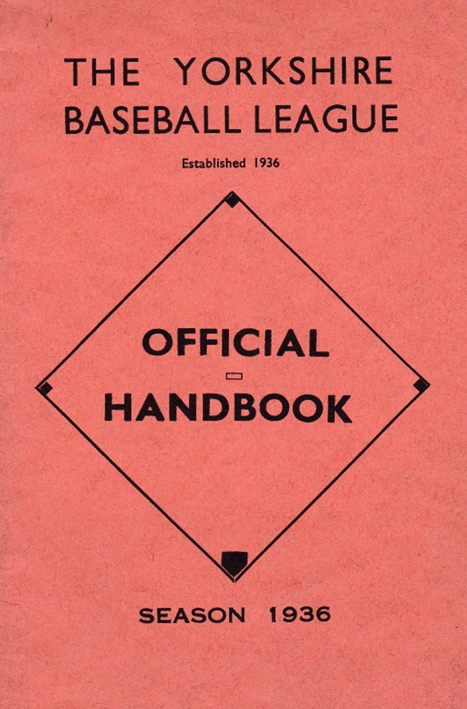
Cover, Official handbook of the Yorkshire Baseball League, 1936 Season. Author's own collection.
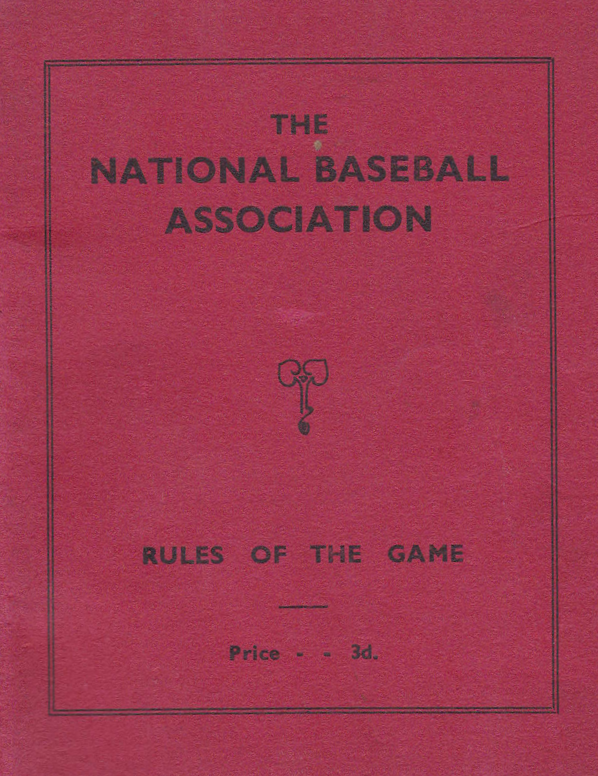
Cover, National Baseball Association Rule Book, 1938 edition. Author's own collection.
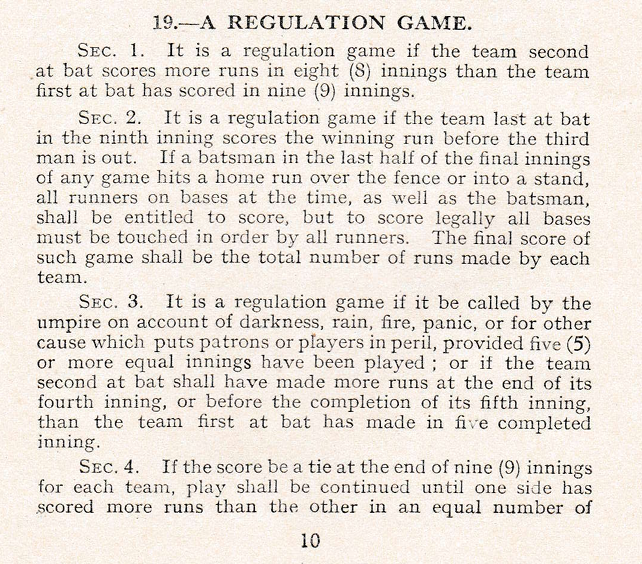
Rule 19.3, the cause of the controversy surrounding the Trojans' semi-final game against Formby. National Baseball Association Rule Book, 1938 edition. Author's own collection.