Una Baza de Oros.
Jamie Barras.
In M.A.P., one reads some interesting facts about Los Oros, the "Indian" vocalist, now appearing at the Palace. " She speaks American-English interlaced with German words and phrases. Born in Madrid of a Spanish mother, her father was a North American Indian. While she was an infant her family moved to the United States[…]She has just come from Germany, where for a year and a half she had a great success. Recently, her business has been a little cheapened by some French girls who disguised themselves as Indians, and were even more so than the real thing."[1]
In 1900, a soprano who performed under the pseudonym “Los Oros” debuted at the Palace Music Hall in London. Possessed of a “mellow voice, rich in its flexibility”, she sang, one critic wrote, “with the sweetness of the nightingale, and a charm of manner and a finished style that appeals irresistibly to her hearers”.[2]
Billed as a half-Spanish, half-Native American woman from Madrid, Los Oros was, in fact, Mayme Pauline Calloway (1872–1942), an African American woman from Chattanooga, Tennessee. This switch in ethnic identities, almost certainly inspired by the “French girls who disguised themselves as Indians” that Calloway denounced to the British press, was likely a commercial decision, exchanging an ethnic identity with shrinking cachet in Europe for one that was in vogue.[3]
It was a path that other African American performing artists would follow.
Mr. and Mrs. Craig C. Williams, who spent 12 years abroad where they met with unusual success, have returned to America. Mr. Williams is an artist of unusual ability, as he composes, sings, plays and instructs. He has sung in all the leading cities of Europe and was heralded as the “Red Caruso”. He and his wife and two lovely children are the guests of Mr. Williams’ sister, Mrs. Berdie Parris, 3412 Vernon Avenue, for an indefinite state. None of America’s artists ever received more recognition at the hands of all Europe than Mr. Williams.[4]
Mystery Gauze, another lady artiste of the Canadian Indian type, also earned the approval of the house.[5]
A decade after “Los Oros” debuted, African American tenor Craig Carlisle Williams (1882–1923) would enjoy a long and successful career in Europe performing as “Chief Carlisle Kawbawgam, the Red Caruso”.[6] There are, as we will see, several parallels between Calloway’s career and that of Williams. It will come as no surprise that both singers aspired to perform in Grand Opera but were denied the chance because of the prejudices of the times.
The case of “Mystery Gauze” is more ambiguous. Willis Gauze (1861–1939), of Pine Creek, Ontario, was the greatest female impersonator of the blackface minstrel era, with a career that lasted over 30 years. The highlight of that career was a long engagement with the Richard and Pringle Georgia Minstrels, the premier African American blackface minstrel troupe of the 1890s. In the Georgia Minstrels, Gauze performed alongside the great Billy Kersands and other Black Canadian and African American vaudeville stars. It was only much later, once Gauze had debuted in England as a solo act, that he began to describe himself as a “Canadian Indian”, billing himself as the world’s only Canadian Indian female impersonator.[7]
However, as Gauze’s exact heritage is not known, it is possible that, rather than adopting an ethnicity that was not their own, this was a case of an artist emphasising whatever aspect of their true heritage went over better with their audience of the moment—Black Canadian in the USA, Canadian Indian in the UK. We can at least say that, as with Mayme Calloway and Craig Carlisle Williams, when in Europe, Gauze judged it better for his career to present himself not as African American, but as Native American.
We can, therefore, cite Mayme Calloway as an example of a phenomenon common to several performing artists in the first decades of the twentieth century. However, as we will see, there is enough that is unique to her story to make it worth telling on its own merits.
Los Oros is a girl of twenty, who has sung in concerts at intervals ever since she was fourteen, and only recently in the halls. Sha has skin of a pale chocolate colour, a round, pretty face with good features, and long black hair, which she wears floating about her shoulders. Her figure, without being heavy, is plump and very round. In her fancy costume her appearance is that of quite a charming bit of bric-a-brac in pale bronze and coloured enamels."[8]
Mayme Calloway grew up on Chattanooga’s Westside, as one of the ten children of Tom Calloway, a plasterer, and Etta “Etura” Calloway née Stiles. In later life, she would claim to have attended the famous Fisk University in Nashville, Tennessee. While she certainly performed with one of the many groups that succeeded the university’s famous “Fisk Jubilee Singers”, this was long after such groups had ceased to have any association with the university, and only after she toured America with a pioneering African American vaudeville show.[9]
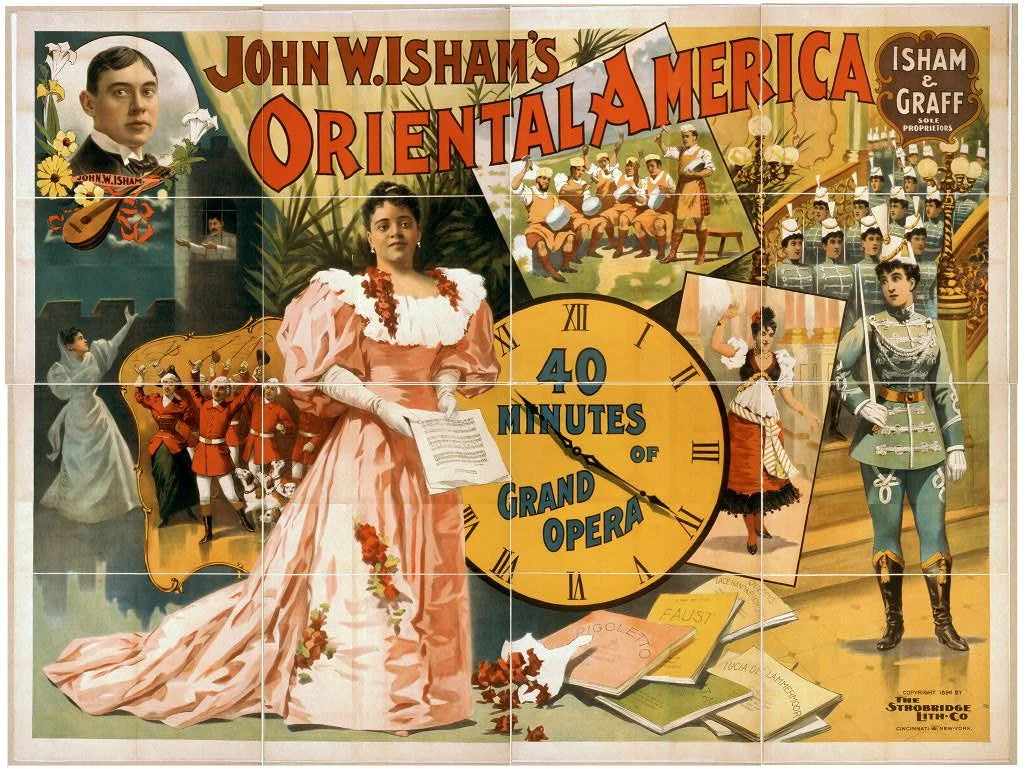
The Academy of Music was crowded this week with Washington’s most classic and cultured people. Mr John W. Isham’s Oriental America was presented. Mr Isham is a young man of great talent and enterprise. He has spared neither pains nor expense to present one of the greatest shows on earth to the American people. He is well aware what Afro-Americans can do and the presentation of this show has no doubt convinced the most skeptical that Afro-Americans will in a few years monopolize the stage.[10]
What set “Oriental America” apart from almost every show that had gone before it was that it featured African American performers performing operatic arias, ballets, and other performing arts, once the preserve of White performers. It was the brainchild of African American New Yorker John William Isham (1866–1902). Isham’s introduction into show business had been as a carnival huckster; he later graduated to promoting the first minstrel show to feature African American chorus girls. In 1895, he left that show to start his own, which he eventually called “Isham’s Octoroons”. Although it still featured the stereotypes of the minstrel shows that preceded it, the Octoroons was effectively a regular vaudeville show; it took African American entertainment from the cotton fields and into the city streets and theatres. Not a success in New York, it nevertheless enjoyed a long life as a touring show. On the back of that success, in the summer of 1896, Isham debuted an even bigger production, Oriental America.[11]
Mayme Calloway—billed under her own name—was a member of the original cast of Oriental America. Although not a headliner, she did have her own solo, “The Enchantress”, from Tchaikovsky’s opera of the same name.[12] (As an aside: one of the stars of the original cast of Oriental America was Billy Eldridge, a dancer and comedian who had got his start performing a double act with Frank Broom, a story I tell elsewhere.[13])
A decade later, Craig Carlisle Williams would follow a very similar path. After a time performing in churches, he made his stage debut in 1906, under his own name, in the book musical “In Abyssinia”, the Williams and Walker Company’s follow-up to their worldwide, history-making success “In Dahomey”.[14] By October 1907, Williams had joined the cast of “The Oyster Man”, another very early example of a Broadway book musical produced by and starring an African American, in this case, Ernest Hogan (1865–1909), the “father of ragtime”.[15]
Calloway remained with Oriental America for at least five months. In January 1897, it was announced that she was transferring to one of the touring companies performing Isham’s earlier hit, the Octoroons. However, she instead opted to step up to a starring role in a much smaller company.[16]
FISK JUBILEE SINGERS. The Fisk jubilee singers will appear in Mechanics hall this evening, in the Worcester entertainment course, in an interesting program[…]The company consists of Miss Mayme P. Calloway, soprano; Mrs. J.N. Caldwell, soprano; Miss Lizzie Friasor, contralto; P.R. DeLang, first tenor; Chas. W. Payne, second tenor; Charles H. Downs, first bass; J.N. Caldwell, second bass; Charles S. Byron, accompanist.[17]
The history of the Fisk Jubilee Singers is a complicated one. The members of the original group were all students of Fisk University, Nashville, Tennessee, a historically Black college, who toured first America and then Europe in the 1870s to raise funds for the college. However, by the end of the decade, former members of the troupe had created their own groups as purely commercial ventures and started touring using the “Fisk Jubilee Singers” name. In December 1894, one of those successor groups, under the leadership of original member Maggie Porter and her husband Daniel Cole, and managed by Charles Mumford, left the US for a tour of Europe. The group included another former Fisk singer, Charles W. Payne, Jefferson N. Caldwell, and others. New to the group was young accompanist Charles Sumner Byron (1874–1913). That tour lasted until the summer of 1896, when the group returned to the US. At this time, or shortly afterwards, Maggie Porter Cole and her husband left the group.[18]
The reorganised group, still under the management of Charles Mumford and still featuring Payne and Caldwell, with Byron as accompanist, began a tour of the US. In January 1897, Mayme Calloway joined the group as the lead soprano. She would remain with the group for at least the next 2 years. In the autumn of 1896, Caldwell and Payne, along with the other two male singers in the Porter-led group that had toured Europe in 1895 and 1896, Charles Johnson and Charles Lewis, possibly accompanied by Byron, toured Germany as the American Troubadours. In later years, the four—without Byron—would tour the continent extensively as the Black Troubadours. However, newspaper reports show that Caldwell, Payne, and Byron also performed in the US with the Mumford-managed Fisk Jubilee Singers in 1897 and early 1898.[19]
In March 1898, Mayme Calloway left America for Europe.[20] She would spend much of the next two decades in Europe, with infrequent trips to America (perhaps only one, although there are gaps in the records). Calloway would later characterise this first trip as a tour with the Fisk Jubilee Singers. However, all the surviving evidence suggests that most, if not all, of the bookings were solely for the male members of the troupe again performing as the American Troubadours. Calloway’s reason for travelling with them may have been because of a significant development in her personal life.
Mme. Losoros, the beautiful soprano, is the wife of Charles Sumner Byron, who is one of the leading pianists of his race, both in this country and Europe.[21]
Charles Sumner Byron debuted as a pianist in 1889 in his hometown of St Louis, Missouri, when he was just 15 years old. He came from a musical family: his father played the mandolin, and at least four of Charles’ brothers would follow him onto the musical platform. By 1894, as we have seen, though still on just 20, Byron was the accompanist for the Maggie-Porter-led Fisk Jubilee Singers; he was still performing that role when Mayme Calloway joined the group in January 1897.[22]
It is not clear when Calloway and Byron began their relationship. Byron attested to Calloway’s American citizenship on her June 1898 passport application made in Dresden in preparation for the Troubadours' tour of Russia; however, this may have simply been because he had an administrative role on the tour. We can only be certain that Calloway and Byron married in London in the summer of 1900, a few weeks before Calloway debuted her “Los Oros” stage name.[23]
The previous September, Calloway had given birth to a daughter, Nellie Atura Calloway, in Berlin. In later years, Nellie would be given the Byron surname, and on official documents, the Byrons would record her year of birth as 1902, i.e., after the 1900 marriage, clearly positioning Byron as the father. However, the birth registration is silent on this matter (Mayme is recorded as “unmarried”), and we have reason to believe Byron may not have been the father—something I will expand on below when we discuss the later movements of Calloway and Byron. It is therefore possible that the start of the Calloway–Byron relationship postdated the touring party’s arrival in Europe by some time.[24]
One bright particular star is the Indian soprano, Los Oros, whose rendering of such florid work as "Lo, hear the gentle lark" is far above the expectation of the variety theatre and succeeds accordingly. With two such singers as Mr. George Grossmith and Los Oros, Mr. Morton proves that nothing is above the heads of the present patrons of the variety theatres.[25]
It seems likely that the newlywed Mayme Calloway and Charles Sumner Byron had parted company from the Black Troubadours by the time of Calloway’s debut as “Los Oros” at the Palace Theatre in London in August 1900. A record of performances by the Black Troubadours shows that they were in Germany from August to November 1900, while Mayme Calloway, at least, was in London. This pattern is repeated in 1901, when Calloway continued to perform as Los Oros at the Palace.[26]
We can perhaps date the separation to the period of Mayme Calloway’s confinement immediately before and after the birth of her daughter in Berlin in September 1899. We can also reasonably suppose that it was prompted, at least in part, by a desire to stay in one place while little Nellie was a newborn—following the Troubadours around Germany would have done mother and child no good. At the same time, the Calloway–Byrons would have needed to earn a living. Enter “Los Oros”.
But why the assumed stage name and ethnic switching? As the experience of the Black Troubadours demonstrated, Europe was a much more welcoming environment for classically trained singers of colour than North America. As I have detailed elsewhere, a plethora of classically trained African American performers debuted in England in the last two decades of the nineteenth century. In terms of sopranos, we might mention Amy Height and Nelly Shannon, both of whom were billed as the “Coloured Nightingale” at various times in their careers, alongside Corlene Cushman and Josie Rivers, two-thirds of the Black Swan Trio.[27]
There was no reason to suppose that Mayme Calloway would not have similarly been welcomed under her own name and ethnic identity. But perhaps it was the very ubiquity of such artists that prompted Calloway and Byron to invent “Los Oros”—with African American vocalists “ten a penny” in Europe, they needed something to set Calloway apart.
The “French girls” that Calloway was so quick to criticise for adopting Indian disguise were the most likely direct inspiration. Having just come from a tour of the continent, Calloway and Byron would have seen the phenomenon firsthand. We can even go so far as to speculate which “French girl” Calloway had in mind.
At the Palace there is now appearing an Indian soprano, who, both in appearance and charm of voice, is making quite a sensation. She is an Indian named Yumata Tiero, and she appears in the gorgeous raiment usually associated with her race. In " El Bacio " she shows the possession of a bright, pure voice, suave, and of extraordinary extension, and she renders the well-known composition with remarkable flexibility and consummate skill. She afterwards juggles delightfully with trills, diatonic and chromatic runs, with an ease and charm which gains her most enthusiastic appreciation.[28]
“Yumata Tiero, the Indian Nightingale” is an enigma. We have photographs of Tiero from around 1900. In one set of photographs, from the Atelier Nadar in Paris, she is in the studio posing in a fringed leather dress of North American Plains Indian design, with eagle feathers in her hair, and holding a bow and arrow. In another, she is in her stage costume, which features a headdress with more feathers but also a coiled serpent figurine that is more East Indian than North American Indian. Her long skirt also featured snakes, but this time picked out in a visibly Pre-Columbian style. Her act included a rendition of the Félicien David aria “Invocation au Serpent”; snakes appear to have been her signature motif. Her outfit was finished with a short, bejewelled bodice, East Indian in inspiration. It was as if she had been dressed by someone who had seen both North American Indians and East Indians but did not know they were not the same thing. Her ethnicity is impossible to determine from photographs alone.[29]
Yumata Tiero debuted at the Olympia in Paris in February 1897. By February of the following year, she was in London and appearing at the Palace—the theatre at which Calloway would debut her own “Indian soprano” act two years later. Tiero remained in London until May and then returned to the continent. By October 1899, she was appearing at the Apollo Theatre in Berlin. It will be remembered that Mayme Calloway gave birth to Nellie in Berlin in September of that year. It does not seem too much to suppose that Calloway and Byron were aware of Tiero, her act, and her performance history.[30]
The last mention of Tiero that I know of is from November 1899, by which time, she had returned to the Olympia in Paris.[31]
It seems that all that Calloway and Byron took from Yumata Tiero and acts like her was the idea of the “Indian soprano” and some elements of costuming: in her original incarnation, “Los Oros” is described as wearing a “marvellous costume and headdress”, and we have a photograph from three years after her debut that attests to this, showing a headdress featuring a large ribbon and a tiara with hanging garlands of flowers. Her repertoire was her own and featured “Lo, Hear the Gentle Lark” by Henry Bishop, composer of “Home Sweet Home” (“be it ever so humble…”) and “Theme and Variations” by Heinrich Plach, a showpiece for the soprano voice.[32]
When Craig Carlisle Williams made his own London debut in 1913, billed as the “Red Caruso”, a “real Indian chieftain”, he appeared on stage in “full war paint” only to then sing a mix of popular ballads and ragtime numbers. In all three cases, Yumata Tiero, “Los Oros”, and the “Red Caruso”, the staged identity was simply surface packaging, albeit one to which the performers committed off-stage as well as on. What genuine North American Indian performers made of it, we can only guess.[33]
Mme. Los Oros, the beautiful and talented protégé of her royal highness, Duchess of Sutherland, and who has won worldwide fame as the “Colored Queen of Song”, and who has been showered with attentions by the crowned heads of all Europe, is an American by birth and education. After making a tour of this country several years ago as a member of one of the celebrated companies of “jubilee singers”, she accompanied the troupe abroad[…][34]
The highlight of Los Oros’s first season in London was her appearance at a Stafford House Fourth of July fete hosted by the Duchess of Sutherland.[35] The Byrons would make much of this appearance in future years, particularly during their tours of their home country. Having completed a long engagement at the Palace Theatre in London in the summer of 1901, sometime in the Autumn or Winter of that year, the couple returned to America for the first time since the Spring of 1898. As we will see, this was to be more or less a permanent return for Charles Sumner Byron.
It might seem obvious that the Byrons’ infant daughter, Nellie, went with them. However, this seems not to have been the case. The next time Nellie Byron appears in the records is October 1904, when she is in Berlin with her mother. The next important documents relating to her are ones in which she does not appear: Charles Sumner Byron’s application for a passport in London in September 1900 and Mayme Calloway’s application for a passport made in Berlin in May 1910. The former shows that as early as 1900, Byron was making plans to travel with his wife but without his [wife’s?] infant daughter. The latter shows that Nellie did not always travel with her mother either.[36]
As further testimony to the latter, we have a document from 1912 that provides even more information. This is the passenger list for the Mauretania travelling from Liverpool to New York, arriving on 22 November 1912. Little Nellie Byron is on board, but she is travelling with her aunt and namesake, Nellie Calloway, not her parents. (As we will see below, her father was in America, her mother was touring Europe.) More than this, while Nellie Calloway is listed among the American passengers, Nellie Byron is listed among the alien passengers. She is heading for her father’s home in Chicago; however, her last permanent place of residence is given as London, and in answer to the question “Whether ever before in the United States”, next to her name is written “No”.[37]
Mayme Calloway–Byron would not return to the US until shortly after the start of the First World War. In 1916, she gave an interview that included the following, curiously worded reference to Nellie: “Her daughter, little Nellie Etura Byron, was born in Berlin, Germany, [and] came to this country two years ago a refugee from Europe”. The implication would seem to be that Nellie had not set foot in the US before her 1912 trip (shifted to 1914, and the outbreak of the First World War, for dramatic effect).[38]
What are we to make of all this? It could be that little Nellie was too ill to travel when her mother and father returned to America in late 1901/early 1902; so her parents left her in the care of a trusted friend in London. For reasons we will discuss below, Mayme Calloway travelled back to Europe without her husband in the late summer of 1904; there she reconnected with her young daughter, and they began a life of sometimes travelling together, sometimes living apart, perhaps so that Nellie could go to school. At such times, Nellie Byron was probably left in the care of Nellie Calloway. As for not travelling to the US under an American passport, this may have been because she was born in Germany; her citizenship was tied to her father, and he was not in Europe to attest to it, so Nellie had to travel under documents from her country of birth (Germany) or residence (England). However, a further possibility presents itself, as hinted at by the 1900 Byron passport application that does not include Nellie: Charles Sumner Byron was not Nellie’s father, and Nellie’s father was not American. As this is an argument from absence, it will have to remain pure speculation. The facts as we know them are that Nellie Byron saw Charles Sumner Byron little if at all in her childhood, and was also apart from her mother for periods. Such was the life of a child with parents who were performing artists on two different continents.
The announcement that Madame Manitza Losoros would sing at the Quinn Chapel last Monday evening, September 25, brought out a quality audience which completely filled the auditorium and gallery. Several years ago when John W. Isham’s “Oriental America” organized and took the road in vaudeville and grand opera, there dawned in the cast a singer of promise who[se] name was Mayme Calloway[…][39]
In time, Calloway’s stage name evolved from “Los Oros” to “Madame Manitza Losoros”. In Europe, she was still billed as an “Indian Soprano”. However, in her home country, there was no attempt to disguise her true origins. She was, instead, marketed as the local girl made good.[40]
Calloway’s first appearance after her first London success as a soloist was in Byron’s hometown of St Louis in February 1902. In a change from their London act, Calloway and Byron appeared on stage together in a trio with Joseph Henry Douglass (1869–1935), the violinist and composer grandson of abolitionist Frederick Douglass. The Byrons were mixing with African American royalty.[41]
The return to the US in 1902 marked a new phase in the careers of both Calloway and Byron. They would remain married for at least the next 15 years; however, from 1904 onwards, they led separate lives, if they were not actually separated in the legal sense.
Professionally, Calloway would concentrate on her Madame Losoros solo act, touring Europe, while Byron would stay in America and devote himself to a group he founded in 1903, the “Byron Troubadours, novelty musical entertainers”. The troubadours were a family act, featuring Charles Sumner Byron and at least four of his brothers. In its earliest iteration, the group made extensive use of the mandolin and specialised in Hawaiian music; it would later adopt a plethora of instruments and musical styles. Led by Charles Sumner Byron, it toured the US extensively from 1903 onwards.[42]
Hawaii makes a second brief appearance at this point in our story in the form of the mysterious soprano “Princess Losoros”, who performed across the Midwest and West in 1903. In one review, the Princess was described as looking “like a Hawaiian”. In other reviews, she was described as the “Hindu cantatrice” and of “royal stock from India”. Although this description seems not to fit Calloway and one might suspect an imitator, Princess Losoros sang the Calloway staple “Lo, Hear the Lark Sing”. In addition, Princess Losoros’s appearance at the Orpheum in San Francisco was reported in the New York Clipper as being “Mme Losoros”. It seems probable then, that this was an attempt at a new spin on the Losoros staged identity that was [thankfully] abandoned by the year’s end.[43]
The Lyceum Sketch club presents Madame Losoros, acknowledged by European and American press the greatest living Afro-American prima donna soprano[…]Next attraction: Byron Troubadours.[44]
In July 1904, Calloway was in St Louis, performing in association with her husband and his brothers, the Byron Troubadours. However, by October, she was in Berlin with Nellie. The evidence suggests she spent much of the next 10 years in Europe, separate but not separated from her husband. In her 1916 interview, she stated that she had spent 10 of the last 16 years in Europe; if we subtract 1902–1904 and 1915–1916, which we know she spent in the US, that leaves three years unaccounted for in the period 1904–1914. The summer of 1905 found her performing at the Passage in Berlin. In January 1907, she was at the Central Theatre in Dresden. In May 1910, she was in Berlin applying to travel to Russia for an appearance. By October 1910, she was in England. She was performing in England again, at the Trocadero Restaurant in Picadilly in December 1913. She returned to America for the final time in November 1914.[45]
Byron spent much of this same period touring the US with his brothers in the Byron Troubadours. The brothers were badly injured when the Chicago Limited derailed in Missouri in August 1904, but by November of that year, they were back on tour. We might also mention tours of the Midwest in July 1905, Oregon, Idaho, and Nebraska from May to June 1910, and the West Coast in December 1913.[46]
Her debut was made and she sang before many of the crowned head[s] of Europe under the foreign impression of Manitza Loso[ros]. With a longing for the home of her childhood, she returned, and to establish her claim potentially in the highest sphere of the classics, she accepted an invitation, under the guardianship of William Henry Hackney, to make her stellar and initial bow as a cantatrice supreme to the people of her racial birthright in Chicago.[47]
Mayme Calloway-Byron returned to the US in November 1914. There she was reunited with her daughter, Nellie, but not her husband, Charles. The Byron and Calloway families had relocated to Chicago by this time. However, Mayme and Nellie Byron took up residence with Nellie’s aunt and namesake, Nellie Calloway, on Rhodes Avenue, while Charles Byron was living at 4340 Forrestville Avenue with his brothers. Charles Sumner Byron joined the US Navy in 1918 and was still employed as a clerk in the Navy in 1920. In the 1920 US Federal Census, he is recorded as living at 4340 Forrestville with four of his brothers and “Daisy Byron”, who is recorded as his wife. However, in 1923, he married again to “Carrie Collins”. By 1930, he was living alone, working as an orchestra director, and a widower. He died in December 1933.[48]
Mayme Calloway-Byron returned to performing in April 1916, with a recital given in her hometown of Chattanooga, Tennessee. This was followed by a second recital at the Quinn Chapel in Chicago in September of that year. In the latter, she appeared under her Manitza Losoros stage name, but her real name was published in accounts of the recital. A photograph accompanying one of the reports shows her in a fashionable tunic and skirt combination with a single ostrich feather in her hair and clutching a long string of pearls; the very image of an Edwardian concert vocalist, along way from the “charming bit of bric-a-brac in pale bronze and coloured enamels” of her early years.[49]
The Quinn Chapel concert was organised by William Henry Hackney, a local baritone, and the two gave a repeat performance in Washington, DC, in November of that year. There would be a further recital at the Quinn Chapel in 1918. Following the war, Calloway-Byron would continue to give recitals from time to time, including a tour of her home state of Tennessee in 1929–30, sometimes under her own name, sometimes under her Manitza Losoros stage name. She died in June 1942, aged 68, after a long illness.[50]
Los Oros, the Indian vocalist, has an exquisite voice, and was justly welcomed. But—I was among the gods when I heard her—is not her music a little over the head of the ordinary man?[51]
Like Craig Carlisle Williams, Mayme Calloway was a classically trained vocalist who was reduced to performing on the music hall stage under an ethnic identity that was not her own. That the latter was, in Mayme Calloway’s case, more of a commercial decision than one forced on her by circumstances does not detract from the fact that she did it to earn a living doing what she loved best, singing Grand Opera. Would she have become a star of opera had she been white? That we cannot know; however, she would unquestionably have spent more time singing in Opera Houses than music halls. The times robbed her of that chance. She forged ahead regardless, touring Europe as far east as Russia as a solo singer for a decade. If nothing else, we can celebrate the way she forged a path for herself.
Jamie Barras, June 2026.
Back to Staged Identities
Notes
[1] News item, Music Hall and Theatre Review, 7 September 1900.
[2] ‘Notices and Advertisements’, Daily Telegraph and Courier (London), 29 August 1900.
[3] Eva Marie Garroutte, “If You’re Indian and You Know It (but Others Don’t): Self-Identification.” In Real Indians: Identity and the Survival of Native America, 1st ed., 82–98. University of California Press, 2003. http://www.jstor.org/stable/10.1525/j.ctt1ppp03.10., accessed 3 March 2025.
[4] ‘Mr. and Mrs. Williams', Chicago Defender, 11 February 1922.
[5] ‘The Palace Theatre’, Dundee Evening Telegraph, 20 March 1906.
[6] I tell Williams’ story here: https://www.ishilearn.com/staged-identities-song-of-hiawatha, accessed 10 June 2026.
[7] I tell the Willis Gauze story here: https://www.ishilearn.com/staged-identities-mystery-gauze, accessed 19 June 2026. Willis Gauze with Richard and Pringle Minstrels: ‘Amusements: Academy of Music’, Evening Journal (Wilmington, Del.), 30 October 1894.
[8] See Note 1 above.
[9] See entry for Tom Calloway and family, Chattanooga district, 1880 US Federal Census, ancestry.co.uk. Ancestry.com Inc. (Operations), accessed 10 June 2026. Fisk University: ‘Mme M. Calloway-Byron Completely Captivated the Appreciative Audience which greeted her with Warm Applause at Quinn Chapel on Monday Evening’, The Broad Ax (Chicago, IL), 30 September 1916. Mayme Calloway with “The Fisk Jubilee Singers”: ‘North Brookfield’, Worcester Morning Daily Spy (Worcester, MA), 25 February 1897.
[10] ‘Amusements’, Washington Bee (Washington, DC), 31 October 1896.
[11] Sampson, Henry T., Chapter Three: Pioneer Black Show Producers in Blacks in Blackface: A Sourcebook on Early Black Musical Shows (Lanham: Scarecrow Press, 2014), 47–74.
[12] See Note 10 above.
[13]https://www.ishilearn.com/staged-identities-messrs-broom-and-carey, accessed 10 June 2026.
[14] Williams in cast of “In Abyssinia”: ‘In Abyssinia’, New York Age, 22 February 1906. Williams and Walker: Karen Fishman, ‘All Going Out and Nothing Coming in’, https://blogs.loc.gov/now-see-hear/2020/02/all-going-out-and-nothing-coming-in/, accessed 3 March 2025.
[15] John Adcock, ‘Ernest Hogan, the Unbleached American’, https://john-adcock.blogspot.com/2012/04/ernest-hogan-unbleached-american.html, accessed 10 June 2026.
[16] In Oriental America, August 1896: ‘Oriental America for Junior Republic’, New York Journal, 4 August 1896. Transfer to Octoroons: ‘The Stage’, The Freeman (Indianapolis, IN), 9 January 1897.
[17] ‘Fisk Jubilee Singers’, Worcester Morning Daily Spy (Worcester, MA), 8 February 1898.
[18] Lotz, Rainer E. “The Black Troubadours: Black Entertainers in Europe, 1896-1915.” Black Music Research Journal 10, no. 2 (1990): 253–73. https://doi.org/10.2307/779388. Charles Sumner Byron: https://www.familysearch.org/en/tree/person/details/GDHP-FCK, accessed 11 June 2026.
[19] Calloway in Fisk Singers, January 1897: ‘The Fisk Jubilee Singers’, The morning times (Washington, D.C.), 25 January 1897. Still managed by Mumford (Mayme Calloway described as touring with the “Mumford Concert Party”): ‘Notes from the Mountains’, The Freeman (Indianapolis, IN), 17 July 1897. The American Troubadours: Lotz, Note 18 above, first reference. Caldwell and Payne still with Mumford group: Note 17 above.
[20] Information contained in passport application filed by Mayme P. Calloway in Berlin in June 1898, U.S. Passport Applications, 1795–1925, ancestry.co.uk, Ancestry.com Inc. (Operations), accessed 10 June 2026.
[21] ‘Troubadours Give Concert’, The Freeman (Indianapolis, IN), 13 December 1902.
[22] Byron debut: ‘St Louis News’, The Freeman (Indianapolis, IN), 25 May 1889. Musical family: “The Byron Troubadours: Novelty Musical Entertainers”. Brochures, promotional materials. Traveling Culture: Circuit Chautauqua in the Twentieth Century. Accessed June 12, 2026. https://digital.lib.uiowa.edu/node/90258. “Herbert Holt Byron’, The International Musician, March 1942.
[23] June 1898 passport application: Note 20 above.
[24] Calloway–Byron marriage: search of Births, Marriages, and Deaths, 1900, Westminster, https://www.freebmd.org.uk/search, accessed 11 June 2026. Nellie Calloway birth registration, Berlin, Germany, Births, 1874–1910; see also passport application filed by Mrs Mayme Pauline Byron in Berlin in October 1904, U.S. Passport Applications, 1795–1925, ancestry.co.uk, Ancestry.com Inc. (Operations), accessed 10 June 2026. Byron surname and 1902 birth, see, for example, entry for Nellie Byron, passenger lists of the Mauretania, arriving New York, 22 November 1912, New York, U.S., Arriving Passenger and Crew Lists (including Castle Garden and Ellis Island), 1820-1957, ancestry.co.uk, Ancestry.com Inc. (Operations), accessed 10 June 2026; also, Note 9 above, second reference.
[25] ‘Yesterday’s Theatres: The Palace’, London Daily Chronicle, 21 May 1901.
[26] A schedule of the Black Troubadours performances is given by Lotz, Note 18 above, first reference. Los Oros at Palace, May 1901: Note 24 above.
[27]https://www.ishilearn.com/staged-identities-cuckoos-and-nightingales, https://www.ishilearn.com/staged-identities-rivers-and-the-black-swan, accessed 11 June 2026. ‘Coloured Nightingale’: ad, Crown Music Hall, Derby Daily Telegraph, 28 March 1888.
[28] ‘Palace Theatre’, Music Hall and Theatre Review, 11 February 1898.
[29] Studio portraits: https://pop.culture.gouv.fr/notice/memoire/APNADAR011857, accessed 11 June 2026. Stage costume: https://upload.wikimedia.org/wikipedia/commons/6/65/Mlle_Yumata_Tiero._Olympia_-_btv1b53260933m.jpg, accessed 11 June 2026.

[30] Yumata Tiero at the Olympia, Paris: ‘Music and Musicians’, San Francisco Call, 25 February 1897. In that article, Tiero is described as “East Indian”. Tiero at the Apollo, Berlin, October 1899: ‘Notes from Germany’, Music Hall and Theatre Review, 27 October 1899.
[31] Programme for the Olympia Theatre, 19 November 1899.
[32] Costuming: ‘Girls Gossip’, Truth, 4 July 1901. Repertoire: ‘The Palace’, Stage, 27 June 1901. Lo, Hear the Gentle Lark: https://www.youtube.com/watch?v=lY-A1p4nzVk, accessed 12 June 2026. Theme and Variations: https://www.youtube.com/watch?v=pmhvSyz8m5A, accessed 12 June 2026.
[33] ‘The “Red Caruso”: An Indian Chieftain at the Alhambra”, Daily News (London), 8 April 1913.
[34] ‘Where the Calcium Shines’, The colored American, 22 February 1902.
[35] Note 30 above, first reference.
[36] Passport application by Charles Sumner Byron, 22 September 1900, London, and passport application by Mrs Mayme Pauline Byron, 30 May 1910, Berlin, U.S. Passport Applications, 1795–1925, ancestry.co.uk, Ancestry.com Inc. (Operations), accessed 10 June 2026
[37] 1912 trip without parents: Note 23 above, fourth reference.
[38] Mayme Calloway returning to US, entry for Manitza Lororos, passenger lists, Franconia, leaving Liverpool, 16 November 1914, Lotz, Rainer E., “Black Europe – The Sounds and Images of Black People in Europe. Vol.1: 1899-1909” (Nijmegen: Bear Family Productions, 2013), page 219. 1916 interview: Note 9 above, second reference.
[39] Sylvester Russell, ‘Concert Par Excellent at Quinn Chapel’, The Freeman (Indianapolis, IN), 30 September 1916.
[40] Madame Manitza Losoros, “Indian Coloratura Soprano”: ‘National Sunday League’, Finsbury Weekly News and Chronicle, 21 October 1910.
[41] Note 21 above. Joseph Douglass: https://aaregistry.org/story/violinist-joseph-douglass-born/, accessed 12 June 2026.
[42] Byron Troubadours: Note 20 above, second reference, and Note 36 above, first reference. Calloway and Troubadours following each other: news item. St Louis Palladium (St Louis, MO), 9 July 1904. Byron and Calloway still married in 1917: Byron names Mayme Byron, wife, as his contact in his 1917 draft registration: Charles Sumner Byron, World War 1 Draft Registration Cards, 1917–1918, ancestry.co.uk, Ancestry.com Inc. (Operations), accessed 10 June 2026.
[43] ‘The Theatres’, Indianapolis Journal, 17 February 1903; ‘Capable Comedians Make Merry at the Columbia’, St Louis Republic (St Louis, MO), 11 August 1903; ‘About Plays and Playhouses’, Omaha Daily Bee, 1 November 1903; ‘Orpheum’, San Francisco Call, 15 September 1903; ‘Orpheum’, New York Clipper, 26 September 1903.
[44] News item, St Louis Palladium, 9 July 1904.
[45] Note 22 above, second reference; Note 44 above; ‘Our Berlin Correspondent Writes’, Music Hall and Theatre Review, 21 April 1905; ‘Central Theatre’, Daily Record and the Dresden Daily, 3 January 1907; Note 36 above, second reference; ‘National Sunday League’, Finsbury Weekly News and Chronicle, 21 October 1910; ‘Trocadero Restaurant’, Referee, 21 December 1913.
[46] ‘Very Bad Wreck on the Rock Island Railway’, Deseret evening news (Great Salt Lake City, UT), 18 August 1904. News items, The star (Reynoldsville, Pa.), 9 November 1904; ‘Devils Lake Chautauqua’, The Fargo forum and daily republican (Fargo, N.D.), 5 July 1905; ‘Byron’s Troubadours’, East Oregonian (Pendleton, OR), 14 May 1910; ‘Byron’s Troubadours’, Montpelier Examiner (Montpelier, ID), 3 June 1910; ‘Byron’s Troubadours’, North Platte Telegraph (North Platte, NE), 16 June 1910; ‘Byron’s Troubadours’, Reedley Exponent (Reedley, CA), 4 December 1913.
[47] Note 39 above.
[48] Charles and Mayme Byron’s two addresses are included on Charles Byron’s 1918 draft registration: Note 42 above, final reference. Byron, US Navy clerk, married to “Daisy”: entry for Charles Byron, Chicago, 1920 US Federal Census, ancestry.co.uk, Ancestry.com Inc. (Operations), accessed 10 June 2026. The address (4340 Forrestville Avenue) is the same as that given on his 1918 draft registration. Byron’s third (?) marriage: "Illinois, Cook County Marriages, 1871-1969", FamilySearch (https://www.familysearch.org/ark:/61903/1:1:Q21V-M8M1), Entry for Charles Sumner Byron and Carrie Collins, 01 Sep 1923. Alone and widowed: entry for Charles S. Byron, Chicago, 1930 US Federal Census, ancestry.co.uk, Ancestry.com Inc. (Operations), accessed 10 June 2026. Death: "Illinois, Cook County Deaths, 1871-1998", FamilySearch (https://www.familysearch.org/ark:/61903/1:1:Q2M8-YZ5B), Entry for Charles Byron and Richard Byron, 19 Dec 1933.
[49] Chattanooga recital: ‘Grand Concert’, Chattanooga Daily Times, 10 April 1916. September 1916 recital: Note 9 above, second reference. “bric a brac”: Note 8 above.
[50] ‘The Calloway-Byron-Hackney Recital at Washington D.C. was a Grand Success’, The Broad Ax (Chicago, IL), 25 November 1916; ‘Sacred Song Concert at the Quinn’, Chicago Defender, 13 July 1918; ‘Colored Troop Legion is Sponsoring Singer’, Tucson Citizen, 9 February 1922; ‘Small Audience Likes Calloway Byron Songs’, Chattanooga Daily Times, 21 December 1929; ‘Singer Dies After Being Ill 2 Years’, Chicago Defender, 27 June 1942.
[51] ‘Variety Notes’, Echo (London), 19 September 1900.
John W. Isham's Oriental America. Poster. Image created by the Library of Congress. Public domain.
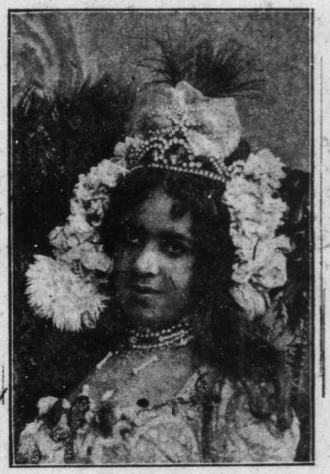
Mayme Calloway as Manitza Losoros, circa 1904, St Louis Palladium, 9 July 1904. Image created by the Library of Congress. Public domain.
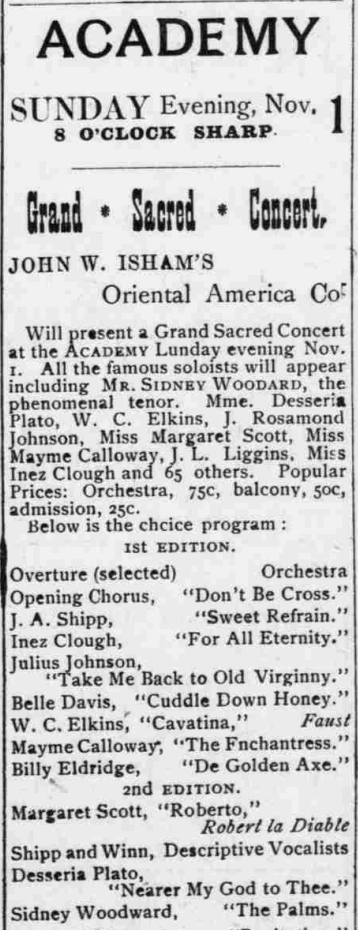
Mayme Calloway in the Oriental America touring company. Washington Bee, 31 October 1896. Image created by the Library of Congress. Public domain.
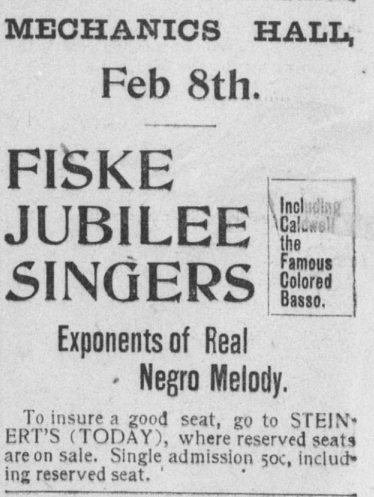
Fisk Jubilee Singers, Worcester Morning Daily Spy (Worcester, MA), 8 February 1898. Image created by the Library of Congress. Public domain.
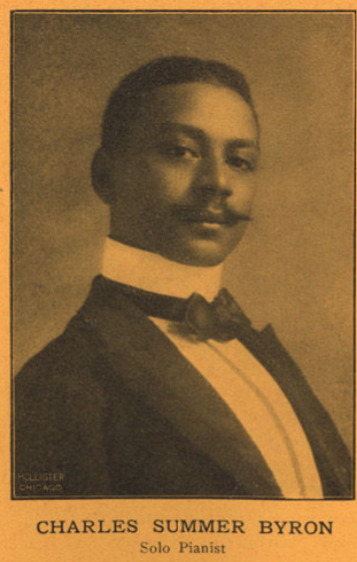
Charles Sumner Byron (1874-1933). From a promotional brochure for the Byron Troubadours. Iowa Digital Collection, https://digital.lib.uiowa.edu/node/90258. Public domain.
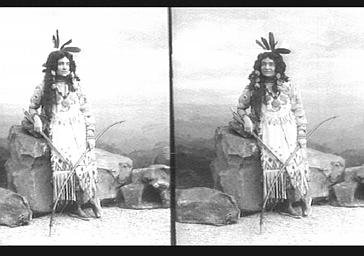
Yumata Tiero. Atelier Nadar, Paris, circa 1897. POP Plateforme ouverte du patrimoine. https://pop.culture.gouv.fr/notice/memoire/APNADAR011857
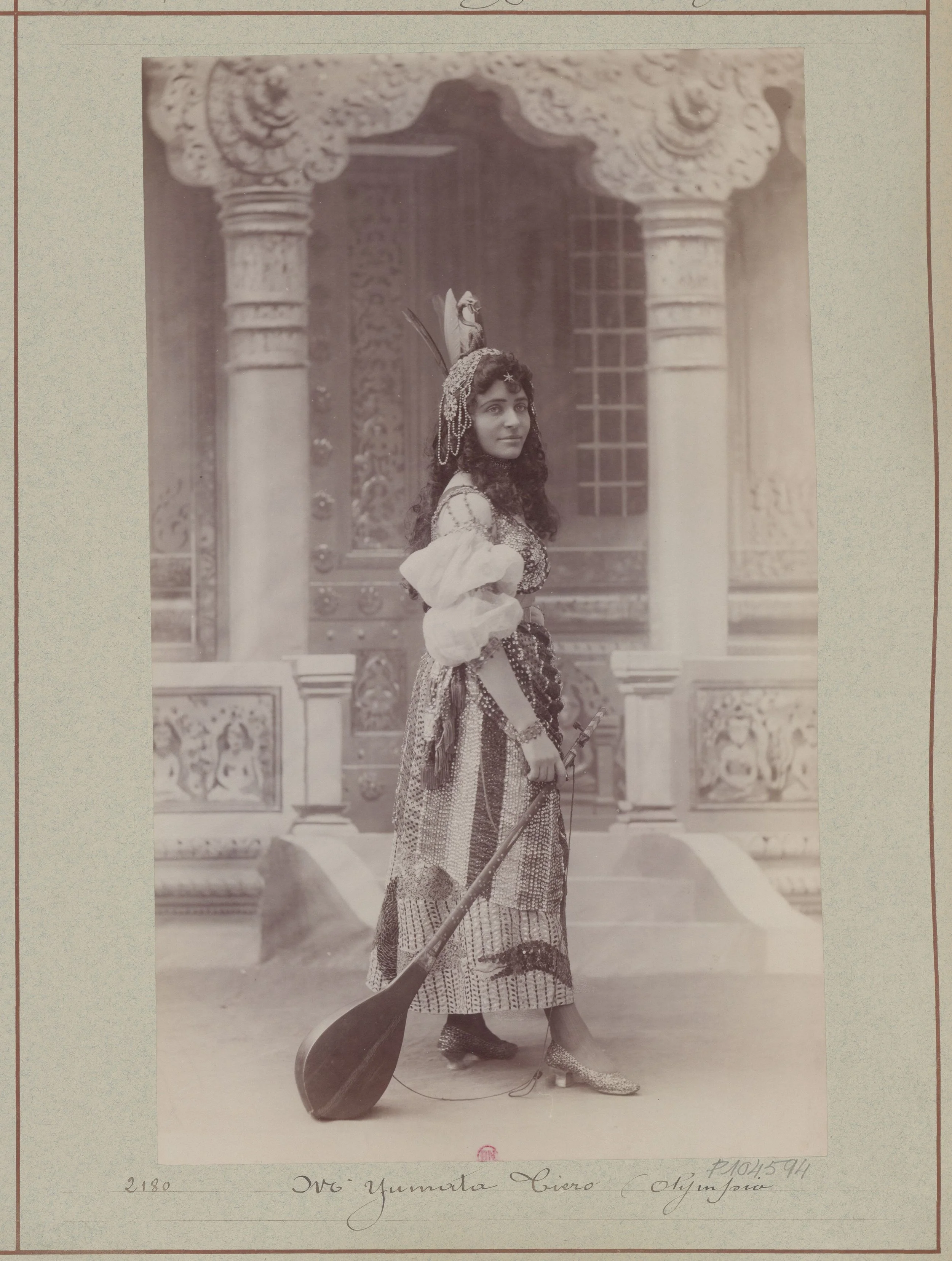
Yumata Tiero, stage costume, Olympia, Paris, 1897. Bibliothèque Nationale de France. https://gallica.bnf.fr/ark:/12148/btv1b53260933m. Public domain.
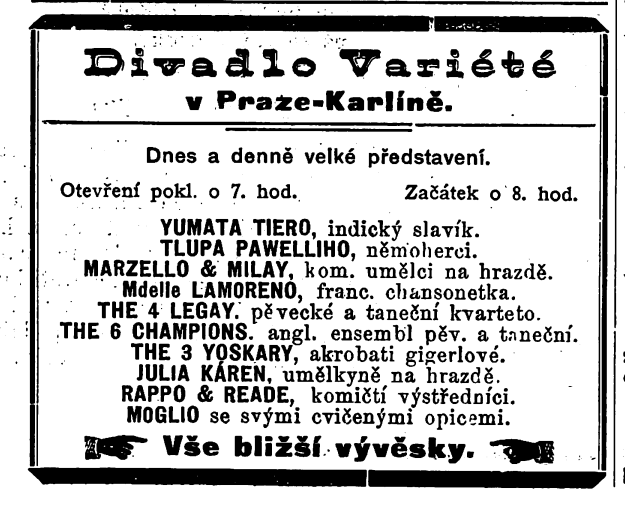
Yumata Tiero in Prague. Šípy, 3 December 1898. Image created by archive.org. Public domain.
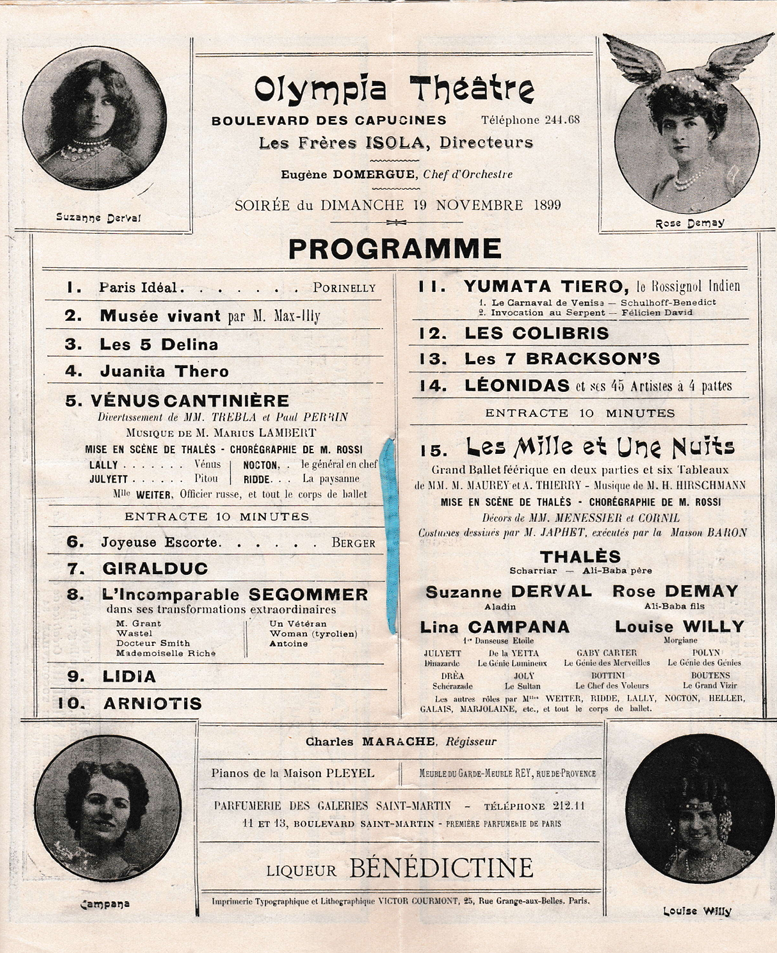
Yumata Tiero at the Olympia, November 1899. Programme, author's own collection.
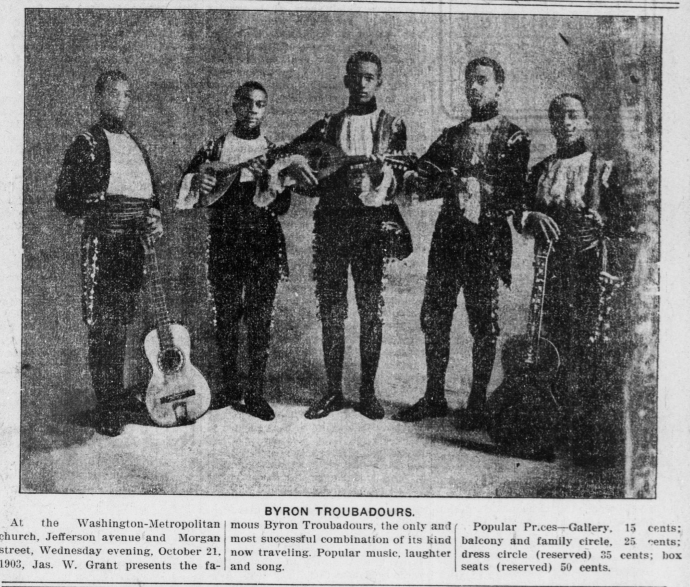
The Byron Troubadours in their original incarnation, Hawaiian Mandolin Band. St Louis Palladium, 17 October 1903. Image created by the Library of Congress. Public domain.
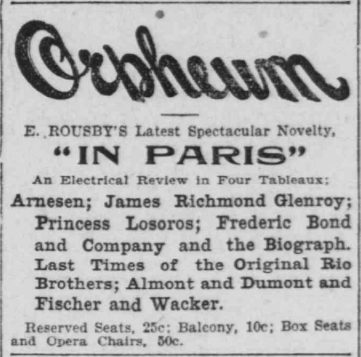
"Princess Losoros", San Francisco Call, 17 September 1903. Image created by the Library of Congress. Public domain.
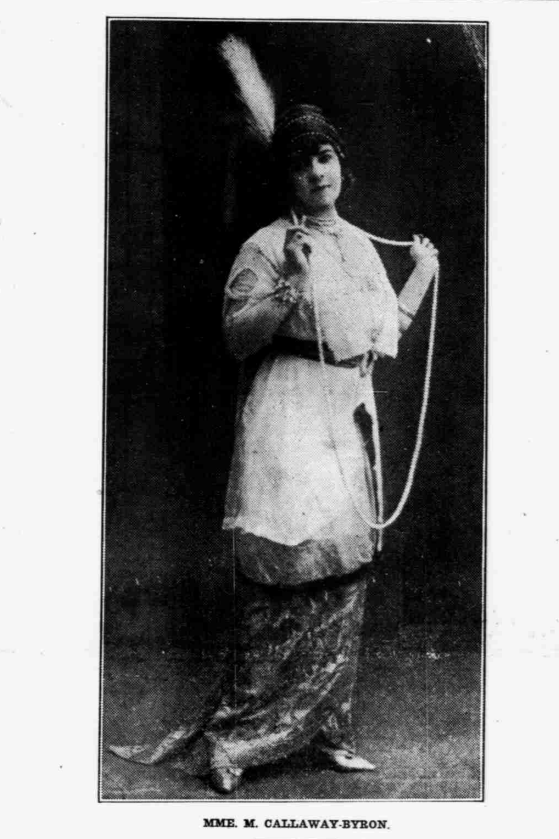
Madame Calloway-Byron, 1916. Broad ax (Chicago, IL), 30 September 1916. Image created by the Library of Congress. Public domain.
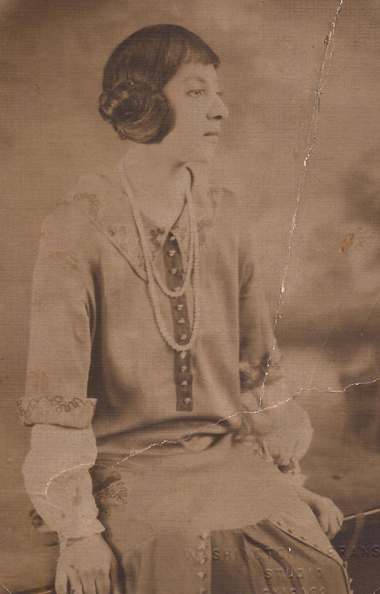
Nellie Etura Calloway. Image uploaded to Ancestry.com. Copyright undetermined.
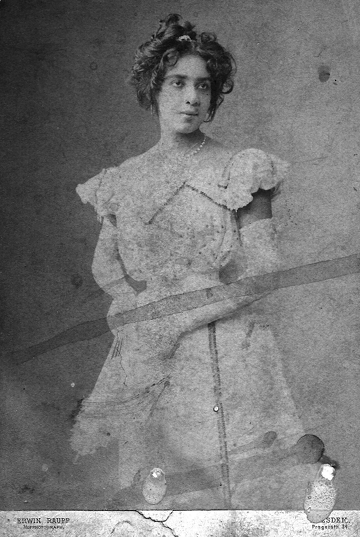
Mayme Calloway as Los Oros. Image uploaded to Ancestry.com. Copyright undetermined.