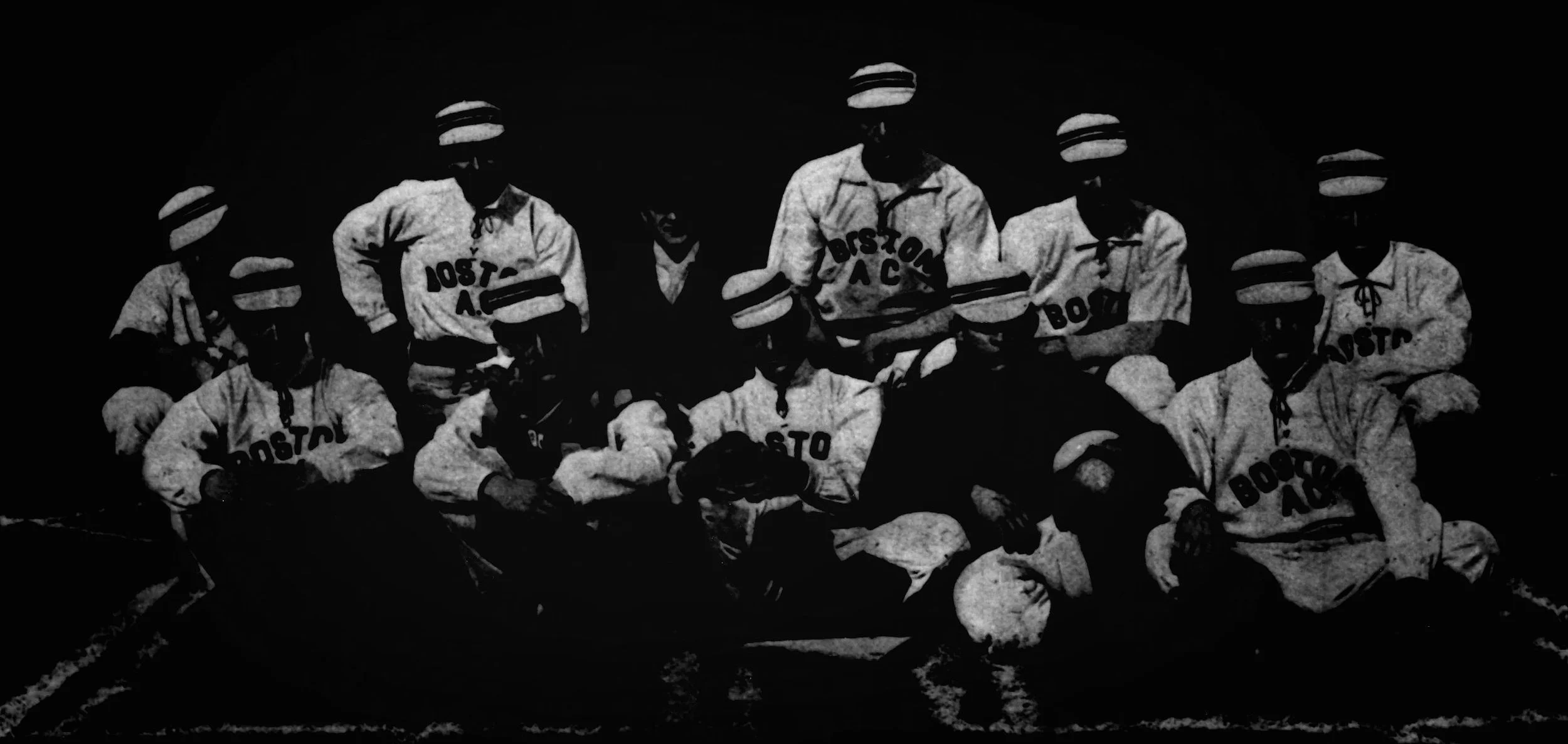
The Amateurs.
Jamie Barras.
Tell me about a complicated man.[1]
Alfred William “Al” Lawson (1869–1954) was a baseball player, manager, and promoter. He was also a pioneer aviator and advocate for passenger air services. He later founded a movement that bypassed banks to give ordinary people direct control of their own credit. But the risks he took were with other people’s money, and when payments came due, he would often be nowhere to be found. He was a utopian visionary who never gave a sucker an even break, a man who dreamt big but always had an exit plan. And he twice took baseball in Britain for a ride.[2]
Here, I will attempt to make sense of the two tours of England that Al Lawson led in 1892 and 1895. The evidence shows that we know both more and less about the players on those tours than we thought, but then, things were never straightforward with Al Lawson.
The New York Amateurs
Al Lawson, manager of the New York Amateur Base Ball Club, sailed for Europe on Saturday, on the Anchoria. He will perfect arrangements for the club’s tour through Scotland, England, and other places.[3]
By 1892, Al Lawson, although still only 23, was a veteran of organising baseball tours. He had led a successful tour of Cuba by pro players in 1890, aged just 21, although he miscalculated the expenses and had to resort to betting against his own team to pay for the tickets home. He organised a repeat tour the following year but baulked at the last moment when the tour’s original investor backed out (at least, that was his story). By 1892, he had also built a reputation as a great pitcher but a lousy team player.[4]
His knowledge of the baseball scene in England, just three seasons old in the summer of 1892, came courtesy of the manager of one of the teams he briefly passed through that year.
Manager Maskrey now has five men under contract[…]The first man the manager signed was Al Lawson, and, in securing him, Maskrey certainly made a ten-strike. The contract with Lawson’s name written in a clear, round hand, will be framed and swung from a peg in Secretary Bosche’s office. Lawson is no minnow, and it took good bait to land him, but the angling was done by an expert handler of the rod and hook.[5]
Former major-leaguer Leech Maskrey (1854–1922) had been one of the professional players hired by the Albert Spalding company in the Spring of 1890 to help instruct rookie English players in the game. Maskrey became the player–manager for Preston North End, one of the four teams in the professional baseball league set up in the English Midlands using Spalding money. The league was not a success and folded after only a year. Maskrey returned to the States and moved into management. Back in England, the Preston club soldiered on.[6]
By the spring of 1892, Maskrey was managing the Atlanta Baseball Club. Al Lawson was one of his first signings. As with most of Lawson’s employers, Maskrey came to regret the decision. However, during the honeymoon period, he shared with Lawson his experiences in England and the information that his old club, Preston, had survived and was part of an amateur scene in England that, as far as Maskrey was aware, was thriving. This planted the seed of an idea in Lawson’s mind.[7]
Lawson had gone to Atlanta from Florida. There, he had set up the Florida State League and served as player–manager for one of its teams, Tampa. The Tampa roster included Jack Dooley and Jack Lawlor, lifelong friends from North Adams, Massachusetts. The two Jacks’ regular gig was with the storied Asylum Base Ball Club of Middletown, New York. Another player on the Tampa roster was William Warren “Wild Bill” Setley (1871–1956), a rival to Lawson for the title of biggest rogue in the amateur game. We will come back to Setley.[8]
Dooley and Lawlor returned to Middletown at the end of the winter season. Following his short stint at Atlanta, Lawson joined them there, signing for the Asylums. He also played at least one game for the Englewood Field Club of Englewood, New Jersey. The Asylums seemed to have an arrangement with Englewood: Dooley and Lawlor would also play at least one game for Englewood that summer. It was from these two clubs, the Middletown Asylum and Englewood FC, that the bulk of the players that Lawson recruited would come. Seton Hall, a Catholic college in South Orange, New Jersey, would also enter the mix.[9]
Lawson took his first active steps in organising the tour in early July, shortly after arriving in Middletown, placing ads for “gentlemen” amateur players. The tour’s business manager and seed money provider was a former Asylum player, Van Eps Harvey (1859–1914). It was Harvey that Lawson put in charge of taking the players to England. To say that things were hastily arranged would be an understatement. On 24 July, barely three weeks after the first ads appeared, Lawson left for England to arrange the schedule; Harvey and the players were due to follow just one week later.[10]
It is here that things began to unravel. Lawson left the US on 24 July on board the Anchoria, expecting Harvey and the 11-man squad to follow on the Circassia a week later. However, when the Circassia docked at Glasgow on 10 August, Harvey had only a handful of players with him. Four more players were said to be on their way and expected to arrive the next day or the day after. The rest had backed out. The latter included Jack Dooley and Jack Lawlor, the core that Lawson had planned to build the team around. Dooley and Lawlor had wisely chosen to remain in Middletown; they would play baseball for both the Middletown Asylum and Englewood FC across the rest of the summer.[11]
The most extensive account we have of what happened next was provided by someone who witnessed events firsthand: an American baseballer already resident in England, William Cornelius Bryan (1852–1933). Bryan was the player–manager for Derby, an amateur team that had played in the 1890 professional league alongside Preston. Unlike Leech Maskrey, Bryan had remained in England after the league collapsed. This was because he had arrived in the country not at the invitation of Albert Spalding but on the lam from a warrant for his arrest back in the States. The charge was seduction; he claimed he was the victim of blackmail, an excuse he may have made to appease his new wife, a wealthy heiress (his transatlantic flight from justice had been funded with her money). While in England playing and managing Deby, he also took part in “pedestrian” (speed walking) events and worked as a correspondent for the American sports journal The Sporting Life. Following his encounter with Lawson, he fired off two angry dispatches to the latter newspaper. The second of these was the most detailed.[12]
Meanwhile, in a letter to the self-same Sporting Life, published in late July 1892, Lawson had provided brief biographies of all but one of the players he thought would make the trip. Although Lawson was not, as we will see, the most reliable of sources, much of what he wrote in that letter can be confirmed.[13]
The passenger lists of the ships that brought the Amateurs to England and returned them to America are also now available online. I have included the information they contain as an appendix alongside team lists provided in English newspaper accounts for the only two games of the tour, played at Preston on Thursday 11 August and Saturday 13 August 1892. In both of these games, the few Amateurs who had made the trip were supplemented by Lawson, Harvey, and men drafted in from local teams, including, it seems, Will Bryan, Lawson’s future critic. The Amateurs won both games, but they hardly covered themselves in glory. Attempts to organise more games came to nought. Al Lawson skipped the country, and Van Eps Harvey was not far behind him. They left their poor players to make their own way home.[14]
Focusing on the men who we can identify from passenger lists as having made the trip, we have six names. Three of these are named in Will Bryan’s account of events (Thomas Cummings, William Carrick, William O’Brien). The fourth name on the passenger lists is “John Doley”. It can safely be assumed that this was a ticket bought for Jack Dooley that was used by someone else after Dooley backed out of the tour. Drawing again on Bryan’s account, we can assume this was the fourth player he mentioned, named only as “Sullivan”. Sullivan was engaged originally as a substitute player; this may be why he did not have a ticket of his own.[15]
The fifth and sixth names on the passenger lists are players that Bryan does not mention. In the case of Charles Hendrick, this appears to be because he did not arrive in time to play. In the case of the sixth player, Bryan’s silence is curious, as his name was also Bryan: John Bryan. As I detail in the appendix, although these six men returned home in two batches, the numbers on their tickets represent an unbroken sequence from 51–56, which suggests strongly that they were the only players who made the trip (alongside Harvey and Lawson, whom, it will be remembered, left for home first). We can identify them as follows:
Thomas Henry Cummings (1872–?). Cummings was one of several players in the original squad who played for the Englewood FC baseball team. In the event, he was the only Englewood player who actually made the trip (the Englewoods who did not were Victor Wilbur and Elgin McBurney). Cummings was a student of Seton Hall, a Catholic college in South Orange, New Jersey. In his letter to The Sporting Life, Lawson mentioned Seton Hall in reference to two other players (O’Brien and Hendrick—see below). In addition, Will Bryan, in one of his angry missives to The Sporting Life, wrote that the Amateurs’ uniforms were repurposed Seton Hall uniforms.[16]
William Joseph O’Brien (1871–?). William O’Brien, of Jersey City, was a Seton Hall graduate and one of the players Lawson named as such in his letter to The Sporting Life. There were several men of that name living in Jersey City in this period, making a more precise identification difficult.[17]
Charles Conely Hendrick (1871–1918). New Jersey native Charles Hendrick was the other Seton Hall graduate Lawson named in his letter to The Sporting Life. He later became a doctor and served as an assistant surgeon in the Spanish–American War. He also qualified as a lawyer. His life of service to his community was brought to a premature end by heart disease.[18]
William Carrick (1871–?) was a Middletown resident. According to Lawson, he was originally from Charleston, South Carolina. He returned to Middletown after the aborted tour and continued playing amateur baseball, turning out for the Columbia College team in 1893.[19]
John Bryan (1870-?). Bryan is something of an enigma. According to Lawson, he was a leading New-York amateur player. The fact that he shared a surname with Will Bryan is the source of one of the tour’s remaining mysteries. Will Bryan was at Preston for at least the first of the New York team’s games and, according to one report, stepped in to help the depleted New York team. A second report puts him in the team that played in the second game, too. In the longer of his two accounts of the tour, Will Bryan wrote that he had played in both games, collecting payment from Lawson for both appearances after the first game and in advance of the second. Lawson did not contradict this aspect of Bryan’s account in his later refutation of several of Bryan’s accusations.[20]
This would seem to account for the name “Bryan” appearing in the team lists we have for the two games at Preston. However, what then are we to make of the fact that, based on the evidence from the passenger lists, John Bryan made the trip and was available to take the field? If he didn’t play, where was he? And if someone else travelled using his ticket, as was the case with John Doley/Dooley, then who was this, and, again, why did that man not take the field? This adds uncertainty to an aspect of the story we thought we knew.
All five of these men were young, no older than 23, and, for the most part, college educated. They were, in other words, as Lawson presented them: “gentlemen” amateurs. That leaves one player to account for.
Sullivan. “Sullivan” was originally engaged as a substitute. No initial was given in any account that named him. He was also the only one of the players that Lawson did not describe in his letter to The Sporting Life posted before the trip. Academic and author Jerry Kuntz, in his biography of Al Lawson and his brother, George, posits that he was “Holyoke Dan” Sullivan, a player who would play for Lawson in 1901 in Easton, Pennsylvania. Lawson was fond of recruiting old friends into his teams—Jack Lawlor and Jack Dooley would also play for Lawson in the Easton team. We will see another example later. However, there is an intriguing alternative theory.[21]
Another player that Lawson, Dooley, and Lawlor played with in the Easton team was Wild Bill Setley. It will be remembered that all four men had played in the Tampa team back in the Spring of 1892. In early 1895, Lawson signed for a club in Norfolk, Virginia. One of the club’s other recruits was Bill Setley. In the brief biography of Setley that ran in the Virginia press to mark his recruitment, it was said that he “played with Al Lawson in Cuba in the winter of 1890 and 1891, and was also with Lawson on the trip to England, 1893”. These claims were repeated a few years later in another biographical sketch of Setley. Their author appears to have been Setley himself.[22]
We know that Setley did not play in the Ocala All-Americans that Lawson took to Cuba in 1890. It seems unlikely then that he was in England in 1892 (not 1893, as he said). And yet, there is the question of why he made the claims when joining a team that included the man best placed to refute them. There is an outside chance that the claims were exaggerated but not outright fiction: he wasn’t on the Cuba tour, but he was on the England tour. It will be remembered that Lawson had followed Dooley and Lawlor back from Tampa to Middletown in the summer of 1892 (via Atlanta). It is not impossible that Setley did too. Added to this, in later years, for complicated reasons, Setley adopted the pseudonym “Jack Shaw” while playing in Massachusetts. He was a man who liked a pseudonym that began with an “S”. Alas, as attractive an idea as it is to have Wild Bill Setley playing in England, we will likely never know the truth of the story.[23]
After the England debacle, Lawson made his way back to the States via Australia. As we’ve seen, despite the rancour the tour must have caused, several of the players involved put themselves in Lawson’s hands again in later years. That is a measure of how good a salesman he was. His problem was he couldn’t leave well enough alone.
The Boston Amateurs
Philadelphia, Aug. 10.—The Boston Amateur Baseball Club, which is composed principally of collegiate players, left here this afternoon on the American line steamer Ohio for Liverpool. The captain and manager of the team, A.W. Lawson, has been in England for four weeks booking dates.[24]
Lawson’s extraordinary decision to take a second crack at a tour of England was prompted by a combination of personal circumstances and his eye for an opportunity. By the summer of 1895, although aged just 26, his arm was shot; his days as a pitcher to be reckoned with were behind him. He needed a new career. An opportunity presented itself in the form of the news that Philadelphia Phillies manager Arthur Irvin was contemplating a post-season tour of England. Lawson knew full well that this was a bad idea, as baseball in England came to a halt in early September, the start of the Association Football season. He also knew that English clubs would baulk at taking on a team as skilled as the Phillies. From this came the idea to leverage the publicity stirred up by reports of Irvin’s plans to present to English clubs the more attractive prospect of a late summer tour by a team of gentleman amateurs.[25]
The 1895 Boston Amateurs tour was only marginally more successful than the 1892 New York Amateurs tour. More games were played (11 versus 2), all of which the tourists won, but this only exposed the false premise on which Lawson’s touring model was based. With seed money from his backers to cover only the cost of getting the team to England, he was relying on income from gate receipts to cover day-to-day expenses and generate profits. He failed to comprehend that baseball was a niche sport in England; it survived on club subscriptions, not gate receipts. Ticket prices were kept low to try to stir interest in the game.[26]
After Lawson and one of his players (Daggett) were forced to hand over their watches to settle a hotel bill, Lawson threw himself on the mercy of baseball’s supporters in England. In this, he came up against the organising secretary of the London Baseball Association (LBA), Nelson Cook. Vermont native Cook knew a rogue when he saw one, as he was something of a rogue himself. He made it clear he wanted Lawson and his team gone from England as soon as possible and lambasted the tourists in the American press, suspecting, correctly, that they were planning to blame the tour’s failure on baseball’s supporters in England failing to interest locals in the game.[27]
Lawson responded to Cook’s manoeuvring by calling him an “ass” and washing his hands of the tour and the team. He decamped to Paris and left it to the tour’s backer and business manager, Bostonian Charles William Rice (1868–1940), to settle the team’s bills and organise the players’ transport home. Rice instead made his own way home, allegedly with cash belonging to the stranded players. In later accounts, both Lawson and Rice blamed the tourists’ poor reception in part on three of the replacements, Pantzer, Lever, and Neale, whom, they said, had claimed to be players, but actually knew little to nothing about the game, and had only signed on for a free trip to England and all the beer they could drink. Baseball’s supporters in England fumed at being bilked a second time.[28]
Despite the name, there was never any suggestion that the players were all from Boston; the team was so named because that was where Charles Rice and the tour’s other backer, W.E. Stone, lived. Lawson and Rice put out stories that the players were mostly from Ivy League schools. Making sense of these claims is complicated by the fact that the affiliations and hometowns of the players were often confused in news reports, and their names were often misspelled. In addition, several of the players announced in advance dropped out at the last moment and were replaced by others, adding to the confusion.[29]
Below I present the biographies of the players I have identified. In this, I was only partly aided by Lawson and Rice’s description of them.
On board the Ohio was the Boston Amateur Base Ball Association, including C.W. Rice, Boston; George H. Lawson, Lansing, Mich., formerly of Ann Arbor University; W.W. Clark, Ayre, Mass.; F.E. Daggett, Boston, a Harvard boy; George E. Pantzer, of Boston, formerly of Yale; C.W. Burt, of New York, and P.R. Harlow, both former Princeton boys; George Maynard, Boston, formerly of Yale; Robert Lever, of New York, and W. Neale, of Boston. Lawson, the captain, was formerly the Boston League pitcher.[30]
The last-minute replacements were George Pantzer, Robert Lever, “W. Neale” (actually Samuel A. Neale), and George Maynard, almost certainly all recruited by Rice in New York just before the Ohio sailed. We have passenger lists for the Ohio and also for the Georgian, the ship on which some of the men returned to America.[31]
It should come as no surprise that the four replacements travelled to England using tickets taken out in the names of the men they replaced (S.P. Rothschilds, T.J. Crowley, H.L. Gardner, and W. Donald James). There was one other name that differed on the passenger list of the Ohio from that given in the quote above: George Lawson travelled as George Anderson. This was not a case of someone using a ticket intended for somebody else. George Lawson was George Herman Lawson (1864–1927), Al Lawson’s big brother; Anderson was their mother’s maiden name. What reason George Lawson had for using a pseudonym is not clear. He and his brother had a love–hate relationship that the events of the 1895 tour did nothing to improve. In reports of games played during the tour, George Lawson was variably named as G. Anderson, J. Anderson, and G.H. Lawson.[32]
Author and academic Jerry Kuntz, in his biography of Al and George Lawson, wrote that none of the players’ names can be found in the archives of the schools they allegedly attended (Harvard, Yale, Princeton).[33] This is not strictly accurate. Thanks to the additional information five of the men (Castle, Wright, Pantzer, Neale, Lever) provided to US immigration authorities upon their return to the US, we can confirm that at least two of the Amateurs were who they claimed to be. We have already met Al Lawson, George Lawson, and Charles Rice. Below, I present biographies of the other players based on my research.
Castle Douglas “Cass” Burt (1873–1948) was a Princeton man, as claimed. Burt was born in Ohio but grew up in New York, the son of wealthy parents. After a promising start, he led a somewhat aimless life, supported by his parents’ money. He attended the Polytechnic Institute of Brooklyn and excelled in baseball, football, and athletics. From there, he joined Princeton. His time at the college was plagued by illness. Although his name appears in lists of alumni from the Faculty of Law, Class of 1896, it is not clear if he graduated. He was intent on a baseball career and attempted to join the Brooklyn team for spring training in 1895, offering to pay his own expenses. He was unsuccessful in that. Then Al Lawson came calling. After the debacle of the 1895 Boston Amateurs tour, Burt continued in baseball for several years. In 1897, he signed for another Lawson-led team, North Adams, Massachusetts. Coincidentally, this brought him into contact with Jack Dooley, the player who had been signed to join Lawson’s 1892 New York Amateurs but later backed out. (Dooley returned to his hometown of North Adams after his hotel business in Middletown failed). Burt eventually took to the stage as a comedian and actor.[34]
William Walter Clark (1870–1929) was a resident of Ayer, Massachusetts, and, as claimed, a Harvard-educated lawyer. He played baseball for the Harvard team his freshman year, graduated in 1894, and passed the bar in 1895. Later, he volunteered to fight in the Spanish-American War. He went on to become a prominent Boston trial lawyer and Massachusetts state senator.[35]
George E.J. Pantzer Jr (1872–1904) was one of the replacement players lambasted by Lawson and Rice. He was the wastrel son of a German-born New York real estate agent. He was managing a bicycle store when he signed up for the Amateurs. On his return from England, he married his pregnant partner, Sadie Anderson. It’s possible he signed up for the tour to try to escape this fate. In 1896, he joined the New York Police Department; he went on to serve as a beat cop in the Brooklyn Bridge Precinct. He did not cover himself in glory: in 1900, he was reprimanded for dereliction of duty; a year later, Sadie sued him for financial support for herself and their son, George Panzter III. The evidence Pantzer gave in court on the circumstances leading up to the marriage is our source for his involvement in the Amateurs. He was let go from the police department in April 1904 and died just a few months later, aged 32. A life wasted.[36]
Percy Richmond Harlow (1869–?) was from Middleboro, Massachusetts. He was named as one of the Amateurs in a New Bedford newspaper when news of the tour’s collapse reached the US. He returned to Middleboro and went on to serve in the local volunteer department alongside his father, Foster Harlow. He made his living through a string of mostly semi-skilled manual labour jobs—carpenter, painter for a railroad, etc. He was not a Princeton graduate, as claimed; it seems unlikely he went to college.[37]
The identification of Frank Eames Daggett (1871–1947) is tentative and based mainly on the player being identified as Frank E. Daggett of Boston in the US press, and this being a relatively uncommon name. It should also be noted that Daggett was the player who, alongside Lawson, handed over his watch to settle an unpaid hotel bill; this suggests wealth. Frank Eames Daggett was a fisherman’s son who rose to become a stockbroker. His start in the world of business was a shady one: he was the secretary for a “bucket shop”, a firm that was nominally a trading firm but actually engaged in a form of gambling, offering clients an opportunity to bet on short-term movements in stocks without ever owning the stock. The firm in question, Baldwin Bros., rose and fell at spectacular speed, collapsing into bankruptcy in April 1895, just three years after it was founded, by which time it had 50 offices across New England. Daggett, who was unlikely to have suffered financially in the collapse, may have felt the need to spend some time outside the country afterwards. In 1900, he founded his own trading firm. It was not a success. He later moved to Ontario and spent many years working at the Toronto Stock Exchange.[38]
New Yorker Robert Lever (1872–?), like George Pantzer, signed onto the tour at a late stage and was lambasted by Lawson and Rice for having lied about his experience in the game to secure a spot. The only reliable information we have on him is what he said to US immigration officials on his return to New York. He said he had been living in the US for 16 years and that his parents’ address was 704 5th Street, New York, in the East Village. In 1895, this was an area of tenements housing mostly working-class immigrant families.[39]
The third of the late recruits lambasted by Lawson and Rice was New Yorker Samuel A. Neale (1867-?). He was a machinist by trade. He was listed in game reports as “W. Neale”. However, Samuel A. Neale was the name he gave to US immigration authorities. Alas, that is all that is known about him.[40]
George Maynard (?–?) is a mystery. The fourth of the players signed on at the last moment, he remained in England after the tour’s collapse. The following season, he played baseball in London for various teams in the LBA. Evidently, the London baseballers rated him as a player, and it is noticeable that he escaped the criticism that Lawson and Rice heaped on the three other late recruits.[41]
The story of the Boston Amateurs is one of exaggeration, not outright fabrication. Lawson and Rice took the gift presented to them by the recruitment of Cass Burt of Princeton and Will Clark of Harvard and ran with it. That they later found themselves at the mercy of tricksters like Pantzer, Lever, and Neale was the inevitable consequence of not planning for the possibility that some of their original recruits would back out. In Lawson’s case, there was no excuse for this, given his experience with the New York Amateurs just three years previously. The only thing he ever seemed to plan for was a hasty exit when things went wrong.
I shall accompany an expedition on a four weeks tour into the interior of Matabeleland within the next few days, and expect to have some exciting times, for besides the game are likely to do a little skirmishing with the Matabeles, who are at present rather hostile. While in England I found base ball making steady progress and feel sure that within a few years the game will become one of the leading sporting features of the country.[42]
With a typical show of nerve, Al Lawson was back in England—without a team—the summer after the Boston Amateurs debacle. He claimed before the trip that this was because he had been engaged by the LBA to coach and had a contract that ran until October. Even if this were true, which is unlikely, by early August, he was in South Africa (his letter to The Sporting Life, quoted above, was dated 28 August). There was no announcement of his hiring in the English press, and no mention of his arrival or taking part in any games that summer.[43]
It seems more likely that his exit from the US was to escape the opprobrium that had accompanied his latest firing by a ball club. His claims of having a job waiting for him in England were a way to deflect accusations that he was running away. He may have hoped to find work in England once he arrived, but for baseball’s supporters in England, being bilked twice was quite enough. So, he headed south, to somewhere he knew his reputation would not have preceded him: dream big but always have an exit plan.
Jamie Barras, 6 August 2026.
Appendix: Passenger and Team Lists for the New York Amateurs, 1892.
First, we have the list of players announced in advance: Al Lawson (Asylum), Jack Dooley (Asylum), Jack Lawlor (Asylum), William Carrick (Middletown amateur player, later with the Columbia College team), Thomas Cummings (Englewood FC), Victor Wilbur (Englewood FC), Elgin McBurney (Englewood FC), John Bryan (New York amateur player), William O’Brien (Seton Hall College, New Jersey), Charles Hendrick (Seton Hall College, New Jersey), E.A. Baier (graduate of University of Minnesota; doctor in Buffalo, NY), and Sullivan (unknown). Business manager: Van Eps Harvey (ex-Asylum). Lawlor is often spelled “Lawler”.[44]
Next, we have the passenger list of the Circassia, which arrived at Glasgow on 10 August 1892. On board were Van Eps Harvey and players named as John Dooley/Doley, William Carrick, Thomas Cummings, and John Bryan. These are all players named in the original squad. As I said in the main text, John Dooley is documented as having remained in the US; another player was travelling on his ticket.[45]
Next, we have accounts of the first game against Preston on Thursday 11 August. The names of the New York players are given as Cummin, O’Brien, Bryan, Sullivan, Carrick, Lawson, Harvey, Jones, Comer. O’Brien and Sullivan were both named in the original squad but are not on the Circassia passenger list. Meanwhile, there is no mention of Dooley/Doley in this team list, even though his name was on the Circassia list. “Bryan” was, according to his own account, Will Bryan, the American baseballer living in Derby drafted into the team. “Comer” was said by one account to have been drafted into the squad from an English team, possibly Derby (the wording is unclear on the latter). “Jones” is unknown, but we can suppose he was another local draftee.[46]
Next, we have the advertised team list for the 13 August game against Preston: Lawson, Cumming, Harvey, O’Brien, Hendrick, Sullivan, Bryan, Lawler, Carrick. Here, “Lawler” and “Hendrick” replace “Jones” and “Comer” from the 11 August game. Lawler is a reference to John Lawlor, and Hendrick to Charles Hendrick, another of the original squad. These, then, are two of the four additional players that Harvey/Lawson was expecting. We know that Lawlor, Like Dooley, did not make the trip. Hendrick is, however, one of the names in the passenger lists.[47]
Then, we have the team listed in reports of the 13 August game: Lawson, Harvey, W. Bryan, Cummin, O’Brien, Sullivan, Carrick, Culshaw, Coolahan. Lawler and Hendrick have disappeared again, replaced by two unknowns, Culshaw and Coolahan. Will Bryan later wrote that he found amateur players from a team in Preston to make up the numbers. Added to this, there was a Preston cricketer called Coolahan. The most likely explanation is that the expected extra players did not arrive, or at least, not in time.[48]
At this point, the tour collapsed amidst bitter recriminations between Lawson and Harvey. Harvey tried to have Lawson arrested. Lawson responded by skipping the country. He would next emerge in Australia.[49]
With the help of Will Bryan and members of the Preston North End club, the remaining members of the New York Amateurs began to make their way home.
Van Eps Harvey was the first to make it back to the States, arriving in New York on the Circassia on 31 August 1892, having left Glasgow on 18 August 1892. He left it to others to help the players get home. Also on board was a “John Lawler”, a 22-year-old teacher from Brantford, Ontario. As I said in the main text, John Lawlor is documented as having remained in the US; so this is either a coincidence, or evidence that Harvey sold Lawlor’s unused ticket to someone who travelled under his name, much as one of the Amateurs travelled under John Dooley’s name. Selling the players’ tickets was an accusation that Harvey levelled at Lawson, for which there is some evidence—see below.[50]
Next, John Dooley/Doley (contract ticket number 53), Charles Hendrick (51), and Thomas Cummings (56) arrived in New York on the Ethiopia on 23 September 1892, having left Glasgow on 31 August 1892.[51]
Finally, John Bryan (contract ticket number 52), William Carrick (55), and William O’Brien (54) arrived in New York on the Anchoria on 27 September 1892, having left Glasgow on 15 September 1892.[52]
As a final piece of intrigue: the Anchoria picked up more passengers in Londonderry on 16 September 1892, a day after it left Glasgow. The new passengers included “A.W.L. Lawson”, “John Bryan”, and “William O’Brien”. We might suspect that these were three men using tickets sold by Al Lawson to pay for his ticket to Australia.[53]
We can tie the six players together by the numbers on their contract tickets as recorded in the passenger lists for their return journeys: Charles Hendrick (51), John Bryan (52), “John Doley” (53), William O’Brien (54), William Carrick (55), and Thomas Cummings (56). Remembering that Lawson and Harvey returned to the US first, this unbroken sequence suggests strongly that these were the only tickets bought for the players for their return journey, and, thus, these were the only players who made the trip.
Back to Diamond Lives
Notes
[1] Homer, The Odyssey, trans. Emily R. Wilson (New York: W.W. Norton & Company, 2018).
[2] Jerry Kuntz, Baseball Fiends and Flying Machines: The Many Lives and Outrageous Times of George and Alfred Lawson (Jefferson, NC: McFarland Publishing, 2009).
[3] “Base Ball Brevities”, San Antonio Express-News, 2 August 1892, 6.
[4] Kuntz, Note 2 above, Chapter 4: “The Yellow Monkey and the Burning of Atlanta (1890-1892)”.
[5] “Signing His Men”, Atlanta Constitution, 24 March 1892, 4.
[6] Joe Grey, “Leech Maskrey,” Society for American Baseball Research (SABR), https://sabr.org/bioproj/person/leech-maskrey/, accessed August 3, 2026.
[7] Note 6 above.
[8] “Tampa is in it Again”, Florida Times-Union (Jacksonville, FL), 18 February 1892, 3; Scott Fiesthumel, “The Legend of Wild Bill Setley,” SABR Baseball Research Journal, https://sabr.org/journal/article/the-legend-of-wild-bill-setley/, accessed August 3, 2026.
[9] “The Englewoods Shut Out”, Middletown Times-Press, 23 June 1892, 8; “Will Pitch for Englewood”, Middletown Times-Press, 1 July 1892, 6; “The Englewoods Beaten”, New York Times, 3 July 1892, 3; “Yesterday’s Sports”, Middletown Times-Press, 3 July 1892, 3; “Baseball”, Middletown Times-Press, 3 August 1892, 6; “Good Ball Playing”, Middletown Times-Press, 8 August 1892, 7.
[10] Van Eps Harvey: https://www.findagrave.com/memorial/40685565/van_eps-harvey, accessed 2 August 2026. “Baseball Brevities”, Providence News (Providence, RI), 24 July 1892, 8.
[11] “For Amateur Honors”, New York Times, 4 August 1892, 3; “Middletown Furnishes Baseball Talent”, Middletown Times-Press, 6 August 1893, 7; “A Narrow Margin for New York”, New York Herald, 13 August 1892, 4.
[12] “William C. Bryan,” Society for American Baseball Research (SABR), https://sabr.org/bioproj/person/willam-c-bryan/, accessed August 3, 2026. “From Old England”, The Sporting Life (Philadelphia, PA), 10 October 1892, 1.
[13] “Ho, For England”, The Sporting Life (Philadelphia, PA), 30 July 1892, 1; Note 12 above, final reference.
[14] Note 12 above, final reference.
[15] Note 3 above.
[16] “Seton Hall Commencements”, Passaic Daily News (Passaic, NJ), 19 June 1890, 2.
[17] Note 13 above; “Six Priests Ordained”, Paterson News (Paterson, NJ), 1.
[18]https://www.findagrave.com/memorial/255405787/charles-conely-hendrick, accessed 4 August 2026; “Personal Mention”, Tri-County Independent (Honesdale, PA), 1 January 1890, 4; “Exercises of Seton Hall College”, New-York Tribune, 18 June 1891, 14.
[19] “Columbias Defeat the Printers”, Middletown Press-Times, 27 August 1893, 4.
[20] “Preston North End v New York Amateurs”, Lancashire Evening Post, 12 August 1892, 4; Note 13 above, second reference; “Al Lawson”, Atlanta Constitution, 26 December 1892, 5.
[21] Kuntz, Note 2 above, Chapter 5: “From the Asylums to the Teamless Tour: (1892-1894)”; “Base Ball Notes”, Morning Call (Allentown, PA), 10 January 1901, 1; “Easton’s Team is Assured”, Philadelphia Times, 8 March 1896, 9.
[22] “Baseball Season Opens”, Weekly Virginian and Carolinian (Norfolk, VA), 28 March 1895, 3; “Setley As A Coach”, Berkshire Eagle (Pittsfield, MA), 6 December 1898, 3.
[23] Kuntz, Note 2 above, Chapter 4: “The Yellow Monkey and the Burning of Atlanta (1890-1892)”; Note 21 above, final reference.
[24] “To Cross Bats with English Teams”, New York Tribune, 11 August 1895, 9.
[25] Kuntz, Note 2 above, Chapter 6: “Clams, Trilbys, and Thespians: (1895)”.
[26] Eleven games: Derby (x3), Stockton (x1), Thornaby (x1), Middlesbrough (x2), Walker (x1), Wallsend (x1), London Consolidated (x2): “Baseball”, Lancashire Evening Post, 26 August 1895, 4; “Baseball”, Lancashire Evening Post, 26 August 1895, 4; “Baseball”, Derby and Chesterfield Reporter, 30 August 1895, 2; news item, Bell's Weekly Messenger, 31 August 1895, 18; “Baseball”, Northern Echo, 31 August 1895, 4; “Baseball”, Morning Post, 6 September 1895, 6; “Baseball”, London Daily Chronicle, 13 September 1895, 7.
[27] “Not Interested in Baseball”, Chicago Chronicle, 5 September 1895, 5; “Baseball in England”, Boston Globe, 19 September 1895, 7; “Lawson’s Latest”, The Sporting Life (Philadelphia, PA), 28 September 1895, 3.
[28] Note 27 above, second and third references. https://www.findagrave.com/memorial/206378036/charles-william-rice, accessed 4 August 2026; “Baseball in England”, Philadelphia Inquirer, 11 August 1895, 4; “Deserted Them”, Buffalo Courier Express (Buffalo, NY), 7 September 1895, 10; “Mr Lawson Not Married”, Boston Globe, 29 September 1895, 24.
[29] “Amateurs Abroad”, Boston Globe, 8 August 1895, 2; “Diamond Gossip”, Buffalo Courier Express (Buffalo, NY), 9 August 1895, 10.
[30] “Her Last Trip”, Philadelphia Inquirer, 11 August 1895, 4.
[31]Ohio, arrived Liverpool 22 August 1895, UK and Ireland, Incoming Passenger Lists, 1878–1960; Georgian, left London, 17 September 1895, arrived Boston, Massachusetts, U.S., Arriving Passenger and Crew Lists, 1820-1963, 1890–1960, ancestry.co.uk, Ancestry.com Inc. (Operations), accessed 3 August 2026.
[32] Kuntz, Note 2 above, Chapter 6: “Clams, Trilbys, and Thespians: (1895)”; Note 26 above.
[33] Kuntz, Note 2 above, Chapter 6: “Clams, Trilbys, and Thespians: (1895)”.
[34] "New York, New York City Municipal Deaths, 1795-1949", FamilySearch, Entry for Cass Burt and Orland Burt, 16 Mar 1948. Castle Douglas Burt, Class of 1896, in Directory of Living Alumni of Princeton University (Princeton: Princeton University, 1914), 91. “Polytechnic Notes”, Times-Union (Brooklyn, NY), 12 December 1892, 2; “What the School Lads Are Doing”, New York Herald, 26 December 1891, 6; “Baseball Notes”, New York Herald, 22 February 1895, 8; “Baseball Notes”, New York Herald, 24 February 1895, 10; “Princeton Graduates”, Times-Union (Brooklyn, NY), 25 September 1896, 7; “First Player Signed”, North Adams Transcript (North Adams, MA), 23 February 1897, 4; “Ball Players Stranded”, Boston Globe, 8 July 1897, 3; “The Hotel Columbus Closed”, Middletown Times-Press (Middletown, NY), 1 December 1894, 5; “Gossip of the Stage”, Brooklyn Eagle, 22 January 1909, 22.
[35] “William W. Clarke, Ex-Senator Dead”, Boston Evening Globe, 19 January 1929, 11; “Ayer”, Fitchburg Sentinel (Fitchburg, MA), 13 August 1895, 5. William Walter Clarke, Harvard Alumni Directory, compiled by the Harvard Alumni Directory (Cambridge, MA: Harvard University, 1919), 135.
[36] “A Blemish to His Cloth”, Brooklyn Citizen, 13 June 1901, 12; “Bad for this Policeman”, Evening World (New York, NY), 6 January 1900, 5; “Put Ten Cops on Retired List”, Brooklyn Daily Times, 13 April 1904, 4. Entry for George Panzter, 1880 US Federal Census, Hoboken, New Jersey; entry for George E. Pantzer, 1900 US Federal Census, Queens, New York, ancestry.co.uk, Ancestry.com Inc. (Operations), accessed 3 August 2026.; https://www.findagrave.com/memorial/195801804/george-e-pantzer, accessed 5 August 2025.
[37] “Middleboro”, Standard-Times (New Bedford, MA), 18 September 1895, 2; “Loss $50,000”, Boston Globe, 5 December 1905, 11; “Dies in Doctor’s Office”, Standard-Times (New Bedford, MA), 23 January 1909, 9. Entry for Percy Harlow, 1900 US Federal Census, Middleboro, MA, ancestry.co.uk, Ancestry.com Inc. (Operations), accessed 3 August 2026.
[38] Note 27 above, first reference; “Gone to the Wall”, Boston Globe, 19 April 1895, 1, 5; “New Bleachery Company”, Boston Evening Transcript, 29 May 1900, 10; “Frank E. Daggett Dies in Toronto”, Ottawa Citizen, 30 June 1947, 25.
[39] Note 31 above, second reference.
[40] Note 31 above, second reference.
[41] “Is Baseball to Boom?”, Morning Leader, 16 March 1896, 12.
[42] “In South Africa”, The Sporting Life (Philadelphia, PA), 19 October 1896, 1.
[43] “Going to England Again”, Boston Globe, 12 May 1896, 7.
[44] Note 3 and Note 13, first reference, above; “Columbias Defeat the Printers”, Middletown Times-Press, 27 August 1893, 4; “New-York’s Fine Streak”, New York Tribune, 24 July 1892, 4.
[45]Circassia, arrived Glasgow 10 August 1892, UK and Ireland, Incoming Passenger Lists, 1878–1960, ancestry.co.uk, Ancestry.com Inc. (Operations), accessed 3 August 2026.
[46] Note 20 above, first reference; Note 12 above, final reference.
[47] “Grand Baseball Match at Deepdale”, Lancashire Evening Post, 12 August 1892, 1.
[48] “Baseball: The First Match between Englishmen and Americans”, Lancashire Evening Post, 15 August 1892, 4; Note 12 above, final reference; “Cricket”, Preston Herald, 14 September 1892, 7.
[49] Kuntz, Note 2 above, Chapter 5: “From the Asylums to the Teamless Tour: (1892-1894)”.
[50]Circassia, arrived New York 31 August 1892, New York, U.S., Arriving Passenger and Crew Lists (including Castle Garden and Ellis Island), 1820–1957, ancestry.co.uk, Ancestry.com Inc. (Operations), accessed 3 August 2026. Circassia, left Glasgow, 18 August 1892, UK and Ireland, Outward Passenger Lists, 1890–1960, ancestry.co.uk, Ancestry.com Inc. (Operations), accessed 3 August 2026.
[51]Ethiopia, arrived New York 23 September 1892, New York, U.S., Arriving Passenger and Crew Lists (including Castle Garden and Ellis Island), 1820–1957; Ethiopia, left Glasgow, 31 August 1892, UK and Ireland, Outward Passenger Lists, 1890–1960, ancestry.co.uk, Ancestry.com Inc. (Operations), accessed 3 August 2026.
[52]Anchoria, arrived New York, 27 September 1892, New York, U.S., Arriving Passenger and Crew Lists (including Castle Garden and Ellis Island), 1820–1957; Anchoria, left Glasgow, 15 September 1892, UK and Ireland, Outward Passenger Lists, 1890–1960, ancestry.co.uk, Ancestry.com Inc. (Operations), accessed 3 August 2026.
[53]Anchoria, left Londonderry, 16 September 1892, UK and Ireland, Outward Passenger Lists, 1890–1960, ancestry.co.uk, Ancestry.com Inc. (Operations), accessed 3 August 2026.
Boston Amateurs at Crystal Palace, Black and White Weekly, 14 September 1895, 6. Image created by the British Library Board. No known copyright holder.
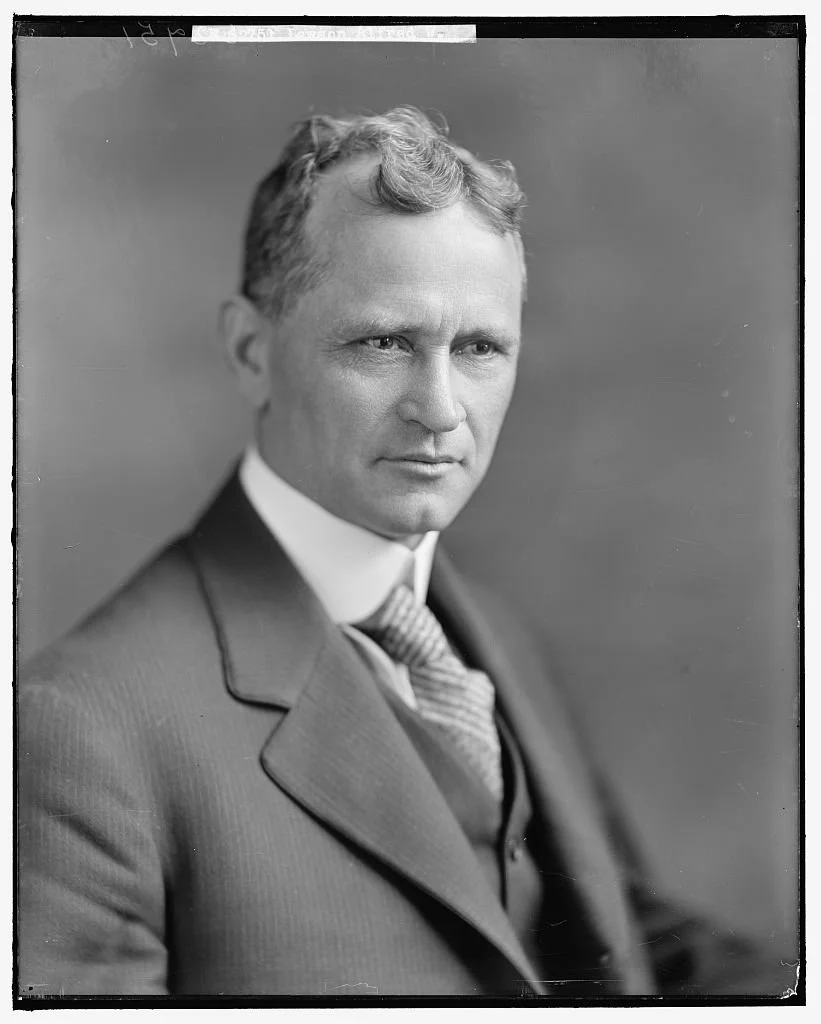
Alfred Lawson in later life. Library of Congress, https://www.loc.gov/pictures/item/2016860569/. Public domain.
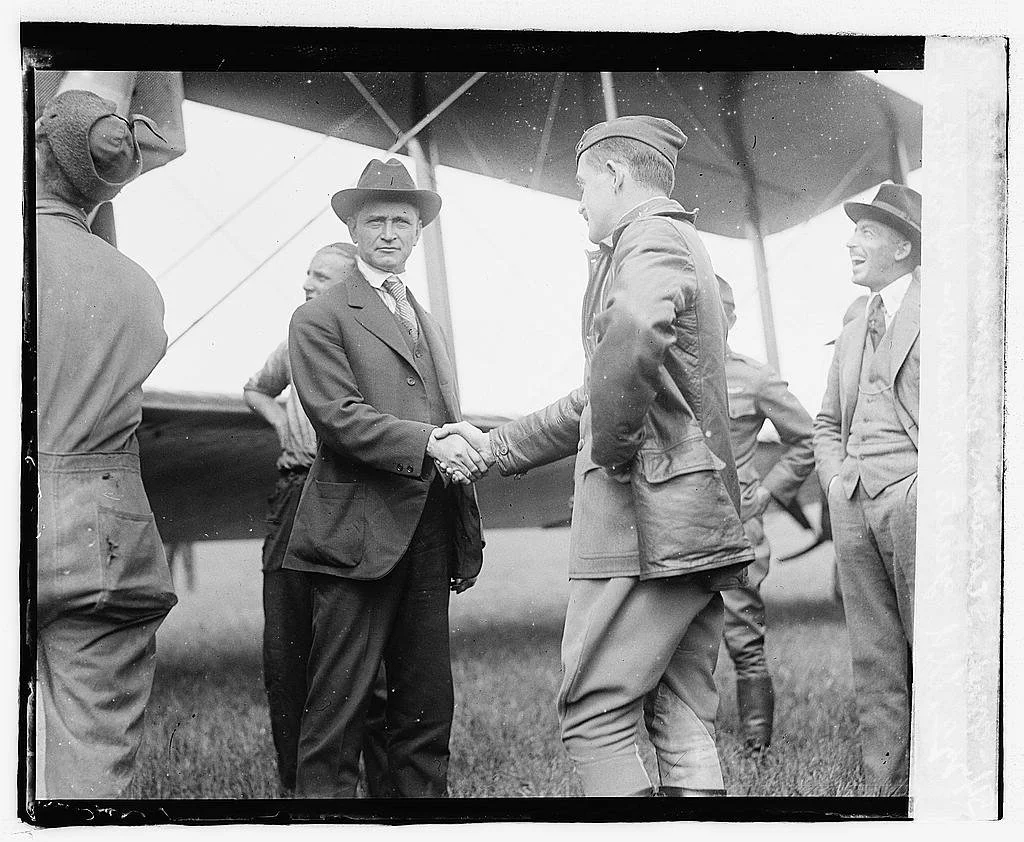
Alfred Lawson after completing a cross-country trial of passenger air services. Library of Congress, https://www.loc.gov/pictures/item/2016819744/. Public domain.
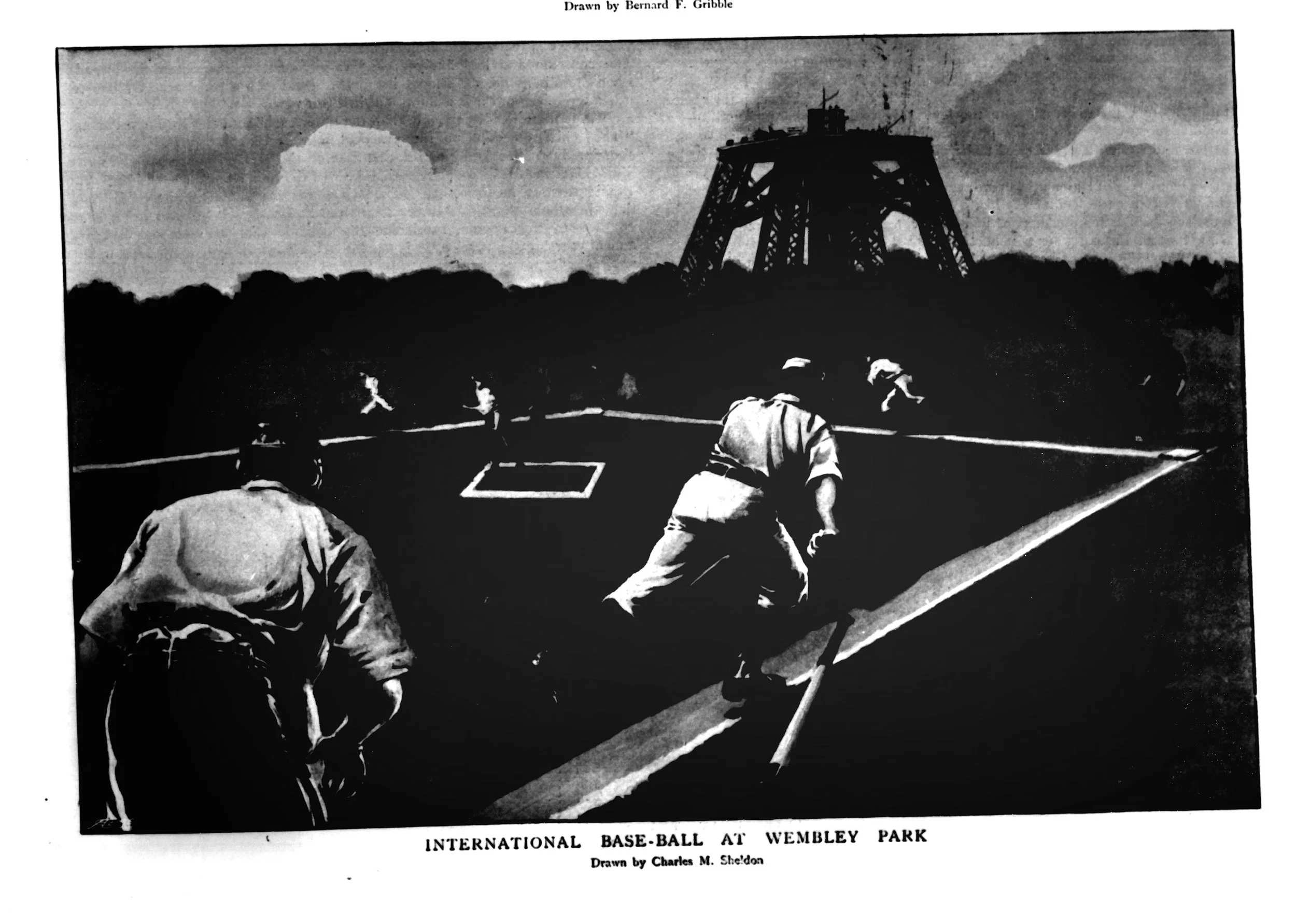
Boston Amateurs at Wembley Park, Black and White Weekly, 21 September 1895, 7. Image created by the British Library Board. No known copyright holder.