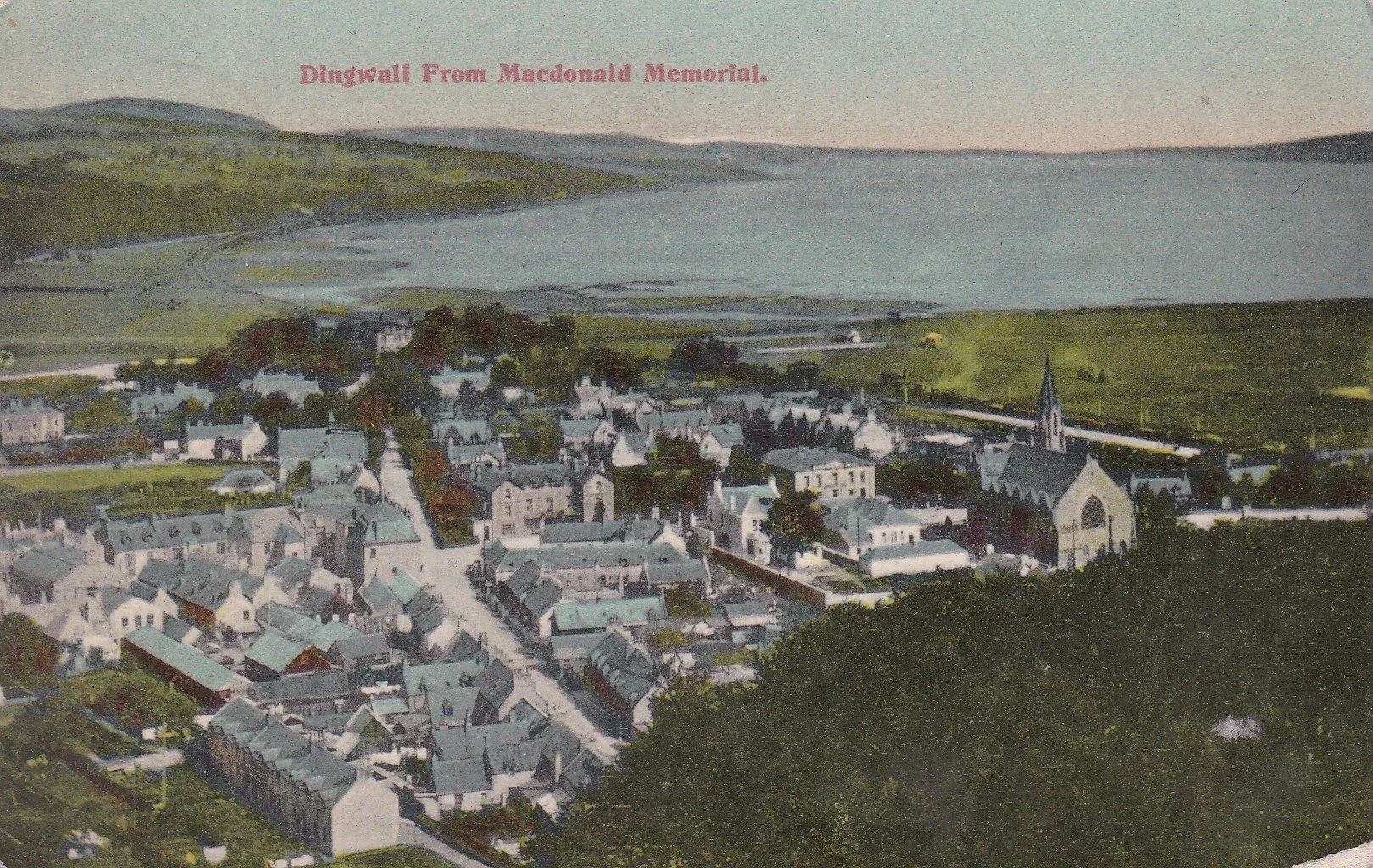
The Dingwall Game
Jamie Barras
DINGWALL—BASE BALL—The friendly match at this game came off in Dingwall on Saturday the 9th inst. A number of spectators assembled to witness the contest between picked nines of the club, headed by the Captain and Lieutenant.[1]
To the best of our current knowledge, the first game of American baseball played in Britain was played in Dingwall, Ross-shire, in the Highlands of Scotland in July 1870. This information was discovered in 2013 in a combined effort by Bruce Allardice, for Project Protoball, and researchers in the UK led by Joe Grey. The former discovered US newspaper reports of the formation of the “Dingwall Base Base Club”; armed with this information, the latter found a newspaper report of the game and established the identities of several of the players, prime among them, Andrew Keith Brotchie (1849–1926), captain, coach, and likely lead pitcher of the Dingwall Base Ball Club.[2]
Brotchie was born in Dingwall but was taken to the US as a baby; after a childhood spent in Boston, Mass., brought to a premature end by the death of his father in 1864, he returned to Dingwall in the autumn of 1867 to work for his maternal uncle and receive from him a business education. This was the catalyst for the formation of the baseball club, and it would be his return to the US in 1871 that would precipitate its dissolution. (See Appendix for Brotchie’s later life.)
My intention here is to build on that early research, to show the connection between the Dingwall Base Ball and Cricket Clubs, and to use that connection as a springboard to speculating on where, in Dingwall, that earliest known game of American baseball on British soil was played. For the purposes of this article, I use the term “American baseball” to refer to the so-called “New York game”, the progenitor of the modern game of “baseball” played under rules that were codified in the New York area in the 1840s.
Dingwall.— On the 27th inst., a numerously attended meeting of men was held in the Burgh Court-room, Mr James Maclennan, sheriff-clerk-depute, in the chair, for the purpose of instituting the American game of "Base Ball,” The following office-bearers were elected namely, president, Mr James Maclennan; captain, Mr A. K. Brotchie; lieutenant, Mr W. W. Jack; secretary, Mr Duncan Macdonald; and treasurer, Mr Robert Mackenzie.[3]
Brotchie’s childhood in the Roxbury district of Boston in the late 1850s and early 1860s placed him at the epicentre of significant changes in the playing of baseball in New England. The early 1850s had been marked by the playing in the area of the “Boston game”, a regional variant of baseball that differed in several key respects from the New York game. However, by the late 1850s, the New York game—on its way to becoming the national game—had made significant inroads. The adoption of the New York game by Union forces in the American Civil War (1861–1865), American baseball’s Big Bang Moment, completed the transition.[4]
A teenage Brotchie would have been well-placed to have watched the likes of the Tri-Mountain, Lowell, and Harvard teams take on visiting teams from New York and Brooklyn on Boston Common. He may also have taken part in the Junior Association championship founded by John A. Lowell in 1866. That part of his story is still to be written. We do have early evidence for his enterprise in the form of an ad that a 16-year-old Brotchie placed in US newspapers in June 1865, offering photographs of Abraham Lincoln and other leaders of the Union for sale through the mail. By this time, his father, James Brotchie, was dead, and all his older siblings were working in a store. The Brotchies were no strangers to hard graft.[5]
Andrew Brotchie travelled—alone; the bulk of the Brotchie family remained in Boston—to Scotland on board the SS Hibernia in October 1867.[6] His arrival would have excited some comment in the small town of Dingwall. His work in his uncle’s bookshop would have made him a visible presence in the community. We can be confident that there would have been many people curious to learn from this young man what life was like in America and about this new game they were playing there, a development of the old summer pastime of base ball.
The Treasurer of the Dingwall Base Ball Club begs to acknowledge with many thanks the receipt of £1. 1s. from Duncan Davidson, Esq. of Tulloch.[7]
The Treasurer of the Dingwall Cricket Club begs to acknowledge receipt of the following subscriptions towards the funds of the club, viz:—Duncan Davidson, Esq. of Tulloch, £2. 2s.[…][8]
The best evidence for the involvement of the Dingwall Cricket Club in the founding of the Dingwall Base Ball Club is in the names of the members and supporters of the Base Ball Club. In terms of supporters, the most important was the local laird, Tulloch of Tulloch, Donald Henry Caithness Reay Davidson (1836–1889). Tulloch was also the patron of the Cricket Club, and as such, he donated cricket equipment to local schools, and, most significantly for our story, allowed the Cricket Club to play some of its matches on the lawn of his seat, Tulloch Castle.[9]
In terms of players, besides Brotchie, the club’s captain, the most significant was Brotchie’s deputy, the club’s lieutenant, William Wesley Jack (1848–1927). Jack was a bank clerk; he was also a member of the Dingwall Cricket Club of some years' standing, and would go on to become one of its leading bowlers.[10] On this latter evidence, we might guess that he pitched for the Base Ball Club, too. He was Andrew Brotchie’s cousin and likely his first ‘disciple’. A newspaper report of that first game of American baseball played on British soil supplies us with a list of more members of the Base Ball Club.
First Nine. A.K. Brotchie. R.J. Gibson. H. Main. D. Maciver. J.M. Forbes. J. Stewart. A. Reid. D. Macdonald. Second Nine. W.W. Jack. W. Nelson. J. Munro. J. Mackay. A. Strachan. W.R. Ross. J. Robertson. H. Maclennan.[11]
The First Nine won the game 51–39 (see gallery below for the full newspaper report). The UK researchers who discovered the newspaper report also identified a number of these players; they are connected by their youth—teenagers for the most part—and their occupations, store clerks (‘shop lads’) and the like. Rather than explore their identities further, for the purposes of this piece, I want to concentrate on the fact that, as with William Jack, we can find a good number of these same names on the books of the Dingwall Cricket Club both before and after the creation of the Base Ball Club.
CRICKET MATCH[…]DINGWALL John Munro, J. Sutherland, L. Munro, A. Robertson, G. Cameron, R. Stevenson, Arthur Joass, A. Gow, J. Robertson, J. Grigor, W. Jack.[12]
CRICKET MATCH[…]Natives. W.W. Jack. W. Nelson. D. Stewart. J. Munro. A.R. McGregor. A. Munro. D. Urquhart. G. Munro.[13]
DINGWALL CLUB. J.W. Stratford. L. Munro. W. Mackenzie. D. Moffat. W. Ferguson. D. Munro. A. Gow. W.H. Begg. J.A. Mackay. P.A. Ross. A. Reid.[14]
CRICKET MATCH[…]ODDS AND ENDS. D. Stewart. William Nelson. D. Wishart. James Reid. Alexander Munro. George Munro. John Munro. Angus Ross. D. Macdonald. William Munro. A. Macdonald. SHOP LADS. A. Strachan. D. Macleay. D. Urquhart. J. Strachan. H. Douglas. A.R. Macgregor. William Macdonald. D. Mackenzie. William Sinclair. H. Gordon. William Allan.[15]
Comparing the rosters of the baseball and cricket teams, while acknowledging that some of these names are common Scottish names, we can find the following in both lists: William Jack, William Nelson, John Munro, Duncan Macdonald, A. Strachan, J. Mackay, J. Robertson, and A. Reid. Although it is perhaps obvious that the first sportsmen in the town to take up this “new” bat-and-ball game would be cricketers, I want to take this connection further and, as stated above, propose that the founding of the Base Ball Club came about as a result of conversations between Andrew Brotchie and these young cricketers, probably with a view initially to recruiting Brotchie into the cricket team.
We may even extend this further and suggest that a large part of that conversation would have come in the form of a debate on the finer points of bowling versus pitching. It must be remembered that overarm bowling had been made legal in cricket just six years earlier (1864), while the introduction of overarm pitching in American baseball was still over a decade in the future (1884).[16] We can imagine then that our supposed debate between Brotchie and the Dingwall cricketers revolved around the relative merits of the two styles.
There is a further, curious, connection between the Dingwall Cricket and Base Ball Clubs, and this is that, in 1870, the year the Base Ball Club was founded, we see no evidence of the Cricket Club playing. There are reports in the local newspapers of its patrons and supporters paying their subscriptions as usual, but no reports of games. This is in stark contrast with the previous year, 1869, and the next year, 1871.[17]
What are we to make of this—did the stalwarts of the Dingwall Cricket Club devote the summer of 1870 to learning baseball? This is a tantalising idea and conjures up all sorts of visions of what might have been if Andrew Brotchie had not returned to America in 1871. Regardless, this adds further support for the argument that, if we are to find where, as the report has it, ‘in Dingwall’ that first baseball game was played, we need look no further than where, in this period, the Dingwall Cricket Club played its matches.
However, before addressing the question of the specific location, it is worth taking a moment to consider Dingwall itself. Much has been made of the fact that the first baseball club in Britain was founded in the ‘wilds’ of Scotland, as if this was something improbable. However, this ignores the fact that up until the Second World War, every summer, old and new English money would decamp en masse for the Highlands of Scotland for sporting holidays (shooting, hunting, and fishing). By the middle of the nineteenth century, the region had a highly developed transport infrastructure and economy devoted to serving this traffic. Dingwall had a direct rail link to Inverness, and in 1870, the same year as the baseball club was founded, the Dingwall and Skye Railway opened, connecting Inverness to the Inner Hebrides via the town. The Prince and Princess of Wales, the future King Edward VII and Queen Alexandra, were amongst its earliest passengers.[18] By the 1870s, Dingwall hosted at least two large hotels, as well as substantial bank buildings, a police station, a prison, a hospital, militia barracks, a courthouse, and a gasworks.[19] Added to this was the presence of local landowners, the lairds, men who not only had the wherewithal to sponsor sports clubs but also the landscaped grounds on which those clubs could play. In short, Dingwall was no more unlikely a place to find a baseball club than any number of small towns in the home counties.
During the play, Tulloch treated the company to a very handsome luncheon, and rode about the field during the match. The day being all that could be desired, and the ground in good order, a very spirited match was played.[20]
The first thing to say in regard to where the Dingwall Cricket Club played its cricket in this period is that, although it had a ground of its own, it played its matches wherever circumstances allowed. A search of newspaper reports cross-checked against the 1876 Ordnance Survey map for Ross-shire and Cromartyshire turns up the locations of four sites in and around Dingwall that were used—although it has to be recognised that this does not represent an exhaustive list, as the location of matches was only infrequently reported. Remarkably, because Dingwall remains a small town, all four sites are still fields today, as can be seen from satellite imagery (see gallery). Below, I present those four sites in order of probability, starting with what is, in my view, the most obvious and, by extension, most likely.
DINGWALL—CRICKET. —We understand that the Dingwall Academy Cricket Club have arranged with the Bell's Cricket Club, Inverness, to play a match on the Dingwall Cricket ground, on Saturday, the 23rd inst.[21]
The Dingwall and Brahan corps had a similar parade on Monday on the Dingwall cricket ground at Pitglassie, when similar movements were gone through.[22]
1. ‘…the Dingwall cricket ground at Pitglassie.’ (57.58836, -4.43028). I have found only one site described as a ‘cricket ground’ in Dingwall in this period, located at Pitglassie Farm, just south of the town itself along the railway line and Station Road. Looking at the 1876 Ordnance Survey map for Ross-shire and Cromartyshire points to this being the field immediately west of the farm buildings. As the ‘official’ cricket ground, this would seem the most likely location of the baseball game; however, it has to be said that there are very few references to cricket matches being played specifically at the ‘cricket ground’ in Dingwall, in this period, and quite a number of reports—see below—naming other locations. This was likely due to the condition of the pitch on the cricket ground, which would have been highly weather-dependent.
DINGWALL—CRICKET Match—The opening match for the season of the Dingwall Cricket Club came off on Saturday last on the lawn before Tulloch Castle, which Tulloch (the patron of the club), with his usual liberality, kindly granted the use of to the club.[23]
2. ‘…the lawn before Tulloch Castle.’ (57.61021, -4.43689). Looking at the grounds of Tulloch Castle on the 1876 Ordnance Survey map for Ross-shire and Cromartyshire points to this being the field immediately north and west of the castle. We have already established that Tulloch of Tulloch was a patron of both the Base Ball Club and the Cricket Club; more than this, we can point to at least two cricket matches being played on his lawn in 1871, the season after the Base Ball Club was founded. Added to this, Tulloch continued to allow his lawns to be used for Dingwall Cricket Club matches for at least the next decade.[24] As a managed green space, the castle lawn would have been much less dependent than the cricket ground on the weather on the days before a match to be playable. Against this location, if the baseball game was played here, one might expect this information to be included in the newspaper report, given the prestige.
CRICKET MATCH. TAIN v. DINGWALL. This match was played at Dingwall on Wednesday last, that being the Tain holiday. The day was a most brilliant one, but oppressively hot for the lively exercise of cricket. The wickets were pitched in a park opposite Fowlis Castle, about 1 1/2 miles from Dingwall.[25]
3. ‘…a park opposite Fowlis Castle.’ (57.64503, -4.36683). ‘Fowlis’ or ‘Foulis’ Castle is north and east of Dingwall (there is a second ‘Fowlis Castle’ near Dundee). Charles Munro of Fowlis/Foulis Castle was another patron of both the Cricket Club and the Base Ball Club, and the lawns of his castle offered the same quality playing field as those of Tulloch Castle.[26] Against this, Fowlis/Foulis Castle is even further from Dingwall than Tulloch Castle, and I could find only one record of a cricket match being played there in 1871. It would also seem likely that, as with Tulloch Castle, if the game were played here, the newspaper report would have mentioned it, given the prestige.
Dingwall—Cricket Match.—A match between eleven of the Dingwall Cricket Club and an equal number of the Clachnacuddin Club, Inverness, was played on Saturday in a field close by the railway station. The weather was favourable, and the game was carried on with much spirit throughout.[27]
4. ‘…a field close by the railway station.’ (57.593653, -4.421232) Inspection of the 1876 Ordnance Survey map for Ross-shire and Cromartyshire shows that this was—and still is—the field to the east of Dingwall Railway Station and the south of Ferry Road. Against this location, I have only seen one report that mentions this field as the location of a cricket match, and that dates from 1865, five years before the baseball game.
It seems to me that the above present us with two strong candidates—the Pitglassie cricket ground and the lawns of Tulloch Castle—one medium-strength candidate—the lawns of Fowlis/Foulis Castle—and one outsider—the field close by the railway station. Although the idea that the first American baseball game played in Britain might have been played in the shadow of a Scottish castle, with the local laird looking on from atop his horse, has its appeal, I think we have to acknowledge that the farmer’s field is the slightly more likely candidate. But the image is no less romantic for that. It is, after all, the stuff of movies.[28]
A baseball match was watched with zest by many who had heard of but not seen the game. Curiously, however, one of the spectators of the game was the secretary of Dingwall Baseball Club, which existed in the 60's, and boasted being the only baseball club in Britain. A Dingwallian returned from America was the originator of the old club.[29]
The demise of the Dingwall Base Ball Club was not the end of the story of American baseball in Dingwall, although it would be nearly 50 years before the game made a return. This was in World War I. The Highlands of Scotland played host to units of the Canadian Army, principally the Canadian Forestry Corps (CFC), during the war, and Dingwall was just one of a number of places at which the Canadians put on exhibitions of baseball. At least one of the old Dingwall Base Ball Club was still around to see the game played in Dingwall in August 1918, and the fete at which the game was played was opened by Sir Hector Munro, master of Foulis, son of Sir Charles Munro, supporter of both the Base Ball and Cricket clubs.[30]
The Canadians would be back in World War II, and, once again, Dingwall would find itself hosting games of baseball and softball, including a semi-final of the CFC softball championship, which was won by the 5th Company team managed by Cpl. Joe Greaves of Port Arthur, Ontario. But that, as they say, is a story for another day.[31]
Jamie Barras, January 2026.
Back to Diamond Lives
Appendix
On his return to the US in 1871, Andrew Keith Brotchie set up home in Boston once more, working as a tea trader and then a grocer. In 1875, he married New Brunswick native, Elizabeth Mudge. The two moved to Weston, Mass., and would go on to have four children together. Alas, Andrew Keith Brotchie Jr (1881–1882) died while still an infant, but daughters, Ella McKenzie Brotchie (1876–1966) and Hannah Mudge Brotchie (1884–1919), and a second son, Everett Andrew Brotchie (1889–1952), survived to adulthood. Both Ella and Hannah became teachers. Ella never married. Hannah married an accountant named Frederick Brown in 1912, but tragically died, aged just 35, in 1919; the couple had no children. Everett Brotchie attended Harvard (Class of 1911), graduating Summa Cum Laude, and then went into the produce business like his father. He served in the US Army Motor Transport Corps in World War One, seeing active service in France. He married Louise Drew Perry on his return from France; alas, there were no children. Andrew Keith Brotchie was naturalised American in 1895. He died in Weston, Mass., in 1926, aged 76.[32]
Notes
[1] ‘Dingwall—Base Ball’, Inverness Advertiser and Ross-shire Chronicle, 19 July 1870.
[2] https://protoball.org/In_Dingwall_in_1870, accessed 6 January 2026; Joe Grey, ‘New findings upturn previous beliefs on baseball’s intro to the UK’, https://baseballgb.co.uk/?p=16856, accessed 6 January 2026. For a possible earlier game played 7 years earlier but just 10 miles away, see: https://www.ishilearn.com/diamond-lives-a-species-of-cricket, accessed 4 March 2026.
[3] Dingwall’, Inverness Courier, 5 May 1870.
[4] John Thorn, ‘Early Baseball in Boston’, https://ourgame.mlblogs.com/early-baseball-in-boston-d86107fb8560?gi=0d825261fd65, accessed 6 January 2026.
[5] Advertisement, Willamantic Journal, 29 June 1865. Death of father, James Brotchie. https://www.findagrave.com/memorial/194739891/james-brotchie, accessed 6 January 2026. Occupation of siblings: census return for Anne Brotchie, Boston, Ward 8, 1870 US Census, ancestry.co.uk, Ancestry.com Inc. (Operations), accessed 5 January 2026.
[6] ‘A K Brotchie’ is on the list of passengers of the SS Hibernia bound for Glasgow and Liverpool: ‘Glasgow and Liverpool: Steamship Hibernia’, New York Daily Herald, 13 October 1867. Brotchie family remaining in Boston: see Note 6 above, final reference. In 1868, the SS Hibernia would founder in a storm with the loss of 88 lives: https://www.wrecksite.eu/wreck.aspx?146195, accessed 9 January 2026.
[7] ‘The treasurer…’, Inverness Courier, 4 August 1870.
[8] ‘The treasurer…’, Inverness Courier, 3 September 1874.
[9] Tulloch: https://www.thepeerage.com/p4353.htm, accessed 8 January 2026. Gift of cricket equipment: ‘Dingwall’, Inverness Courier, 10 March 1870. Cricket match at Tulloch Castle: ‘Cricket: The Dingwall Cricket Club’, Saturday Inverness Advertiser, 16 May 1874; see also below.
[10] ‘W. Jack’ in the 1866 Dingwall cricket team: ‘Cricket Match at Dingwall’, Saturday Inverness Advertiser, 23 June 1866. W.W. Jack as bowler: ‘Cricket Match’, Inverness Advertiser and Ross-shire Chronicle, 10 September 1872.
[11] See Note 1 above.
[12] ‘Cricket Match—Golspie v. Dingwall’, John O’ Groat Journal, 29 July 1869.
[13] See Note 11 above, second reference.
[14] ‘Cricket Match: Nain v. Dingwall’, Saturday Inverness Advertiser, 9 September 1871.
[15] ‘Cricket Match’, Inverness Advertiser and Ross-shire Chronicle, 30 August 1872.
[16] Daniel Gallan, https://www.thecricketmonthly.com/story/1165430/let-s-try-this-another-way. Larry DeFillipo, https://sabr.org/gamesproj/game/june-8-1885-presto-change-cannonball-morris-dominates-after-overhand-pitching-is-suddenly-legalized/, accessed 6 January 2026.
[17] Subscriptions paid in 1870 and acknowledged: ‘Local and District News’, Saturday Inverness Advertiser, 14 May 1870; ‘Local and District News’, Inverness Advertiser and Ross-shire Chronicle, 15 April 1870. Games played 1869 and 1871, see Notes 13 and 15 above.
[18] R.W. Butler, ‘Evolution of tourism in the Scottish highlands’, Annals of Tourism Research, 1985, 12, Issue 3, 371-391, https://doi.org/10.1016/0160-7383(85)90005-2; ‘The Dingwall and Skye Railway’, John o' Groat Journal, 15 September 1870; ‘The Visit of the Prince and Princess of Wales to Dunrobin’, Cheltenham Looker-On, 1 October 1870.
[19] These facilities can be seen on the 1876 Ordnance Survey map of Ross-shire and Cromartyshire, Ross-shire LXXXVIII.3 (Dingwall), accessed here: https://maps.nls.uk/os/, accessed 8 January 2026.
[20] ‘Dingwall—Cricket Match’, Inverness Advertiser and Ross-shire Chronicle, 2 June 1871.
[21] ‘Dingwall—Cricket’, Inverness Advertiser and Ross-shire Chronicle, 19 May 1874.
[22] ‘Ross-Shire Rifle Volunteers’, Inverness Courier, 29 July 1869.
[23] See Note 21 above.
[24] See Note 21 above and ‘Cricket Matches’, Inverness Advertiser and Ross-shire Chronicle, 19 September 1871; ‘Cricket Match’, Invergordon Times and General Advertiser, 18 June 1879.
[25] ‘Cricket Match’, Northern Ensign and Weekly Gazette, 17 August 1871.
[26] Charles Munro of Foulis, patron of the Cricket Club: ‘The treasurer…’, Saturday Inverness Advertiser, 14 May 1870; of the Base Ball Club: ‘The treasurer…’, Inverness Courier, 14 June 1870.
[27] ‘Dingwall—Cricket Match’, Inverness Courier, 28 September 1865.
[28] https://www.imdb.com/title/tt0097351, accessed 8 January 2026.
[29] 'Fete and Sports at Dingwall', Northern Chronicle and General Advertiser for the North of Scotland, 21 August 1918.
[30] See Note 29 above.
[31] ‘Fire Brigade Club’s Efforts’, North Star and Farmer’s Chronicle, 5 September 1942.
[32] Much of this information has been assembled by a descendant of Andrew Keith Brotchie: https://www.familysearch.org/en/tree/person/details/9HQN-3Q7, accessed 9 January 2026. To this, we can add the following. Death of Ella Brotchie: Massachusetts, U.S., Death Index, 1901-1980. Everett Brotchie’s military service: U.S., Veterans Administration Master Index, 1917-1940. Everett Brotchie at Harvard: Boston, Massachusetts, 1913 Harvard University Alumni Directory. ancestry.co.uk. Ancestry.com Inc. (Operations), accessed 9 January 2026.
Dingwall, early 20th Century. Postcard, author's own collection.
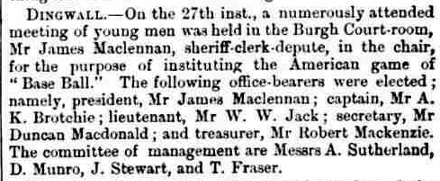
The formation of the Dingwall Base Ball Club, April 1870, Inverness Courier, 5 May 1870. Image created by the British Library Board. No known copyright holder.
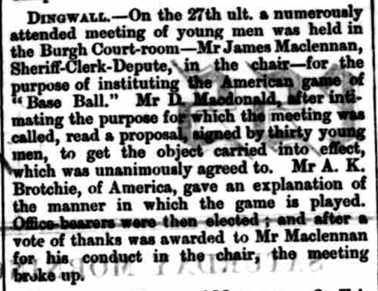
The formation of the Dingwall Base Ball Club, April 1870, Saturday Inverness Advertiser, 7 May 1870. Image created by the British Library Board. No known copyright holder.
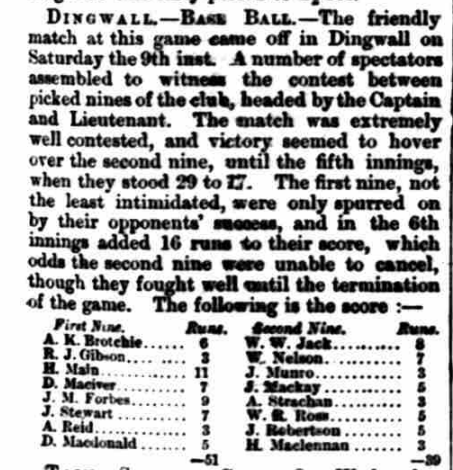
The earliest known game of American baseball played on British soil. Inverness Advertiser, 19 July 1870. Image created by the British Library Board. No known copyright holder.
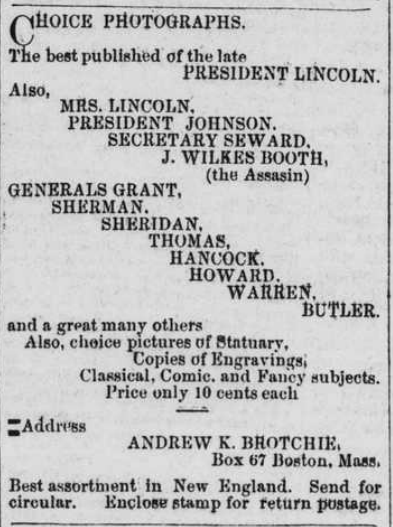
A teenage Andrew K. Brotchie showing some Yankee enterprise. Willimantic Journal, 29 June 1865. Image created by the Library of Congress. Public domain.
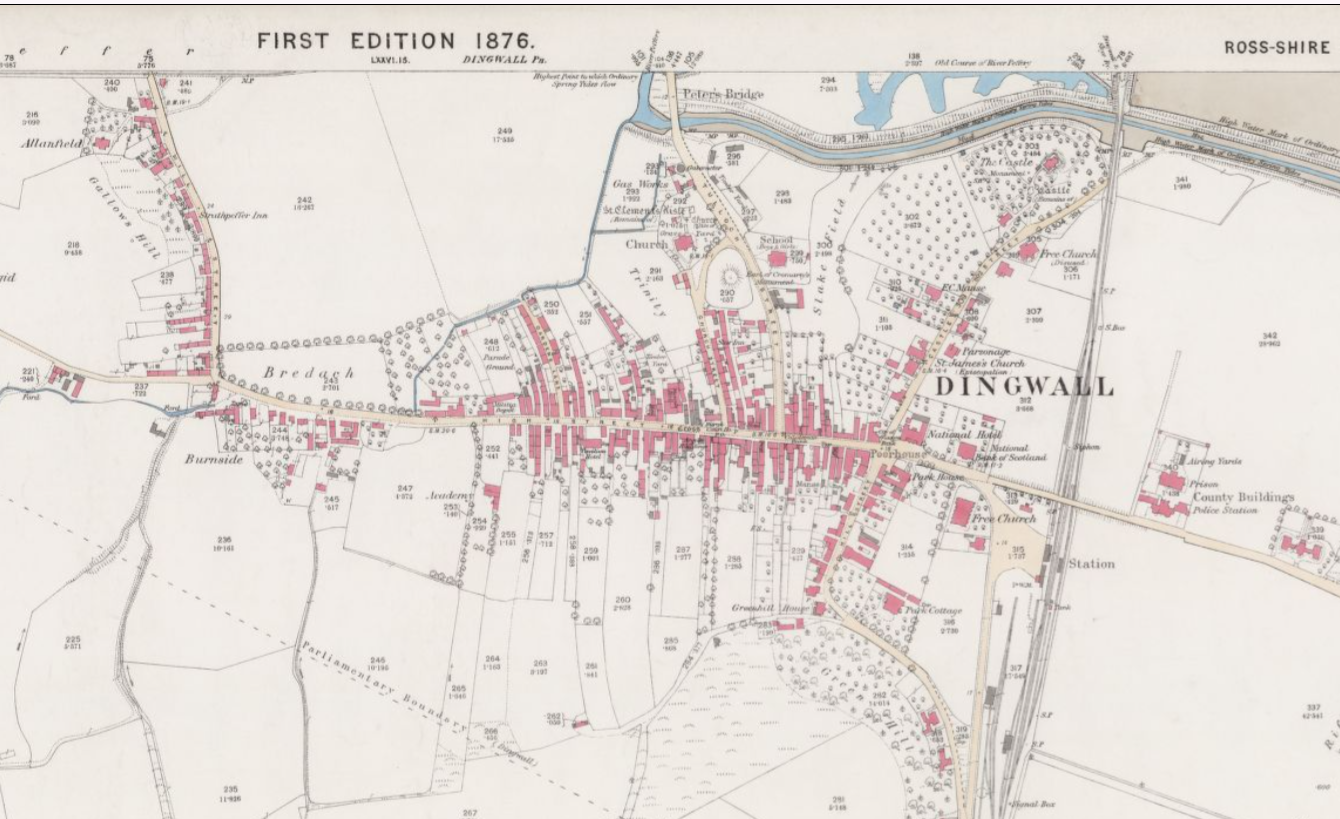
1876 Ordnance Survey Map of Dingwall. National Library of Scotland.
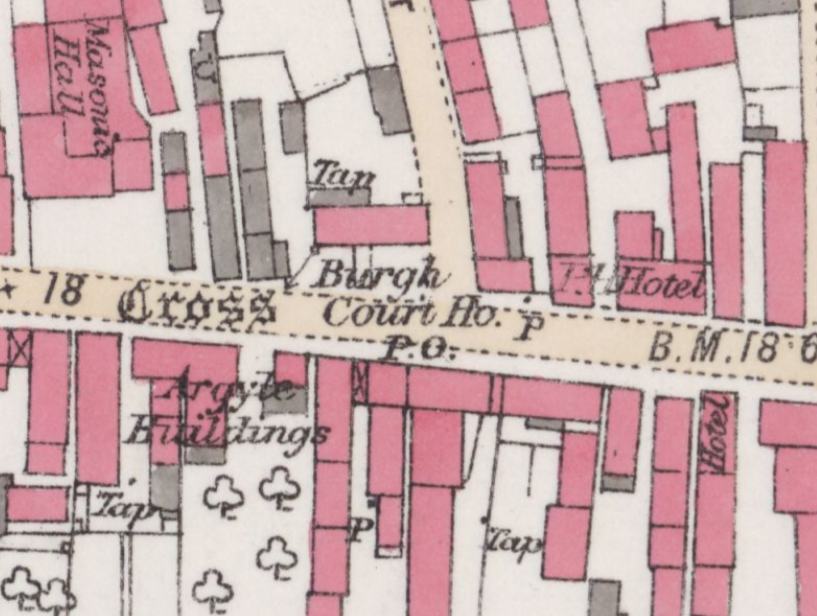
The Burgh (County) Court House, Dingwall, location of the meeting to decide the formation of the Dingwall Base Ball Club. 1876 Ordnance Survey Map of Dingwall. National Library of Scotland. This site is now occupied by the Dingwall Museum: https://www.dingwallmuseum.info/
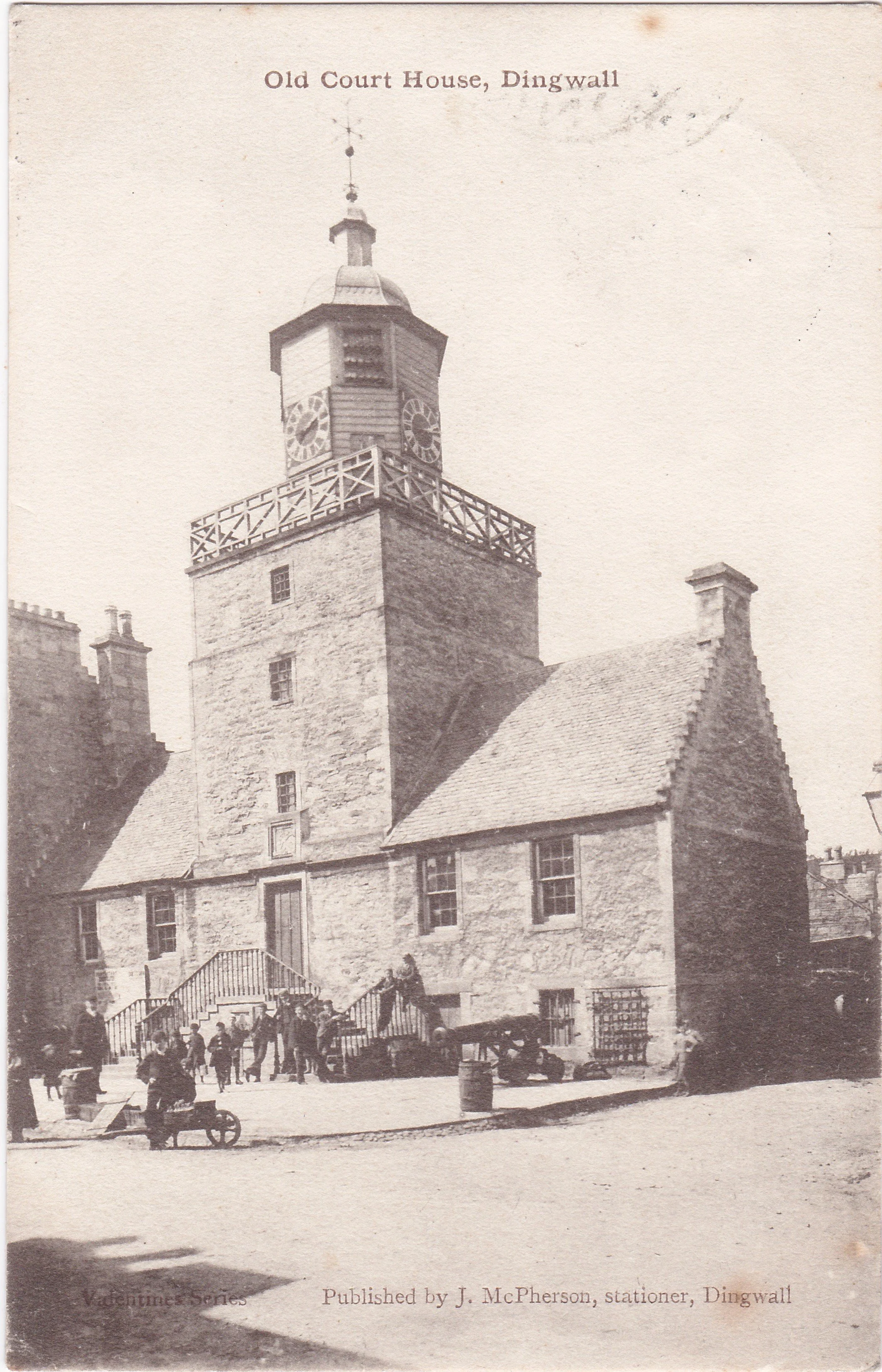
Burgh Court House, where the Dingwall Base Ball Club was formed on 27 April 1870. Postcard, author's own collection.
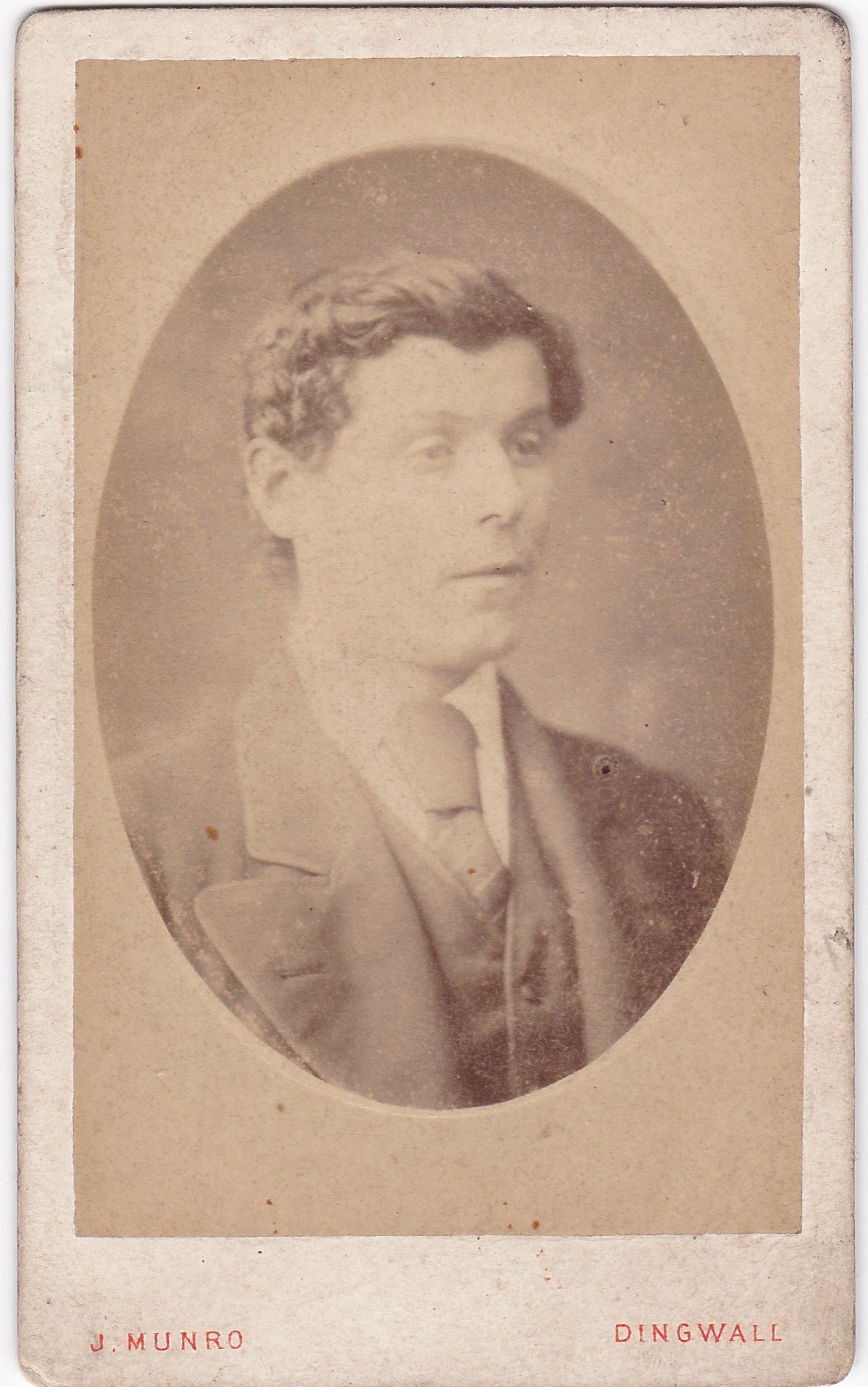
Young men of the town. Studio portrait of a Dingwall resident, c. 1890, cabinet card, photographer John Munro. Author's own collection.
Cabinet card c. 1890, photographer John Munro, Dingwall. Author's own collection.
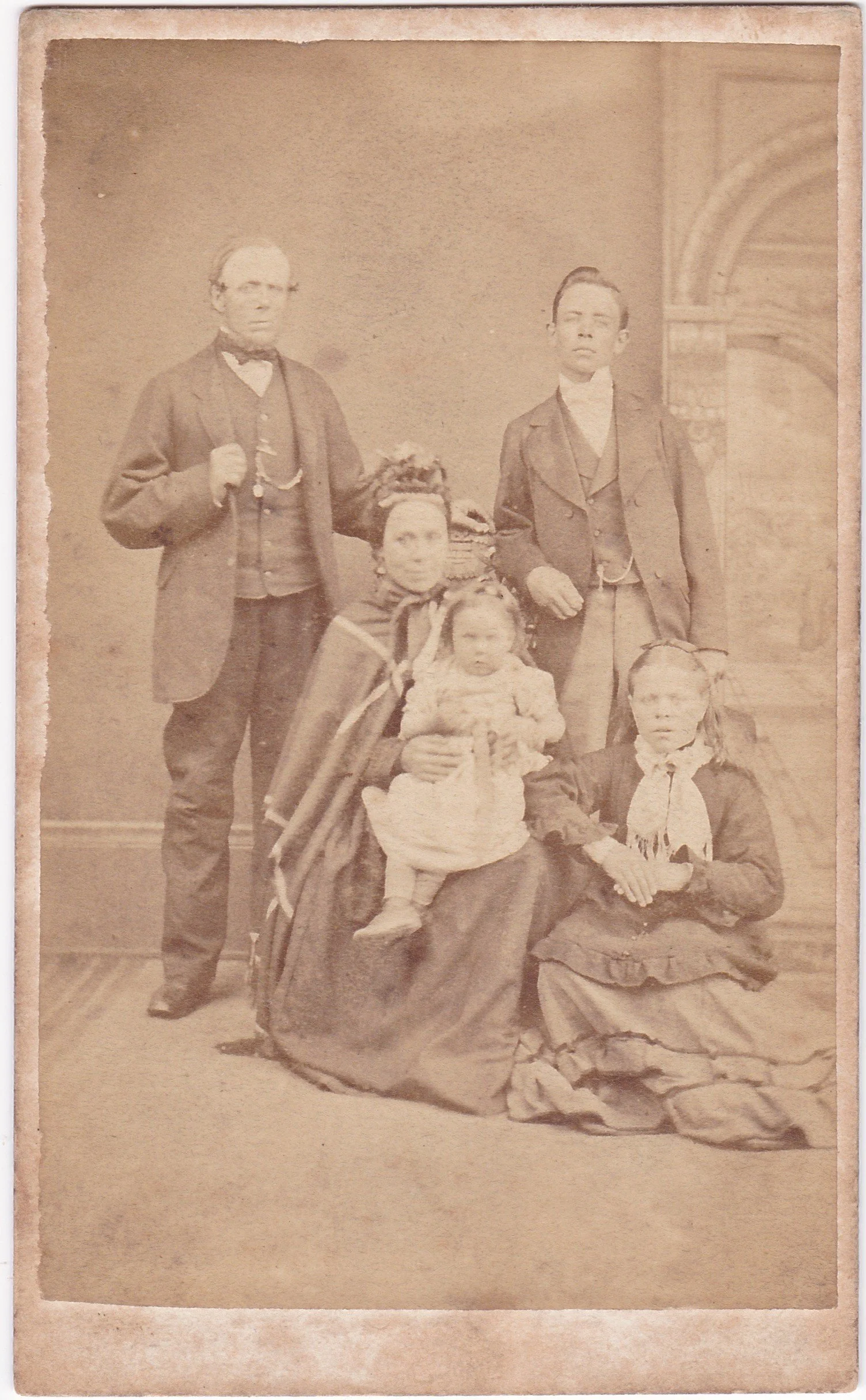
"Shop lads". Studio portrait of a Dingwall family c. 1870, cabinet card, photographer John Munro. Author's own collection.
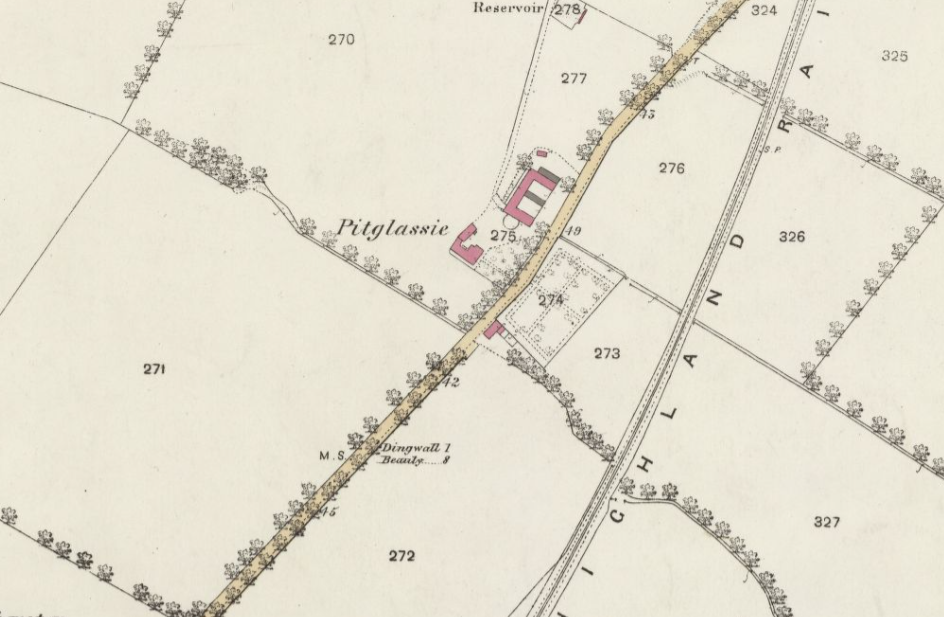
Site 1: the Dingwall Cricket Club ground at Pitglassie Farm. 1876 Ordnance Survey Map of Dingwall. National Library of Scotland.
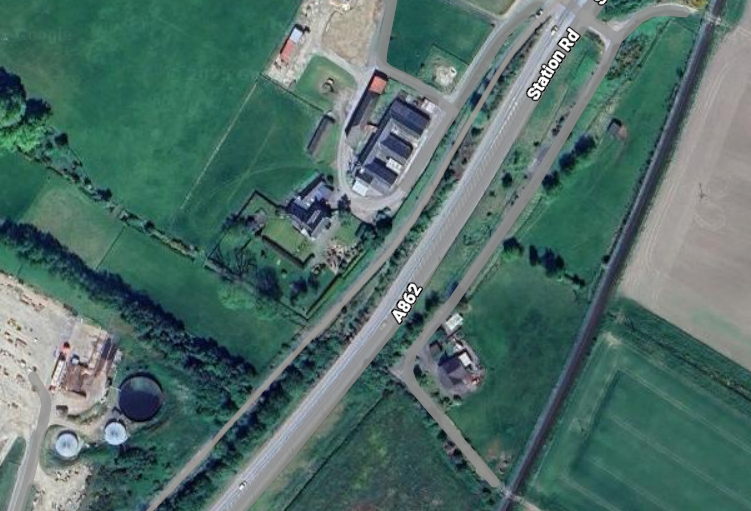
Site 1: the Dingwall Cricket Club ground at Pitglassie Farm. Google Maps.
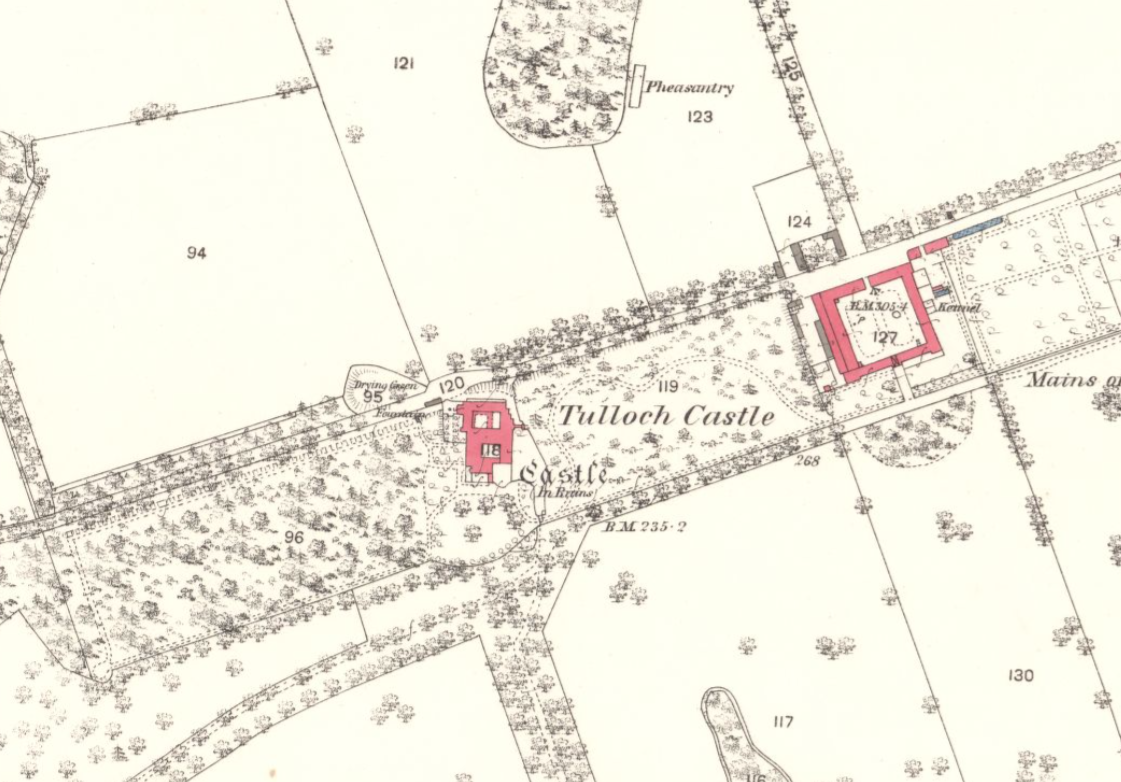
Site 2: the lawns of Tulloch Castle. 1876 Ordnance Survey Map of Dingwall. National Library of Scotland
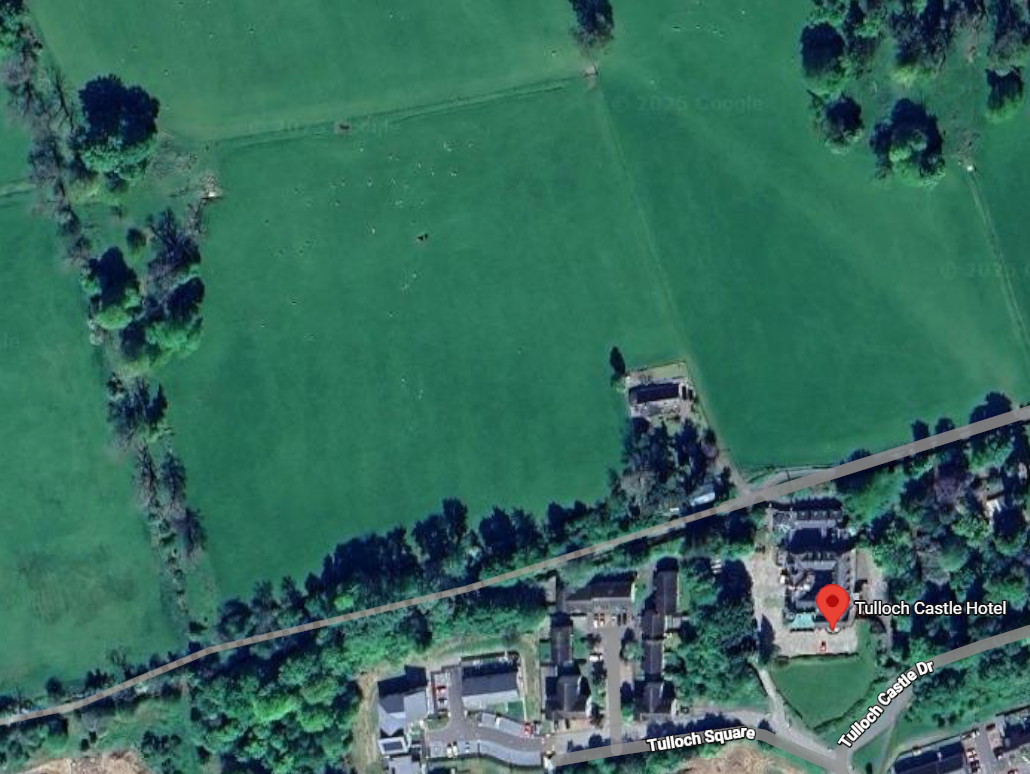
Site 2: the lawns of Tulloch Castle. Google Maps.
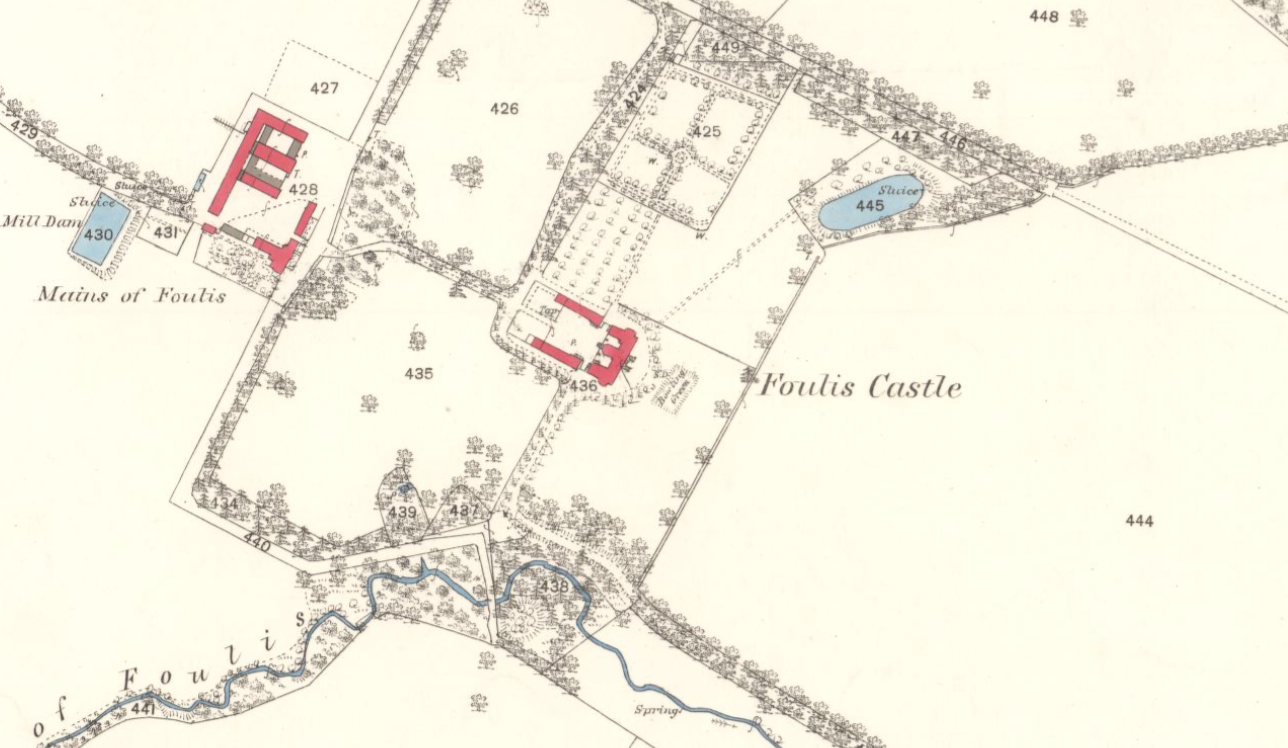
Site 3: the lawns of Foulis Castle. 1876 Ordnance Survey Map of Dingwall. National Library of Scotland
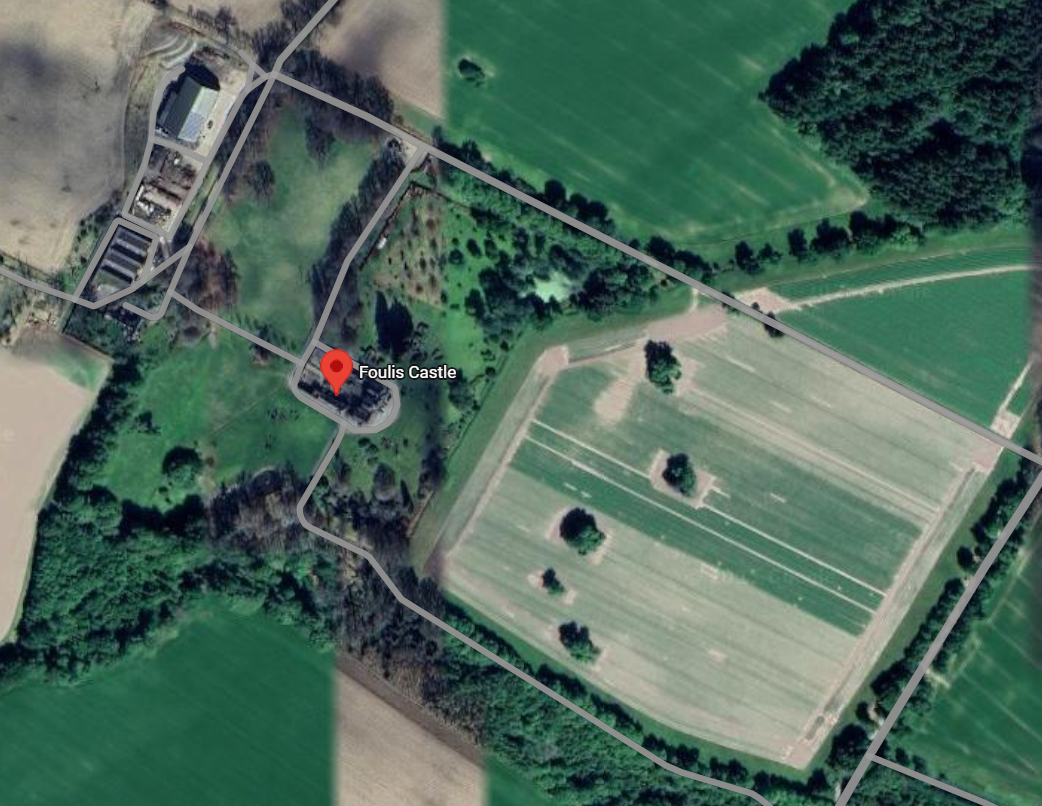
Site 3: the lawns of Foulis Castle. Google Maps.
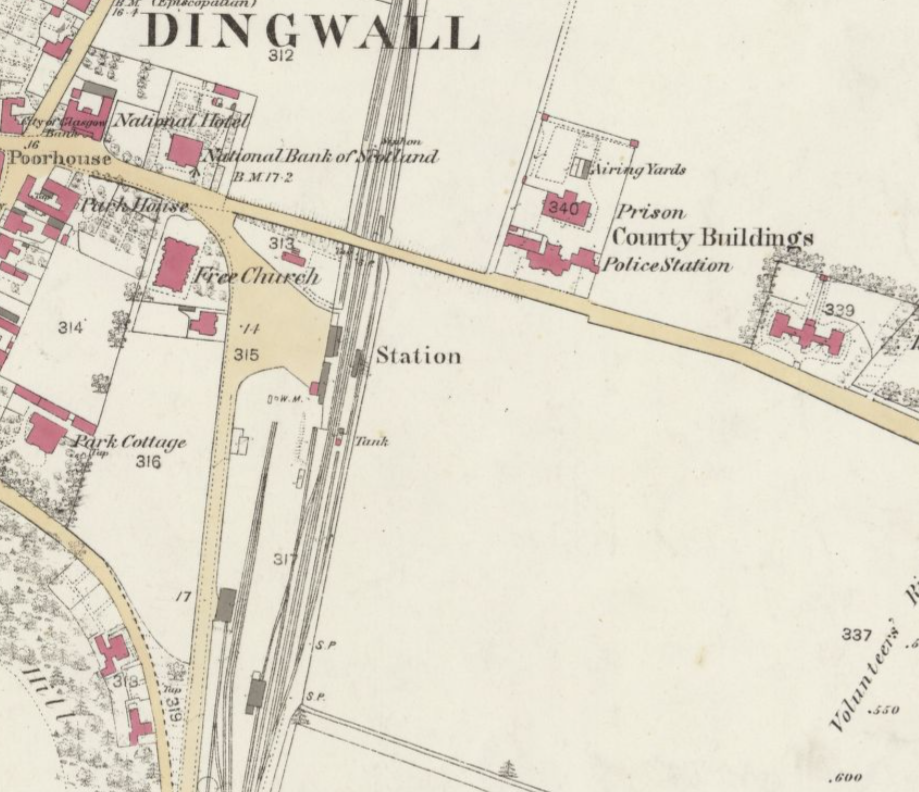
Site 4: A field close by the Railway Station. 1876 Ordnance Survey Map of Dingwall. National Library of Scotland
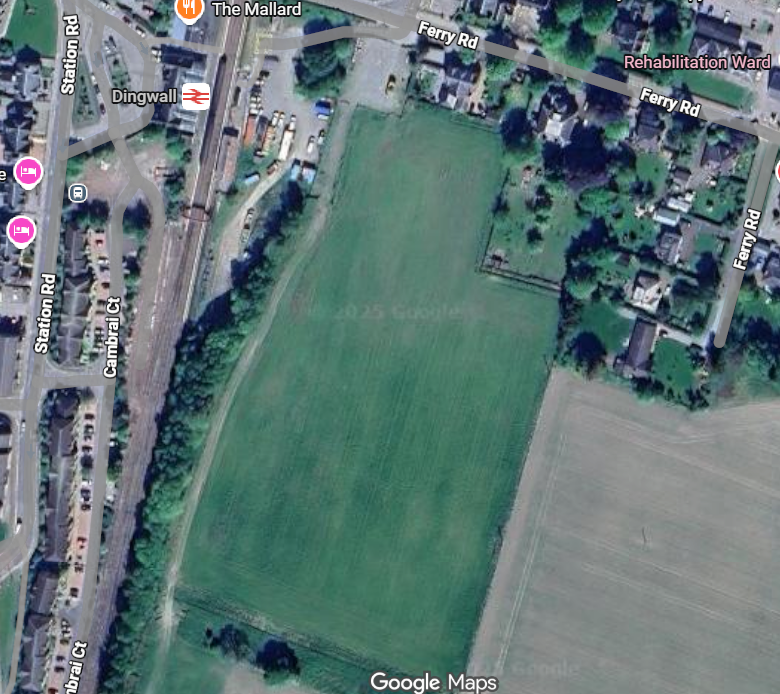
Site 4: A field close by the Railway Station. Google Maps.