A Kind of Bumblepuppy.
Jamie Barras.
The “invasion” of our suburbs by the American and Canadian soldiers has brought to the home of English baseball that wonderful variant of the game known here as American baseball. Americans, however, declare that their code is the “real thing,” and that the English system is a kind of “bumblepuppy,” unworthy of notice.[1]
In May 1918, American baseball came back to Liverpool. Each of its earlier visits (see Appendix) had been important to the story of how the base-running bat-and-ball game known as “rounders” had evolved into the sport known as “English baseball”.[2] The American game’s 1918 return would again impact its English cousin, although the effects would not be felt for a generation. There would be one further difference with this visit. By the second decade of the twentieth century, two generations of Liverpudlians had grown up watching and playing the English version of the game. The 1918 Liverpool crowds represented the most knowledgeable body of spectators that the American game had yet encountered in England. They would sometimes be harsh critics, but they also knew enough about this style of bat-and-ball game to single out individual players for praise, leaving us a unique record.
LIVERPOOL SOLDIERS TURN TO BASEBALL. In consideration of Tommy's sport when he gets to the front, one has always to remember that the baggage must be kept to the lowest possible weight, and his sport must pla[y]ed in small areas. Therefore, sirs, baseball is essentially " THE " game for soldiers. It is a game that will suit him, because it is easily equipped, does not take up much room, and played on any sort of ground, pitches being possible on uneven turf, whereas cricket, for instance, must be played on reasonably good turf, unless injuries to players are to be numerous.[3]
Baseball in Liverpool had had a good war. (“Baseball”, without a modifier, is, of course, how the Liverpool players referred to their version of the game.) Critically, unlike cricket, baseball’s only serious rival locally as a summer team sport, baseball’s playing fields did not require a level of care that was an unaffordable luxury in wartime; nor did games keep essential workers from their jobs for several days. County cricket was suspended for the duration. Baseball played on.[4]
The snappy gameplay and lack of a need for a carefully maintained playing field, coupled with little beyond a bat and ball being needed in the way of equipment, factored into another bright spot in baseball’s war: its adoption by soldiers at the front. Soldiers of Liverpool regiments wrote home requesting equipment to be sent to them in France; Liverpool sporting goods manufacturers were happy to comply. The same phenomenon was observed in the game’s second home, South Wales. In this, English baseball was unconsciously echoing the story of its American cousin, which had seen an explosive growth in popularity during the American Civil War for much the same reasons.[5]
(As an aside, a game that mixed “baseball and rounders” was played in at least one internment camp in Germany, at Ruhleben, with one of the teams captained by footballing great Steve Bloomer, who had played American baseball in the 1890s for the Derby club. Bloomer was one of a number of English football players based in prewar Germany who were interned at the start of the war. Another of the baseball/rounders teams at Ruhleben was formed of merchant seamen of African/African-Caribbean heritage.[6])
Teams featuring soldiers also became a feature of the game in Liverpool itself. These included both Liverpool baseball players home on leave, turning out for their old clubs, and regimental teams. There was, of course, a melancholy side to the story of English baseball in the First World War. On 22 May 1915, the Liverpool baseball club took on a side from the “Liverpool Pals” (the King’s (Liverpool) Regiment) at the Stanley Athletic Ground. Every name on the Pals’ team list would feature on lists of soldiers killed in action by war’s end. Although in some cases we cannot be sure if the dead were the players of the 22 May game or a relative, even those latter cases highlight the extent to which death touched almost every family in Liverpool in the First World War.[7]
There would be deaths in battle among the baseball community itself, prominent among them Jack Brayton of the Everton Baseball Club and Alf Moore of the Northern. Both men had been among the many Liverpool baseball players who combined playing baseball in the summer with playing association football in the winter.[8]
Baseball, far as Liverpool is concerned, will be kept on, because most of its players are men engaged on war munitions. There can be no doubt that the sport-interest of the city during this summer will be large and keen[...][9]
On the civilian side, the baseball scene could rely on essential workers for players and supporters. As with other sports, dock and munitions workers were especially important in this regard. The story of the First World War women’s football leagues, which owed much to women munitions workers, is now well-known.[10] Much less well-known is the story of the women’s rounders scene in Liverpool in the First World War. (It would not be until the 1930s that women in the city would play under English baseball rules, several years after the women’s game began in South Wales.) From around 1910, the city hosted the “Liverpool Ladies’ Rounders League”, which drew its teams largely from factory and shop workers. The 1912 season, for example, consisted of six teams: Ogden’s, New Liverpool Rubber, Johnson’s, Shinio, Crawford’s, and Hignett’s, all works teams of one form or another. (‘Shinio’ was a brand of metal polish manufactured by Reckitt and Sons, the company behind the much more famous ‘Brasso’.) Rounders continued into the First World War, with the league replaced by a knock-out competition, the “Lancashire Ladies’ Rounders Tournament”. Works teams in the war years included Bibby’s and the old staple, Crawford’s.[11]
The availability of “…munition workers [and] a sprinkling of old hands and the boys on leave from the colours” meant that the English Baseball Association could run a full programme of men’s leagues and knockout competitions all through the war, albeit with a reduced number of teams.[12] This was in line with the continuation of association football in the city. After controversially continuing with the 1914/15 season, the Football Association suspended the leagues for the rest of the war, but the game continued in the form of regional competitions. The two big Liverpool clubs, Liverpool FC and Everton FC, played in the “Lancashire Section”. As before the war, the two clubs also contributed players to the local baseball scene, most notably future Liverpool FC captain, Donald McKinlay (1891–1959).[13]
In England, the game of baseball never appealed to the public fancy, as recently there were only about half a dozen clubs known to exist, those being found in the Midlands; but there are signs that America’s national game may become popular in this country. Perhaps the many Canadians in our midst, with whom baseball is popular, or the entry of the United States into the war may have something to do with it.[14]
The surprising thing about baseball in Liverpool in the First World War is that, despite Canadian troops passing through the port from 1914 onwards, there is no evidence of the American game being played in the city until the arrival of large numbers of American troops in the last year of the war. This stands in stark contrast with the situation in the South East of England, where Canadian forces operated military and hospital leagues from 1915 onwards.[15]
That is not to say that there were no scratch games played by the transiting Canadian troops, of course; just that there is no evidence of games played in front of a Liverpool crowd. It is possible that the Liverpool baseball community hoped to play against its North American cousins, as the idea of “international baseball matches” was floated as a fundraising activity in the summer of 1917. However, this may have been a reference to a resumption of the England–Wales baseball internationals played under the English code—an England–Wales rugby international featuring military teams had been played at Annfield the previous summer, a possible source of inspiration.[16]
So, it was not until the final summer of the war that American baseball made its presence known once more in the city.
U.S. BASEBALL PLAYERS TO GIVE AN EXHIBITION AT GOODISON PARK. One result of the American invasion of Liverpool is the arrangement of a baseball match to be played at Goodison Park tomorrow week for the Lord Mayor's Million Shilling Fund. The cream of the American and Canadian teams happen to be located in England just now, and arrangements have been made for a particularly strong pair of sides to contest on the local football ground. The international is styled U.S.A. v. Canada, and the game will be the first of its kind played in this city by other than local players.[17]
The game arranged for 25 May 1918 was, of course, not the “first of its kind played in this city by other than local players”—touring US teams had played in the city in both 1874 and 1889—but it was the first time that Liverpool crowds familiar with this style of base-running bat-and-ball game got to see it played the American way. The game was arranged by Everton FC chairman William R. Clayton (1862–1941). One of Clayton’s predecessors, George Mahon, had been involved in the 1894 effort to bring American baseball to Liverpool, and knock-out championship finals under the English code were sometimes played at Goodison Park, too.[18]
In the event, the Canadian team had to drop out, and the game was played between US Army and Navy teams, resulting in a 3–2 victory for the US Army team. The attendance was reported as 7000, and £251 was raised for the Prisoner of War Fund. The game received an extensive write-up in the Liverpool Echo’s Bee’s Sports Notes column, a report that was likely the work of the Bee’s English baseball correspondent, “Mr. Fitzgerald”. The report included a box score and team rosters.[19]
Armv: Ribble (catcher), Muschletz (pitcher), Keene (first base), Caputa (second base), Benton (third base), Moye (short stop), Tillett (right field), Kelly (centre), Henninger (left field). Navy: Day (catcher), Cohn (pitcher), M’Ilvaney (first base), Henson (second base), Wagge (third base), Hastie (short stop), Nix (right field), Shanahan (centre), Lennon (left field).[20]
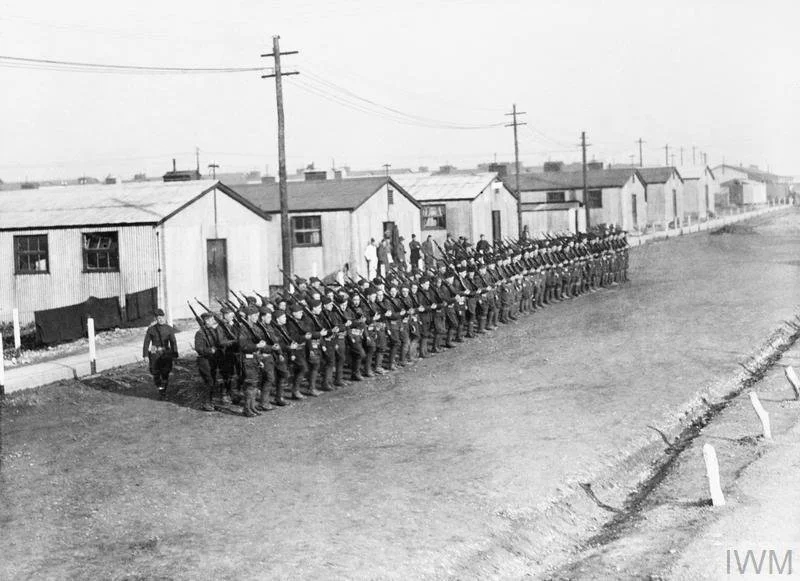
For reasons I will outline below, we can suppose that the Navy team probably belonged to one of the U.S. Navy destroyers on patrol duty in the Irish Sea, although I do not know which vessel. The Army team we can be more sure about, as it was to feature in many of the games in the Liverpool area that summer. It belonged to the 162d Infantry Regiment of the 41st Infantry Division. The 162d was formed in 1917 by the merger of two National Guard units, the 3d Infantry Regiment of the Oregon National Guard and elements of the 3d Infantry Regiment of the District of Columbia National Guard. In common with the rest of the 41st Infantry Division, it did not see frontline service in World War One, being kept in England as a source of replacement troops for frontline units instead. This unusually prolonged presence in England is why it was able to participate so frequently in baseball games in Liverpool.[21]
The Liverpool Echo columnist was the first of several Liverpool baseball old hands to single out the 162d nine’s battery for praise.
Muschletz, the Army pitcher, contrived to get much play on the ball, and on one occasion, he screwed round and volleyed first base, from which Wagge, in an unguarded moment, had edged, and that player was instantly trapped by Keene.[22]
This was followed in June by a knowledgeable correspondent, “Spion Kopite”, responding to an incident that I will detail below, writing in a letter to the Echo:
Personally, I have noted a few of the exponents in the Army side now with us, and any that includes Muschletz as pitcher, Ribble as catcher, Moye, and one or two others unknown by name—will certainly draw myself and friends as spectators. The first two mentioned are equivalent to, say, Fleetwood and Clennell, or Longworth and McKinlay, of our elevens.[23]
Reuben Chapin “Rube” Muschlitz (1896–1961) was one of the three brothers who were staples of the Washington, D.C., amateur baseball scene. Rube was serving as an NCO in Company F of the 3d Infantry Regiment of the District of Columbia National Guard when, in 1917, it merged with the 3d Oregon to form the 162d Infantry Regiment. He would end the war a lieutenant. Postwar, he would return to his job in the U.S. Mint and continue with his National Guard career, rising through the ranks of both. He would also continue playing baseball, including in a team that was managed by one of his brothers, Alfred L. Muschlitz, and featured another of his brothers, Roland Muschlitz. We can identify two more of the 25 May U.S. Army team as Muschlitz’s comrades in the former Company F, 3d DC: John H. Moye(1897–?) and William Irving Tillet (1896–1974). There is even tentative evidence that Muschlitz and Moye continued playing baseball together after the war back in DC.[24]
James Robert “Jimmy” Ribble, Jr (1899–1973) was born in Colorado but moved to Oregon with his family as a boy. He was serving in Company F of the 3d Infantry Regiment of the Oregon National Guard when it merged with the 3d DC to form the 162d Infantry Regiment. I have been unable to find any information on his baseball experience. Instead, newspaper reports concern mostly his postwar criminal career, which began with his conviction for the robbery of a National Guard Armory and ended with his doing time in San Quentin. He later settled into a more stable career as a merchant seaman. He remained proud of his military service throughout his life.[25]
Splendid baseball was witnessed locally when a team from Balch defeated the 162nd U.S. Regt. by 16 runs to 4. The naval men were excellent in fielding and batting, and two of their men completed the big feat of a 'home' run—namely, White and Allan.[26]
The 162d Regiment nine—this time identified as such—was back in action just a few days after the 25 May game at Goodison Park, again with Muschlitz and Ribble as the battery. Their opponents were a nine from the U.S.S. Balch, a US Navy destroyer operating out of Queenstown, Ireland, assigned to patrol duty in the Irish Sea. We do not have a roster for the Balch nine, just the names of its battery, Davidson and Leonard, and of its two players who scored home runs, White and Allan. These do not match any of the names of the players of the US Navy team in the 25 May game, so we must assume that the former was from a different vessel. However, this was likely another destroyer operating out of Queenstown.[27]
Shortly after the 162d nine played its second game, it was announced in the Liverpool press that a new baseball league “in connection with boys societies and works” was to be created that would follow the English code but permit American-style pitching (i.e., overarm or roundarm pitching, as opposed to the underarm pitching of the English code) and score a full circuit of all four bases as a single run (as opposed to scoring one run for every base rounded, meaning 4 runs for a full circuit, as under the English code). Crawford’s, of women’s rounders fame, was one of the companies muted as a participant. Although this initiative seems to have led nowhere, it was a sign that local baseball enthusiasts were taking note of what the American code had to offer. As we will see, postwar, very similar changes to the English code would be [briefly] adopted.[28]
The 162d nine was scheduled to face a US Navy team a third time on Saturday, 8 June 1918. This was another game organised by Everton chairman William Clayton, this time to be played in the grounds of the New Brighton Tower, in Wallasey, Cheshire, at the mouth of the Mersey. In the event, the 162d nine was unable to play, and instead, a Canadian team was brought in at short notice. The 162d were fortunate to miss the game as it was such a sorry affair that it caused an uproar in the Liverpool press.
The reshuffling of the sides caused a delay of half an hour in the start. That, however, would have mattered little if the game had been at least up to the Goodison ground standard. This was by no means the case. There was no snap, bite, in the play. Most of the players moved about in quite a lackadaisical spirit, the while a small minority of them continually urged them to energise their muscles and to look alive. Fielding errors abounded; some of them were such as the merest schoolboy would have blushed to be identified with.[29]
Knowledgeable Liverpool baseball crowds would not stand for being sold a bill of goods. One of the spectators, an American-born Wallasey resident, had particular reason to be incensed at this poor show. His name was Joseph Mayer Armel (1872–1948), originally of Cincinnati, Ohio. Armel had contributed to a 1910 attempt to introduce American baseball to Liverpool, playing in at least one game, and was a shareholder in the London-based Anglo-American Baseball League.[30]
I am one of the thirty men spoken of from time to time who are stockholders of the [Anglo]-American Baseball league. They are playing this game in London and the vicinity, and the players have the vim in them. They are well groomed in uniform, and we dislike very much to see such exhibitions put on as on Saturday, where the men are ungroomed, were playing listless baseball, and were not even second class amateur quality, and we who are backing the thing and giving all the returns to charity feel that is an injustice to the game, and will in a very short time be bringing two teams here to play in Liverpool.[31]
This decision to bring two of the London-area teams to Liverpool—no easy feat with wartime restrictions on transport, particularly as these were serving soldiers—is a measure of how damaging proponents of American baseball felt that this incident was to their cause, not just in Liverpool but across England. The game took place at Goodison Park on Saturday, 6 July 1918. The two teams, identified in the Liverpool press as simply “the Americans” and “the Canadians”, were the Northolt (US) and Sunningdale (Canada) teams of the Anglo-American Baseball League.
At last we have had an opportunity of seeing something approaching the real baseball. For this we have to thank the Everton Football Club, who have so generously opened their hospitable gates to our kindred beyond the seas for the triple purpose of enriching British charities, entertaining our glorious allies, and of enlightening the Briton's dark ignorance of the great Transatlantic sport. Two sides, representing the United States Army and Canada, came from the south of England at the club's invitation, and a fine exhibition of the game Saturday ended in the well-deserved victory of Canada 12 runs to 7.[32]
In a thrilling game, probably the best game of American baseball played in Liverpool in 1918, Sunningdale triumphed 12–7. The ship had been righted. American baseball in Liverpool was back on course. However, this came at the cost of a game-ending injury to Sunningdale’s Black Canadian star Charles Edward “Charlie” Kelly (1892–1933).[33]
BASEBALL TOURNAMENT AT GOODISON PARK. From the point of view of popular interest, the baseball games that have been recently played in this district have been so successful that a number of gentlemen, including Mr. F. Sugg, have arranged a cup competition for American baseball teams. It is hoped by this to bring out the best possible skill, and draw forth the utmost energy on the part of the competing sides.[34]
American baseball’s rehabilitation in the eyes of the Liverpool cognoscenti continued with the announcement that there would be a knock-out competition under the American code to be played across 8 days in late July/early August 1918. Baseball fans in the city were promised that the teams in the first game of the competition would be:
[…]fully equipped with regulation costumes, and the officers in charge of the two detachments have given every facility to the players in the way of leave, really representative sides will be put to it.[35]
This was clearly an assurance written with the criticism of the 8 June New Brighton game in mind. “F. Sugg” was Frank Sugg (1862–1933)[36], the Lancashire county cricket player and Derby and Everton footballer. Sugg was the pitcher for a Liverpool team that took on the Spalding tourists at baseball in Liverpool in March 1889 (he was playing for Everton FC at the time). Like Spalding, Sugg owned a sporting goods company. Frank Sugg Limited was headquartered in Liverpool—Alfred John Bailey (1870–1943)[37], who would serve as chairman of the English Baseball Association throughout the 1920s and 1930s, was the company secretary. In his company advertising, Sugg described himself as an All-England and county cricketer and an “international baseball player (England v. All-America)”. Frank Sugg, through his company, sponsored many sporting competitions, including English baseball in both Liverpool and South Wales, and had done so since at least 1909. He was also an early supporter of women’s football, refereeing one of the earliest women’s football games to be played in Liverpool. This was a match played in January 1896 and featured former members of the pioneering British Ladies Football Club, including its star player, Daisy “Tommy” Allen.[38]
The first game in what would be dubbed the “Northern Baseball Cup” was played at Goodison Park on Saturday, 27 July 1918. It featured the 162d nine, led by Rube Muschlitz and Jimmy Ribble, taking on a nine from the 254th, a US Army Air Service Squadron (i.e., support, not frontline) that was based at Shotwick Aerodrome on the Wirral, just south of Liverpool. The 254th nine outclassed the infantrymen, winning 7–0.[39]
The second game was played at Police Athletic Ground, Fairfield, on Wednesday, 31 August 1918. The teams were the U.S. Casuals and a Canadian team, the Casuals winning 9–2. Alas, we have very little information about this game. The final between the U.S. Casuals and the 254th Air Service Squadron took place back at Goodison Park on Saturday, 3 August 1918. For this game, we have rosters. They are revealing.
U.S. Casuals.—Ribble (catcher), Muschlitz (pitcher), Messer (1st base), Lasiter (2nd base), Leonard (3rd base), Moye (short stop), Tillett (left field), Brooks (centre field), O'Keefe (right field). 254th Air Squadron.—Smith (catcher), Brooks (pitcher), Zinn (1st base), Winans (2nd base), Clark (3rd base), Gillespie (short stop), Purdue (left field), Wagner (centre field), Murray (right field).[40]
The core of the U.S. Casuals team was the pick of the 162d nine: Muschlitz, Ribble, Moye, and Tillett. Although the 162d’s players were unquestionably thirsting for revenge, the result was a foregone conclusion: the Air Squadron won 3–0. Those who ignore history…
A NOVEL PROPOSAL TO AID WAR CHARITIES. Mr. J. Robinson, captain of the Everton Baseball "Club writes:— I do not wish to hinder the good work that is being done by the American baseball teams for a good cause, my only thought being how help in same[...]I would like to suggest, if possible before the season closes, a match between teams representing English and American baseball, say about four innings American and one innings English styles. If they do not care to play our game could find a team plav them own game, and give them a good run.[41]
With the American baseball teams receiving all the press, Jack Robinson of Everton Baseball Club felt the need to remind readers that the English game was also carrying out a full programme of games that summer. He did this in the form of a challenge to play a North American team issued through the Liverpool Echo on 2 August 1918. The challenge was accepted, and a game was scheduled for Saturday, 10 August 1918, at the Police Athletic Ground, Fairfield, between a Canadian and an English team, the game to be played under American rules. Alas, I can find no record of the game.[42]
A baseball match between a team of American sailors and Canadians was played on Saturday at Bebington Show Grounds. The proceeds were devoted to the Wounded Soldiers' Fund, and notwithstanding the wretched weather conditions, the large stand was well occupied. Four innings were played, and the game was followed with great interest. Result: Americans, 6 runs; Canadians, 2.[43]
The last American baseball game played in Liverpool before the Armistice was played on Saturday, 14 September, in “wretched weather conditions”. The summer was well and truly over.
With the November 1918 Armistice, Liverpool’s soldiers started to come home, and its American and Canadian visitors started to depart. American baseball would, however, return to the city for one last flourish the following summer. The U.S. Government offered grants to U.S. military personnel to study at British universities for a semester; over 1000 men accepted. This led to a single season of varsity baseball involving teams of American servicemen studying at the likes of King’s College London and the Universities of Edinburgh, Birmingham, Manchester, and Liverpool. When those students left Liverpool, American baseball did too. It would be 14 years before it would make a return.[44]
This is not to say it did not leave a legacy. When English baseball returned for its own 1919 summer season, it was with altered rules. As with the mooted “boys societies and works” league of 1918, the English game in Liverpool adopted the American system of counting only a full circuit of the bases as a run (albeit, with a “home run” scoring 2 runs). It did this as observation of the American game in 1918 had shown that the American approach made for “tighter basework”. Alas, the innovation did not last. By 1921, the Association had reverted to the old scoring system—fans and players both found low-scoring games monotonous. This was, of course, one of the reasons an English code existed in opposition to the American code in the first place.[45]
It could be argued, then, that what the Liverpool baseball community's experience of American baseball in 1918 did was reaffirm its love for its own game. However, the story is more complicated than this. The 1920s and early 1930s would be the golden years of baseball under the English code in both Liverpool and South Wales, it is true, and the game in South Wales would continue to thrive for another 20 years beyond that time and survive into the 21st Century. However, in Liverpool, the game would go into a rapid decline after its early 1930s peak. This followed the reintroduction of American baseball into the city in 1933 (a story I tell elsewhere).[46]
The young men, who, in 1933, switched to the American code, had been children in 1918. I have no doubt it was their memories of that summer of American baseball that prompted them to take the leap of faith that their fathers and grandfathers had not, could not, make.
Jamie Barras, April 2026
Back to Diamond Lives
Appendix: Early Encounters between Liverpool and American Baseball
1874: The Harry Wright baseball tourists, the Boston Red Stockings and the Philadelphia Athletics, played two games on the grounds of the Liverpool Cricket Club on 30 and 31 July 1874; the first games of the tour. Although crowds for the second game were notably down on those for the first, these two games likely accelerated existing efforts in the city to turn rounders into an organised sport.[47]
1889: The Albert Spalding baseball tourists, the Chicago White Stockings and an All-America combination, played an exhibition game at the Police Athletic Ground, Liverpool, on 23 March 1889. This was followed by scratch teams of the tourists taking on Liverpool teams at first baseball and then rounders (the Americans won the first, the English won the second). The pitcher for the Liverpool team in the baseball game was cricketer and footballer Frank Sugg. It was following this encounter that rounders teams in Liverpool switched to a two-handed grip on the bat and adopted a hard ball.[48]
1894: In the wake of the 1889 Spalding tour of England, a National Baseball Association (NBA) was set up (with Spalding money). An attempt at a professional baseball league lasted only a single season (1890), but the NBA persisted in attempts to grow the amateur game. In 1892, it explored admitting the National Rounders Association (NRA) into its ranks, but the attempt stalled over the NRA’s insistence that the rules of the game be changed to remove the foul line and three outs, all out; something to which the NBA could never have agreed. Following this, the NRA changed its name to the “English Baseball Association”, and a brief civil war erupted between the now-competing codes. This culminated in an attempt by the NBA to establish American baseball in Liverpool in 1894, with the backing of the chairmen of the Everton and Liverpool Football Clubs. Alas, the scene was expected to be self-financing, and the full expense fell on the game’s organising secretary, D.E. Connor, who simply couldn’t afford to keep the effort going. Connor attributed this to a lack of support from the American community in the city. The effort’s failure was greeted with glee by the English baseball crowd, who felt vindicated in their decision to stick with their own code.[49]
1910: In the summer of 1910, the American vice-consul in Liverpool, George Blaine Stephenson (1884—1947), of Indiana, called for the American game to be re-established in the city. This led to the formation of the “Liverpool Baseball Club (American Code)” under the patronage of the US Consul Horace Lee Washington and Canadian Government officer Alfred F. Jury. We have records of only one game, played on 16 July 1910, between two scratch teams, the Liverpool Greys and Liverpool Whites. The pitcher for the Greys was Ontarian John Milton State, a promotional agent for a Canadian shipping line, and for the Whites, Juan Augustín Navarro y Díaz (1880–1932), the Panamanian consul in Liverpool. Navarro’s deputy, Juan Bautista Chevalier (1881–1947), played for the Greys, while the Whites also included an “F. Jimenez”, who may have been Francisco Jimenez (1870–?), a London-based wine dealer of Spanish nationality who operated through Liverpool. The presence of these three players in the game is remarkable. Other players included the aforementioned Stephenson and the following: Joseph Mayer Armel (1872—1948), of Cincinnatti, Ohio, future shareholder in the London-based 1918/19 Anglo-American Baseball League; Daniel Ray Shurtliff (1885—1961), a Utah-born Mormon missionary—Mormon missionaries would play a large role in the 1930s American baseball leagues in Britain; and Dr Edward Paul Shaffter (1867—1932), a veterinary inspector and, like Armel, originally from Ohio. There is mention of another game being planned for the following week, but after that, nothing.[50]
Notes
[1] ‘Baseball Exhibit’, Liverpool Echo, 25 May 1918.
[2] I tell the full story of this evolution here: https://www.ishilearn.com/diamond-lives-intolerancem, accessed 13 April 2026.
[3] ‘Bee’s Sports Notes’, Liverpool Echo, 20 May 1915.
[4] Andrew Taylor, ‘Did Canada Save British Baseball?’, Journal of Canadian Baseball, 2022, 1(1). https://doi.org/10.22329/jcb.v1i1.7699.
[5] ‘Baseball in France’, Liverpool Echo, 16 March 1916. I tell the story of baseball in South Wales in World War One here: https://www.ishilearn.com/diamond-lives-health-friendship-and-baseball-part-ii, accessed 12 April 2026. Baseball and the American Civil War: Michael Mahr, ‘Heading for Home—Civil War Soldiers and Baseball’, https://www.civilwarmed.org/civil-war-baseball/, accessed 12 April 2026.
[6] ‘Seven Months a German Prisoner’, Evening News (London), 9 June 1915; ‘Ex-Teessiders in Germany’, Tees-side Weekly Herald, 20 March 1915; ‘English Footballers’ Life in Germany’, Evening News (London), 28 January 1915. Bloomer had been coaching football in Germany when war broke out: Paul Brown, 'The Ruhleben Football Association: How Steve Bloomer’s Footballers Survived a First World War Prison Camp, (Goal Post Books, 2020). See also: https://www.bbc.co.uk/news/magazine-28420676, accessed 13 April 2026.
[7] ‘An Ideal Game for Soldiers’, Liverpool Echo, 24 May 1915. The Liverpool Pals’ team comprised the following: T. Horner, F. Goodman, C. Longley, G. Carroll, C. Jowett, A. Sowerby, P. Smith, W. Moorcroft, A. Dodd, H. Hartley, and T.H. Jones. These names can be checked against the names of the men of the Liverpool Pals killed in action: https://astreetnearyou.org/regiment/218/The-King's-(Liverpool-Regiment), accessed 12 April 2026.
[8] Jack Brayton: ‘Footballer Killed in Action’, Liverpool Echo, 26 October 1918. Alf Moore: ‘Bee’s Sports Notes’, Liverpool Echo, 11 July 1916. Death: ‘Died from Wounds’, Liverpool Daily Post, 28 May 1918.
[9] ‘Bee’s Sports Notes’, Liverpool Echo, 30 April 1915.
[10] The most prominent women’s football team of the First World War in Liverpool was the Aintree Filling Factory munitions workers' team. The sport was popular all over Lancashire, and the biggest game locally was probably the June 1918 game between the Aintree Filling Factory and Dick, Kerr Limited from nearby Preston. The Dick, Kerr team was the most important women’s team to emerge in this period, and would continue playing even after the Football Association banned women from the game in 1921. ‘Lady Footballers’, Liverpool Echo, 2 November 1917. Aintree Filling Factory vs Dick Kerr Ltd: ‘Lady Footballers’, Liverpool Echo, 24 June 1918. Dick, Kerr: Patrick Brennan, ‘The Dick, Kerr Ladies’ FC’, https://www.donmouth.co.uk/womens_football/dick_kerr.html, accessed 12 April 2026.
[11] ‘Baseball and Rounders’, Liverpool Echo, 30 July 1910. 1912 season: ‘Baseball and Rounders’, Liverpool Echo, 25 May 1912. Shinio: https://www.gracesguide.co.uk/Reckitt_and_Sons, accessed 12 April 2026. 1915 Rounders tournament: ‘Rounders Final at Aigburth’, Liverpool Daily Post, 10 July 1915. Crawford’s and Bibby’s rounders teams: ‘Bee’s Sports Notes’, Liverpool Echo, 6 March 1917. Women’s baseball in South Wales: https://www.ishilearn.com/diamond-lives-health-friendship-and-baseball-part-iii, accessed 12 April 2025.
[12] ‘Bee’s Notes’, Liverpool Echo, 22 February 1916.
[13] Richard Foster, ‘When football played on during world war one and inflamed a London derby’, https://www.theguardian.com/football/the-agony-and-the-ecstasy/2020/mar/24/when-football-played-world-war-one-north-london-derby, accessed 13 April 2026. Donald McKinlay and baseball: ‘Promises to Play’, Liverpool Echo, 5 August 1915.
[14] ‘U.S. National Game, Liverpool Evening Express, 4 August 1917.
[15] Stephen Dame, ‘Batted Balls and Bayonets: Baseball and the Canadian Expeditionary Force, 1914–1918’, https://sabr.org/journal/article/batted-balls-and-bayonets-baseball-and-the-canadian-expeditionary-force-1914-1918/, accessed 13 April 2026. Andrew Taylor has also written extensively about Canadian baseball in Britain in the First World War: https://www.facebook.com/FolkestoneBaseball, accessed 13 April 2026.
[16] ‘Sportsman’s Ambulance Fund’, Liverpool Evening Express, 2 August 1917. ‘Great Rugby Football Match’, Liverpool Echo, 18 May 1916.
[17] ‘U.S. Baseball Players’, Liverpool Echo, 17 May 1918.
[18] William R. Clayton: https://www.liverpoolfootprint.co.uk/clayton-w-r, accessed 13 April 2026. George Mahon: https://www.liverpoolfootprint.co.uk/mahon-g, accessed 13 April 2026. Mahon and baseball in 1894: ‘Baseball’, Music Hall and Theatre Review, 20 July 1894. Clayton and 25 May 1918 game: ‘Baseball Champions’, Liverpool Evening Express, 22 May 1918. Goodison Park and English baseball: ‘English Baseball’, Liverpool Mercury, 19 August 1895; ‘English Baseball’, Liverpool Mercury, 2 September 1895
[19] Attendance and monies raised: ‘Innovations at Goodison Park’, Athletic News, 28 May 1918. Echo report: ‘Bee’s Sports Notes: A Fine Baseball Exhibition by the Americans’, Liverpool Echo, 25 May 1918. ‘Mr Fitzgerald’: ‘Bee’s Sports Notes: Wanted and Received’, Liverpool Echo, 10 March 1916.
[20] See Note 18 above.
[21] ‘Composition of National Guard Divisions and Disposition of Former National Guard Units’, (Washington, D.C.: U.S. Government Printing Office, 1918), 8. Photo of E Company of the 162d Infantry Regiment at Winnal Down Rest Camp, Winchester: https://www.iwm.org.uk/collections/item/object/205086764, accessed 13 April 2026.
[22] See Note 18 above.
[23] ‘Bee’s Sports Notes’, Liverpool Echo, 25 June 1918.
[24] Reuben Muschlitz: https://www.findagrave.com/memorial/49263138/reuben-chapin-muschlitz, accessed 13 April 2026. The three Muschlitz brothers in the same DC baseball team: ‘Barrett Club Expects Big Baseball Season’, Washington Times, 3 March 1922. With Moye in Veterans’ team: ‘Vets of Foreign Wars to Play Roberts Team’, Washington Times, 27 April 1923. Tillett, Moye, and Muschlitz all appear in the personnel lists for Company F, 3d Infantry Regiment, District of Columbia National Guard published in the Evening Star (Washington, DC), 27 June 1916. William Irving Tillett: "United States, Social Security Death Index," database, FamilySearch (https://familysearch.org/ark:/61903/1:1:JTZ9-4WL : 11 January 2021), William Tillett, Feb 1974; citing U.S. Social Security Administration, Death Master File, database (Alexandria, Virginia: National Technical Information Service, ongoing); "United States, Veterans Administration Master Index, 1917-1940", FamilySearch (https://www.familysearch.org/ark:/61903/1:1:WQ2V-LWT2 : Sat Apr 26 00:27:00 UTC 2025), Entry for William Irving Tillett, 14 May 1919.
[25]https://www.wikitree.com/wiki/Ribble-1391, accessed 13 April 2026. Roster Roll of 3d Oregon, 1916–1917, "St. Louis, Missouri, United States records," images, FamilySearch (https://www.familysearch.org/ark:/61903/3:1:3QHV-N3Z8-844S?view=explore : Apr 13, 2026), image 1515 of 698; United States. National Archives and Records Administration. St. Louis Missouri. Image Group Number: 106436696. ‘Armory Thief Sentenced’, The Oregonian, 3 May 1922.
[26] ‘Bee’s Sports Notes’, Liverpool Echo, 31 May 1918.
[27] See Note 25 above. U.S.S. Balch: https://www.history.navy.mil/research/histories/ship-histories/danfs/b/balch-i.html, accessed 13 April 2026.
[28] ‘New Baseball League’, Liverpool Echo, 30 May 1918.
[29] ‘Baseball Players at the Tower’, Liverpool Echo, 10 June 1918.
[30]https://www.familysearch.org/en/tree/person/details/GX3B-ZGD, accessed 13 April 2026. Armel in the 1910 attempt: ‘Baseball and Rounders’, Liverpool Echo, 23 July 1910. This is assuming that “J.A. Armel” is a typo and “J.M. Armel” was meant. Armel’s identity as a shareholder in the Anglo-American Baseball League can be confirmed by the list of shareholders given here: ‘Baseball Follows American Flag to Europe’, San Francisco Chronicle, 13 October 1918.
[31] ‘A Critic of Baseball Exhibit’, Liverpool Echo, 15 June 1918.
[32] ‘Bee’s Sports Notes: International Baseball Match at Goodison Park’, Liverpool Echo, 8 July 1918.
[33] See Note 31 above and: ‘Baseball League’, Weekly Dispatch (London), 7 July 1918. Charlie Kelly: Dame, Stephen. (2022). Coloured Diamonds: Integrated Baseball in the Canadian Expeditionary Force 1914-1918. Journal of Canadian Baseball. 1. 10.22329/jcb.v1i1.7696. Andrew Taylor of the Folkestone Baseball Chronicle Facebook page has written extensively about the Anglo-American Baseball League: See Note 14 above, final reference. This may also have been Kelly’s last game for Sunningdale.
[34] ‘Baseball Tournament at Goodison Park’, Liverpool Echo, 25 July 1918.
[35] See Note 34 above.
[36]https://www.espncricinfo.com/cricketers/frank-sugg-20407, accessed 12 April 2026. Frank Sugg joins Everton F.C.: ‘Football’, Bolton Daily Chronicle, 5 October 1888; game against old club Derby: ‘Everton vs. Derby County’, Sporting Life, 17 March 1890. Pitching for Liverpool against Spalding tourists: ‘The American Baseball Teams at Liverpool’, Sporting Life, 25 March 1889. Sugg Challenge Competition, English baseball, Liverpool: ‘Baseball Budget’, Liverpool Echo, 31 July 1909. South Wales: ‘Baseball’, Western Mail, 2 October 1924.
[37] Years of birth and death: Alfred John Bailey, secretary, sports goods manufacturer, 1911 England Census, Poulton district, ancestry.co.uk. Ancestry.com Inc. (Operations), accessed 12 April 2026; ‘A Notable Figure’, Liverpool Echo, 30 March 1943. Chairman, English Baseball Union: ‘Will This Come True’, Athletic News, 27 June 1927. Bailey, secretary of Frank Sugg Limited: https://www.gracesguide.co.uk/1908_Stock_Exchange_Year-Book:_Miscellaneous_Companies:_F, accessed 12 April 2026.
[38] Sugg referee in women’s football match: ‘The “Original” Lady Footballers’, Birkenhead News, 11 January 1896. British Ladies FC and Daisy “Tommy” Allen: ‘Ladies’ Football Match’, Totnes Weekly Times, 30 March 1895; Patrick Brennan, ‘The British Ladies’ Football Club’, https://www.donmouth.co.uk/womens_football/blfc.html, accessed 12 April 2026. Sugg advert “international baseball player’: advert for Frank Sugg Limited, in Sheffield Independent, 13 March 1913.
[39] ‘Baseball Tournament’, Liverpool Echo, 29 July 1918. 254th: https://www.usafunithistory.com/PDF/0200/254%20AERO%20SQ.pdf, accessed 13 April 2026. Shotwick Aerodrome: https://www.abct.org.uk/airfields/sealand-north-south-shotwick/, accessed 13 April 2026.
[40] ‘Winners of the Northern Baseball Cup’, Liverpool Echo, 5 August 1918.
[41] ‘A Novel Proposal to Aid War Charities’, Liverpool Echo, 2 August 1918.
[42] ‘International Baseball’, Liverpool Echo, 8 August 1918.
[43] ‘A baseball match…’, Liverpool Echo, 16 September 1918.
[44] ‘University Baseball’, Liverpool Evening Express, 13 May 1919. The London-based Anglo-American Baseball League also continued for a further season in the summer of 1919.
[45] ‘Baseball Revival’, Liverpool Echo, 26 April 1919; ‘Baseball Jottings’, Liverpool Echo, 7 June 1919. Runs rule abandoned, discussed in: ‘Baseball In Wales’, South Wales Argus, 16 July 1921.
[46] I tell the story of the golden years of the game here: https://www.ishilearn.com/diamond-lives-health-friendship-and-baseball-part-iii, accessed 13 April 2026. The return of American baseball in 1933: https://www.ishilearn.com/diamond-lives-versions, accessed 13 April 2026.
[47] John Bauer, ‘Summer 1874: New game in the Old Country: U.S. teams tour England’, https://sabr.org/gamesproj/game/summer-1874-new-game-in-the-old-country-u-s-teams-tour-england/, accessed 13 April 2026.
[48] Spalding Tour: https://chicagology.com/baseball/1888worldtour/, accessed 12 April 2026. The Liverpool games were the last stop of the England leg of the tour. The tour is described in detail in: Harry Clay Palmer, James Austin Fynes, J. Austin Fynes, Francis C. Richter, William Ingraham Harris, ‘Athletic sports in America, England and Australia’, (Philadelphia, Boston: Hubbard Brothers, 1889), 151—460. Changes in way rounders was played: William Morgan, ‘The E.B.A. Game’, Baseball Mercury, Issue 27, May 1981, https://www.projectcobb.org.uk/misc/mercury/issue_27.pdf, accessed 14 July 2025.
[49] 1894 effort established: ‘Baseball’, Music Hall and Theatre Review, 20 July 1894. D.E. Connor on why it ultimately failed: ‘Another Plea for Baseball’, Liverpool Echo, 21 September 1912.
[50] ‘American Baseball in Liverpool’, Liverpool Echo, 15 July 1910; ‘Baseball and Rounders’, Liverpool Echo, 23 July 1910. Stephenson: https://www.familysearch.org/en/tree/person/details/9NYD-T9M, accessed 16 April 2026. John Milton State: https://www.familysearch.org/en/tree/person/details/GBJX-DP6, accessed 13 April 2026. State appears in the 1911 England census as ‘John State’, living in Toxteth Park, Liverpool. G.B. Stephenson’s “Canadians, Cubans, Americans, and Englishmen” comment: ‘Baseball and Rounders’, Liverpool Echo, 28 May 1918. Liverpool’s Hispanic community: https://warwick.ac.uk/fac/arts/modernlanguages/research/hispanic/hispanicliverpool/, accessed 13 April 2026. Juan Navarro: entry for Juan Navarro, Toxteth Park district, 1911 England Census, and entry for Juan Augustín Navarro y Díaz, ancestry family tree, crossreferenced with the name of Juan Navarro’s wife, María Otilda; Juan Bautista Chevalier: entry for Juan Bautista Chevalier, Waterloo district, 1911 England Census; Francisco Jimenez: entry for Francis J. Jimenez, London, 1911 England Census, ancestry.co.uk, Ancestry.com Inc. (Operations), accessed 17 April 2026. Shafftner: https://www.familysearch.org/en/tree/person/details/KDBX-282; Armel: https://www.familysearch.org/en/tree/person/details/GX3B-ZGD; Shurtliff: https://www.familysearch.org/en/tree/person/details/KWCH-C7D, accessed 14 April 2026. Liverpool was the headquarters of the Mormon Mission in Britain from 1837 until 1933: Ronald G. Watt and Kenneth W. Godfrey, “‘Old 42’: The British and European Mission Headquarters in Liverpool, England, 1855–1904,” Mormon Historical Studies 10, no. 1 (2009): 87–99.
Photo of E Company of the 162d Infantry Regiment at Winnal Down Rest Camp, Winchester: https://www.iwm.org.uk/collections/item/object/205086764
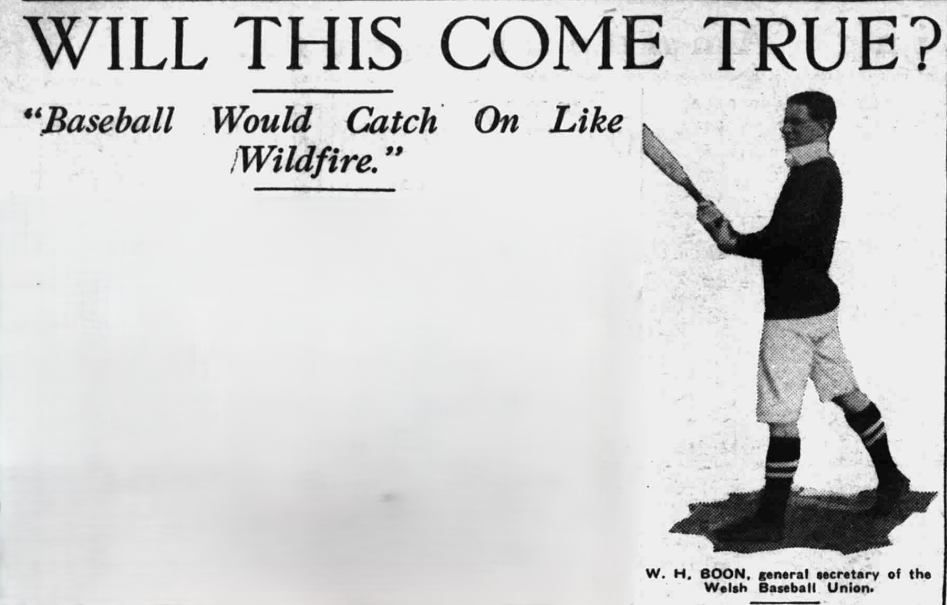
The uniform and equipment of a player of English baseball. Athletic News, 27 June 1927. Image created by British Library Board. No known copyright holder.
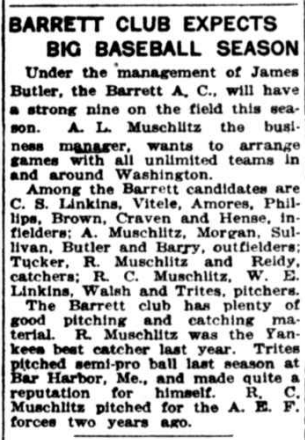
The Muschlitz brothers. Washington Times, 3 March 1922. Image created by the Library of Congress. Public domain.

U.S.S. Balch (DD-50). US Naval Historical Center Photograph (Photo # NH 103740). Public domain.
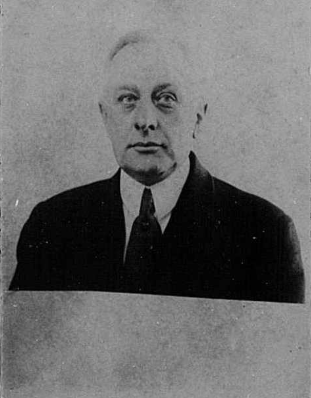
Joseph Mayer Armel, the Wallasey resident and Anglo-American Baseball League shareholder incensed at the poor quality of play at the 8 June 1918 American baseball at New Brighton Tower. Image from Armel's 1923 US Passport application. Public domain.
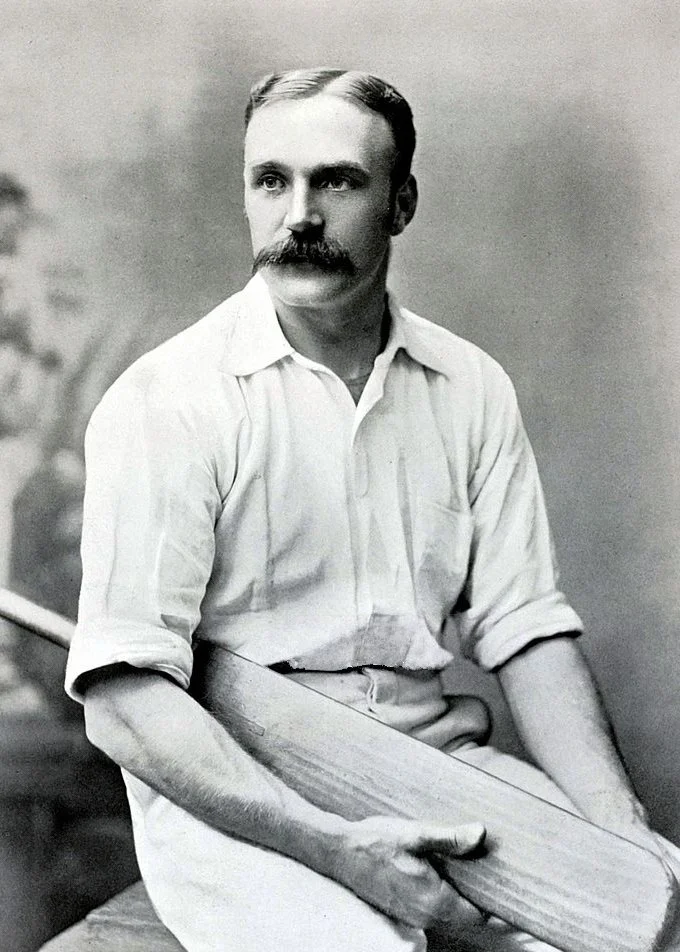
Frank Sugg. Image created by Wikipedia. Public domain.
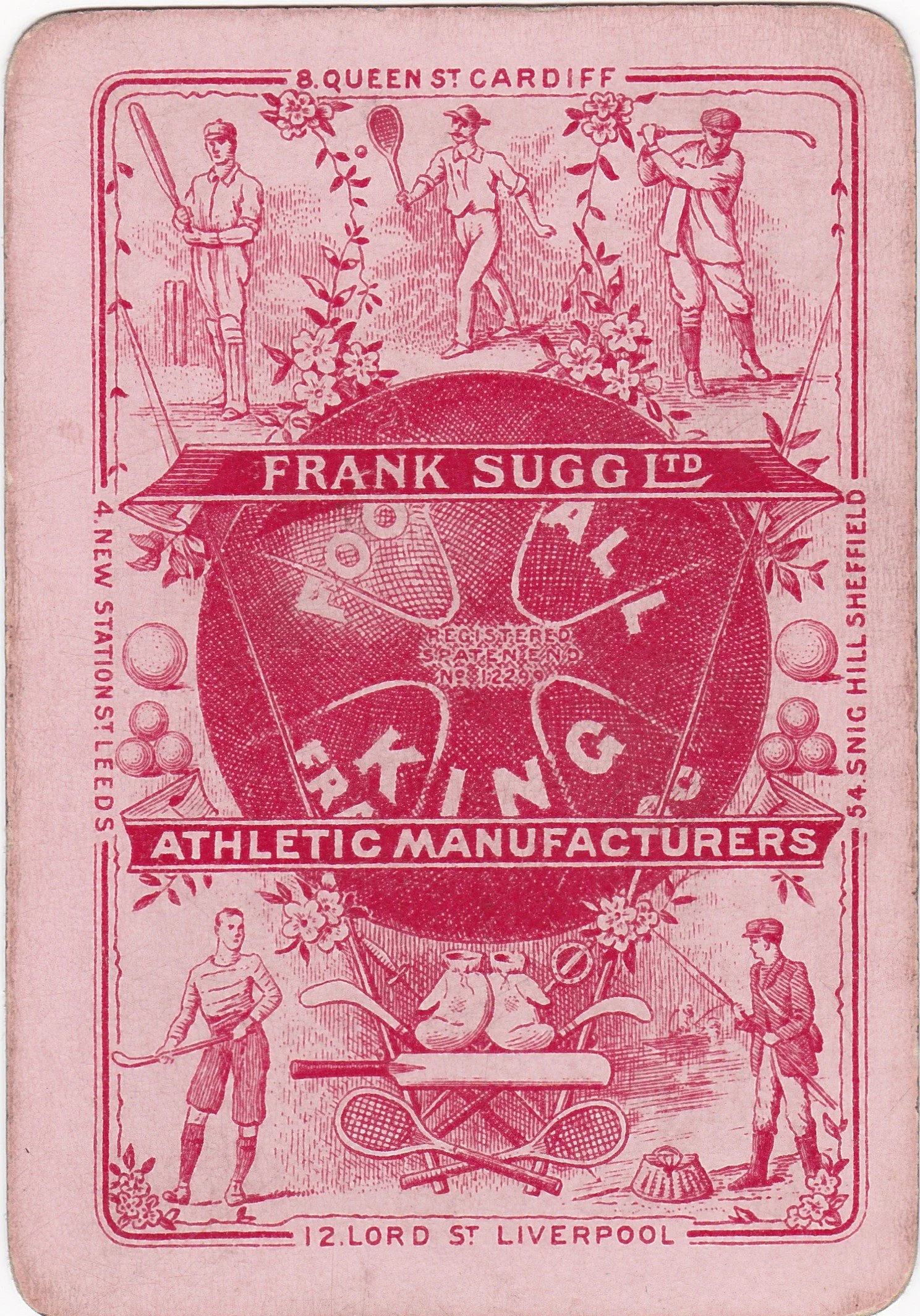
Frank Sugg Ltd. Playing card, author's own collection.
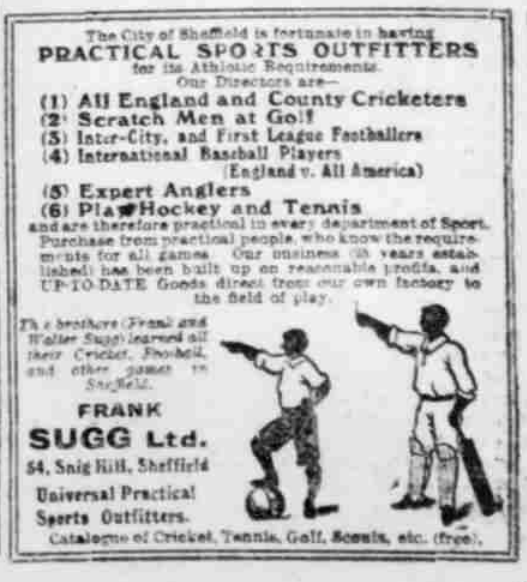
"International Baseball Players". Frank Sugg Limited Advertisement. Sheffield Independent, 13 March 1911. Image created by British Library Board. No known copyright holder.
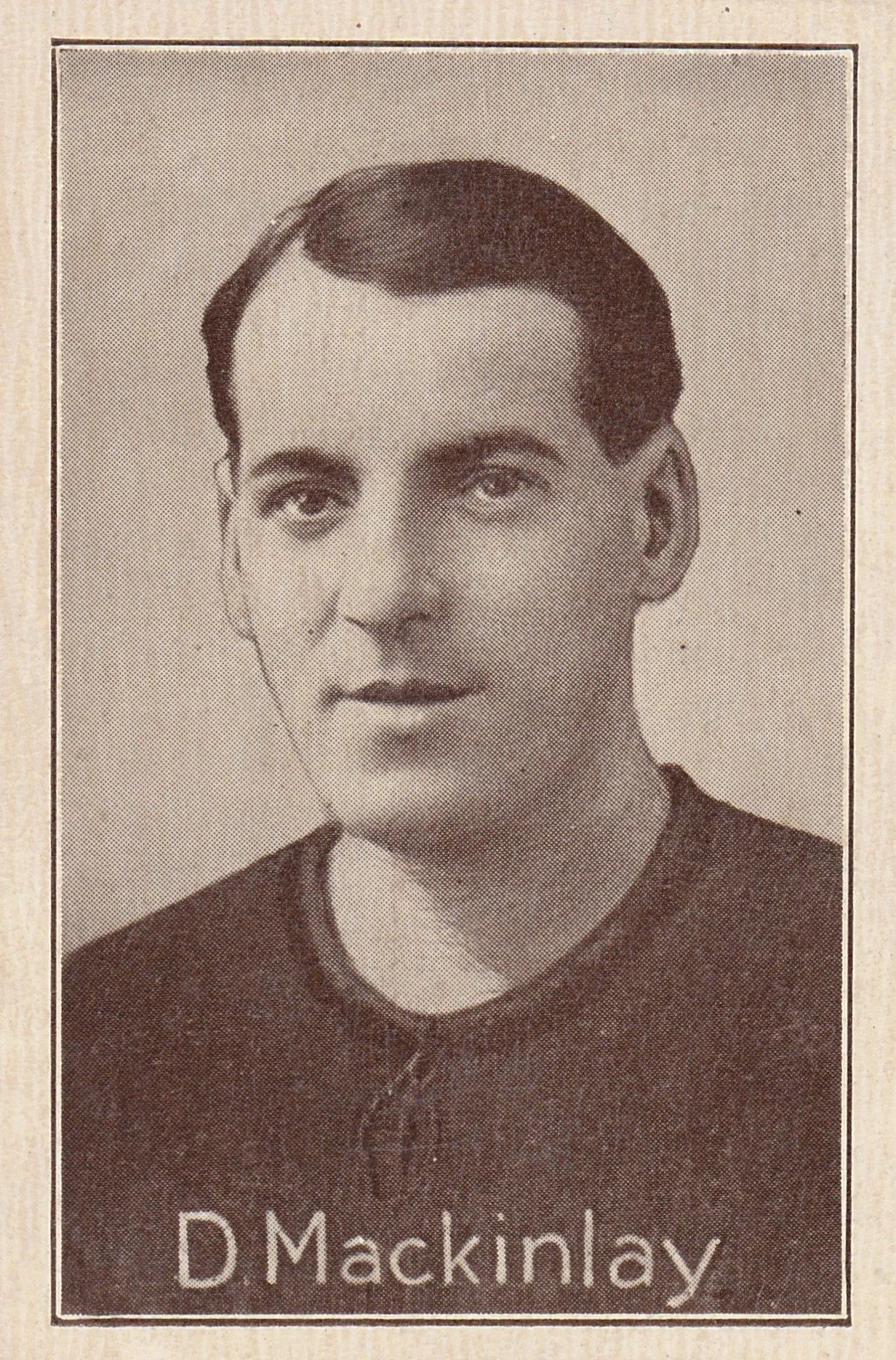
Donald McKinlay, Liverpool FC footballer and player of English Baseball. Trade card, author's own collection.
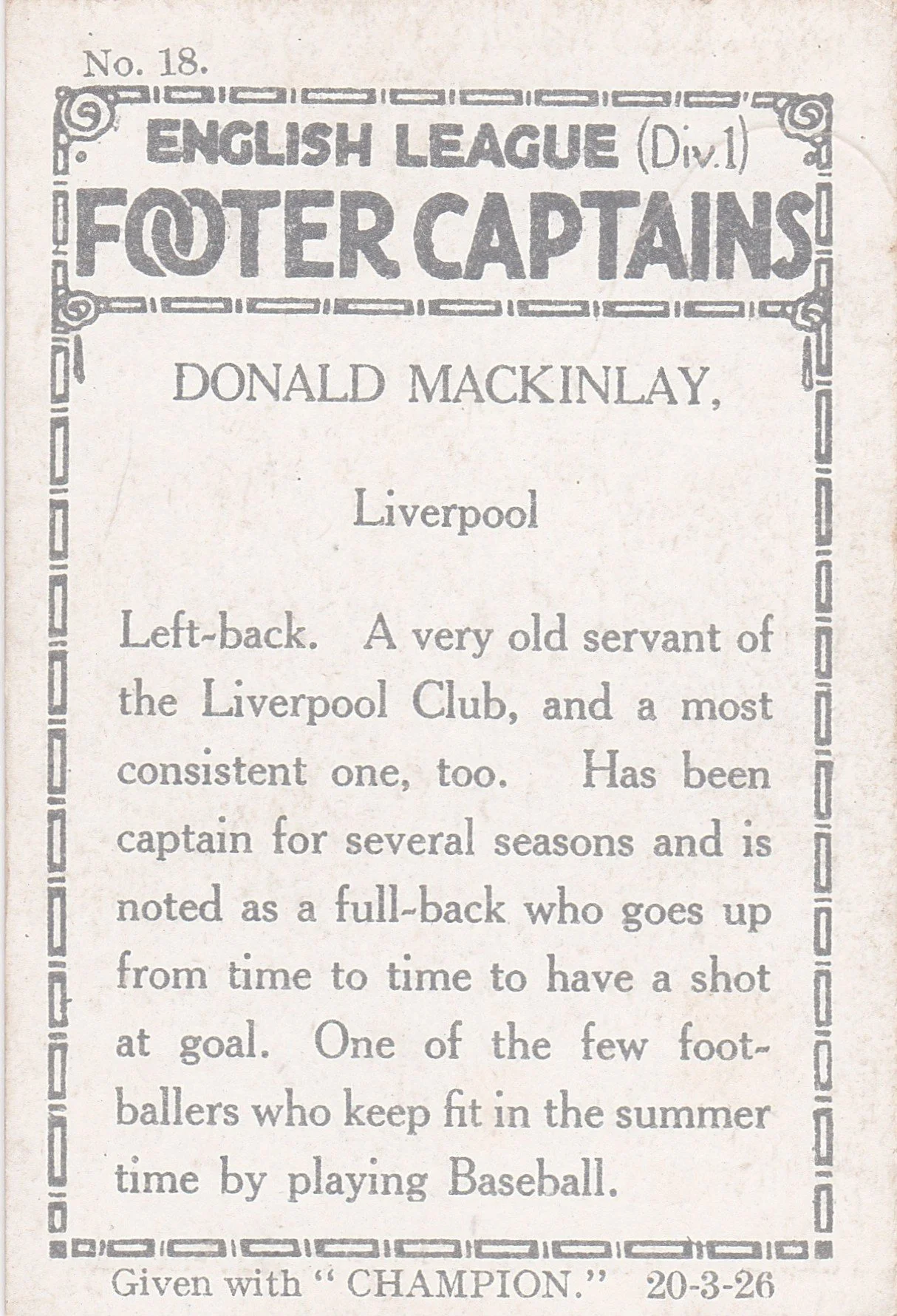
Donald McKinlay, Liverpool FC footballer and player of English Baseball. Trade card, author's own collection.
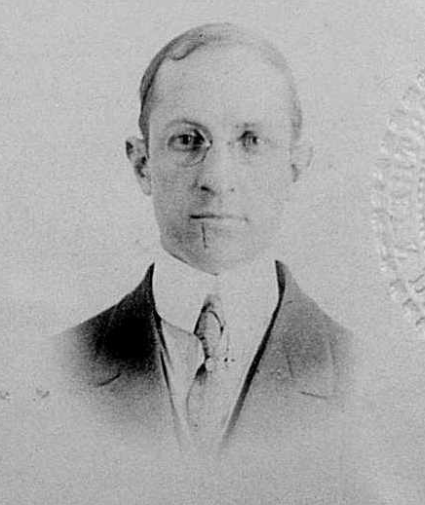
George Blaine Stephenson, US vice consul in Liverpool, organiser of the 1910 effort to reintroduce American baseball to Liverpool. Image from Stephenson's 1918 US passport application. Public domain.
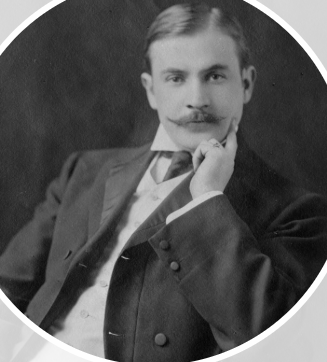
Daniel Ray Shurtliff, 1910. Mormon missionary, participant in the 16 July 1910 Liverpool game. Photo uploaded to familysearch. No known copyright holder.