A Species of Cricket.
Jamie Barras.
3 July 1863. The party were loudly cheered on returning to Inverness in the evening. They proceeded at once to the "Racoon" and dined on board. Afterwards the officers had a game at what is called "rounders," a species of cricket, in a field in north side of Kessock Ferry. The Prince was the most active and energetic of the party. There was an immense concourse of spectators, among whom the Prince moved in the most easy and affable manner.[1]
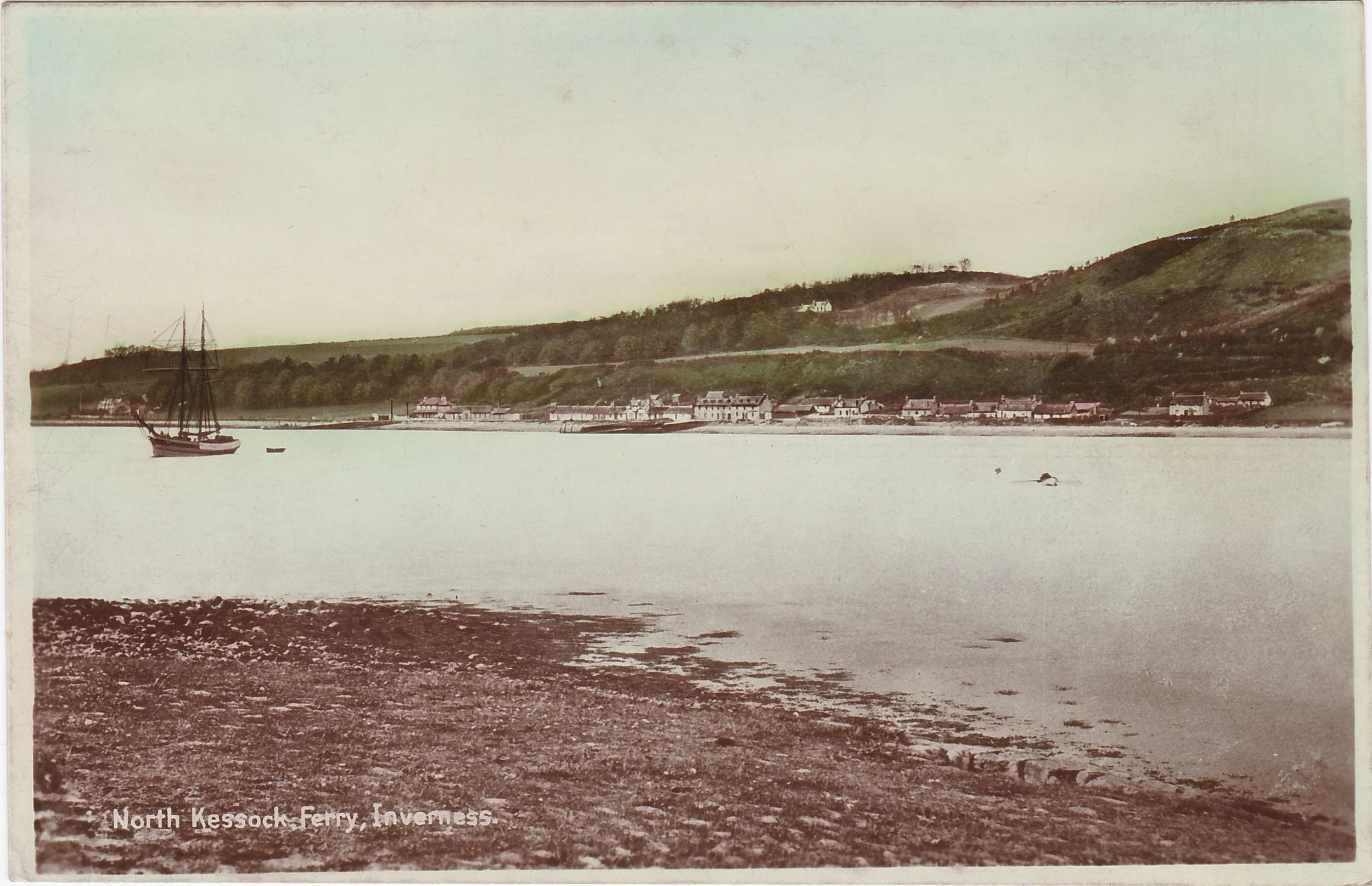
At eight o’clock in the evening, the Prince, along with the majority of the officers on board the vessel, manned a gig and crossed to the north side of the ferry, where they engaged in a game at bat and ball within a grass field at the side of Kessock Inn.[2]
By the 1860s, the Royal Navy had been playing rounders as a recreation for nearly two decades. What is particularly interesting about this game of rounders played at Kessock Inn, Inverness, on 3 July 1863, is the timing, the players, and their connections to the United States and the American game of baseball. This is of particular interest as, just 7 years later and 12 miles away, the earliest known baseball club in Britain would be founded.[3]
In this piece, I want to show that this event is the first link in a chain of coincidences connecting a royal prince to the story of the Royal Navy and the spread of American baseball, something I first explored in The Transit of Venus.[4] I present the story of that 3 July 1863 game of “bat and ball” here as a companion piece to that latter work and as an example of the rich rewards that surely await further study by baseball scholars of the Royal Navy’s fondness for bat-and-ball games.
THE game of base-ball is much played in America, and is a sort of improved form of rounders, and might, equally with that game, which became popular at garden parties in the early autumn of last year, be played by a mixed number of ladies and gentlemen.[5]
BRITISH SCHOOL TREAT.—On Friday last, upwards of 80 of the boys of the British School went to Ashridge park, first proceeding by rail to Tring. During the day, which happy to say was a very favourable one as to the weather, the boys enjoyed themselves much, some at bat and ball, cricket, foot-ball and other games[…].[6]
In his 2019 book, Pastime Lost, baseball historian David Block proposed that “rounders” was a relatively modern term (1810s) for a development of the old English game of “base ball”. The latter was played originally without a bat, the ball being struck with the flat of the hand; however, at some point, a variant with a bat was introduced, known by some as “bat and ball” and others by the same old name of “base ball”. Later, this game acquired in some parts of England the name “rounders”. Elsewhere, I have reframed this theory as rounders being a particularly vigorous variant of various base-running ball games around in England at the end of the eighteenth century.[7]
Attempts to turn rounders into a sport for adults reached maturity with the founding of the City of Bristol Rounder Club in Bristol, England, in 1864. The Kessock Inn game, played 1 year earlier, is of separate interest because of the timing and the players.[8]
The Christening of "Prince Alfred." The baptism of his Royal Highness the infant Prince, second son of Her Most Excellent Majesty and his Royal Highness Prince Albert, took place on Friday, in the private chapel at Windsor Castle.[9]
Prince Alfred Ernest Albert (1844–1900), as the second son of Queen Victoria and Prince Albert, was destined for a military career from birth. He duly entered service in the Royal Navy in 1858. Just four years later, it seemed as though his naval career would come to a premature end. In early 1862, the unpopular King Otto of Greece was deposed; in a plebiscite held the same year, Greek voters, keen to ally their nation with the might of the British Empire, chose Alfred to replace Otto over all other options, including becoming a republic. At this point, Great Power politics intervened, with France and Germany both making it known that they opposed the ascension of a British prince to the Greek throne. It is thought that Queen Victoria and Prince Albert were also against it, wishing Alfred to, in time, ascend to the throne of the Duchy of Saxe-Coburg and Gotha, Prince Albert’s familial seat. For appearance’s sake, Alfred was allowed to make a public show of declining the Greek offer. Timeō Danaōs et dōna ferentēs.[10]
Keen to draw a line under the affair, late in 1862, the British government announced that Prince Alfred had been appointed as junior lieutenant to the screw corvette H.M.S. Racoon, under the command of Count von Gleichen.[11] It was at this moment, while at Malta, that Prince Alfred fell ill. It was decided that the Racoon would travel to the Mediterranean to collect Alfred once he had recovered. However, the plan then changed, with Alfred instead making his way back to England in stages to join his new ship there. In the meantime, the Racoon was dispatched on special service to Bermuda.[12]
ANOTHER BLOCKADE RUNNER GOT IN “Charleston, April 13, “A steamship arrived this morning from Bermuda, with a cargo of army equipments, &c., for the government.”[13]
The steamers Cornubia and Beauregard, with 13,000 bales of cotton, arrived at Bermuda on the 23rd from Southern ports.[14]
The schooner Laura Ann, which arrived at Bermuda on the 24th ult., was boarded on the 21st ult. by the Florida, and received on board the crew of the ship Star of Peace, 980 tons, which vessel the Florida had recently captured and destroyed. The Star of Peace was on her way to Boston from Calcutta, laden with saltpetre, hides, and wool.[15]
As the above quotes show, by April 1863, the month that the Racoon was ordered to Bermuda, the island had become a major base for Confederate commerce raiders and blockade runners, second only to Nassau in the Bahamas. Although most blockade runners were British-built, had British crews, and were commanded by Royal Navy officers on half pay, Bermuda was awash with Americans from both sides of the conflict: freebooters, merchants, smugglers, spies, and sailors from Union vessels captured by Confederate raiders awaiting a berth on a ship to take them home.[16]
The Racoon’s time at Bermuda was brief; she arrived on 14 April 1863, left on 10 May, and by 29 May, was back in England, where she found Prince Alfred waiting for her.[17] However, this was time enough for members of her crew to have seen the island’s American residents at play. In common with the officers of most ships of Her Britannic Majesty’s Navy, the Racoon’s officers had a keen interest in bat and ball games—indeed, as well as their game of “bat and ball”, the officers of the Racoon would also play at least one game of cricket while in Scotland.[18]
It is worth noting two additional points here that period photographs of the field by the side of Kessock Inn show that it was not the flattest of playing fields, level only at one end. We know of at least one instance in this period of a cricket club setting out to play cricket but abandoning that idea and playing rounders instead when they arrived at the ground to find it too “wet and heavy” for cricket. Fast-forward to 1897, and Royal Navy midshipmen landed on Crete with the intention to play cricket, but, finding the ground unsuitable, played an improvised game of rounders instead.[19]
A similar line of reasoning may have been involved here—enthusiasts of the bat and ball faced with a field level only at one end, searching for an alternative to cricket, the solution being inspired by the date and the recent visit to Bermuda. As I detailed in The Transit of Venus and as we will see later in this piece, the idea of Royal Navy officers trying their hand at a game like American baseball is not the least bit outrageous; it happened, and within a few years of Racoon’s Bermuda cruise. This, more than anything else, is what is so tantalising about that 3 July 1863 game of “bat and ball” at Kessock Inn.
As both cricket and baseball required a level playing field—although the requirements were more stringent for the former—in any port where the Royal Navy played cricket, there was an opportunity for the US Navy to play baseball, and by extension, for the two to play each other at either one or both games. There is no more pertinent example of the first part of this observation than the first reported game of baseball in England, which was played on 12 June 1871 at the Bat and Ball Cricket Ground, Gravesend, Kent, between two teams formed of members of the Sheridan Base Ball Club of Ithaca, Michigan, then serving on the U.S.S. Franklin.[20]
We will encounter below two examples of British sailors playing American sailors at baseball on cricket grounds.
In summary, given that the Racoon had just returned from the Americas, that the game was played on the eve of American Independence Day, that British observers equated American baseball with rounders and its ancestor bat and ball, and that we have confirmed examples of Royal Navy officers playing baseball just a few years after this game, I think I we can make a good case that this 3 July 1863 games of “rounders”/“bat and ball” was inspired by a recent encounter by the Racoon’s crew with American baseball.
Before moving on, it is worth consulting a list of officers assigned to H.M.S. Racoon in 1863. It can reasonably be assumed that the midshipmen and lieutenants at least played in the Kessock Inn game.[21]
H.M.S. Racoon, 1863. Captain—Count von Gleichen (1833—1891); Lieutenants—Prince Alfred (1844–1900), H.M. Miller, Hugh Campbell, George Rodolph Trefusis (1840–1867); Sub-Lieutenant—Hugh Sydney Baillie (1842–1876); Master—William Henry Bradley (1830–?); Second Master—Charles William McConachy (1840–1910); Master’s Assistants—George A. Broad, William Henry Petley (1846–1901); Paymaster—John Bradbridge (1830–1910); Assistant Paymaster—Charles Edwin James (1838–1894); Clerk—Alfred N.C. King; Surgeon—Dr James Young (1829–?); Assistant Surgeon—W.L. Powell; Chaplain—Rev. William L. Onslow; Engineer—John Lawson; 2nd Class Assistant Engineers—Samuel T. Bird and William T. Ray (1836–?); Midshipmen—Hon. John William Maule Ramsay (1847–1887), Hon. Nelson Byng (1845–1941), Anthony Kingscote (1846–1891), Alleyne Polkinghorne Pascoe (1845–1872); Naval Cadet—Hon. William Brook Phipps (1847–1880); Prince Alfred’s governor: Major John Clayton Cowell, R.E. (1832–1894).
These men had mostly seen service in the Mediterranean and UK coastal waters. However, the story of the assistant paymaster, Cornishman Charles Edwin James (1838–1894), is an interesting one. Before being appointed to the Racoon, James had, for a brief time, served on H.M.S. Formidable. Before that, he had spent two years serving on H.M.S. Hero. The Hero spent most of 1862 operating out of Bermuda. James would have had ample opportunity to observe Americans at play during this time. What’s more, in 1860, the Hero visited Canada and the United States, hosting Prince Alfred’s older brother, Edward, on his tour of North America, which included 3 days in New York.[22] Was Assistant Paymaster James the catalyst for the game at Kessock Inn? Perhaps. We will meet him again soon.
When it comes to the second link in the chain of coincidences connecting Prince Alfred to American baseball, we are on firmer ground.
AN INTERNATIONAL MATCH.—A match played between an American and English nine, at Rio Janeiro, on the 30th of July, was witnessed by an immense concourse of spectators, including many distinguished personages; among others, Prince Alfred of England, and his suite; also, many richly attired ladies. The contest was a splendid yet stubborn one; it finally resulted in the success of the Yankees, in a score of 11 to 9. The utmost good feeling prevailed throughout; and in the evening, a grand ball and supper was participated in at the American Hotel, where both parties toasted, and were highly complimentary to each other. Mr. McGowan, formerly pitcher in the Athletic Club, of Harlem, played his old position in this international affair.[23]
A private letter from Mate G. Lewis McGowan, of the United States steamer Oneida, dated Rio Janeiro, July 31, gives an account of a base ball match between selected nines from the two nationalities, which came off on the 30th of July.[24]
In February 1867, the now Captain Prince Alfred, Duke of Edinburgh, took command of H.M.S. Galatea and set off on what was intended to be a 2-year, round-the-world voyage. That voyage was to extend to 4 years after Alfred stepped in front of a would-be assassin’s bullet in Australia in March 1868, necessitating a temporary return to England for recuperation.[25] On board the Galatea, Alfred was able to renew his acquaintance with one of his old Racoon shipmates: Assistant Paymaster Charles Edwin James.[26]
The afternoon of 15 July 1867 saw the Galatea entering Rio de Janeiro harbour for what was to be eight busy days of receptions, balls, and naval salutes before her departure on 23 July. Already in harbour were several ships of the Royal Navy’s South America station and the US Navy’s South Atlantic Squadron. On 20 July, these vessels were joined by the U.S.S. Oneida, which was bound for the Pacific and service with the US Navy’s Asiatic Squadron.[27]
On board the Oneida was New Yorker G. Lewis McGowan, who, on the Oneida’s arrival in East Asia, would be transferred to the U.S.S. Maumee. This transfer likely saved his life. On 24 January 1870, as she left the port of Yokohama, the Oneida collided with the British passenger steamer, the Bombay. The Bombay sailed on in the mistaken belief that it had been a glancing blow, and the Oneida was as lightly damaged as the Bombay was. In fact, the American vessel had received a mortal wound and sank within 15 minutes, taking 115 members of her crew down with her. This now-forgotten tragedy caused a huge diplomatic row at the time, as rival British and American boards of enquiry arrived at opposite verdicts as to which ship’s officers were responsible for the disaster.[28]
If G. Lewis McGowan is to be believed, while at Rio, he pitched for an American nine against a British nine in a game watched by Prince Alfred. While the origins of the players of these two teams are not mentioned in newspaper accounts, we can suppose, given the presence of McGowan in the team, that the American nine was formed of US Navy sailors. By extension, we can reasonably assume that the British nine was, similarly, formed of Royal Navy sailors. We can also say in support of McGowan’s account that there was a Harlem Base Ball Club in existence in this period, albeit not formally known as the Athletic Club at the time,[29] and, so, it was possible that McGowan, as a New Yorker, was a member. However, beyond this, his account requires careful parsing.
Let’s start with the date. This game reportedly took place on 30 July. However, as we have already seen, Prince Alfred and the Galatea left Rio on 23 July, a full week earlier. Thus, if this date is correct, then Prince Alfred could not have been one of the spectators. If we are to suppose the game took place at all, and 30 July is the correct date, then this latter detail must have been an embellishment added by McGowan, which must cast into doubt other elements of the account.
However, it is worth exploring an alternative explanation: that McGowan or the US newspapers got the date wrong. The Oneida arrived in Rio three days before the Galatea left, a narrow window of opportunity, but it is conceivable that the game actually took place on 21 or 22 July. Our accounts of the Prince’s visit to Rio, while rich in detail on how the Prince spent his mornings and evenings (paying courtesy calls and attending balls, respectively), do tend to skip how he spent his afternoons. We know from a subsequent account, detailed below, that Captain Creighton of the Oneida was one of the American officers who dined with Prince Alfred while at Rio. Tantalisingly, on 21 and 22 July, Prince Alfred stayed at the Palace of Princess Isabel, Countess d’Eu, heir to the Brazilian throne. This is of interest to us here, as the grounds of the Princess’s palace were where Rio’s British residents played their cricket.[30]
CRICKET. Rio British Cricket Club v. Eleven Men of H.M.S. Narcissus,— A cricket match was played between two elevens at Rio Janeiro on the 26th of June last, resulting in the victory of the landsmen by 30 runs.[31]
Cricket and the Royal Navy went hand-in-hand in this period. The role that the Royal Navy played in spreading cricket around the world is well known, with, for example, the first documented matches in countries such as Japan and Fiji being between Royal Navy teams and landsmen in 1863 and 1874, respectively. It should come as no surprise that it was a similar case with baseball, with, for example, the first recorded baseball game in Japan being between a US Navy team and a team of landsmen in 1871. As we will see below, the US Navy also featured in the first recorded baseball game in Hong Kong in 1869. The needs of baseball and cricket for a level playing field align.[32]
In short, whether the McGowan game happened on 30 July or a week earlier, in front of Prince Alfred or otherwise, the presence in Rio of both American and British ships and the existence of a cricket ground in the city presented all the elements needed for the two navies to be able to take to the playing field against each other. This supports the idea that McGowan was at least telling the truth about the game taking place. However, this does still leave us with one problem with McGowan’s account: why is there no mention of cricket?
When H.M.S. Scout took on the U.S.S. Pensacola and Omaha at Coquimbo, Chile, in 1873, and the U.S.S. Benicia at Honolulu, Hawaiʻi, in 1874, the contests comprised games of both baseball and cricket. When an “all-star” English cricket team toured the US and Canada in 1858, it played a practice game of baseball to try the game. On a second tour in 1868, the new All-England team played organised baseball against local nines. On their tour of England 6 years later, the Boston Red Stockings and Philadelphia Athletics staged exhibition games of baseball and played cricket against the M.C.C. and other teams. For much of this period, if only for reasons of national pride, when US teams met British teams on the playing field, both national pastimes were played. The result was usually a win at baseball for the American team, a win at cricket for the British. Not coincidentally, in this age of Great Power politics, this meant honours were even, and everyone went home happy.[33]
However, reports of baseball matches between American and British teams without a “balancing” match of cricket were not unknown. An example of particular interest to us here is the first recorded game of baseball played in Hong Kong. This was played on 3 February 1869 between teams from the U.S.S. Piscataqua and H.M.S. Charlotte. The venue was the Hong Kong Cricket Ground. There was, as far as we know (but see below), no “balancing” cricket match. Instead, we are told that the game came about after a discussion between the officers of the Piscataqua and the Charlotte about the merits of baseball and cricket, which led the American officers to send the British a challenge to “play a game of baseball with them”. The Americans won 28–16. Around a week later, a second game was played, this time between a representative team from the British squadron and the Piscataqua nine; the Americans won a second time.[34]
US Navy and Royal Navy nines playing baseball on a cricket ground without a corresponding cricket match; this mirrors the Rio 1867 scenario. Although this already answers the difficulty with the McGowan account, I want to suggest a different answer that applies to both Rio in 1867 and Hong Kong in 1869: that, despite the lack of any report of a cricket match, one was, in fact, played in both cases.
It will be noted from the account of the two Hong Kong games that there was a gap of one week between the two games. Why? I think it is likely that a cricket match was played in this period. By the same token, I think it is likely that a cricket match was played in Rio in 1867. I think the explanation for why no cricket matches were reported can be found in the most likely result of such contests: victory for the English elevens. Both McGowan and the anonymous correspondent who provided the Hong Kong account were writing for a US readership, as were the newspapers that published these accounts. They were only interested in tales of precocious Yankees taking the high-and-mighty British down a peg or two.
In summary, I am inclined to believe that there was a game of baseball played between American and British sailors in Rio in late July 1867, and the two teams also played each other at cricket on the same day or the day preceding or following. The most likely venue for these games was one of Rio’s cricket grounds, possibly the grounds of Princess Isabel’s palace. It is possible that the game(s) took place while Prince Alfred was staying at the palace, that he was one of the spectators, and Charles Edwin James was one of the players. However, it is also possible that they took place on or around 30 July, as reported, after Alfred, Charles James, and the Galatea had left Rio, and Alfred’s presence in the crowd was an embellishment by G. Lewis McGowan.
The final links in the chain of coincidences that connect the Prince to the sport take us back to England, but not before a diversion to first the Cape of Good Hope and then on to Australia.
In the bay float several British men-of-war, among which we recognise the Galatea, which acknowledges the command of Prince Alfred—otherwise known as Duke of Edinburgh. We met last at Rio, and he has preceded us in the voyage east.[35]
After she departed Rio de Janeiro in late July, the Galatea continued her leisurely journey toward Australia (and Alfred’s rendezvous with a would-be assassin). Arriving at the Cape of Good Hope via Tristan da Cunha on 15 August, Alfred found a familiar sight waiting for him in Simon’s Bay: his old ship, the Racoon. During his stay at the Cape, he took a break from shooting elephants long enough to go on a short cruise with his old shipmates.[36]
While Alfred was absent, the officers of the Galatea played at least one game of cricket against the Cape Town garrison. There was also a further arrival in the harbour, another ship familiar to Alfred, although of recent acquaintance: the Oneida, which was continuing on her way to East Asia. On his return to the Cape, Alfred visited the Oneida and renewed his acquaintance with Captain Creighton. Alas, there is no indication that any sport was in the offing, although one of the Oneida’s officers remarked in a letter to the New York Times that on one excursion, he and his fellow officers “passed grove after grove where cricketers were displaying their skill”. Ah, what could have been! It would be another 16 years before the first recorded game of baseball would be played in Cape Town—inevitably between a US Navy team and landsmen.[37]
The Galatea set sail once more in mid-September and finally arrived at Adelaide on 31 October 1867. This was the start of five months of fetes, balls, salutes, and hunting trips up and down Australia’s east and southeast coasts. At Hobart, in January, the officers of the Galatea again found time to play cricket. More significantly for the history of the sport, at Sydney, a month later, in honour of the Prince’s visit, a combined team of Army and Navy officers took on the “Aboriginal Black Eleven”, a team of indigenous players assembled for what, later that same year, would become the first tour of England by an Australian national cricket team.[38]
It is, however, a more mundane bat-and-ball game that was a feature of the tour that is of greatest interest to us. Our old friend, rounders.
The Prince Alfred Reception Committee at Hobart Town have arranged for a day’s popular games in the Domain during the stay of the Prince. There will be six flat races, three hurdle races, two sack races, two wheelbarrow races, a blindfold race, a quoit match, a game of rounders[...][39]
It is not known if Prince Alfred got to see that game of rounders laid on in Hobart in 1868 in his honour—he never got to spend long in any one location—however, his name would become associated with the sport after his return to England. The ground for this was laid the year before he set off on his round-the-world cruise in the Galatea.
VISIT OF PRINCE ALFRED TO LIVERPOOL.—His Royal Highness the Duke of Edinburgh arrived at Broad Green Station on Tuesday night about half-past six on a visit to Mr. S.R. Graves, M.P. of Wavertree Grange. Triumphal arches and other signs of welcome greeted the royal guest on his way from the station through Wavertree to the Grange.[40]
Wavertree Grange stood on the grounds of a 104-acre green space that is now officially known as Wavertree Sports Park but informally as “The Mystery”. It acquired the latter name due to the identity of the benefactor who donated the space to the community being unknown for many years afterwards. Following Alfred’s visit, the road that ran along the eastern edge of the Mystery was renamed “Prince Alfred Road” in his honour (as its previous name was “Cow Lane”, we can see why Mr. S.R. Graves, M.P., was keen to encourage the change).[41] We will return to the Mystery later.
Alfred’s 1866 visit to Liverpool, his third in 15 years, was to form a lasting kinship between the city and the monarch’s second son, strengthened by Alfred’s career as a naval officer, which resonated with the people of this port city. Thus, it was no surprise that, when a club formed in the city to promote the playing of the games of rounders and quoits as competitive sports for adults in 1873, in honour of Prince Alfred’s recent marriage, it took the name The Duke of Edinburgh Rounder and Quoit Club.[42]
At eight o’clock in the evening, the Prince, along with the majority of the officers on board the vessel, manned a gig and crossed to the north side of the ferry, where they engaged in a game at bat and ball within a grass field at the side of Kessock Inn.[43]
Alfred, Duke of Saxe-Coburg and Gotha, died at his ducal seat on 30 July 1900, aged just 55. As a sportsman and officer in the Royal Navy active in the mid-nineteenth century, it is no surprise that his story intersects with that of the spread of American baseball across the world. As I hope I have shown, where the Royal Navy went, cricket went, and this set up conditions that eased the adoption of American baseball in the far-flung places of the earth. At the same time, as I hope I have also shown, it is remarkable just how many links there are in the chains of coincidence that link Alfred to the spread of American baseball.
Charles Edwin James retired from the Royal Navy in 1876, shortly after his marriage to Annie Elizabeth Michell. The couple settled in James’ hometown of Falmouth, Cornwall, and went on to have three children; however, only their son, Lawrence, survived infancy. James died in 1894, aged just 57.[44]
I, for one, am convinced that the exploration of the careers of Royal Navy officers like Prince Alfred and Charles Edwin James will throw up more instances of British involvement in the spread of American baseball. The officers of the Racoon have shown us the way.
Jamie Barras, March 2026, revised August 2026.
Back to Diamond Lives
Notes
[1] ‘Prince Alfred in the Highlands’, Inverness Courier, 9 July 1863. Kessock Inn and North Kessock: https://www.undiscoveredscotland.co.uk/northkessock/northkessock/index.html, accessed 1 March 2026. The Inn is now known as North Kessock Hotel, and the field is covered with houses.
[2] ‘Prince Alfred on his Cruise’, Aberdeen People’s Journal, 11 July 1863.
[3] For the Royal Navy and rounders, see for example the following, which describes a game on an island off Mozambique in 1849: Capt. G.L. Sullivan, Dhow Chasing in Zanzibar Waters (London: Sampson Low, Marston, Low & Searle, 1873), 41–42. At the time of writing (March 2026), the earliest known game of American baseball, which is to say the game played under rules written down in New York in the 1840s, played in Britain was that played at Dingwall, Ross-shire, in July 1870: ‘Dingwall—Base Ball’, Inverness Advertiser and Ross-shire Chronicle, 19 July 1870. I tell the story of that game here: https://www.ishilearn.com/diamond-lives-the-dingwall-game, accessed 1 March 2026. The credit for the discovery is shared by Bruce Allardice of the Protoball Project and a team of UK researchers led by Joe Grey. Dingwall is just 10 miles from North Kessock, the location of the Prince’s July 1863 game of “rounders”.
[4]https://www.ishilearn.com/diamond-lives-the-transit-of-venus, accessed 1 March 2026.
[5] ‘Base-Ball’, The Queen, 26 May 1888.
[6] ‘British School Treat’, Leighton Buzzard Observer and Linslade Gazette, 22 September 1863.
[7] David Block, “Chapter 6: Bat, Ball, and Beyond” in “Pastime Lost: The Humble, Original, and Now Completely Forgotten Game of English Baseball” (Lincoln: University of Nebraska Press, 2019); https://www.ishilearn.com/a-game-without-a-history, accessed 28 August 2026.
[8] ‘Rounders v. Cricket’, Bristol Daily Post, 4 August 1864.
[9] ‘The Christening of Prince Alfred’, Weekly Chronicle (London), 8 September 1844.
[10] Entry for Prince Alfred Ernest Albert, Encyclopædia Britannica, 11th Edition (Cambridge: Cambridge University Press, 1911).
[11] Von Gleichen, more properly Prince Victor Ferdinand Franz Eugen Gustaf Adolf Constantin Friedrich of Hohenlohe-Langenburg, was a close relative of the royal family, being the son of Queen Victoria’s half-sister: https://www.pdavis.nl/ShowBiog.php?id=1417, accessed 1 March 2026.
[12] ‘Racoon’, Naval & Military Gazette and Weekly Chronicle of the United Service, 18 April 1863. There was a suggestion that this late-stage change in mission was some kind of “punishment” handed out to Count Von Gleichen for some offence: ‘The Racoon’, Portsmouth Times and Naval Gazette, 4 April 1863. However, it is hard to see how Alfred would be entrusted to the care of an officer out of favour with the Lords of the Admiralty.
[13] ‘America’, London Evening Standard, 30 April 1863.
[14] ‘America’, Leeds Mercury, 16 April 1863.
[15] ‘America: The Civil War’, Manchester Courier, 18 April 1863.
[16]https://web.archive.org/web/20150330233650/http://www.nps.gov/history/CRMJournal/Summer2007/reviewbook4.html, https://www.usni.org/magazines/naval-history/2024/october/business-blockade-running, accessed 1 March 2026. One such Royal Navy officer on half pay commanding a British-built blockade runner was Ralph Peter Cator, future captain of the H.M.S. Scout: see Note 5 above.
[17] ‘The West India Squadron’, Hampshire Telegraph and Naval Chronicle, 16 May 1863; ‘Naval and Military’, Western Daily Gazette, 28 May 1863; ‘Portsmouth’, Portsmouth Times and Naval Gazette, 30 May 1863; ‘Prince Alfred—Portsmouth—May 11’, Reading Mercury, 16 May 1863.
[18] ‘Prince Alfred at Stromness’, Orcadian, 21 July 1863. We might also mention here a game of cricket played a year later in Norway: ‘Prince Alfred in Norway’, York Herald, 10 September 1864.
[19] ‘Cricket’, Morning Advertiser, 2 April 1866. Rounders on Crete: ‘The Blockade of Crete: British Officers Playing Rounders in Suda Dockyard’, Graphic, 10 April 1897.
[20] ‘A Game of Base Ball’, Gravesend Reporter, 17 June 1871. The report describes baseball as “merely an elaboration of the well-known game of “rounders””.
[21] Assembled from the list of naval appointments published here: ‘Naval Appointments’, Globe, 30 January 1863; ‘Naval Appointments’, Globe, 31 January 1863. ‘Naval Appointments’, Cork Constitution, 5 February 1863; ‘Naval Appointments’, Dublin Daily Express, 23 June 1863. Years of birth and death assembled from National Archives Navy Service Records, and ancestry.co.uk, Ancestry.com Inc. (Operations), accessed 5 March 2026.
[22] Charles Edwin James’s career: Service Record, ADM-196-11-428, National Archives; HMS Hero: https://www.pdavis.nl/ShowShip.php?id=52. Edward’s Canada and USA tour, 1860: https://ephemeralnewyork.wordpress.com/tag/prince-of-wales-nyc-visit-1860/, accessed 5 March 2026.
[23] ‘An International Match’, New York Sunday Mercury, 15 September 1867. Quoted here: https://protoball.org/In_Rio_de_Janeiro_on_30_June_1867, accessed 1 March 2026. “30 June 1867” appears to be a typo.
[24] ‘A private letter…’, Philadelphia Enquirer, 14 September 1867.
[25]https://www.pdavis.nl/ShowShip.php?id=85, https://dictionaryofsydney.org/entry/assassination_attempt_on_prince_alfred_1868, accessed 1 March 2026. Henry O’Farrell, the would-be assassin, who may not have been in his right mind, was swiftly tried and, controversially, just as swiftly executed.
[26] See James’s service record, Note 22 above, first reference.
[27] The account of Galatea’s visit to Rio is taken from: ‘His Royal Highness the Duke of Edinburgh at Rio Janeiro’, The Times, 23 August 1867; ‘Reception of Prince Alfred at Rio Janeiro’, Washington Chronicle, 4 September 1867. Oneida at Rio: ‘Naval’, New York Tribune, 4 September 1867; ‘Naval Intelligence’, New York Times, 2 September 1867.
[28] McGowan joins the Oneida: ‘Navy Bulletin’, Philadelphia Enquirer, 10 May 1867. McGowan, New Yorker, and assigned to Maumee (name recorded as “G.L. McGowan”): Register of the Commissioned, Warrant, and Volunteer Officers of the Navy of the United States, 1869 Edition. USS Maumee: https://www.civilwar.com/history/order-of-battle/union-forces-31893/union-navy/146910-maumee-1864-1869.html, accessed 1 March 2026. Online resources that I have consulted put the end of the Maumee’s service at 1865, and record her as then being sold in Hong Kong in 1869 without comment. We can point to the reference above and news reports to show that, in fact, she was part of the Asiatic Squadron up until the end of 1869, which is how she came to be sold in Hong Kong: ‘Naval Matters’, New York Tribune, 23 December 1869.
[29] ‘Mutual v Harlem’, New York Herald, 27 August 1866. This game took place on the Harlem Club grounds at Mount Morris Square.
[30] Alfred’s movements: Note 24 above. Princess Isabel and cricket in Rio: https://cricketbrasil.org/en/our-history/, accessed 1 March 2026.
[31] ‘Sporting Intelligence’, Western Morning News, 6 August 1867.
[32] Mike Galbraith, https://galbraith.press/death-threats-sparked-japans-first-cricket-game-the-japan-times/, https://randomthoughtsoncricket.home.blog/, Mike Galbraith, https://galbraith.press/legendary-1896-ycac-vs-ichiko-baseball-games/, accessed 2 March 2026.
[33] 1858 practice game: Frederick Lillywhite, 'The English cricketers' trip to Canada and the United States' (London: F. Lillywhite, 1860), 50. 1868, etc.: Note 4 above, and: John Thorn, https://ourgame.mlblogs.com/american-cricket-in-the-1860s-decade-of-decline-or-new-start-3d4dd866e467, John Bauer, https://sabr.org/gamesproj/game/summer-1874-new-game-in-the-old-country-u-s-teams-tour-england/, R.A. Fitzgerald, https://archive.org/details/wicketsinwestort00fitz, accessed 1 March 2026.
[34] ‘Base Ball Among Chinamen’, Brooklyn Daily Times, 27 April 1869.
[35] ‘Prince Alfred’s Visit from an American Point of View’, Cape and Natal News, 23 December 1867.
[36] ‘Cape of Good Hope: Arrival of H.R.H. the Duke of Edinburgh’, Paisley Herald and Renfrewshire Advertiser, 28 September 1867; ‘The Morning Herald has the following…’, The Daily Southern Cross (NZ), 24 October 1867.
[37] ‘Cricket at the Cape’, Bell's Life in London and Sporting Chronicle, 9 November 1867. Oneida at the Cape: See Note 32 above. The latter is an account written by one of the Oneida’s officers, reprinted from the New York Times. It is very much of its time. Cape Town baseball, 1883: https://protoball.org/Cape_Town_club_v_USS_Enterprise_club_on_14_April_1883, accessed 2 March 2026.
[38] Prince Alfred’s tour: https://www.australiangeographic.com.au/history-culture/2024/10/australias-first-royal-visit/, accessed 1 March 2026. Galatea’s cricket match in Hobart: ‘Tasmania’, Australian and New Zealand Gazette, 24 March 1868. Army and Navy versus the “Aboriginal Black Eleven’, ‘Cricketers’, Bristol Times and Mirror, 7 May 1868. Olly Rickets, ‘Aboriginal cricket: The first Australian tour of England, 1868’, https://www.bbc.co.uk/news/magazine-23225434.
[39] ‘Reception of Prince Alfred’, Launceston Examiner (Tas.), 12 December 1867.
[40] ‘Visit of Prince Alfred to Liverpool’, Stockport Advertiser and Guardian, 22 June 1866.
[41]https://historic-liverpool.co.uk/historic-townships/wavertree/, accessed 2 March 2026.
[42] This 1873 date for the founding of the club is based on a history of the club written after it changed its name: ‘Liverpool Rounders Club’, Liverpool Mercury, 4 December 1877. The name “Duke of Edinburgh Rounder and Quoit Club” would not appear in print until 1875.
[43] See Note 2 above.
[44] Derived from information at: https://www.familysearch.org/en/tree/person/details/GSZH-MKK, accessed 6 March 2026. Annie Michell was Charles James’s first cousin, the daughter of his maternal uncle.
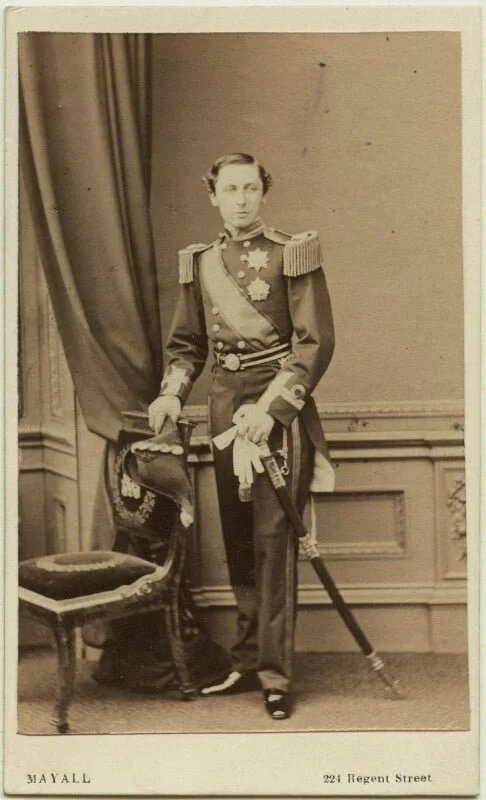
Prince Alfred, Duke of Edinburgh, 1867. National Portrait Gallery. Creative Commons.
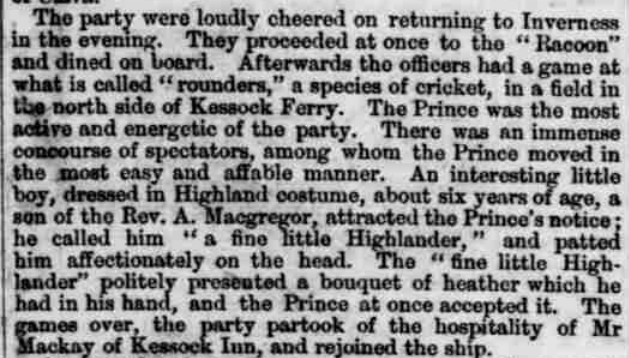
A species of cricket. Inverness Courier, 9 July 1863. Image created by the British Library Board. No known copyright holder.
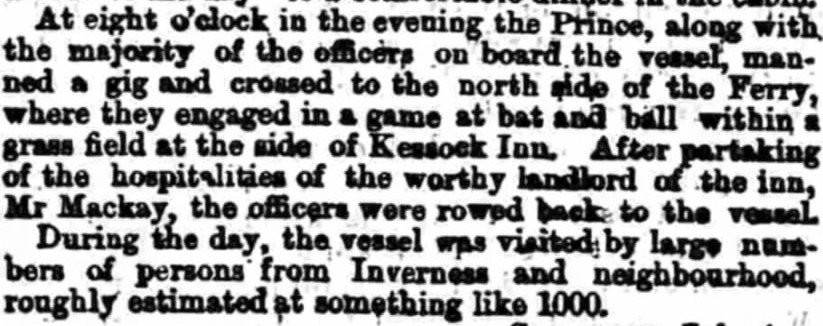
"a game at bat and ball". Courier and Argus, 8 July 1863. Image created by the British Library Board. No known copyright holder.
North Kessock and the Black Isle, with the Kessock Inn background, left. Postcard. Author's own collection.
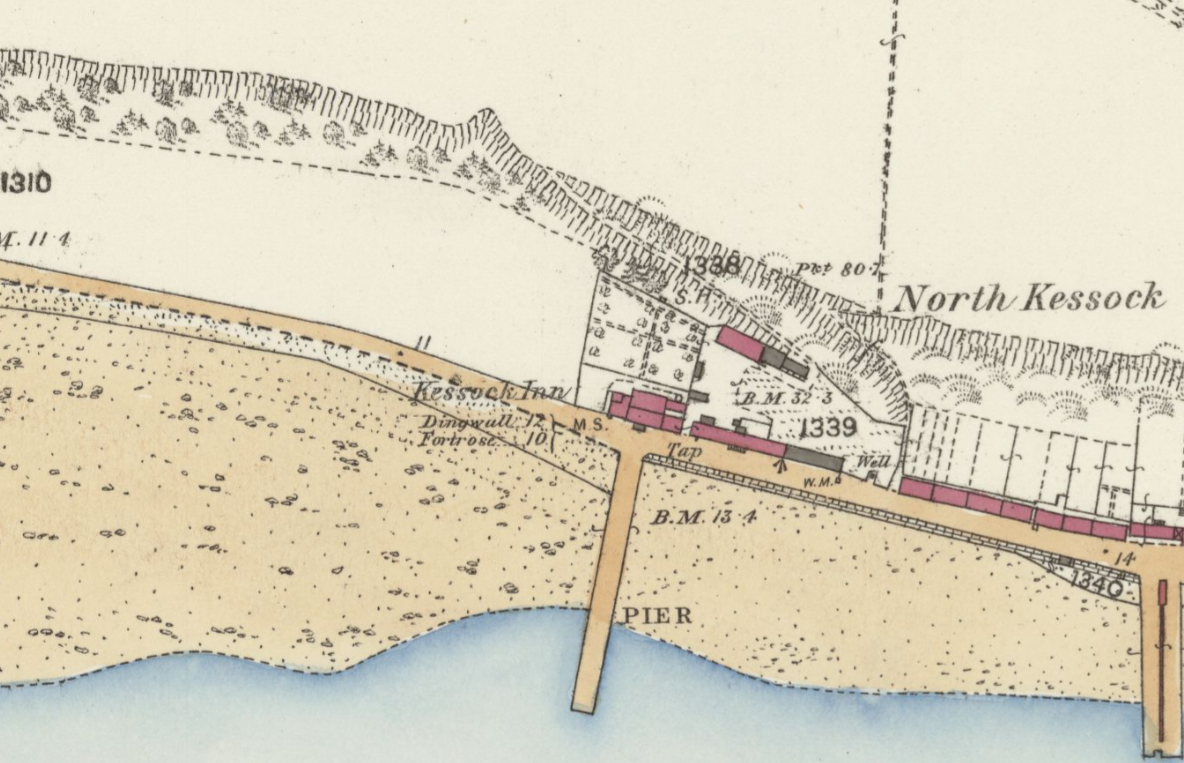
Within a grass field at the side of Kessock Inn. 1873 Ordnance Survey Map. Accessed at the National Library of Scotland: https://maps.nls.uk/os/.
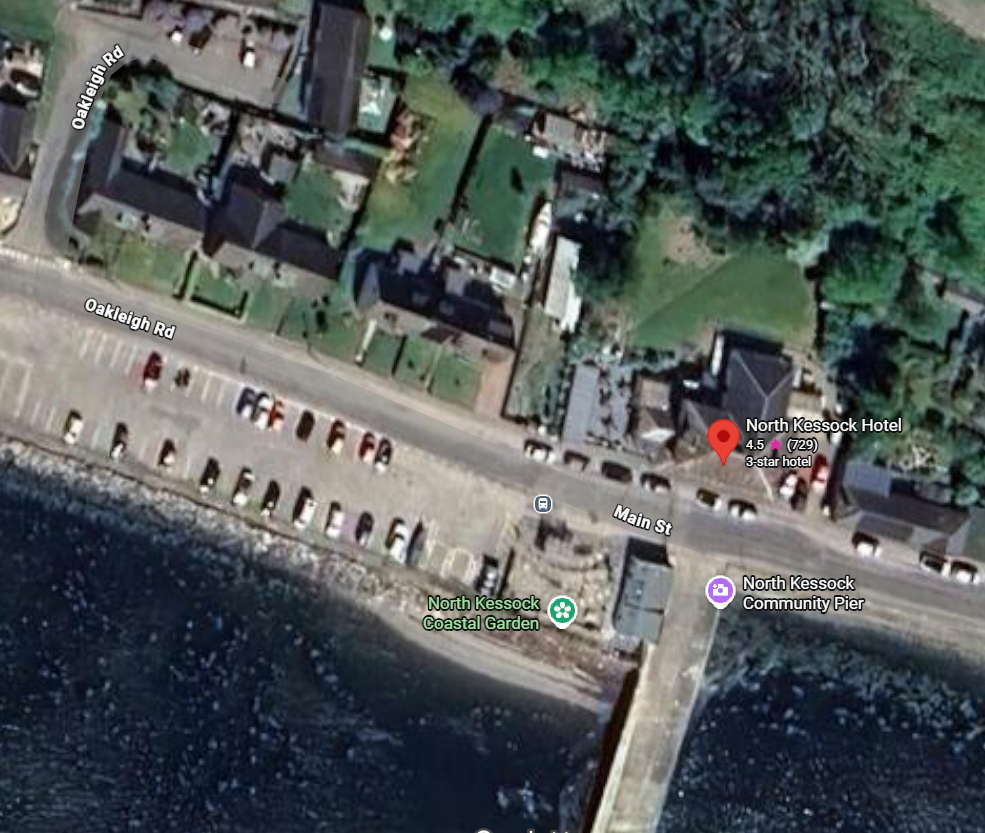
North Kessock ferry landing today (2026). Google Earth.
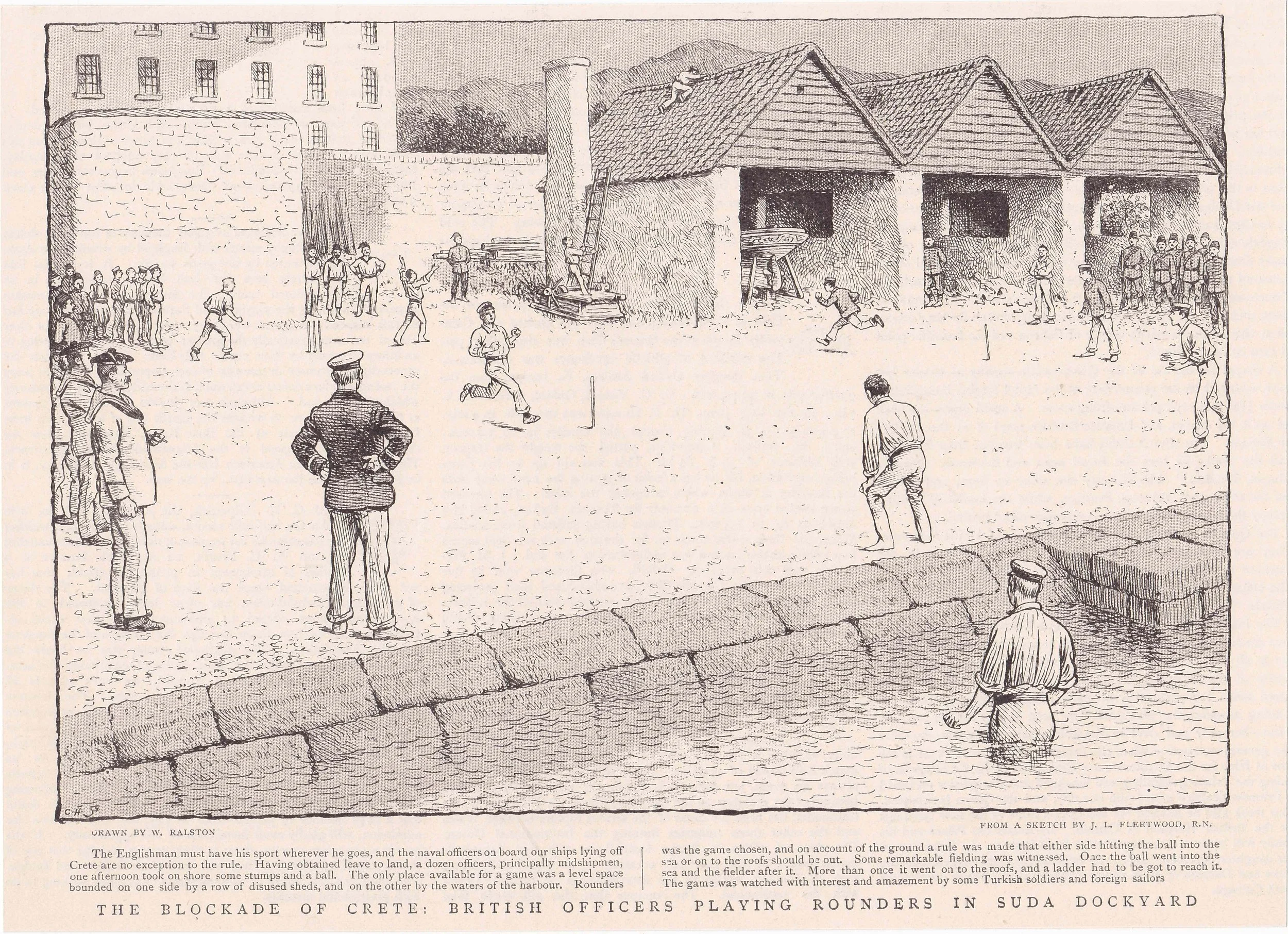
Royal Navy midshipmen playing an improvised game of rounders, Suda, Crete, 1897. The Graphic, 10 April 1897. Author's own collection.
![HMS "Galatea" in Farm Cove; Government House to the left, c. 1870, [attributed Charles Pickering], from albumen print published in "A collection of photographs of buildings and views in New South Wales," Thomas Richards, Government Printer, 1873, Sta](https://images.squarespace-cdn.com/content/v1/674e1985476d7307b8b5f633/95caca4f-76ab-463c-acb9-0574b32dc480/SLNSW_479645_142_HMS_Galatea_in_Farm_Cove.jpg)
HMS "Galatea" in Farm Cove; Government House to the left, c. 1870, [attributed Charles Pickering], from albumen print published in "A collection of photographs of buildings and views in New South Wales," Thomas Richards, Government Printer, 1873, State Library of New South Wales, PXD 557/vol. 3, 55.
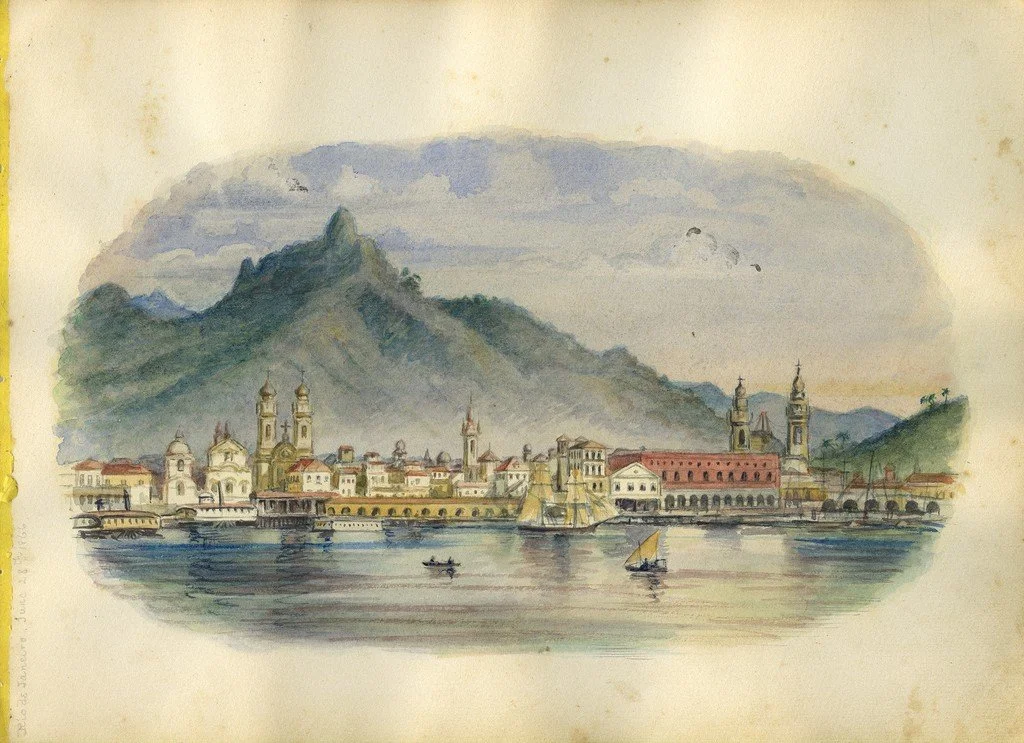
Rio De Janeiro, 1866. Public Digital Library of America. Public domain.
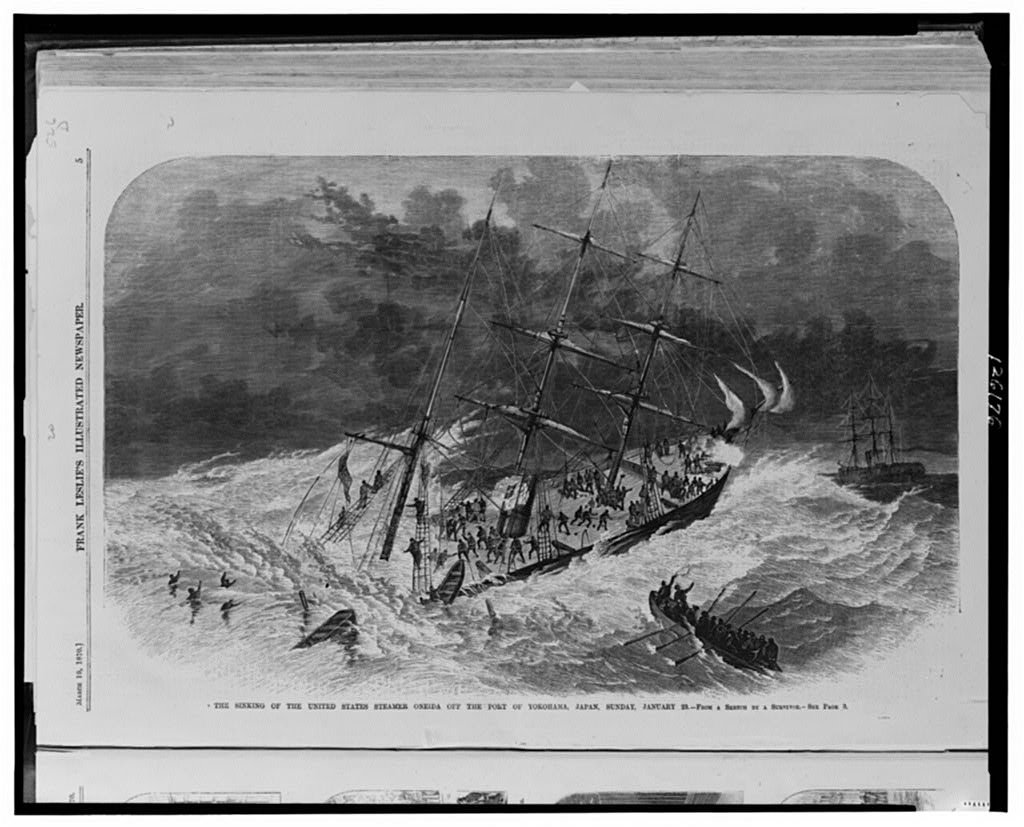
The Oneida Disaster, 1870. Image created by the Library of Congress. Public domain.
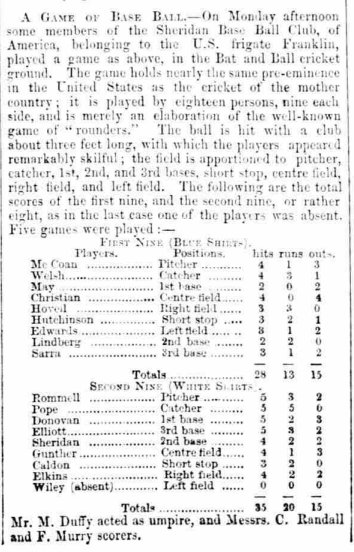
A Game of Base Ball, Gravesend Reporter, 17 June 1871. Image created by the British Library Board. No known copyright holder.
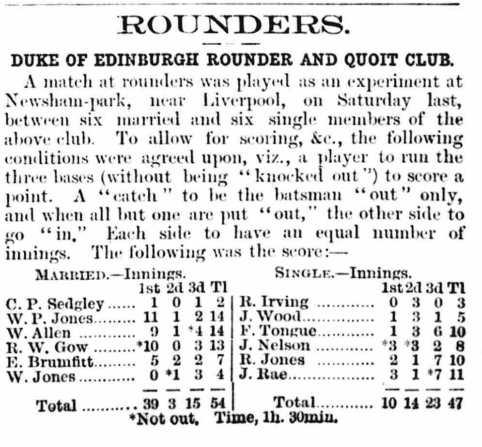
The Duke of Edinburgh Rounder and Quoit Club. Athletic News, 12 June 1875. Image created by the British Library Board. No known copyright holder.