Limelight and Cornstalks
Part II: Leaves.
Jamie Barras.
INTERNATIONAL BASEBALL.—The Australian baseballers, who recently concluded a tour in America, played their only match in England at the Crystal Palace, yesterday, when they defeated a London team by 21 runs to eight. For the winners, Laver, Stuckey, and Ingleton played finely, while the pick of the London side were Armstrong, Kruger, La Martine, and Ashby.[1]
In the first part of this series, I looked at the role entertainers played in the early history of baseball in Australia and New Zealand, and how this led to Australian baseballers taking on a London team at the Crystal Palace in July 1897. It was the story of Charley Hicks and Harry Musgrove, two men who, building on their experience of wrangling entertainment troupes from one side of the world to the other, strove to create a scene with global reach, an effort that was not without hubris. In this second part, I want to look at the Australian team’s opponents and the circumstances that brought them together. It is the story of another globe-trotting showbusiness personality, but one inspired by the multinational, multiethnic, egalitarian London entertainment scene to create a London baseball scene with broad reach.
MR. R.G. KNOWLES AT HOME[…]"You are an enthusiastic baseball player, I know?" "Oh, certainly. My friend Marco and myself credit ourselves with having originated the game in my back garden when I lived in the Loughborough Road. We look upon ourselves as the fathers of the eighty teams, of which the Thespian and Music Hall team, to which we belong, holds the championship."[2]
Richard George “R.G.” Knowles (1858–1919) enjoyed a near-40-year career as a music hall comedian, actor, author, and public speaker. He was, despite his later attempts to claim an American origin, born in Canada to Scottish-Canadian parents. The story of his early life and professional career falls outside the scope of this current work; I have included key details as an appendix. Our interest in Knowles begins with his arrival in England in the Summer of 1891. With him was his wife, banjo player Winifred Johnson (1871–1931), a star performer in her own right. The country would be the Knowles’ home for the next 30 years. While Winifred Johnson quickly established herself as a star banjo soloist, R.G. Knowles’ rise to the top of the English music hall world would be a little slower. His unique selling point was his rapidfire delivery of his material, an approach English audiences took time to warm to. Leaning into their bemusement, Knowles billed himself as the “peculiar American comedian”.[3]
R.G. and Winifred joined the small army of North American entertainers touring Great Britain and Ireland who made London their home, renting a house on Loughborough Road in Brixton, South London. In the spring of the following year, 1892, as the weather grew warmer and the days lengthened, Knowles’ thoughts turned to outdoor pursuits.
But, while baseball had been steadily progressing in public favour in the Midlands and the North, it was not until much more recent times that it earned any recognition in London and the South of England. The ball was first set rolling by Messrs. James Marco, George Dare, Harry Athol, Kelly, Ashby, and R.G. Knowles, who were all American comedians fulfilling engagements in the London variety theatres. Their original idea was to be able to play their national game for their own enjoyment, and they commenced operations by scouring the town and its suburbs for the purpose of finding the materials and a location.[4]
The above quote comes from the book that R.G. Knowles co-wrote about the game of baseball and his role in promoting it in England, published in London in 1896. It is the best source we have on baseball in the capital in this period. It grew out of a piece that, a year earlier, Knowles had contributed to the Windsor Magazine.[5] Communicating his love of the game to others was one of his strategies for broadening its appeal.
Before describing these early efforts by Knowles and his fellow entertainers in London, we should place them in context. An attempt had been made to launch a professional American baseball league in England in 1890, funded by the American baseball team owner and equipment manufacturer Albert Spalding. However, this was the game in Britain trying to walk before it could run; the league collapsed after a single season. However, the organisation created to oversee the game in Britain, the National Baseball Association (NBA), survived the collapse and continued to oversee amateur scenes in the English Midlands (where the professional league was based) and the North-East. These were blue-collar scenes, funded by local industrialists keen to improve the physical and spiritual lives of their workers by providing physical recreation. Separately, an English base-running bat-and-ball game, modelled on rounders and newly christened “English Baseball”, was being played in North-West England, South-West England, and South Wales. Like the American baseball scenes in the English Midlands and the North-East, it found its chief backers among individuals and organisations interested in the physical and spiritual well-being of the working man and woman.[6]
It was against this backdrop that Knowles and his fellow performers were about to launch not a blue-collar but a no-collar baseball scene.
Knowles’ fellow London baseball pioneers were also comedians, but their comedy was very different from his. Knowles was a patter comedian and wordsmith; his fellow pioneers were tumblers—acrobats. They were also all from New York State (as far as they knew, Knowles was too). Three of them came from the same hometown and, as youths, had learned acrobatics together in a makeshift outdoor arena known as the “Sawdust Pile”. This was in Rochester, New York, and they were James Marco, real name James McLaughlin (1859–1924), John Daggert “Jack” Ashby (1863–1922), and Richard “Dick” Kelly (1866–1895).[7]
James Marco, who stood over six feet tall, was, for the bulk of his career, one half of a double act, “The Marco Twins”, with “Little Dietrich”, a small-statured man from Germany. Dick Kelly and Jack Ashby were also a double act. Their signature piece was an acrobatic skit called “Fun in a Chinese Laundry”, which they performed in “yellowface”. These were different times.[8]
George Dare, real name George Alexander Hall (1858–1933), was the youngest of three brothers from New York City who all became acrobats. The most famous member of his family was his sister-in-law, the aerialist, Leona Dare(Susan Adeline Stewart, 1854–1922). In 1892, George Dare was performing in England as one-half of a double act, Wills and Dare, who were billed as “grotesque eccentriques”.[9]
Harry Athol, real name Henry Holleran (1867–1931), was an Irish-American acrobat from Elmira, New York. He started his career in the US as a teenage contortionist with the Gibler Bros. vaudeville company and later formed a long-running partnership with Cornishman Dick Rowe. Rowe and Athol toured England in the late 1880s, which is where Athol met his future wife, Nottingham-born “Gaiety girl” Katie Seymour (1870–1903). Athol settled in England with Katie and eventually moved into theatre management. Alas, Katie died tragically young; Athol went on to marry two further times.[10]
These six pioneers started playing baseball on Clapham Common, South London, during the Easter break of 1892. They were soon joined by several others, two of whom would become regulars on the scene: Ohio-born Frank Halter (1870–?),another acrobatic comedian and contortionist, and Wal Pink (Walter Augustus Pink, 1862–1922). Pink is, at first glance, an outlier, as he was neither a contortionist nor American; he was a London-born songwriter. However, his greatest claim to fame gives us a clue as to how he found his way into such company: he was a founder member of the showbusiness charity The Grand Order of Water Rats (membership no. 003). A search of the membership rolls shows that Knowles (membership no. 046), Athol (049), and Marco (054) were also early members of the Order, as were two of the other Clapham Common players who did not remain long on the scene, “Anglo-American Character Comedian” Arthur Forrest (007), and contortionist and one-half of the Donaldson Brothers, Leon Donaldson (127). This connection to charitable giving would prove vital to the growth of the London baseball scene, as it brought its members into contact with men with money to spend on supporting the scene.[11]
A search of theatrical notices shows that in June 1892, R.G. Knowles and Kelly & Ashby were appearing at the London Pavilion, Piccadilly Circus, while James Marco and Harry Athol were working as a double act a short distance away at the Tivoli on the Strand. George Dare was “resting”.[12] With time on his hands, Dare paid a visit to the Earls Court Arena to take in a show. From this visit would come an event that would change the course of baseball in the capital.
BASEBALL AT THE "WILD WEST.” A match at baseball was played in the arena at the Wild West Show, Earl’s Court, to-day in the presence of a large attendance. The competing teams were the London Thespians v. the Buffalo Bill B.C. The Thespians, for whom R.G. Knowles, the American Entertainer, played splendidly, were unable to show at their very best in consequence of the heavy condition of the ground. The Cowboys eventually won on the seven innings by 13 runs to 5. T. V. Murphy (as catcher) played in tine form for the winners.[13]
The first game of baseball played in London in front of a crowd for which we have a record was played on 30 June 1892 at Earl’s Court Arena between the “Clapham Common Nine”, now calling itself the Thespians Baseball Club, and the Buffalo Bill Baseball Club. This was Buffalo Bill’s second visit to Britain; there would be a third in the new century. Although this was the first time that the Bills had played baseball in Britain, it was not the first time they had played baseball in Europe: in 1890, they had played a game against Americans studying in Dresden, Germany.[14]
There would be a return match between the Bills and the Thespians, also won by the former (9–5), on 13 July 1892. The Music Hall and Theatre Review periodical published a photograph of the two teams posing together after that game in its 22 July edition. For these two games, the six pioneers (Knowles, Dare, Marco, Ashby, Kelly, and Athol) were joined by Wal Pink and Frank Halter and another of the original Clapham Common players who, like Arthur Forrest and the Donaldson Bros., would not remain long on the scene: Tom Ardell. Ardell was a blackface comedian, one-half of the Ardell and West double act; their signature skit was “The Zulus” (different times…). His real name was Julius Augustus Schultze (1867–?), and he was born in Indiana to German parents.[15]
As I have written elsewhere, playing for the Bills on both days was John Yellow Horse Nelson (1866–1957), the son of former US Army scout John Young Nelson and his Oglala Lakota wife, Jennie Yellow Elk Woman Nelson. The world of entertainment in nineteenth-century England was multinational and multiethnic. As we will see, Knowles was keen for his no-collar London baseball scene to be the same.[16]
These two games would have a sequel, but not in London: on 23 June 1894, the Bills and the Thespians met again at Buffalo Bill’s showground in Ambrose Park, Brooklyn. Kelly and Ashby of the 1892 Thespian team played in that game, as did Dick Rowe, the Cornishman who had a double act with Harry Athol in the 1880s. The Bills won again, 9–8.[17]
A baseball match took place on Wednesday on the sands at South Shields between a team of professionals, captained by Tom McNaughton, and a local team. After a pleasant game, the music-hallers were declared winners, they scoring eleven runs against their opponents' six. The Thespian side comprised Tom and Fred McNaughton, Charles Frazer, George Ripon, the Monetas, Al Coote, Frank Morton, and Charles Norton.[18]
By the summer of 1893, Knowles’ missionary work was beginning to bear fruit. In April 1893, he captained a music-hall team in a game against a local team on Tyneside. Three weeks later, the music-hall team, minus Knowles, took on another local team. On the second occasion, the team was led by the McNaughton Brothers, Tom (1866–1923) and Fred (1868-1920). These are the first games by a team of entertainers outside of London for which we have records. They brought the London scene into contact with the broader “national” American baseball scene, something that would soon have great import for both. Notably, most of the players were English, not American. The McNaughtons were Londoners like Wal Pink, and also fellow Water Rats (membership nos. 85 and 86). Tom McNaughton had been one of the interested spectators who had turned out to watch the “Clapham Nine” play the previous year. The McNaughtons would become stalwarts of the London scene.[19]
The “Monetas” were burlesque comedians Harry (Enrico) and Carl (Carlos) Moneta. Although the Monetas often traded on their supposed Spanish origins, Harry at least had no actual claim to Spanish heritage, as he was born Henry Robertson (1872–1945) in Woodstock, Oxfordshire. In Carl’s case, the situation is less certain—he and Harry were not real brothers. In their 1891 census return, Carl gave his place of birth as Liverpool. His name and purported origins were probably also just props; however, research to date has not turned up any more information on him. The partnership dissolved in 1898.[20]
There would be a third game between stage performers appearing on Tyneside and a local team on Saturday, 27 May 1893, which the theatricals won 16–14. The theatrical nine included members of the Carl Rosa Opera Company, prominent among them Maine-born Walter Sumner “W.S.” Starkweather (1857–1912), advertising-executive husband of soprano Marie Duma (Maude Mary Starkweather). Starkweather would go on to become a stalwart of the London scene.[21]
Looking ahead a year, the “Gentleman Jack” theatrical company, featuring boxer Jim Corbett (James John Corbett, 1866–1933), would also play a Newcastle team on the city’s Town Moor. Corbett would later, famously, play minor league baseball for a season back in the States.[22]
As we will see shortly, these four games on Tyneside in 1893 and 1894 were just some of the games outside London featuring entertainers, many of them connected with the London scene. Jumping ahead, and looking at two examples of troupes not connected to the London scene, in 1898, “Charles Harrington’s Great No. 1 American Combination” had its own baseball team with both white and Black players. In June 1898, the team played a team drawn from the stock company of James M. Hardies’s Regent Theatre in Salford that included white, Black, and North American Indian players. I have written about this game and these players elsewhere.[23]
Back in London, in the summer of 1893, the baseball scene was slowly growing. So much so that it could sustain a second music-hall team.
THE J’s BASEBALL TEAM. The J’s are the youngest society of artistes, but none show a greater amount of vitality. They specially attract the young and athletic blood of the profession, and have already distinguished themselves in the baseball field. They have started a cycle club, and will be heard of in other fields of sport. Their prowess will be remembered on the occasion of the [music-hall] sports [day], when they captured a large number of prizes.[24]
The J’s was a fraternal order of variety artists, much like the Water Rats, centred on the English circus family, the Jees. Two of the Jees, brothers Fred and Jack Jee, played for the J’s baseball team, as did several performers who would become staples of the London scene: Londoner Alfred Le Fre (1870–1969) and Fred Boisset (1863–1895) and Willie Boisset (?–1902). The Boissets were a troupe of acrobats originally from France. Fred was the French-born son of the troupe’s founder, Hugo Boisset. “Willie Boisset” was a stage name for an American acrobat recruited into the troupe later in its life; I have yet to discover his real name. Both men would die tragically young.[25]
As well as playing for the J’s, the Boissets had their own baseball team. In September 1893, in Glasgow, they bested a team led by Englishman Charles Lauri Jr (1860–1903), the “Garrick of Animal mimes” (once a music-hall staple in their own right, these days, we see “animal impersonators” only in pantomime, for example, the cat in Dick Whittington). Charles Lauri would keep up the game, his pantomime troupe playing at least once in 1894. This was against the Stockton Baseball Club of the Cleveland and South Durham Baseball Association (the Lauri team received a fearful drubbing, 33–2). His brother-in-law, Italian pantomimist Enrico Zanfretta (1864–?), was a member of his troupe, as was Frenchman Henri Laurent Agoust (1840–1901), and we might reasonably suppose that they both took part in the games.[26]
The scene that Knowles and Marco had started was gaining momentum. It was about to have its Big Bang moment.
BASEBALL. THE ENGLISH ASSOCIATION CUP.—FINAL TIE. THESPIANS (LONDON) BEAT ST. AUGUSTINES (DARLINGTON).—They who have watched the play of the American-cum-London team of Thespian baseball players in their previous matches could have little doubt as to the ultimate issue of their final tie with St. Augustines (Darlington) in the English Association's cup competition, Hyde Farm, Balham, on Saturday afternoon. They went first to bat and never looked like losing.[27]
On Saturday, 5 August 1893, the Thespians took on the St. Augustine’s team from the Cleveland and South Durham Baseball Association on their home ground in the final of the English National Amateur Baseball Championship. They emerged victorious, in a 33 runs to 6 drubbing.
The Thespians’ route to the final was a confused one. The NBA ran the competition on the basis of regional playoffs earning teams the right to progress to the semi-finals against teams from other regions. However, by 1893, the game in the English Midlands was in such a poor state that the NBA initially scheduled playoffs for the North-East of England only, with teams in the Cleveland and South Durham Association on the one hand and the Northumberland and North Durham Association on the other competing to face each other in one of the semi-finals. The other semi-final was to be between the only other two teams in the competition, the Thespians and the Union Club of Liverpool. The Union was the premier club under the English Baseball code, but it had entered the Championship—which was open to all-comers—under the American code. This was a rare example of cooperation between the codes that, alas, did not come off as planned.[28]
In the event, the Thespians–Union game never happened—poor scheduling by the Liverpool club’s management meant they couldn’t arrange a suitable date to travel down to London. Instead, the Thespians faced Stockton—who had already lost to Darlington St Augustine’s in the Cleveland and South Durham playoffs—on Thursday, 13 July, at the Greyhound Inn cricket ground in Dulwich. The Thespians won, 27–19. In the other semi-final, Darlington St Augustine’s bested Wallsend, the winner of the Northumberland and North Durham play-offs, 48–30 in a game that took place in Middlesbrough.[29]
It was then, and only then, that the NBA realised that the Thespians were not the only club in London, and, therefore, the Thespians should not have automatically progressed to the semi-final. Despite that semi-final already having taken place, the NBA decided that to qualify to play St Augustine’s for the championship, the Thespians would first have to beat the J’s in a “new” semi-final (a demi-final?). This the Thespians did, on Wednesday 26 July, at Clapham Common, 38–8, clearing the way for the final against St Augustine’s at Dulwich on Saturday, 5 August. As we have already seen, they emerged from that game the easy winners.[30]
It would be nice to report that Knowles was magnanimous in victory. He was not.
The Thespians simply played with the Saints as a cat does with a mouse. In batting, fielding, throwing, and a general knowledge of the game, they were simply miles ahead of the Northerners[…][31]
No matter. The London baseball scene was now national news (at least to the extent that baseball was reported in the British press, which was not a great deal). The effect was immediate, with new clubs popping up and signalling their intention to play the game in the capital the following season. Before discussing the teams that did eventually emerge, it is worth looking at some possibilities that ultimately were not realised and how they fit into Knowles’ vision for the London baseball scene.
In consequence of the great success that has attended the efforts of the Thespians and the J's at baseball, we understand a new club is being formed, which will consist entirely of ladies.[32]
Paul Wartenberg has formed a new club, which is in active practice for a match game against the J’s next week.[33]
The medical students from St. Thomas's Hospital are also to be represented by a nine that will guarantee to make every team that plays them know they have had a game. The Olympian Quintette [sic] are going to organise a coloured team, and after you have seen a game between black and white teams, you will then know what fun there is to be had at a baseball match. Their coaching is a revelation.[34]
The “ladies” in question were probably the wives of the Thespians and J’s, many of whom, like Winifred Johnson Knowles and Katie Seymour Athol, were performers in their own right and physically active. In addition, Nancy Macintosh (1866–1954), the Ohio-born soprano who debuted with the D’Oyly Carte Opera Company in 1893, was said to be a keen baseball player. Ultimately, it would be another two decades before a women’s baseball scene would develop under the American code in Britain, in Chipping Norton, Oxfordshire. However, by no later than 1908, there was a women’s rounders league in Liverpool, a complement to the men’s leagues there that played under the English baseball code; the players were mostly “factory girls”.[35]
We can suppose that the “medical students from St. Thomas’s Hospital” were North Americans studying in Britain; this was the case with the near-contemporary University of Edinburgh Baseball Club, founded in 1890.[36]
The Wartenbergs were a troupe of acrobats, originally from Germany, active throughout the latter part of the nineteenth century and the beginning of the twentieth. Renoir famously painted two of the younger members of the troupe in 1879. Over time, as with the Boisset troupe, new members from outside the family were recruited and given the “Wartenberg” name. Nothing came of the team formed by “Paul Wartenberg”, and his real name and nationality are lost to history. However, he would turn out for the Thespians in the 1894 season. Like “Carlos Moneta” and “Willie Boisset” before him, he serves as an example of the challenges of identifying players in the 1890s London scene.[37]
The “Olympian Quintet” was a five-member African American vocal group that enjoyed a near-20-year career in the English halls. The quintet’s names were Charles Cornish, A.E. Hardy, J.W. Sampson, and William and Frank Slocum. Knowles’ description of African American baseball teams emphasised their entertainment value, not their playing skill. However, the continued growth of the London baseball scene would soon provide evidence that Knowles was colourblind when it came to hiring players for their skill at the game. It is worth skipping ahead in time to look at that.[38]
In 1895, African American comedian and acrobat Charles Cornelius Carey (1869–1901) secured a regular place in a team new to the London leagues that season, Fullers. Carey caught for Fullers all through the season, which took the team to the final of the English National Amateur Baseball Championship. The following year, Carey started the season with the St Jacob’s Oil team. The Saints, as they were known, had been around since the previous year but were new to the top tier of the game in 1896. Vogeler’s, the company that sponsored them, fielded teams in both tiers in the 1896 season (it can be argued that the “Junior Saints” were the established team, and the “Senior Saints” a new team). The Senior Saints were all-conquering early in the season, so much so that another team in the league, the Dewar’s—the successor to the J’s—recruited Knowles to turn its fortunes around. Knowles’ solution was to steal Carey from the Saints. Later that summer, Knowles also recruited African American boxer and entertainer Frank Craig (1868–1943), the “Harlem Coffee Cooler”, to play for Dewar’s.[39]
The London entertainment scene was multinational, multiethnic, and egalitarian; Knowles was happy for the London baseball scene to be the same. It was open to all. The only qualification was enthusiasm for the game. It was an admirable approach, but one that had drawbacks, as the 1894 season would demonstrate.
The Association will open with five class clubs for members—viz., the Thespians, the J’s, the Remingtons, the Postmen, and the Electrics.[40]
On 22 February 1894, the arrival of London on the American baseball scene in England was cemented with the formation of the London Baseball Association (LBA) at a meeting at the Holborn restaurant in Central London. Eugene Stratton (Eugene Augustus Rühlmann, 1861–1918) was sworn in as its first president. Stratton, born in Buffalo, New York, to German parents, was the most famous solo blackface minstrel in England. He was a great personal friend of R.G. and Winifred Knowles and had been involved with the London baseball scene since the previous summer. He had also served as the NBA’s representative in Liverpool, a thankless task given the dominance of the English game in the city.[41]
Three new teams were pencilled in to join the Thespians and the J’s in the LBA’s inaugural 1894 season. All three were, at least in inception, a departure from the thus-far no-collar scene. The “Postmen” were employees of the Clapham Post Office, and we can reasonably suppose that they were inspired to form a team by witnessing the games on Clapham Common. The “Electrics” (usually written in period sources “Electric’s”) were employees of the “Telephone Construction and Maintenance Company”, manufacturers of telephone equipment. We can point to its North American managers and engineers as the source of its interest in baseball. One of those North American employees was Charles Petitjean (1863–1936) of Massachusetts, one of the two Telephone Company employees who joined the LBA board and became regulars in the Electrics team. The other was John Graham (?–?).[42]
One thing to note is that the Electrics was a company team, but not a works team; the Consolidated Telephone factory was in Coventry, its only presence in London was its showroom and offices. This was a white-collar, not a blue-collar team. One final thing to note is that Charles Petitjean was one of the men in the 1890s scene who would continue over into the next attempt to popularise baseball in London, the British Baseball Association (BBA) of the 1900s. Petitjean would serve as an umpire in the BBA.[43]
We can deal with both these teams quite quickly. The Electrics, captained by Petitjean, took part in the regular season. They fared very badly, going down to heavy defeats (21 July: 48–8 against the Remingtons; 18 August: 37–11 against the J’s; 30 June: 59–8 against the Thespians; 1 September: 39–19 against the J’s). This was even with the support of players drafted in from the J’s. It was announced in March 1895 that the team would drop down to the new second-tier “Junior” division for the 1895 season; however, in the event, it disbanded. The Postmen, meanwhile, whose representatives on the LBA board were H. Johnson and “Mr. May”, played only a few practice matches pre-season; there is no evidence that they took part in the regular season (they do not appear in the list of local cup fixtures published on 25 May 1894, for example).[44]
The fate of these two clubs illustrates the major drawback of the egalitarian, open-to-all approach that Knowles took to baseball in the capital. He was happy for anyone willing to get involved to participate on equal terms with everyone else. This is fine and noble, but also hopelessly impractical for a competitive sports scene. Very few novices remain long in a sport when they are handed heavy defeats every week at the hands of experienced players. To be fair to Knowles, this would prove to be a perennial problem in American baseball in Britain and was baked into any scene that fielded players who had grown up playing the game alongside men who had just picked up a bat and ball for the first time. Also, to Knowles’ credit, he would learn the lesson: the LBA’s future seasons would feature two tiers, with the bulk of the novice English players in teams in the second (“Junior”) tier.
The third new team that season was of a different order.
The Remingtons have the foundation for an excellent team, and every one of the teams must keep a sharp eye on them for next season, as they are just a little bit swift, and will be found in the front rank of '94. Rose and Clive are a strong battery, and want a lot of beating, while Saxby, Sexton, Jenkinson, and Corbett are a strong infield, and capable of attending to anything that comes their way. Brown and Newhall are certainly at home in the outfield, and with a few more players to choose from they will always be able to put a first class nine on the field.[45]
The full name of the Remingtons was the Remington Typewriters’ team. It was the company team of the Wyckoff, Seamans, and Benedict Company, the owner of the Remington Typewriters brand. The team was built around a solid core of experienced players drawn from North American employees seconded to the company’s London offices from its New York headquarters. As with the Electrics, these were managers and senior engineers, not factory employees—white-collar, not blue-collar, workers. Regardless, the Remingtons marked a real step up in the London baseball scene. Its most significant player was its catcher, New Yorker William Archibald Clive (1869–1912). Clive had been active on the amateur baseball scene in New York before his transfer to London. The list of players he had played with or against was a star-studded one: Mike Griffin, Billy Shindle, Moxie Hengel, Pete Hotaling, and Jumbo Latham. He married an Englishwoman and made London his home. He was one of a small number of LBA players who would continue with the game in the capital into the new century, playing a key role in launching the BBA.[46]
Alongside Clive in the Remingtons was Henry Turner Saxby (1865–1930). Like Clive, a senior engineer seconded to London from Wyckoff, Seamans, and Benedict’s New York headquarters, Saxby was born in England but grew up in the US, which is where he learned his baseball. Unlike Clive, he would return to the US within a few years.[47]
With men like Clive and Saxby in their ranks, the Remingtons would remain on the London scene until the end of the 1897 season. In 1894, they easily outclassed the J’s and the Electrics and gave the Thespians a run for their money. Jumping ahead: in August 1896, they bested a team from the US Navy cruiser, the USS Minneapolis, 15–6. This was the first recorded baseball game in the capital to feature a team from the US military.[48]
The other thing to note about the team is its name: ‘Remington Typewriters’ was the name of the brand, not the company. This was a form of sponsorship, a full 80 years before the earliest official sports shirt sponsorship. It would be the model for how other teams on the London scene—Fullers, St Jacob’s Oil, Dewars—would be funded in future years. The difference being that, in those cases, the connection to the company behind the brand would be largely financial only.[49]
BASEBALL. The Thespians journeyed to Derby on Saturday, May 12, to play the Derby Club, and sustained a defeat.[50]
The Thespians would go on to claim a second national title at the end of the 1894 season, besting Stockton, 38–14, on home ground on Saturday, 25 August 1894. However, arguably, the story of the season was the Thespians’ contests with the Derby club. Although not the oldest baseball club in Britain, Derby was the oldest surviving. It started in 1887 as the works team of Derby industrialist Francis Ley. After a controversial outing in the professional league of 1890, the club fell into the doldrums. Its reemergence as a force in American baseball in Britain began with its defeat of the Thespians, 15–13, at Derby on Saturday, 12 May 1894.[51]
Derby hammered the visiting J’s two days later, 23–7. They then travelled down to London for a return match with the Thespians on 6 June 1894, and again emerged victorious, 29–26. The game was marred by controversy: noticing that a Thespians player, Blockson, had skipped second base on his way to third, Langlands, the Derby secretary, who was acting as umpire, instructed one of the Derby players to throw the ball to third to touch Blockson out. Not the behaviour of an impartial official. “Blockson” was Delaware-born Harry Blocksom (1869–?) of the double-act Blocksom and Burns. His partner, Pennsylvania-born John C. Burns (1865–1936), caught for the Thespians for much of the 1894 season.[52]
When it was announced that the Thespians would be facing Derby in the semi-finals of the National Cup, Knowles realised something had to be done. So, he brought in a ringer.
THE NATIONAL BASEBALL CUP. SEMI-FINAL TIE: DERBY v. THESPIANS. The Derby Baseball Club journeyed to London on Saturday to antagonise the Thespians in the semi-final tie of the National Cup. The game took place in the Baseball Park and was witnessed by an unusually large assemblage of spectators. The teams either side differed slightly from the nines that have opposed each other already this season. On the home side the only alteration was that Cornwell, Californian, took up the duties of pitcher in succession to Blocksom, who went third base[..][53]
William Henry Cornwell III (1876–1954) was an 18-year-old pupil of King’s College School, which was associated with the London university of the same name. Although he spent the latter part of his childhood in California, he was born in the Kingdom of Hawaii to American parents. A phenom of phenoms, on 22 June 1894, he won five events at the King’s College School Athletics Meet, something that earned him a write-up in the London papers. By then, he had already debuted on the London baseball diamond. He both pitched and caught for the Electrics in their 52–21 drubbing by the Thespians on 9 June 1894, being singled out for praise as “one of the finest players in England” in the press. In a Fourth of July game between two picked teams, he pitched the “A” team to victory, 11–9.[54]
Knowles had found his secret weapon. He brought Cornwell into the Thespians team. The result was victory for the Thespians in their semi-final against Derby, 22–14, setting up the final against Stockton, again with Cornwell in the pitcher’s box, and the Thespians’ second successive national championship.[55]
The ease with which players moved between teams was a feature of the LBA and grew naturally from Knowles’ open-to-all approach to organising the scene. It was also, at the same time, an acknowledgement that the scene had a deficit of players: although the LBA had fixed clubs and a fixed schedule, anyone who turned up and could play was guaranteed a game for whatever teams were playing. This meant that games always went ahead, but, of course, this was no way to generate fan support for individual teams. This was no way to put down deep roots.
Acknowledgements: I was first introduced to R.G. Knowles and the London Baseball Association via posts by Andrew Taylor at his Folkestone Baseball Chronicle Facebook page. Andrew was also a great help to me in my early research on the subject.
Jamie Barras, July 2026
Back to Limelight and Cornstalks
Appendix: Early Life and Career of R.G. Knowles
R.G. Knowles had a challenging start in life. His father died five weeks before he and his twin brother, Robert, were born. His brother Robert would himself die just eight years later—a shattering loss for a twin. R.G.’s mother, Ann, remarried within a year of Robert’s death, and R.G. grew up in the home of his mother and stepfather alongside eight stepsiblings.[56]
Given this harrowing start to his life, it is perhaps not surprising that Knowles would later claim to have left Canada as a young boy and grown up in Chicago. (He also falsely claimed that his parents were originally from Buffalo, New York, to reinforce these bogus American ties.) The truth was that he spent his formative years and early adulthood in Ontario, latterly working as a clerk at Eaton’s Dry Goods Store in Hamilton. It was while working as a store clerk that he began appearing in amateur stage productions. He formed a song-and-dance partnership with a friend, Dick Ford. He would likely have eventually left Ontario to pursue a career in entertainment, whatever happened. As it was, the impetus for the final break with his early life came in June 1879, when he and Dick Ford were arrested on suspicion of having burglarised a local restaurant.[57]
Nothing seems to have come of the arrest, but Knowles and Ford took this misadventure as a sign; they left for America. There, they joined up with another song-and-dance duo, Kennedy and Mobley, and formed the “Nonsensical Four”, debuting in Chicago in January 1880. It would be another eight years before Knowles returned to Hamilton. By then, he was something of a star. Nevertheless, he remained very touchy on the subject of his past. When a Hamilton theatre critic referred to him in a review as “Dick Knowles”—the name the people of Hamilton would have known him under in his youth—he dashed off an angry letter to the critic’s editor, pointing out that he was known professionally as “R.G. Knowles” and only “R.G. Knowles”. He also felt the need to point out that he earned more in a week than the critic earned in a month. He was a man with a chip on his shoulder.[58]
From his rocky start and first professional engagements as a member of the “Nonsensical Four”, Knowles went on to establish himself as a comedian and comic actor of note. The best review of R.G. Knowles’ career that I know of is that by Tony Barker, published in England in October 1980 in the Music Hall newsletter. He met his future wife, the banjo player Winifred Johnson (1871–1931), a star performer in her own right, while touring. In later years, Winifred would become R.G.’s manager, and in the early years of their marriage, they appeared together in the play “A Pair of Jacks” all across America.[59]
A further significant milestone in Knowles’ early career—the one that took him back to Hamilton—was his several-year engagement as a comedian with the Haverley–Cleveland Minstrels Company. This was, by the 1880s, the largest of the minstrel troupes composed of white performers of blackface minstrelsy. It is worth noting that, unlike his great friend, Eugene Stratton, whom we will meet later, Knowles did not make performing in blackface a feature of his career after he went solo. Later events would show that Knowles regarded Black performers as his equals; this was likely due to his experience of the world of blackface minstrelsy. Although this may seem paradoxical, it reflected the fact that, as we saw in the first part of this series, there were Black performers of blackface minstrelsy. Knowles would have come into contact with these performers while touring.[60]
Notes
[1] ‘International Baseball’, The Times, 29 July 1897.
[2] ‘Mr. R.G. Knowles at Home’, The Sketch, 28 November 1894.
[3] Tony Barker, ‘R.G. Knowles’, Music Hall, issue 15, October 1980. Author’s own collection. Winifred Johnson’s early life and career: ‘A Chat with Winifred Johnson’, Era, 30 March 1895.
[4] R.G. Knowles and Richard Morton, ‘Baseball’, (London: George Routledge and Sons, 1896), page 44, https://archive.org/download/baseball_202409/Baseball.pdf, accessed 9 January 2025.
[5] R.G. Knowles, ‘Baseball in England: Past, Present, and Future’, Windsor Magazine, November 1895, 516–520.
[6] Catherine Budd, ‘A sport for the “Yankee-like enterprise and energy of Ironopolis”: Baseball in late nineteenth-century Middlesbrough’, Cleveland History, 2013, 104, 23-30; Joe Grey, ‘What About the Villa?’ (Ross-on-Wye: Fineleaf Editions, 2010); https://www.ishilearn.com/diamond-lives-intolerance, accessed 11 July 2026.
[7] Marco/McLaughlin and “Sawdust Pile”: ‘Jim Marco, Stage Comedian, Expires’, Democrat & Chronicle (Rochester, NY), 13 January 1925; Ashby: ‘Theater Manager Dies’, Democrat & Chronicle (Rochester, NY), 26 September 1922; Kelly: ‘Richard Kelly Dead’, Democrat & Chronicle (Rochester, NY), 7 January 1895.
[8] ‘The Marco Twins’, Rochester Herald, 13 February 1897. A fictionalised version of the “twins” early life is presented here: ‘The Marco Twins’, Football News (Nottingham), 19 March 1910. Kelly and Ashby: Note 5 above, final reference. See also potted biographies for Marco and Ashby in Knowles and Morton, Note 4 above, 76–78.
[9] I tell the Leona Dare story here: https://www.ishilearn.com/staged-identities-dare, accessed 9 July 2026. Potted George Hall Dare biography: Knowles and Morton, Note 4 above, 75–76. Wills and Dare: ‘Collins’s Islington Green’, Islington Gazette, 28 January 1892.
[10] ‘The Acme of Amusement!—The Gibler Bros.’, Columbia Herald-Statesman (Columbia, MO), 18 November 1881; ‘Mr. Dick Rowe of Penzance, in the States’, The Cornishman, 24 January 1884; ‘Death of Miss Katie Seymour’, Pall Mall Gazette, 8 September 1903. Potted biography: Knowles and Morton, Note 4 above, 77–78. Henry Holleran: this information can be put together from Henry Athol Hollerand’s 1921 England Census return, St Marylebone, in which he gives his place of birth as Elmira, NY, searches for his marriages and death under “Henry A Hollerand”, cross-referenced with the entry for Henry Holleran and Lawrence Holleran (Harry’s brother, known professionally as Lawrence Athol), 1880 US Federal Census, Elmira, New York, and Henry Holleran’s 1891 US passport application, filed in London, which confirms that he is an “artist”, ancestry.co.uk, Ancestry.com Inc. (Operations), accessed 10 July 2026.
[11] ‘The Growth of Baseball’, Music Hall and Theatre Review, 25 August 1893. Wal Pink: https://www.gowr.co.uk/roll-of-honour/walpink/, accessed 10 July 2026. Water Rats Membership Roll: https://www.gowr.co.uk/roll-of-honour/, accessed 10 July 2026. Arthur Forrest: ‘Notices’, Magnet (Leeds), 12 April 1884. Donaldson Brothers: ‘Notices: Empire Palace’, Portsmouth Evening News, 16 July 1892. The biographical information on Halter comes from his 1891 US passport application, filed in Berlin, ancestry.co.uk, Ancestry.com Inc. (Operations), accessed 10 July 2026, and Knowles and Morton, Note 3 above, page 76.
[12] ‘Notices and Advertisements’, London Evening Standard, 13 June 1892.
[13] Knowles and Morton, Note 4 above, page 44.
[14]https://codyarchive.org/topics/britain, accessed 10 July 2026. ‘Tagesbericht. — Buffalo Bills Wild West wird morgen’, Tageblatt, 15 June 1890, https://codyarchive.org/item/wfc.nsp11413, accessed 10 July 2026.
[15] ‘Base Ball and Mummers’, Music Hall and Theatre Review, 22 July 1892. Ardell and West: ‘Advertising: The Empire’, South Wales Echo, 17 June 1892. Tom Ardell/Julius Schultze: ‘Attaining Celebrity Abroad as well as at Home’, Evansville Journal (Evansville, IN), 20 September 1888.
[16]https://www.ishilearn.com/diamond-lives-behind-the-mask, accessed 10 July 2026. See also: ‘Baseball at the Wild West’, Sporting Life, 2 July 1892. In that article, Nelson is described as “J. Nelson (eldest son of old John Nelson)”. John Nelson and family: https://library.centerofthewest.org/digital/collection/BBOA/id/1140/, accessed 10 July 2026.
[17] ‘Baseball’, Music Hall and Theatre Review, 6 July 1894; ‘Wild West Beat the Thespians’, Times-Union (Brooklyn, NY), 25 June 1894. It should be noted that the latter report gets the team lists the wrong way round.
[18] ‘Babble’, Music Hall and Theatre Review, 12 May 1893.
[19] ‘Babble’, Music Hall and Theatre Review, 21 April 1893. Tom McNaughton: https://www.themusichallguild.com/projects-3, https://www.findagrave.com/memorial/176872993/tom-mcnaughton, accessed 10 July 2026. Se also Knowles and Morton, Note 4 above, page 71. Fred McNaughton: https://www.findagrave.com/memorial/243603296/fred-mcnaughton, accessed 13 July 2026.
[20] Harry and Carlos Moneta: ‘Opera House—Don Quixote’, Cork Constitution, 7 November 1893. Henrico and Carl Moneta: ‘Moore and Burgess Minstrels’, Daily Telegraph, 15 May 1890. Partnership dissolved: ‘Advertisements and Notices’, The Era, 15 January 1898. Entries for “Carloss E. Moneta” and “Harry R Moneta”, Eccles, Suffolk, 1891 England Census, ancestry.co.uk, Ancestry.com Inc. (Operations), accessed 10 July 2026. The fact that Harry Moneta was Henry Robinson comes courtesy of one of his descendants, who created a family tree on ancestry.co.uk, Ancestry.com Inc. (Operations), accessed 10 July 2026.
[21] ‘Baseball on Tyneside’, Newcastle Journal, 27 May 1893; ‘Baseball’, Newcastle Daily Chronicle, 30 May 1893. Walter Starkweather’s biographical information can be assembled from the following: entry from Walter S. Starkweather and Maud Mary Starkweather, 1901 England Census; Maud Mary Starkweather, US passport application, filed 31 March 1920, Washington D.C., ancestry.co.uk, Ancestry.com Inc. (Operations), accessed 10 July 2026; and registration of death of Walter S. Starkweather, 1912, Births, Marriages, Deaths, https://www.freebmd.org.uk/cgi/search.pl, accessed 12 July 2026.
[22] Newcastle–Corbett game: ‘Baseball’, Music Hall and Theatre Review, 6 July 1894. Corbett and baseball: L. Robert Davids, ‘Jim Corbett Playing First Base’, https://sabr.org/journal/article/jim-corbett-playing-first-base/, accessed 12 July 2026.
[23] ‘Baseball: The Game in Manchester’, Sporting Life, 7 July 1898; https://www.ishilearn.com/diamond-lives-behind-the-mask, accessed 13 July 2026.
[24] ‘The J’s Baseball Team’, Music Hall and Theatre Review, 1 September 1893.
[25] “Society of artistes”: Note 10, first reference. The J’s and the Jees: ‘Marriage of Charles Avolo and Lillie Jee’, Music Hall and Theatre Review, 28 July 1893. Alfred Le Fre: ‘Obituary: Albert Le Fre (Albert de Vay)’, Stage, 19 March 1970. Fred Boisset: ‘Death of Mr. Fred Boisset’, Era, 29 June 1895. Willie Boisset: ‘Merry-Go-Round’, London and Provincial Entr’acte, 4 January 1902. Boisset troupe team: ‘Baseball’, Music Hall and Theatre Review, 15 September 1893.
[26] Boisset v Lauri game: ‘The J’s held their first supper…’, Music Hall and Theatre Review, 24 November 1893; Boissets and Lauri appearing in Glasgow in the same week: ‘Gossip About the Play’, Glasgow Evening Post, 18 September 1893. Charlies Lauri: https://dogpatch.press/2015/06/15/museum-of-furry-pantomime/, accessed 10 July 2026; ‘Mr Charles Lauri Jun.’, Illustrated Sporting and Dramatic News, 20 February 1886. Charles Lauri’s Team versus Stockton: ‘Stockton’, Northern Review, 19 May 1894. Biographical information for Enrico Zenfretta: entry for Enrico Zanfretta, Tufnell district, 1911 England Census, ancestry.co.uk, Ancestry.com Inc. (Operations), accessed 10 July 2026. For Henri Agoust: Henri Laurent Agoust, US passport application, filed in Austria, 17 February 1898, US Passport Applications, 1795–1925; Henri Laurent Agoust’s will, England & Wales, National Probate Calendar (Index of Wills and Administrations), ancestry.co.uk, Ancestry.com Inc. (Operations), accessed 10 July 2026.
[27] ‘Baseball: The English Association Cup’, Yorkshire Post and Leeds Intelligencer, 7 August 1893.
[28] Union and the plan to take on the Thespians under the American code: ‘Baseball Notes’, Liverpool Echo, 1 July 1893.
[29] Union’s woes: ‘Baseball Notes’, Liverpool Echo, 15 July 1893. Thespians–Stockton: ‘Curious Accident at Baseball’, Lancashire Evening Post, 14 July 1893. St Augustine’s–Wallsend: ‘Baseball’, Jarrow Express, 21 July 1893.
[30] ‘Baseball’, Morning Leader, 27 July 1893. That Knowles was unhappy about the NBA’s insistence on the Thespians playing a second semi-final against the J’s can be gleaned from his description of events in his book: Knowles and Morton, Note 3 above, 48–49. We might speculate that it came as a surprise to the NBA that the J’s existed because Knowles had neglected to mention them when putting the Thespians forward as the representative London team.
[31] ‘Baseball’, Music Hall and Theatre Review, 11 August 1893.
[32] ‘Babble’, Music Hall and Theatre Review, 18 August 1893.
[33] ‘Baseball’, Music Hall and Theatre Review, 4 August 1893.
[34] Note 11 above, first reference.
[35] Nancy Macintosh: https://www.gsarchive.net/whowaswho/M/McIntoshNancy.htm, accessed 12 July 2026. And baseball: ‘Miss Nancy MacIntosh, the New Prima Donna’, Gentlewoman, 9 September 1893. Women’s game in Chipping Norton: ‘Baseball at Chipping Norton’, Evesham Standard & West Midland Observer, 25 August 1923; ‘Baseball at Chipping Norton’, Oxford Journal, 13 October 1920; ‘Mixed Baseball in England’, Daily Mirror, 18 September 1920. Rounders League in Liverpool: ‘Baseball and Rounders’, Liverpool Echo, 30 July 1910.
[36] University of Edinburgh Baseball Club: ‘Baseball, the Growth of Baseball in England’, Sporting Life, 5 March 1890; Evening News (Edinburgh), 18 March 1890.
[37] Renoir’s painting: https://www.artic.edu/artworks/81558/acrobats-at-the-cirque-fernando-francisca-and-angelina-wartenberg, accessed 12 July 2026.
[38] The surnames of the members of the Quintet were given in their billing; see, for example, ‘Public Entertainments’, Sussex Daily News, 30 January 1889. Charles Cornish: ‘Music Hall Gossip’, Era, 4 September 1897. Frank Slocum: ‘Babble’, Music Hall and Theatre Review, 12 July 1892; A. E. Hardy et al.: ‘Windsor Theatre’, Boston Globe, 21 February 1886. To date, the only member of the troupe I have traced is William Slocum, in the 1901 England Census, 44 years old, living in Newington with his wife, Ella, and born in Rhode Island, USA.
[39] Carey, “a coloured player”, in the Fuller’s team: ‘Baseball’, Daily Telegraph (Derby), 27 May 1895. Carey playing for St Jacob’s Oil and Dewars in 1896: ‘Baseball’, London Daily Chronicle, 25 May 1896; ‘Baseball’, Music Hall and Theatre Review, 31 July 1896. Carey is one of the players in the photograph of members of the London baseball scene that accompanies Knowles’ 1895 Windsor Magazine article, Note 5 above. Only Carey’s surname is given in the newspaper accounts that I have seen. I make the case for Carey being Charles Cornelius Carey here: Note 23 above, second reference. Frank Craig’s boxing career: https://ringsidereport.com/?p=54533, accessed 3 September 2025. Craig on stage, performing a ‘plantation dance’: ‘Frank Craig at the Canterbury’, Sporting Life, 20 February 1895. Craig’s music hall career: Roy Busby, British Music Hall: An Illustrated Who's Who from 1850 to the Present Day (London: Paul Elek, 1976), 42. Craig in the Dewars team with Knowles: ‘Baseball’, Music Hall and Theatre Review, 26 June 1896; ‘At Balham’, Boxing World and Mirror of Life, 4 July 1896.
[40] ‘Baseball’, Music Hall and Theatre Review, 2 February 1894.
[41] ‘London Baseball Association’, Sporting Life, 23 February 1894; ‘London Baseball Association’, Music Hall and Theatre Review, 23 February 1894; ‘The Baseball Associations’, Globe, 22 February 1894. Eugene Stratton: Harrington, Judith. (2009). A Closer Look at Eugene Stratton (1861-1918). Dublin James Joyce Journal. 2. 78-88. 10.1353/djj.2009.0007. Joins the London scene: ‘Baseball Notes’, Music Hall and Theatre Review, 23 June 1893.
[42] Clapham postmen: ‘Baseball’, Music Hall and Theatre Review, 4 May 1894. Telephone Construction and Maintenance Company: https://www.gracesguide.co.uk/Consolidated_Telephone_Construction_and_Maintenance_Co, accessed 12 July 1894. Knowles referred to the company as the “Telephone Maintenance and Induction Company”, a corruption arising from its telegraphic address “Induction London”, see Note 11 above, first reference. Charles Petitjean’s biographical information: entry for Charles Petitjean, Clerkenwell district, 1911 Census, ancestry.co.uk, Ancestry.com Inc. (Operations), accessed 10 July 2026; registration of death of Charles Petitjean, 1936, Births, Marriages, and Deaths, https://www.freebmd.org.uk/cgi/search.pl, accessed 13 July 2026. Petitjean and Graham on LBA board: Note 41 above, third reference.
[43] Charles Petitjean, umpire in the BBA: ‘British Baseball Association’, Sporting Life, 7 June 1906.
[44] Electrics practicing: ‘Baseball’, Music Hall and Theatre Review, 15 September 1893. Postmen playing practice game: ‘Baseball’, Music Hall and Theatre Review, 30 March 1894. Opening day of 1894 season: ‘Baseball’, Daily News (London), 11 May 1894. Electric’s in regular season, see, for example, ‘Baseball’, London Daily Chronicle, 11 June 1894; ‘Baseball’, Mid-Surrey Gazette, 25 August 1894; ‘Baseball’, Lloyd's Weekly Newspaper, 22 July 1894; ‘Baseball’, Clapham Observer, 8 September 1894. Fixture list: ‘Baseball’, Music Hall and Theatre Review, 25 May 1894. Announcement of the second tier for 1895 season: ‘Baseball’, Music Hall and Theatre Review, 8 March 1895.
[45] Note 11 above, first reference.
[46] Clive’s biographical information can be assembled from the following: entry for William A. Clive, Newington Green district, 1901 England Census, William A. Clive, Newington, 1911 England Census, Entry for Jess Beta Clive and William Archibald Clive, 14 January 1903, England, Surrey, Parish Registers, 1536–1992, ancestry.co.uk, Ancestry.com Inc. (Operations), accessed 10 July 2026; record of death of William A. Clive, 1912, Births, Marriages, Deaths, https://www.freebmd.org.uk/cgi/search.pl, accessed 12 July 2026. His career in amateur baseball: Knowles and Morton, Note 4 above, page 74. Clive in the BBA: ‘Base-Ball at Plumstead’, The Bystander, 23 May 1906; ‘Baseball’, The Sportsman, 19 May 1906; ‘Baseball’, Daily News (London), 13 May 1907.
[47] Henry Turner Saxby: https://www.familysearch.org/en/tree/person/details/L1Z5-B5J, accessed 12 July 2026. See also entry for Henry T. Saxby, “typewriter inspector”, Islington district, 1891 England Census, ancestry.co.uk, Ancestry.com Inc. (Operations), accessed 10 July 2026. Knowles and Morton, Note 4 above, page 69.
[48] Minneapolis game: ‘Baseball’, Music Hall and Theatre Review, 14 August 1896. Cruiser: https://www.history.navy.mil/research/histories/ship-histories/danfs/m/minneapolis-i.html, accessed 12 July 2026.
[49] Fuller’s was the confectioner William B. Fuller. St Jacob’s Oil was the product of the Charles Vogeler Company. Dewars was, and is, the distiller. https://www.gracesguide.co.uk/Fullers, https://www.gracesguide.co.uk/St._Jacobs_Oil, accessed 12 July 2026.
[50] ‘Baseball’, Music Hall and Theatre Review, 18 May 1894.
[51] Thespians–Stockton game: ‘Baseball’, Music Hall and Theatre Review, 31 August 1894.
[52] ‘Baseball: Derby v. J’s (London)’, Derby and Chesterfield Reporter, 1 June 1894; ‘Baseball: Derby v. Thespians’, Derby Daily Telegraph, 9 June 1894; ‘Baseball’, Music Hall and Theatre Review, 15 June 1894. Harry Blockson: entry from Harry Blockson and Annie H. Blockson, Neptune City, 1905 New Jerey Census, ancestry.co.uk, Ancestry.com Inc. (Operations), accessed 10 July 2026. John C. Burns: ‘John C. Burns’, Los Angeles Evening Citizen News, 20 May 1936.
[53] ‘The National Baseball Cup’, Derby Daily Telegraph, 30 July 1894.
[54] Cornwell III: https://www.wikitree.com/wiki/Cornwell-117, accessed 19 February 2026. Andrew Taylor of the Facebook Folkestone Baseball Chronicle has covered the career of W.H. Cornwell III in baseball in England: https://www.facebook.com/FolkestoneBaseball/. King’s College School Sports: ‘King’s College School Sports’, Penny Illustrated Paper, 30 June 1894. Cornwell for the Electric’s: ‘Baseball’, Music Hall and Theatre Review, 15 June 1894. For the “A” team: ‘Baseball’, Music Hall and Theatre Review, 6 July 1894.
[55] Notes 49 and 51 above.
[56] The biographical details for R.G. Knowles’ early life have been assembled from public records by descendants of family members. See, for example, Richard George Knowles (1858-1919) - Find a Grave Memorial, Ann Walker Laird Knowles - Glover (1835-1933) - Find a Grave Memorial, accessed 9 July 2026.
[57] This sequence of events can be assembled from the following: ‘Supposed Burglars Arrested’, Hamilton Spectator (Hamilton, ON), 6 June 1879; ‘Interesting, But Not News’, Hamilton Spectator (Hamilton, ON), 9 March 1895.
[58] ‘Amusements’, Chicago Daily Telegraph, 1 January 1880; ‘Music and Drama: An Aggrieved Minstrel’, Hamilton Spectator (Hamilton, ON), 3 June 1889. It has to be said that most of Knowles’ anger was directed towards the critic’s negative review of his performance.
[59] Note 3 above.
[60] Knowles in Haverley–Cleveland Minstrels: Note 57 above, second reference.
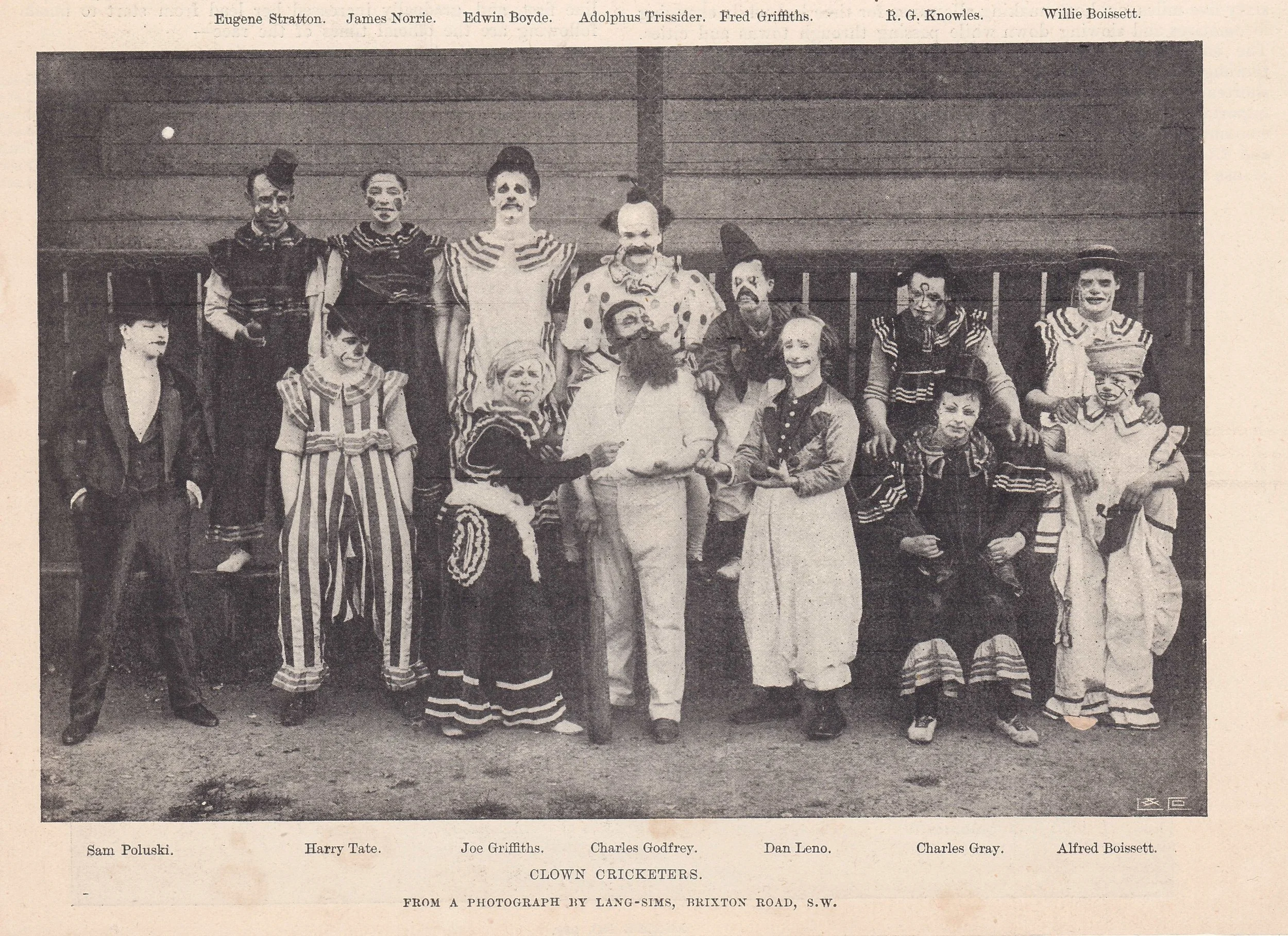
Clown Cricketers, Sketch Magazine, 9 October 1895. Author's own collection.
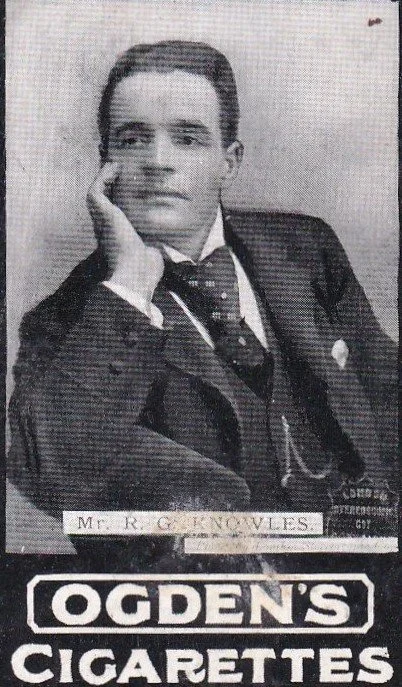
Richard George "R.G." Knowles (1858-1919). Ogden's Cigarette card. Author's own collection.
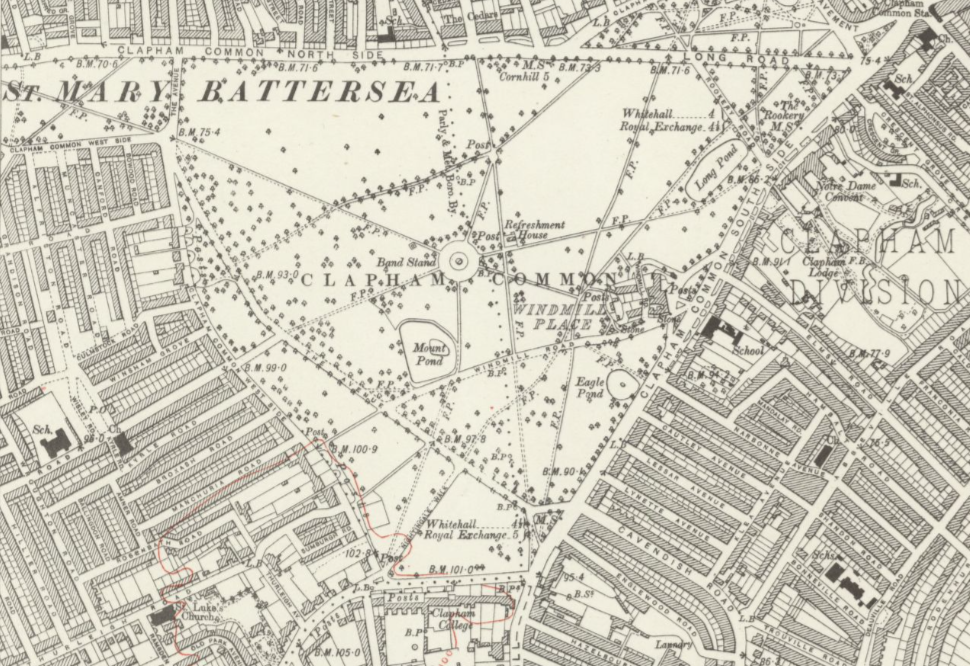
Clapham Common, 1896 Ordnance Survey Map. Library of Scotland. https://maps.nls.uk/os/. Public domain.
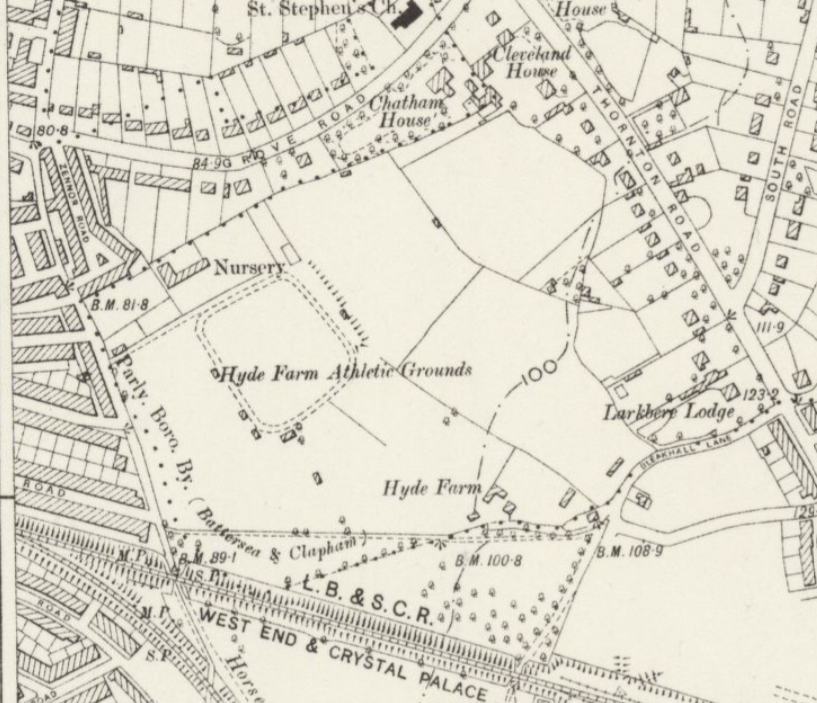
Hyde Farm, Balham, 1896 Ordnance Survey Map. Library of Scotland. https://maps.nls.uk/os/. Public domain.
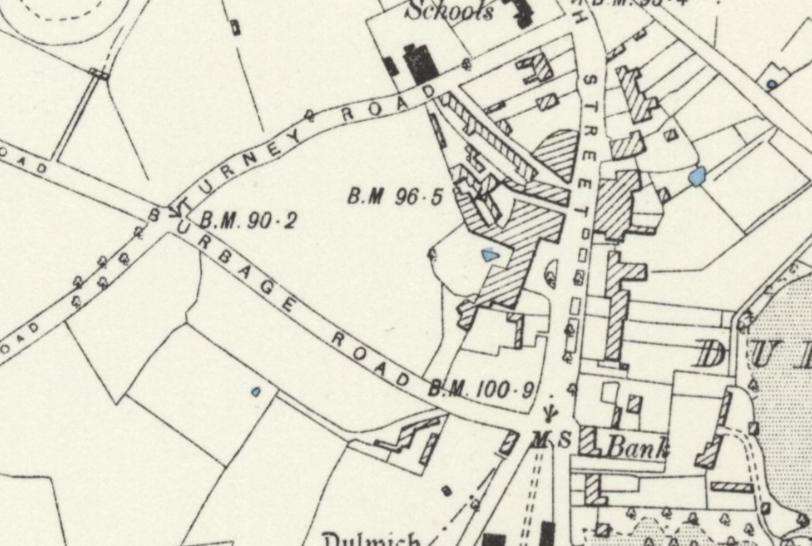
Greyhound Inn cricket ground, Dulwich, 1896 Ordnance Survey Map. Library of Scotland. https://maps.nls.uk/os/. Public domain.
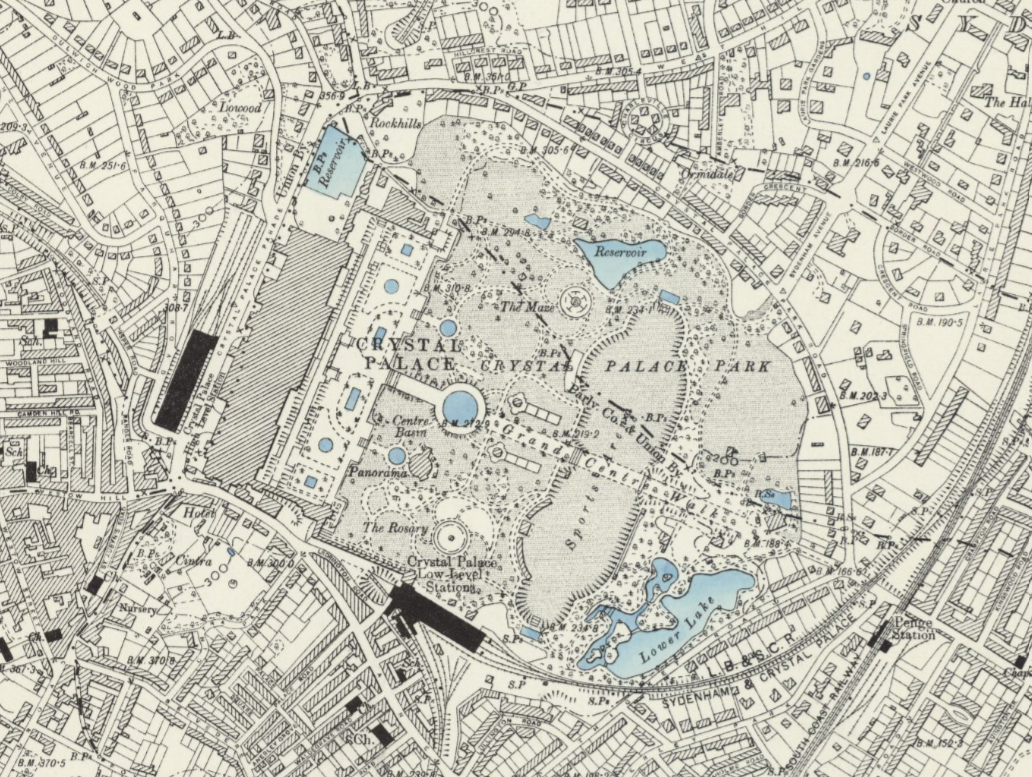
Crystal Palace Sports Arena, Sydenham, 1896 Ordnance Survey Map. Library of Scotland. https://maps.nls.uk/os/. Public domain.

Baseball and Mummers: Thespians and Buffalo Bills, Music Hall and Theatre Review, 22 July 1892. Image created by British Library Board. No known copyright holder.
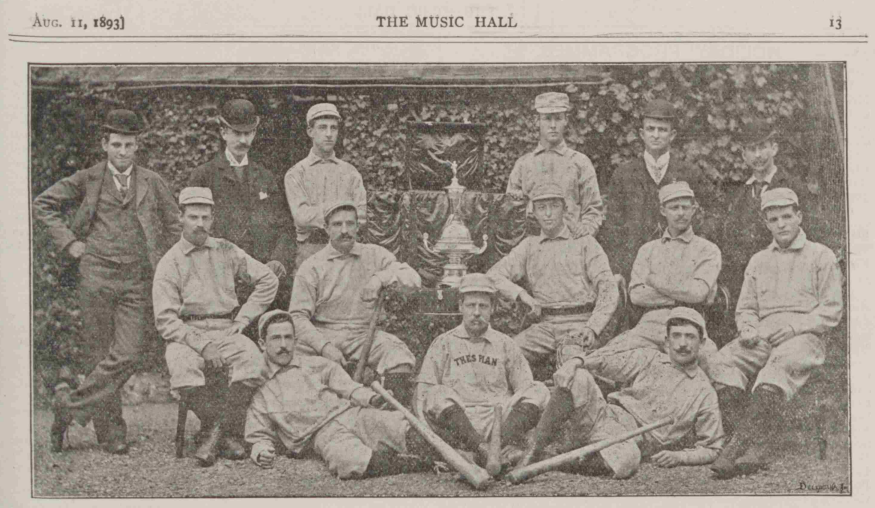
Thespians Baseball Club, Music Hall and Theatre Review, 11 August 1893. Image created by the British Library Board. No known copyright holder.
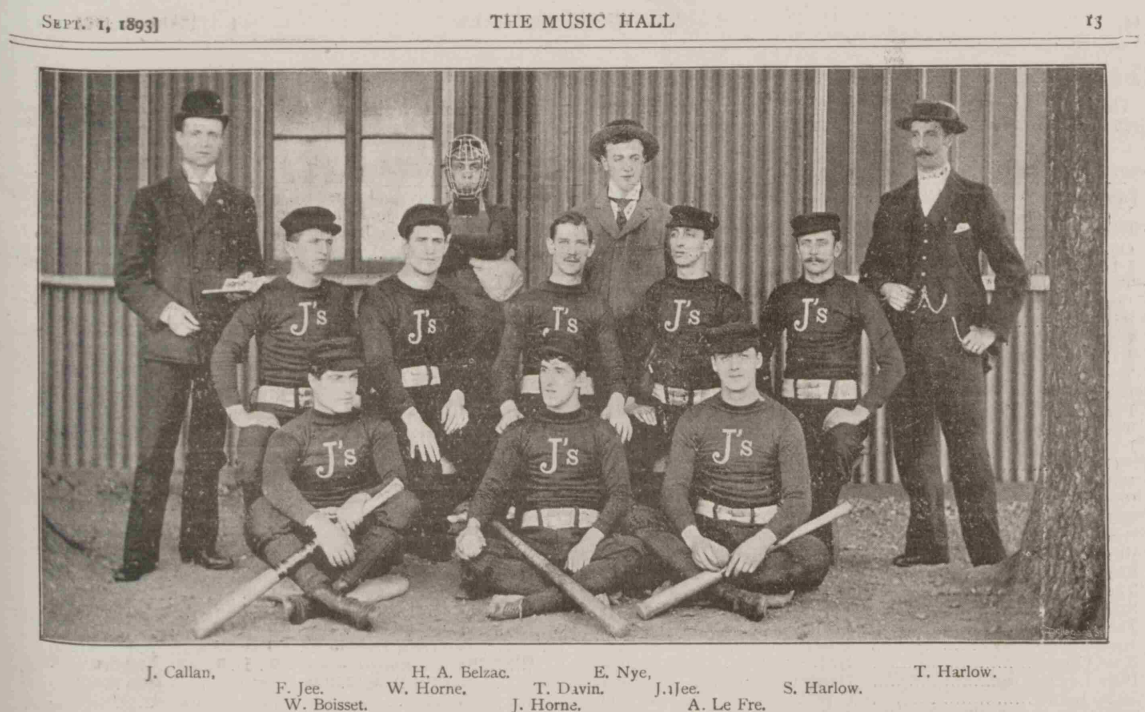
J's Baseball Club, Music Hall and Theatre Review, 1 September 1893. Image created by the British Library Board. No known copyright holder.
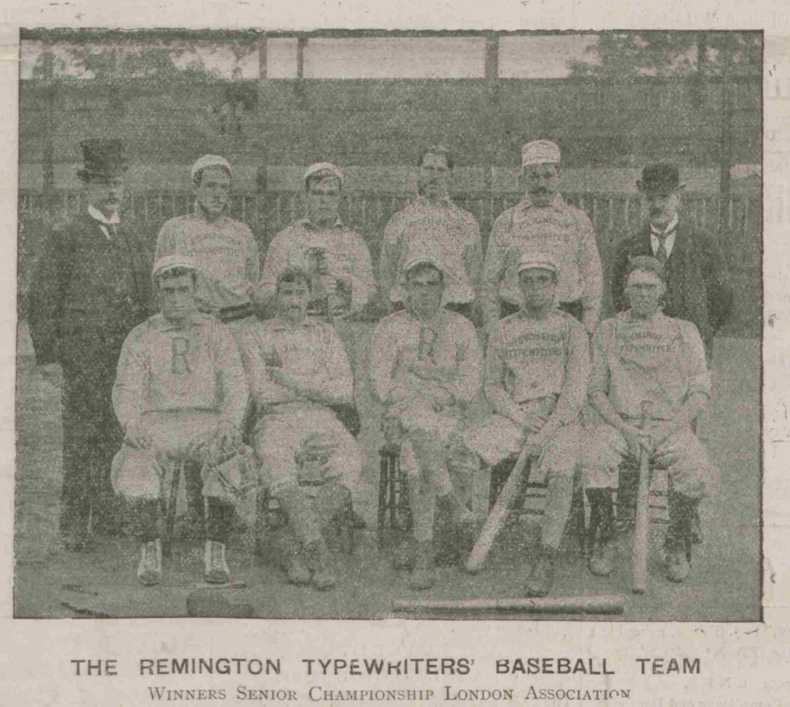
Remington Typewriters Baseball Club, Music Hall and Theatre Review, 27 December 1895. Image created by the British Library Board. No known copyright holder.
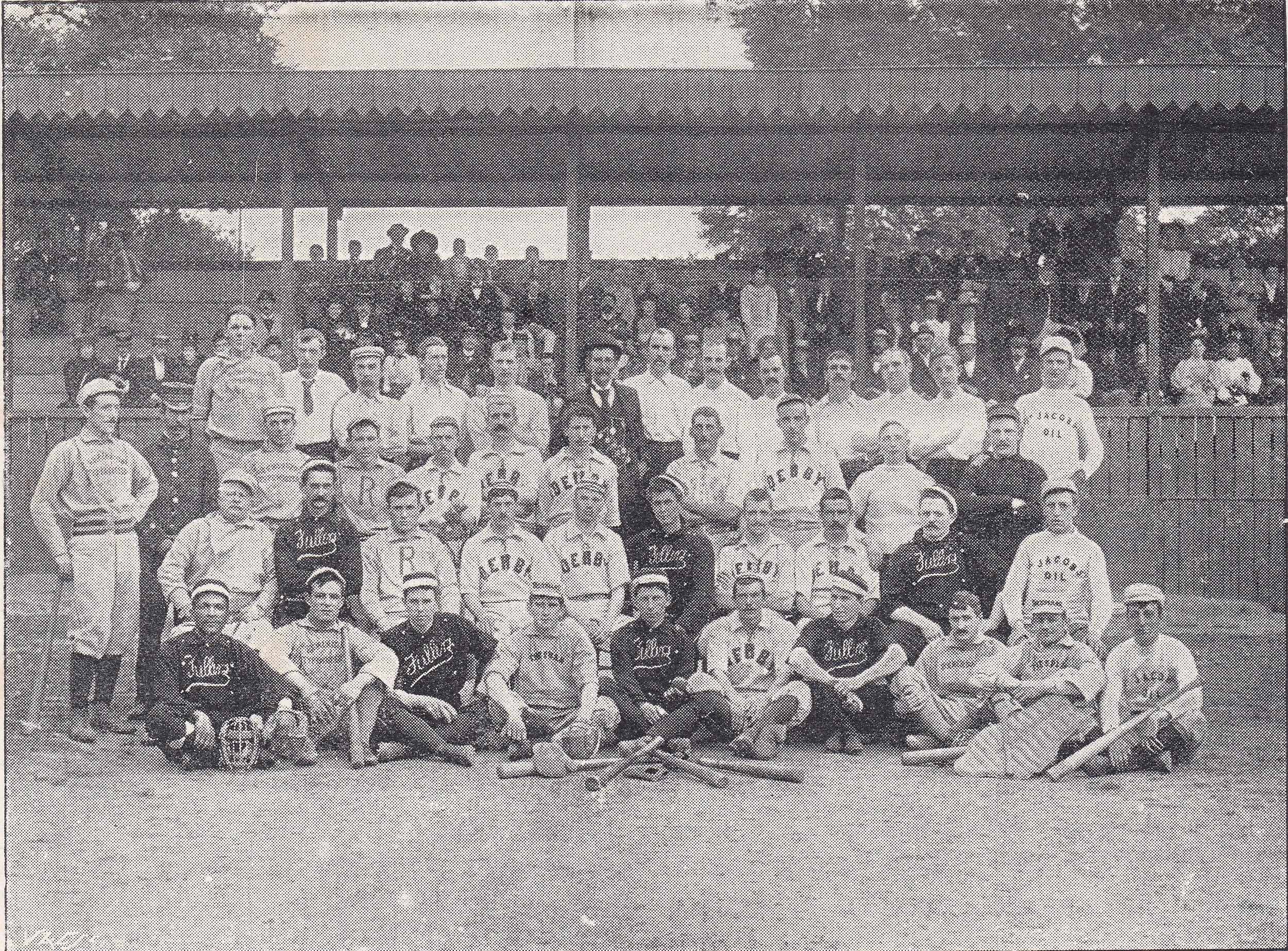
1895 London Baseball Association teams and the national champions, the Derby team. Windsor Magazine, November 1895. Author's own collection.
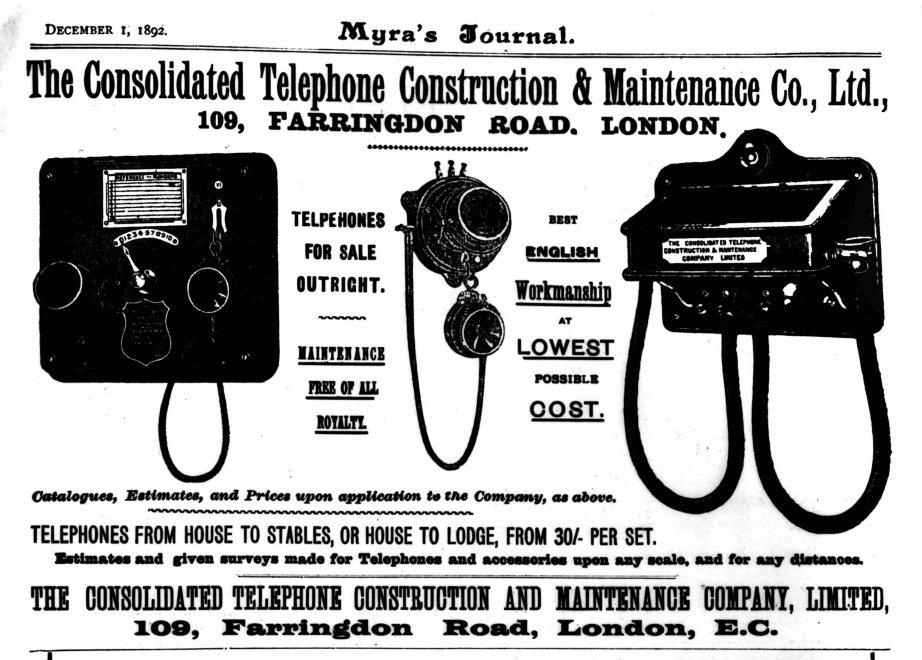
Consolidated Telephone Construction and Maintenance Company Limited, sponsors of the Electrics Baseball Club. Myra's Journal, 1 December 1892. Image created by the British Library Board. Public domain.
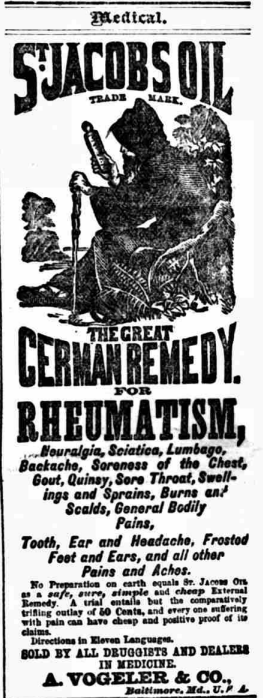
St Jacob's Oil, product of the Vogeler Company, and name it gave to the baseball clubs its sponsored. Toronto Daily Mail, 11 November 1881. Image created by the British Library Board. No known copyright holder.
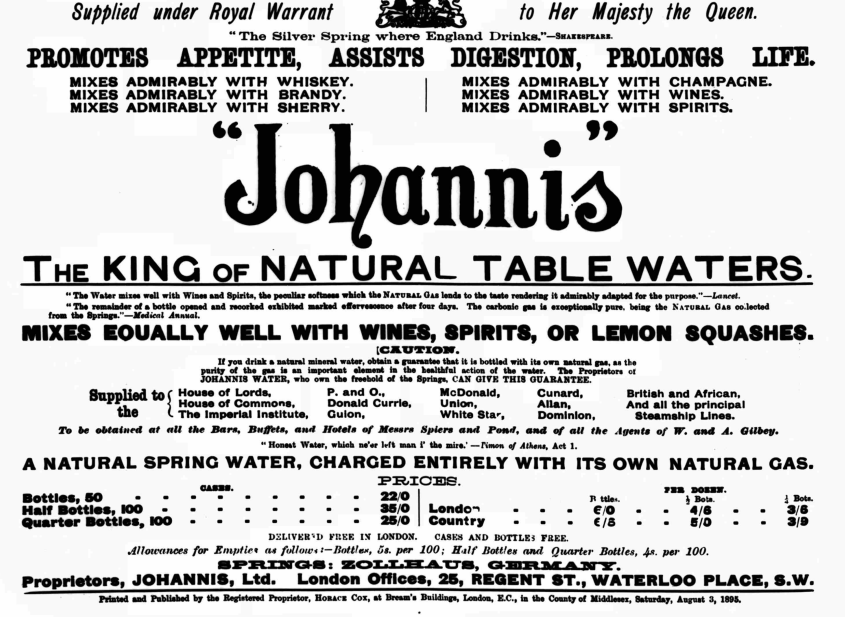
Johannis Mineral Water, proposed name for a team that did not emerge for the 1895 season. Queen Magazine, 3 August 1895. Image created by the British Library Board. No known copyright holder.
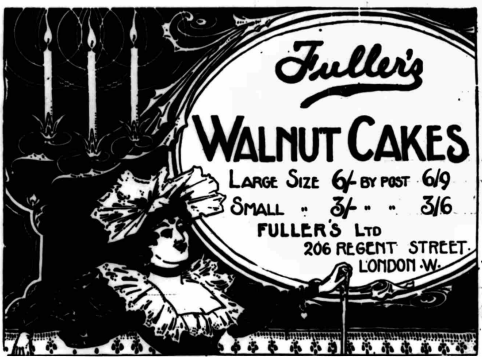
Fuller's, sponsors of the 1895 Fullers baseball team. Queen Magazine, 15 June 1895. Image created by the British Library Board. No known copyright holder.
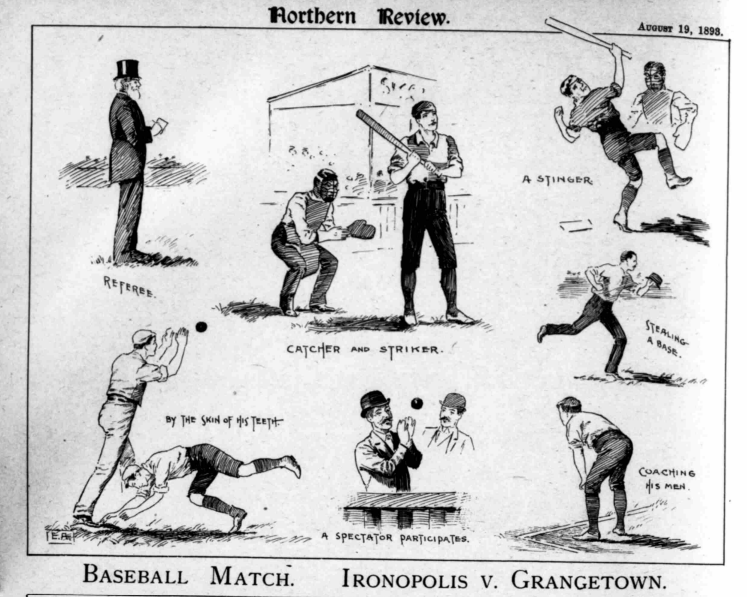
Baseball in England, 1893. Northern Review, 19 August 1893. Image created by the British Library Board. No known copyright holder.
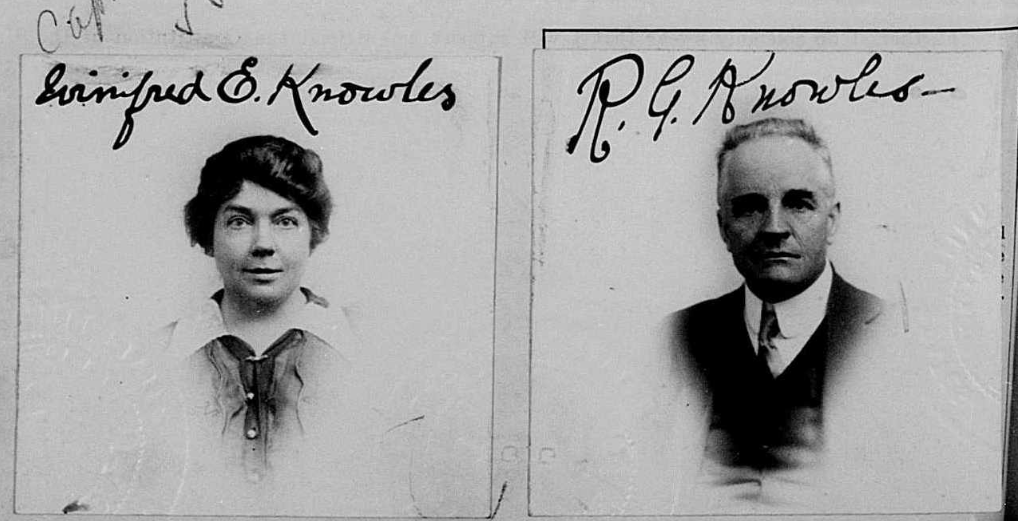
Winifred Johnson Knowles and R.G. Knowles in later life. US passport application. Public domain.