A First-Class Game for Girls.
Jamie Barras.
Representatives of the National Organisation of Girls’ Clubs report that the demand for recreative games for girls is increasing, and that there is a need for more open playing fields. In England, and more especially in the North of England, the game of rounders is becoming a popular game for girl workers. Because of the training and exercise it gives to mind and body, and because of the inexpensive equipment apparatus required and its suitability for play in public parks, rounders is a first-class game for girls.[1]
In 1892, the National Rounders Association, the Liverpool-based [men’s] organisation in charge of attempts to turn rounders into a competitive sport for adults, rebranded itself as the English Baseball Association (EBA). This was a reaction to stinging criticism from supporters of American baseball—which was at that moment trying to gain a footing in the country—that rounders was a game for children. This move marked the effective end of rounders as a game for men and older boys under that name.[2]
By the first decade of the twentieth century, the largest single body of players still playing the game under its old name were female factory workers in the Northwest of England. Promoted by organisations interested in the care and welfare of female factory workers, like the pioneering Liverpool Union of Girls’ Clubs (LUGC), rounders was the most popular summer sport amongst working women—“factory girls”—in the region.[3]
The game these women played was Liverpool Rounders—an adaptation of the game codified as a men’s game in 1883 by the Liverpool Rounders Association, the forerunner of the National Rounders Association. Liverpool Rounders was characterised by the use of a flat bat, something akin to a miniature cricket bat, a small, soft ball, and “corking”—the putting out of runners by hitting them with a thrown ball. Using the distinctive flat bats as a visual reference, we can track the progress of the Liverpool game from its home town out across Lancashire and into Yorkshire, and even the other way, across the Irish Sea to Ireland. It even made it as far as Australia.[4]
Yet, within a couple of decades, the Liverpool game would be displaced by a version aimed almost exclusively at school-age girls and promoted as an activity for school physical education (P.E.) lessons. This version, which differed from the Liverpool game in several key respects, not least its aims, would become so dominant that, although the Liverpool game is still played to this day in one part of Lancashire under the name “Bolton Rounders”, to the general public at large, rounders is thought of as a game only for family picnics and school P.E. lessons.[5]
In this piece, I chart rounders’ journey from a competitive sport for adults to a participation sport for school-age girls, and the losses, gains, and arguments along the way. It is the story of what happens when someone quits a game in a huff halfway through and walks off with the bat and ball.
Mr. Crane places great store on the hold base ball has taken on the Liverpool rounders people. I know that for two or three years he has been trying to bring these players to see the advantage of giving up their childish game for base ball.[6]
Although 1892 marked the end of attempts to turn rounders into a competitive sport for men under that name, people of all ages continued to enjoy the old game under its old name. It is just that any man or older boy expressing an interest in rounders as a sport after 1892 would be directed to the nearest English Baseball club instead. This is what happened in 1908 to the members of the Walton St Mary’s Rounders Club of Liverpool, teenage boys who wrote to a local newspaper expressing an interest in creating a rounders league. Women expressing an interest in English Baseball would be similarly directed towards rounders—although not without pushback, as the existence in 1911 in Liverpool of an Aintree Base-Ball Club formed of female players demonstrates.[7]
The men’s game, under its new name “English Baseball”, was played under the 1889 revision to the original 1883 rounder rules. The revised rules had come about due to a Liverpool Rounder team faring badly in an encounter with an American baseball team (during the 1889 Spalding World Tour). The revised rules swapped out the original small, soft ball for a larger, hard ball, introduced a longer bat that could be held in two hands, and eliminated corking (replacing it with touching the runner with a held ball). These changes were designed to increase the pace and vigour of the game, moving it closer to the feel of the American game.[8]
Meanwhile, the women’s game, still under its old name “Rounders”, stuck more closely to the original 1883 rules. There’s no doubt that the EBA felt justified in describing the games as two different games on this basis. However, we can immediately see the fallacy of this argument: the men’s game continued to be known as rounders for another three years after the 1889 rules were implemented; the decision to adopt “English Baseball” as a name was driven by wounded male pride, not changes in game mechanics.
Regardless, by the end of the first decade of the twentieth century, Liverpool played host to both an English Baseball League exclusively for men and a “Ladies Rounders League” (as well as youth and Church leagues in both sports). The Rounders League featured factory teams, prime among them teams from Crawford’s Biscuit Factory, a major employer of women on Merseyside and a pioneer of rounders as a sport for working women. This division would remain in place up to the modern day. Meanwhile, in English Baseball’s other heartland, South Wales, by the late 1920s, men and women were playing under the same code, the game by then known locally as “Welsh Baseball”. In the early 1930s, Liverpool attempted to reproduce this shift by introducing a “Ladies Baseball League”; however, the league failed after a single season. The idea of baseball being for men and rounders for women was too deeply rooted in the city’s sporting culture.[9]
Of course, we shouldn’t assume that only the men of the EBA supported this distinction: by the 1920s, the LUGC was running rounders in Liverpool with the mission of providing physical recreation to working women. To the Union, it was advantageous that rounders was distinct from baseball, as this left its member clubs free to develop the sport in the direction they wanted without interference from men’s organisations, with a focus on lowering barriers to participation and providing safe spaces for women—the twin pillars of women-only sports.[10]
Rounders’ model for the benefits of having a sport tailored for women was netball. This development of women’s basketball was invented at almost the same moment that the working women of Liverpool took up rounders. The organisation that, more than any other, was responsible for promoting netball was also the organisation that, by the 1920s, was promoting the version of rounders that would come to eclipse the Liverpool game.
The rules this year contain several alterations, and are published conjointly for the first time by the National Council of Girls’ Clubs and the Ling Association. The Ling Association were the first body to print recognised rules of the game many years ago, and these have been taken up by the Liverpool Union, and eventually by the North-West Council of Girls’ Clubs, to meet their own conditions.[11]
The Ling Association of Gymnastic Teachers, later renamed the Physical Education Association of Great Britain, was born from the pioneering efforts of Martina Bergman Österberg (1849–1915) in the field of physical education (P.E.) for girls.
In 1881, Martina Bergman, as she then was, was hired by the London School Board to improve the provision of P.E. for girls in London schools. Four years later, she founded the Physical Training College, a women-only institution devoted to training the next generation of P.E. teachers for girls. The college was based originally in Hampstead and later moved to Dartford; its graduates would shape P.E. teaching for girls not just in England but across the world for the next century.[12]
The Ling Association—named after Per Henrik Ling (1799–1839), Madame Österberg’s mentor in teaching Swedish gymnastics—was founded in 1899 by graduates of the Physical Training College. The Association aimed to standardise P.E. teaching for girls in England, certify teachers, and become the field’s national professional body. However, it was founded without Madame’s knowledge, and, although she was invited to be its first president, she declined. Famously autocratic, Madame—probably correctly—saw the Association as an attempt to democratise the process by which the future direction of P.E. teaching for girls was decided. Madame went on to form her own rival association; as a result, for a time, the Ling struggled to grow beyond its founding members (the two associations merged following Madame’s death in 1915).[13]
The Ling’s most enduring legacy was its codifying of the rules of netball, a development of women’s basketball pioneered by Madame Österberg at the Physical Training College and purpose-made to improve the physical conditioning of women and girls. However, the Ling was prominent in promoting many other girls’ sports, some of which, for example, cricket, were previously viewed as only for boys.[14]
Rounders was one such sport.
THE BATTING BASE AND NEUTRAL GROUND.—The batsman shall stand with both feet in a square 6 feet by 6 feet at the time the ball is bowled; should she offend, she shall take the hit again, unless out. Should she offend twice consecutively, she shall be out.[15]
Rounders is a fast-paced game with a low barrier to entry and much to teach about teamwork and leadership: the perfect physical activity, it was seen at the time, for school-age girls. It had been a feature of the curriculum at the Physical Training College since its earliest days, and by the first decade of the twentieth century, graduates of the college had introduced it into P.E. lessons as far away as Melbourne, Australia.[16]
However, it would not be until 1915 that the Ling would create a Rounders Committee to formalise a set of rules. This initiative was led by Mary Hankinson (1868–1952), one of the leading figures in the founding of the Ling and its secretary for the first two decades of its existence. Hankinson was responding to calls from association members who had gone out into the world armed with the version of rounders they had learned at the Physical Training College, only to discover the game was already played under different rules in the schools where they were employed. Variation was an anathema to the Ling, as it saw standardisation as the key to formulating approaches to maximise the physical benefit of a sport or activity. The Rounders Committee was only the second body that the Ling had created devoted to a single sport. The first was, of course, the Netball Committee, established by Mary Hankinson at the time of the Association’s founding in 1899, with its first set of rules for netball, renamed from “women’s basketball” for the occasion, published as early as 1901.[17]
However, with rounders, unlike netball, the Ling could make no claim to primacy. The resistance to the Ling version of the game was so great that publication of a second edition of the rules of rounders, scheduled for 1921, was pushed back due to a combination of poor sales of the first edition and disagreements over what those rules should be between the Ling and other interested parties, primarily the London School Board and the National Organisation of Girls’ Clubs (NOGC). These disagreements would not be resolved until 1930, when the Ling published a revised set of rules in association with the recently renamed National Council of Girls’ Clubs (NCGC). The first edition included an insert describing the separate rules of the Liverpool game; later editions would feature a single set of rules but permit variation in the type of bat used to accommodate the Liverpool style of play in those districts that hosted the Liverpool game. In time, even this concession would disappear, and almost all memory of the Liverpool game with it.[18]
Some of the differences between the game that Ling preferred and successfully advocated for and the Liverpool game initially favoured by the NOGC/NCGC were born simply from regional differences, most immediately obvious in the type of striker and ball: The Liverpool game used a flat bat, while the Ling game, developed from the game as played in the South of England, used a short stick. In early versions of the Ling rules, this stick could be up to 20 inches long; this was later reduced to the modern length of 18 inches (c.f. the 30 inches of the flat bat of the Liverpool game). The Ling also favoured a medium-hard ball of slightly greater dimensions than the smaller, softer ball of the Liverpool game (3 ounces versus 2 ounces; 8-inch versus 7-inch circumference).[19]
More contentious was the number of players per team. Historically, these had numbered anywhere between 6 and 11. The Liverpool game was played with 11 players a side. The Ling opted for 9—the same number as in American baseball. As both games retained the English standard of all players needing to be put out for an inning to end, this meant that the Ling game was, on average, around 20% shorter in duration than the Liverpool game. This was one of the features that skewed the game toward being more attractive for school timetables.
Meanwhile, every region had its own preference for the number, separation, and position of bases or posts. Early descriptions of rounders, such as the first published in English in The Boy’s Own Book of 1828, described a diamond layout identical to that of American baseball. Early efforts to turn rounders into a competitive sport retained this layout, although opting for a shorter distance between the bases than in the so-called “New York Game”, the model for the national game of American baseball (22 or 25 yards versus 30).[20]
However, by the third quarter of the nineteenth century, the diamond rounders layout had, in most descriptions of the game, been replaced by a pentagon arrangement, with the four running bases set forward from the batting base in either a square or trapezoid arrangement. The Liverpool-based National Rounders Association in its 1883 rules adopted a curious arrangement of four running bases within a diamond arrangement in relation to the batting base, with the fourth base midway between third base and the batting base. The distance between each of the first three bases was fixed at 22 yards. This became the standard for the Liverpool game.[21]
The Ling, in surveying all these approaches, went a different way. It retained the idea of four running bases forming a pentagon with the batting base but placed fourth base at a right angle to the line formed by the batting base and bowler’s position. As in the diamond arrangement, this meant that the runner completed their circuit of the bases at the line that marked the edge of the playing area, not in the field of play. More particularly, perhaps, the Ling reduced the distance between each of the first three bases to just over 13 yards (12 metres—the Ling probably used metric measurements when writing the rules and then converted them to Imperial units for publication).[22]
This latter change was the rule that, more than any other, marked the Ling game as designed specifically for school-age children. The published Ling rules also used “she/her” personal pronouns throughout; taken together, these two points underline that the Ling rules were designed with school-age girls in mind—in keeping with its mission in supporting the teaching of P.E. to girls. The Liverpool game, in contrast, was the old pastime rounders turned into a competitive sport for adults, more specifically, men, later adapted for working women and older girls. It even retained corking, an uncouth practice that the progressive Ling, of course, rejected.
The result was that the two sets of rules had, in the course of time, grown dissimilar on many points, and, therefore, the publication of the rules by the joint bodies is a great step in the advancement of the game and in its national recognition.[23]
Why then, when the Ling game was so constrained in terms of its target player base, did the NOGC/NCGC concede so much ground to it?
One reason is that the NOGC did not see itself as a sports regulator. It left all decisions on gameplay and competition to its member clubs and restricted itself to logistical support and guidance on good governance. Its resistance to the Ling rules was born from a desire to support the game its member clubs currently played; it had no real stake in that game. It could also see the advantages in school-age girls learning the same game across the country; something that would inevitably feed forward into the game played by working women.[24]
Another was that the NOGC knew full well the struggles any women’s sport faced. The most frequent lament of both the NOGC and the LUGC was the difficulty in securing playing fields. Even the LUGC, which had a good working relationship with the Liverpool Corporation (local government), struggled to access municipal green spaces in the face of competing demands from men’s organisations. The stranglehold that men’s organisations had on playing spaces was one of their chief weapons in opposing the development of women’s sports. Famously, from 1921 to 1971, the Football Association banned its members from allowing women’s teams to play on their pitches, an act of blatant misogyny that stifled efforts to grow the women’s game in England for upwards of 100 years.[25]
School sports faced none of these challenges, of course, as they had their own playing fields and gymnasia.
The NOGC was not about to attempt to launch rounders as a national-level sport for women; it was therefore not going to stand in the way of the Ling Association turning it into a staple of school P.E. lessons instead.
And what of the Ling Association and its interest in the game? Despite being primarily focused on supporting P.E. teaching for girls, the Ling did involve itself in efforts to advance competitive sports for women. In 1926, several Ling members joined the first council of the nascent Women’s Cricket Association (WCA). That same year, yet more members joined the nascent All England Women’s Net Ball Association (AEWNBA), the first national body of the game that the Ling had done so much to promote. However, the story of the AEWNBA’s birth and the Ling’s involvement in it demonstrates why the Ling was loath to do more than support others’ efforts to develop women’s competitive sports.[26]
By 1922, the playing of netball had progressed to the point that it was widely recognised that a national association was needed to co-ordinate the various leagues and regional associations that had sprung up since the game’s introduction two decades earlier. That year, the Netball Committee of the Ling Association began discussing the idea of the Ling creating and leading a national netball association. No decision was made then, but in 1925, the Ling found itself having to mount a legal action against two publishers for infringement of its copyright over the unauthorised publication and sale of copies of its netball rules. This was the spur for the Ling to finally take action, and it issued a circular inviting opinions on a proposal to launch a national netball body under the auspices of the Ling. This triggered an angry letter from the London and Home Counties Netball Federation (LHCNF). The LHCNF had been founded with the aim of becoming the basis for just such a national body, and it was not pleased that the Ling was now proposing to do the same. Rather than go to war over control of the game, which would have benefited no one, the Ling opted to cooperate with the LHCNF in advancing the latter’s plans. The result, in February 1926, was the founding of the AEWNBA. Members of the Ling’s Netball Association would serve on the AEWNBA’s board for many years; however, in 1930, the Ling relinquished full control of revising the rules of the game to the AEWNBA, effectively ending its direct influence over the game’s direction. This was an act of great selflessness given what the game owed the Ling for its popularity and growth.[27]
Having had its fingers burned over plans to turn the game it had fostered and grown into a competitive sport, the Ling was not about to try to take the lead in promoting other women’s sports.
In 1892, the only body interested in promoting rounders as a competitive sport for men caved to external pressure and rebranded its game “English Baseball”; three decades later, leadership of the women’s game was split between two organisations, one of which, the NCGC, was involved in the game as a competitive sport for women at a regional level, but neither of which had any interest in creating a body to coordinate efforts to turn it into a competitive sport at a national level.
Rounders was effectively an orphan.
SHIELD AND CUP.—On Wednesday evening, in the St. John’s School, the trophies of the Bolton and District Rounders Association were presented by the Bolton Cotton Queen to the winners, who were as follows: Gibraltar Mill: the Sir William Edge Shield (this is the fifth time in succession). St John’s, the Sunday School Cup; Greenhalgh and Shaw’s Ltd., the Championship Medals[...][28]
The interwar years marked the peak of rounders’ success as a competitive sport for adults. The men’s game, under the name “English Baseball” in Liverpool and “Welsh Baseball” in South Wales, and known by its supporters in both places as simply “baseball”, experienced not only its greatest period of popularity but also its greatest period of innovation. Spurred on by the annual “England v Wales Baseball Internationals”, played between all-star Liverpool and South Wales teams, the game drew on the competition between its two centres to constantly improve in skill and technical gameplay. Thousands of men and boys of all ages played the game, and thousands more watched it. In terms of sport in Britain, it was as popular as, if not more so than, its chief rival, the American version of the game, although both were niche sports compared to the likes of cricket and association football.[29]
Meanwhile, the women’s game, under the name “Rounders” in Liverpool and “Welsh Baseball/baseball” in South Wales, included dozens of church group and factory teams and was probably the biggest female-participation sport in the country, rivalled only by hockey and netball. Its popularity in the mill town of Bolton, 30 miles from Liverpool, was such that it is played there to this day. Rounders played with a flat bat is today known as “Bolton Rounders” and continues to chart a separate course from the mainstream rounders community.[30]
The outbreak of the Second World War brought this golden age to an end. The postwar world was very different. Improvements in healthcare, workers’ rights, and universal education dramatically increased social mobility. Sons and daughters no longer followed their parents into the same workplaces, labouring alongside them on the same production lines, playing alongside them in the same sports teams. Traditional sports saw dramatic declines in local engagement. On wet Saturday afternoons in August, people stayed home and watched television, or jetted off on a package holiday to somewhere there was guaranteed sunshine.[31]
These same changes had the opposite effect on sports provision for children. Under national direction, P.E. provision in state schools became standardised, supported by an injection of cash that filtered down to even the poorest districts. The case for rounders as part of that provision was dramatically improved by the creation in 1943 of the National Rounders Association, the first national body the game had had since the old NRA rebranded itself back in 1892. This was the initiative of P.E. teachers and its sole focus was on standardising the provision of rounders in schools. Guided by the advocacy of the new NRA, rounders became part of the national P.E. curriculum; a child’s progress in the game was now part of the assessment of their education.[32]
By the early 2000s, rounders was played by millions of schoolchildren, mostly girls, across the UK and beyond. However, those numbers were heavily skewed towards younger children—one-third of players stopped playing after primary school. Armed with a new grant from Sport England, the National Rounders Association rebranded as Rounders England in 2009 and committed to increasing participation among older girls and women. By 2013, it could boast national teams at the U14, U16, U19, and senior levels, who competed against their counterparts from the other home nations.[33]
However, just two years later, it experienced a serious setback when the Department of Education announced that rounders would no longer be eligible for assessment as part of the P.E. curriculum. This decision was driven by modern pedagogical arguments in favour of promoting physical activities in which both boys and girls engaged, which simplified assessment criteria and allowed the comparison of like with like. Behind these arguments was a recognition that there was a limit to how far a player could take their interest in rounders. A girl taking up cricket at primary school could go on to play professionally as an adult. This was not an option with rounders. Critics labelled rounders a “leisure activity”, not a sport, for this reason.[34]
Although it can, therefore, be argued that by passing on the chance of promoting rounders as a competitive sport for adults in the 1920s, the rounders community sowed the seeds for its future difficulties, the latter came only after 70 successful years of rounders as a participation sport for school-age girls, and it is easy to be wise in hindsight. Added to this, the promotion of rounders has become caught up in arguments for and against continuing to support separate women-only sports versus increasing women’s access to traditionally male-dominated sports. A nationwide, netball-like promotion of rounders as a competitive sport for women would not have spared it from the current trend towards promoting access over preserving separation.
Rounders England continues to fight back against both the underlying assumptions behind the Department of Education’s 2015 decision and rounders’ image as a women-only sport. It has done this by doubling down on its mission to widen participation, albeit with more emphasis on playing rounders as a social activity than a competitive sport, a way to make friends and bring communities together. To that end, its current slogan is “Connecting People Through Rounders.” Time will tell what outcome these efforts will have and what rounders will look like in its third century as a sport.[35]
Jamie Barras, September 2026.
Back to The Rounders
Notes
[1] “Games for Girls”, Dundee Evening Telegraph, 30 July 1925, 2.
[2] I tell that story here: https://www.ishilearn.com/baseball-rounder-war, accessed 21 September 2026. See also: “English Baseball”, Liverpool Mercury, 25 April 1892, 7; “Gloucester Baseball”, Gloucester Citizen, 30 May 1892, 4; “Rounders”, South Wales Echo, 25 May 1892, 3.
[3] “Union of Girls’ Clubs”, Liverpool Echo, 30 May 1930, 14.
[4] See photographs, for example, here: “Rounders Competition”, Sheffield Daily Telegraph, 10 October 1913, 9; “Honour for C.C.C. Rounder Team”, Liverpool Weekly Courier, 12 September 1925, 9; “Belfast Girl Club Union Rounders Competition”, Belfast Telegraph, 7 September 1925, 12; Public Record Office Victoria, P323 Diagram of rounders court for Chart: "F + C.D.", https://prov.vic.gov.au/archive/664DD1F3-5615-11EB-BE8C-6DA5F58AD5C8?image=1, accessed 21 September 2026.
[5] “Origins of Bolton Rounders Game Sought by University,” BBC News, https://www.bbc.co.uk/news/uk-england-manchester-13977360. Accessed 23 September, 2026; https://www.westhoughton-high.org/wp-content/uploads/Rounders-KO.pdf, accessed 22 September, 2026
[6] Will C. Bryan, “Baseball: From Over the Sea”, Sporting Life (Philadelphia, PA), 22 October 1892, 3.
[7] “Baseball Budget”, Liverpool Echo, 15 May 1908, 11. Aintree Base-Ball Club, 1911: postcard in the author’s own collection.
[8] “Rounders and Baseball at Liverpool”, Cricket and Football Field, 23 March 1889, 5; James Manders Walker, “Modern Rounders,” in Rounders, Quoits, Bowls, Skittles and Curling (London: George Bell and Sons, 1892), 7–17.
[9] “Baseball and Rounders”, Liverpool Echo, 30 July 1910, 8; “Ladies’ Baseball”, Western Mail, 26 February 1927, 4; “Ladies’ Baseball Section”, Liverpool Echo, 4 April 1931, 6.
[10] “How the Rounders League Has Grown”, Liverpool Weekly Courier, 12 September 1925, 9; Jennifer Hargreaves, “Chapter Five: Recreative and Competitive Sports,” in Sporting Females: Critical Issues in the History and Sociology of Women’s Sport, 1st ed. (London: Routledge, 1994), 88–111, https://doi.org/10.4324/9780203221945.
[11] Note 3 above.
[12] The story of Martina Bergman and the Ling Association is told in a series of articles written by Jane Claydon for the University of Greenwich’s Osterberg Collection: https://osterbergcollection.org.uk/, accessed 21 September 2026.
[13] Jane Claydon, “The Ling Association,” PDF, Osterberg Collection, accessed 21 September 2026, https://osterbergcollection.org.uk/wordpress/wp-content/uploads/2021/07/The-Ling-Association-rev.17.6.2021-web.pdf.
[14] Jane Claydon, Madame Bergman Ӧsterberg, Her Students and the Ling Association: Their Influence on the Development of Netball 1895–1930, PDF, Osterberg Collection, accessed 21 September 2026, https://osterbergcollection.org.uk/wordpress/wp-content/uploads/2021/03/Netball-1895-1930-web.pdf; Jane Claydon, Women’s Cricket: Pioneers and Unsung Heroes, PDF, Osterberg Collection, accessed 21 September 2026, https://osterbergcollection.org.uk/wordpress/wp-content/uploads/2021/07/Womens-Cricket-Pioneers-and-Unsung-Heroes-2July2021-web.pdf.
[15] The Rules of the Game of Rounders, 1936–37 (London: Ling Association, 1937).
[16] Jane Claydon, Madame’s Pioneers (Osterberg Collection, 2021), 13, accessed 21 September 2026, https://osterbergcollection.org.uk/wordpress/wp-content/uploads/2021/08/Pioneers-booklet-7th-July-2021-web.pdf;
[17] Steve Bailey and Wray Vamplew, 100 Years of Physical Education 1899–1999 (Warwick: S. Bailey, 1999), 25; Note 11 above. Mary Hankinson’s years of birth and death: “She was a Good Friend of G.B. Shaw”, Buckinghamshire Advertiser, 14 November 1952, 3.
[18] Bailey and Vamplew, Note 17 above, 59; The Rules of the Game of Rounders, 1930 (London: Ling Association, 1930).
[19] Note 18 above, final reference.
[20] William Clarke, The Boy’s Own Book (London: Vizetelly, Branston and Co., 1829 Edition), 20; “An Old Game Revived”, Western Mail, 7 July 1869, 4; Lawn Tennis: Its Laws, Rules, Regulations, Definitions, Plans, &c. The Game of Rounders, Containing Laws and Plans of the Game and the Rules of the Rounders Association (Manchester: John Heywood, 1887), 15–20.
[21] Cassell’s Complete Book of Sports and Pastimes: Being a Compendium of Out‑Door and In‑Door Amusements (London: Cassell, 1887), 222; Note 19 above, final reference.
[22] Note 15 above.
[23] Note 3 above.
[24] Madaline Roolf, “Chapter 1, Youth Organisations Affiliated to the National Council of Girls’ Clubs,” in Youth and Leisure: A Survey of Girls’ Organisations in England and Wales (Edinburgh: T. & A. Constable, 1937), 4.
[25] Jean Williams, “A Game for Rough Girls?”: Women’s Football in Britain (London: Routledge, 2003). It has to be acknowledged that some women’s organisations also opposed women’s football; this included the LUGC: “Girls and Football”, Liverpool Weekly Courier, 15 October 1921, 7.
[26] Note 14 above, second reference; Bailey and Vamplew, Note 17 above, 59–60.
[27] Bailey and Vamplew, Note 17 above, 59–60.
[28] “Shield and Cup”, Cotton Factory Times, 3 October 1930, 4.
[29] Martin Johnes, “‘Poor Man’s Cricket’: Baseball, Class and Community in South Wales c.1880–1950,” The International Journal of the History of Sport 17, no. 4 (2000): 153–66.
[30] Note 5 above.
[31] Johnes, Note 29 above.
[32] “Rounders Catches On”, Nottingham Evening Post, 1 May 1944, 4.
[33] “Grass Roots: Rounders England,” Sports Management 17, no. 1 (2013): 34–36.
[34] “Rounders Chief Executive Criticises Department of Education Decision,” Sky Sports, January 22, 2015, https://www.skysports.com/more-sports/news/12040/9699631/rounders-chief-executive-criticises-department-of-education-decision; Camilla Turner, “Rounders Is Being Replaced by Cricket at Girls’ Schools as It Is Seen as a ‘Leisure Activity’ Rather than a Sport, Leading Head Says,” The Telegraph, December 22, 2017, https://www.telegraph.co.uk/education/2017/12/22/rounders-replaced-cricket-girls-schools-seen-leisure-activity/, accessed 17 September 2026.
[35] https://www.roundersengland.co.uk/, accessed 23 September 2026.
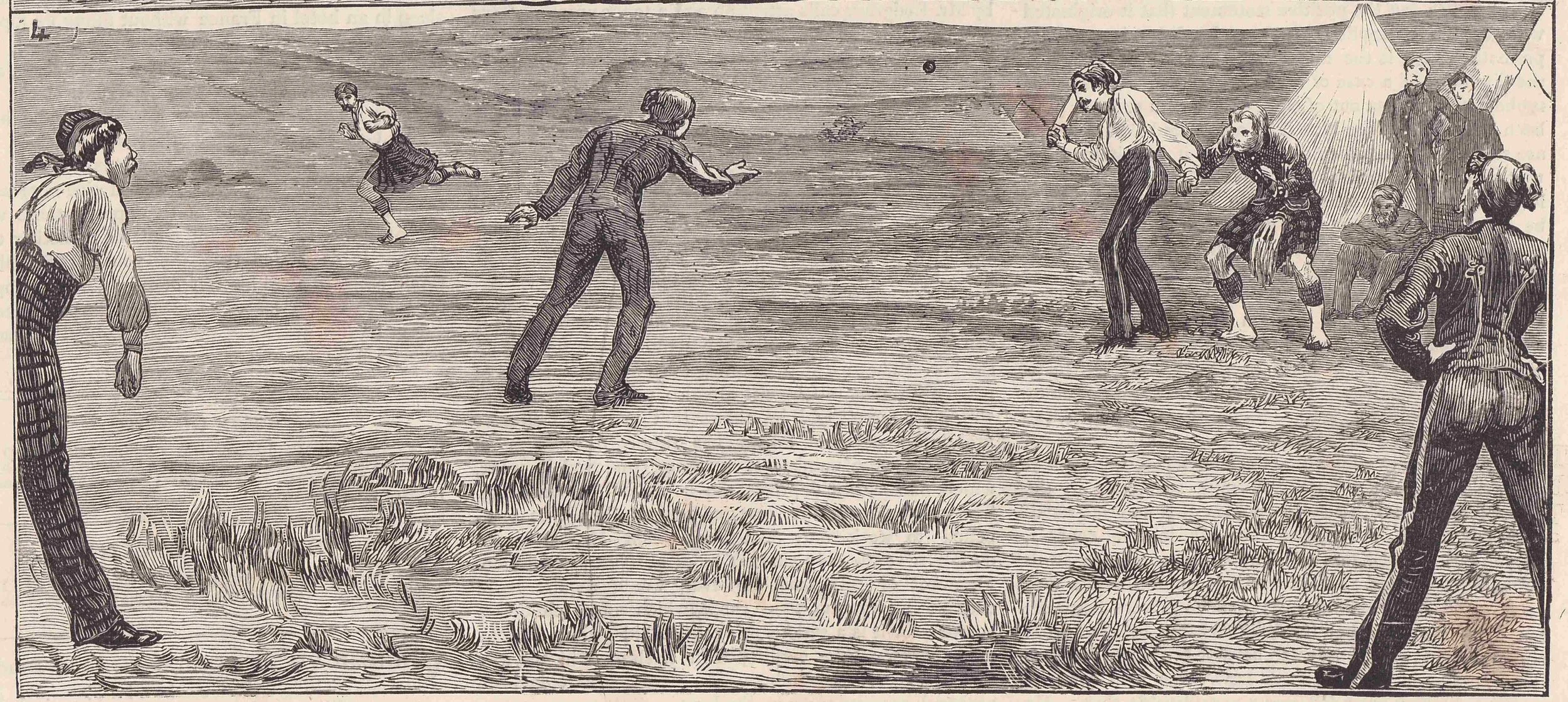
Rounders on Dartmoor, Graphic, 16 August 1873, 1. Author's own collection.
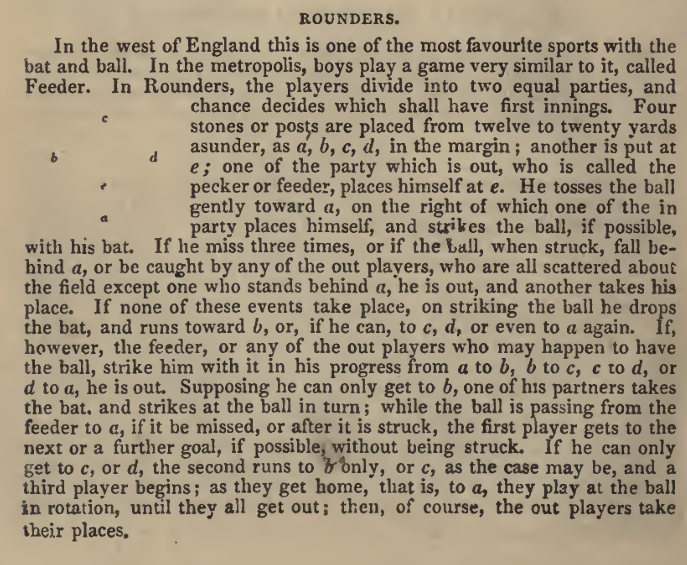
Earliest known description of Rounders in English, William Clarke, The Boy’s Own Book (London: Vizetelly, Branston and Co., 1829 Edition), 20. Public domain.
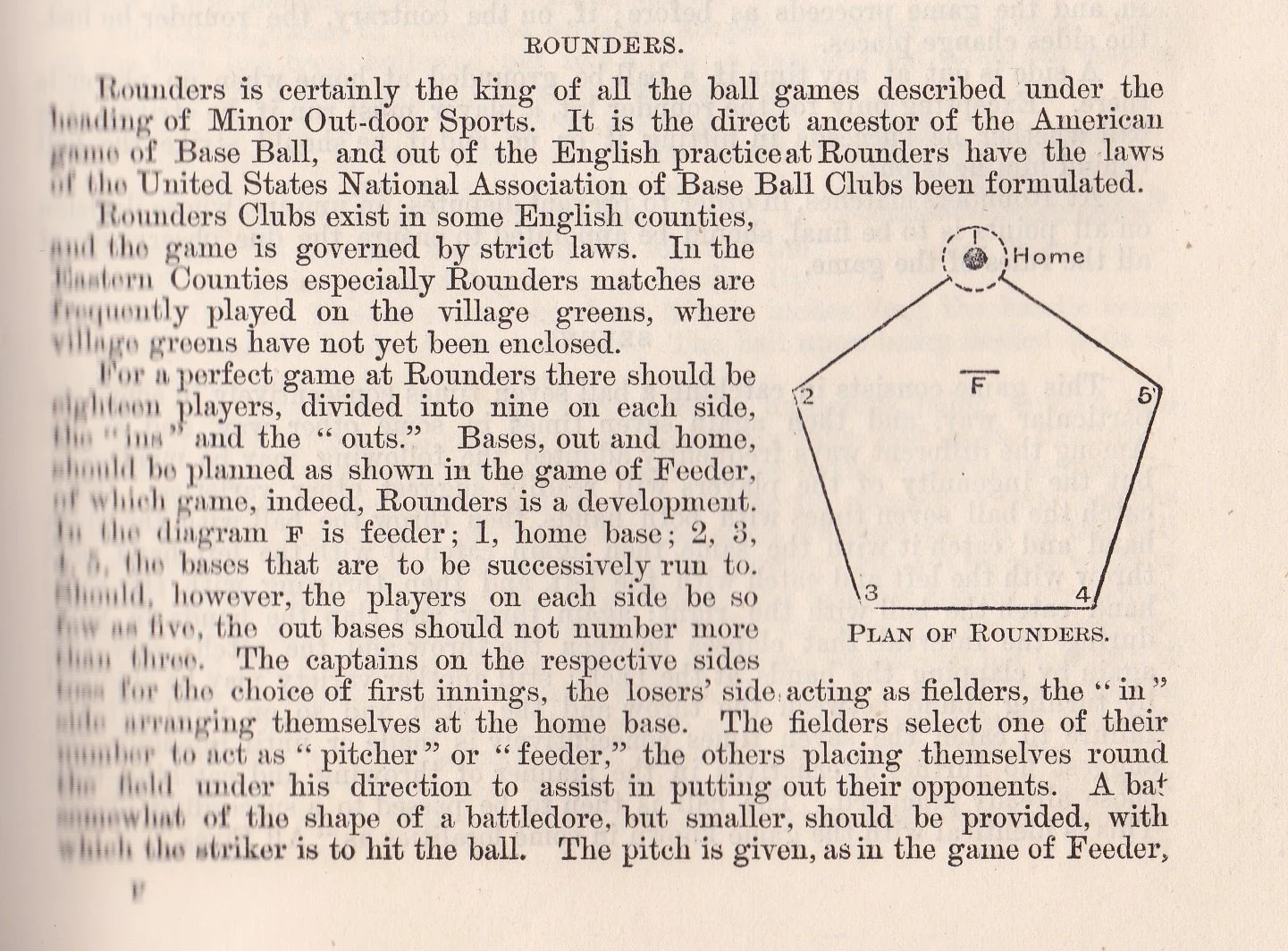
Description of Rounders, late nineteenth century. Cassell’s Complete Book of Sports and Pastimes: Being a Compendium of Out Door and In Door Amusements (London: Cassell, 1887), 222. Author's own collection.
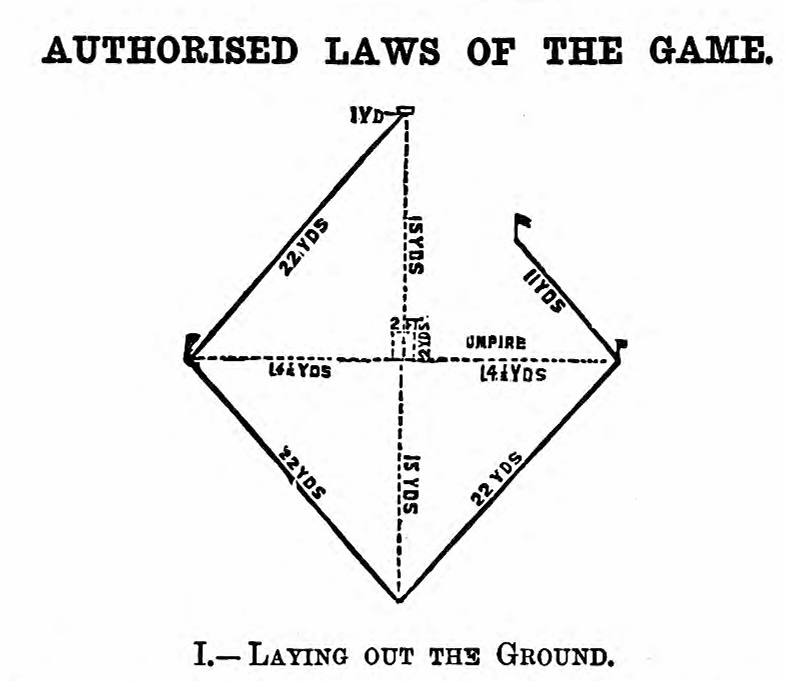
Layout of the Liverpool game, original 1883 rules. Lawn Tennis: Its Laws, Rules, Regulations, Definitions, Plans, &c. The Game of Rounders, Containing Laws and Plans of the Game and the Rules of the Rounders Association (Manchester: John Heywood, 1887), 15–20. Public domain.
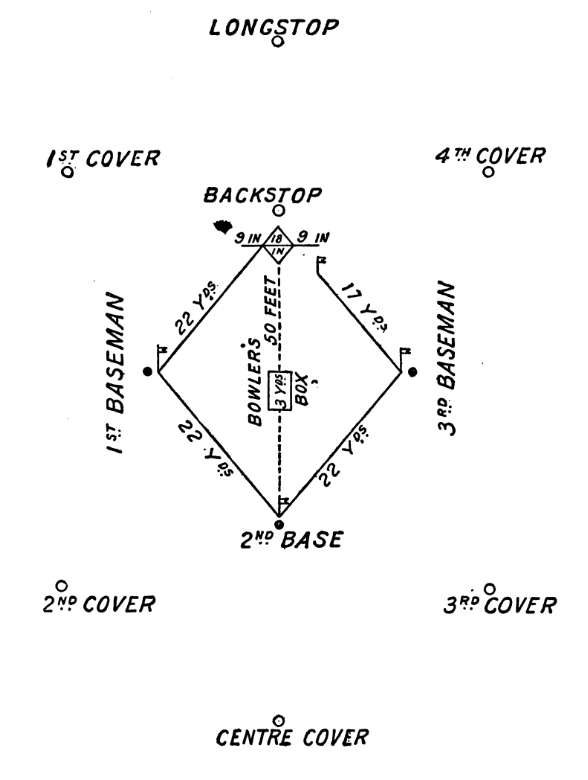
Revised layout of the Liverpool game, 1889 revision of the rules. James Manders Walker, “Modern Rounders,” in Rounders, Quoits, Bowls, Skittles and Curling (London: George Bell and Sons, 1892), 7–17. Author's own collection.
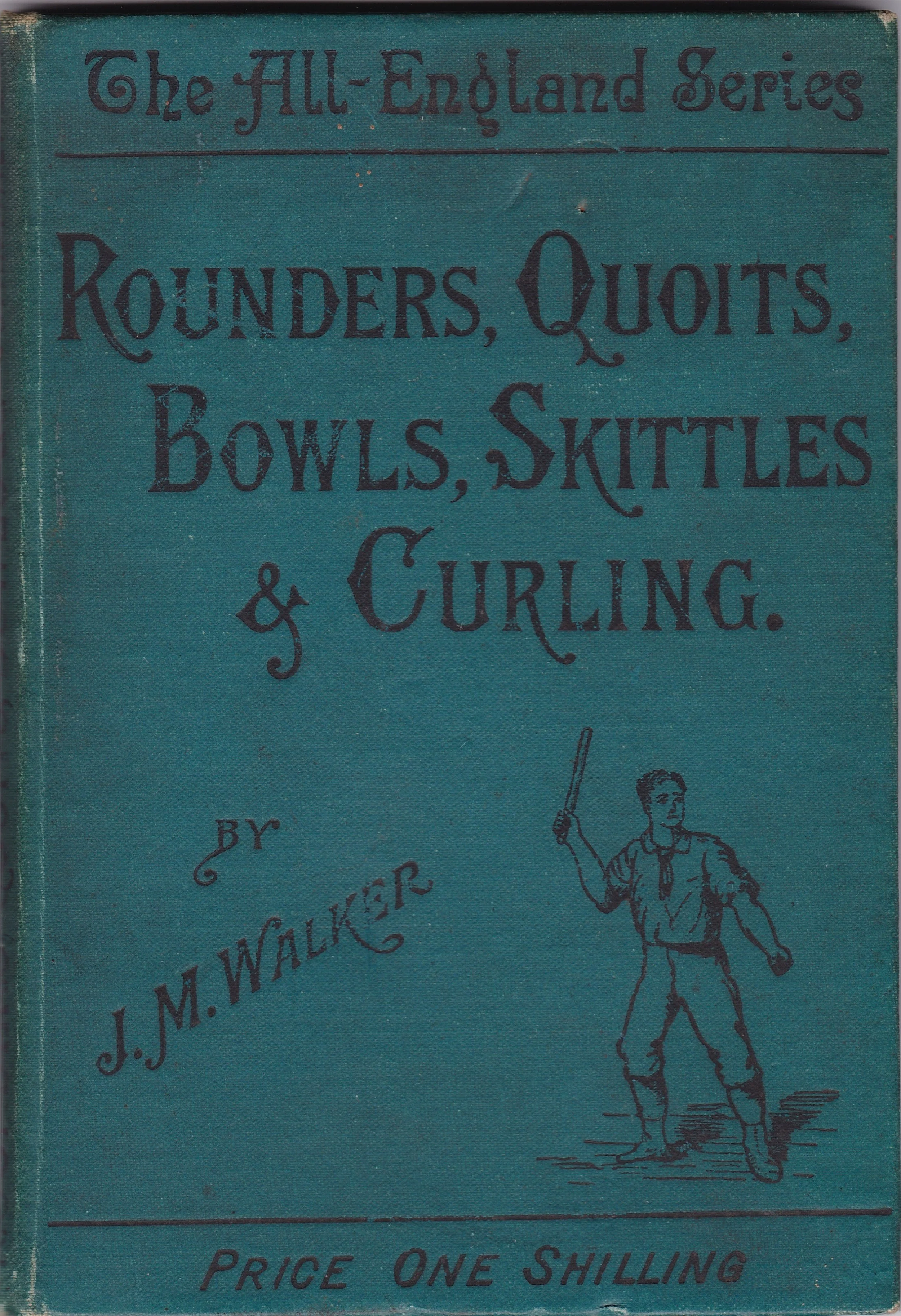
Cover, James Manders Walker, “Modern Rounders,” in Rounders, Quoits, Bowls, Skittles and Curling (London: George Bell and Sons, 1892), 7–17. Author's own collection.
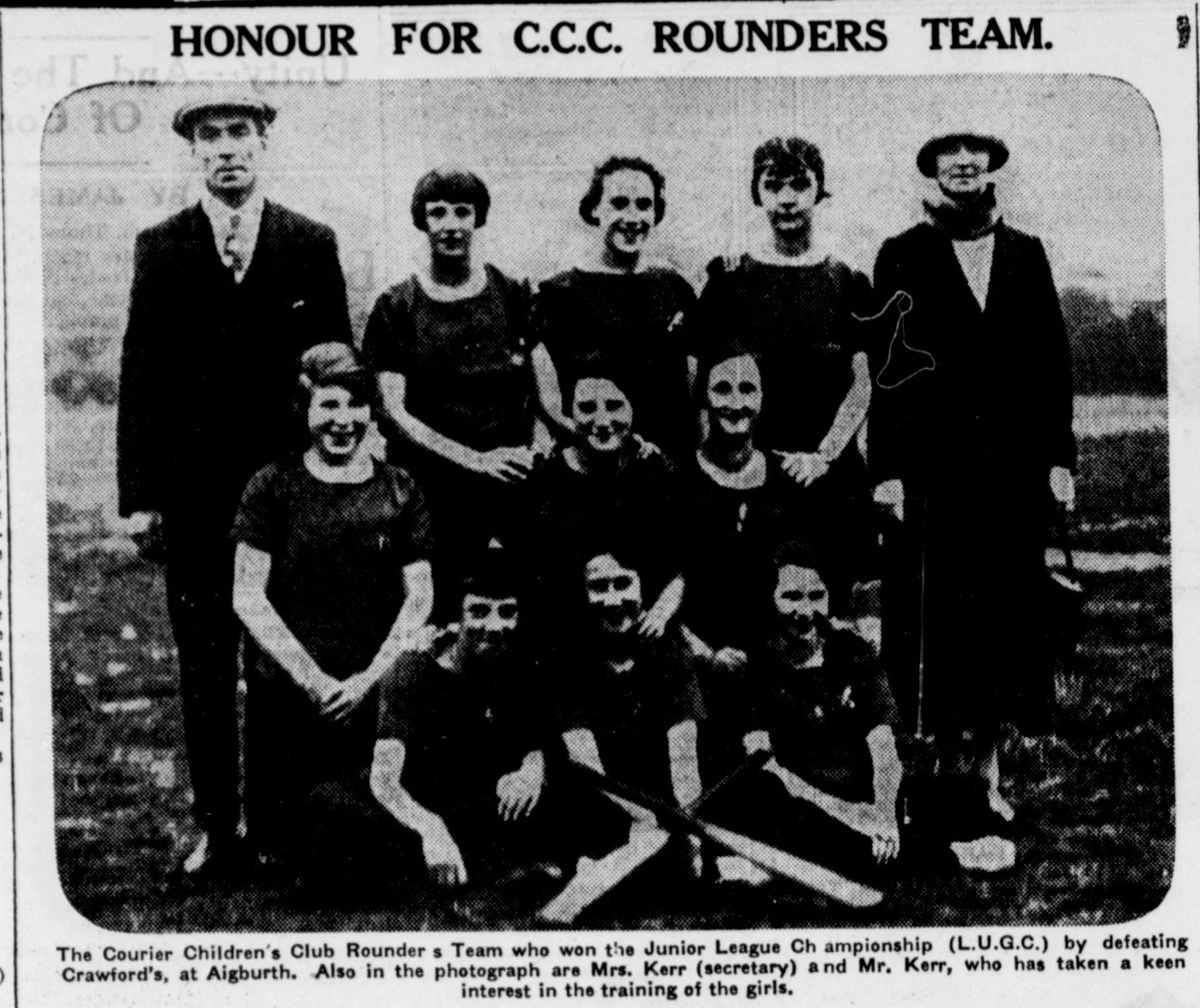
The Liverpool game in Liverpool. Liverpool Weekly Courier, 12 September 1925, 9. Image created by the British Library Board. No known copyright holder.
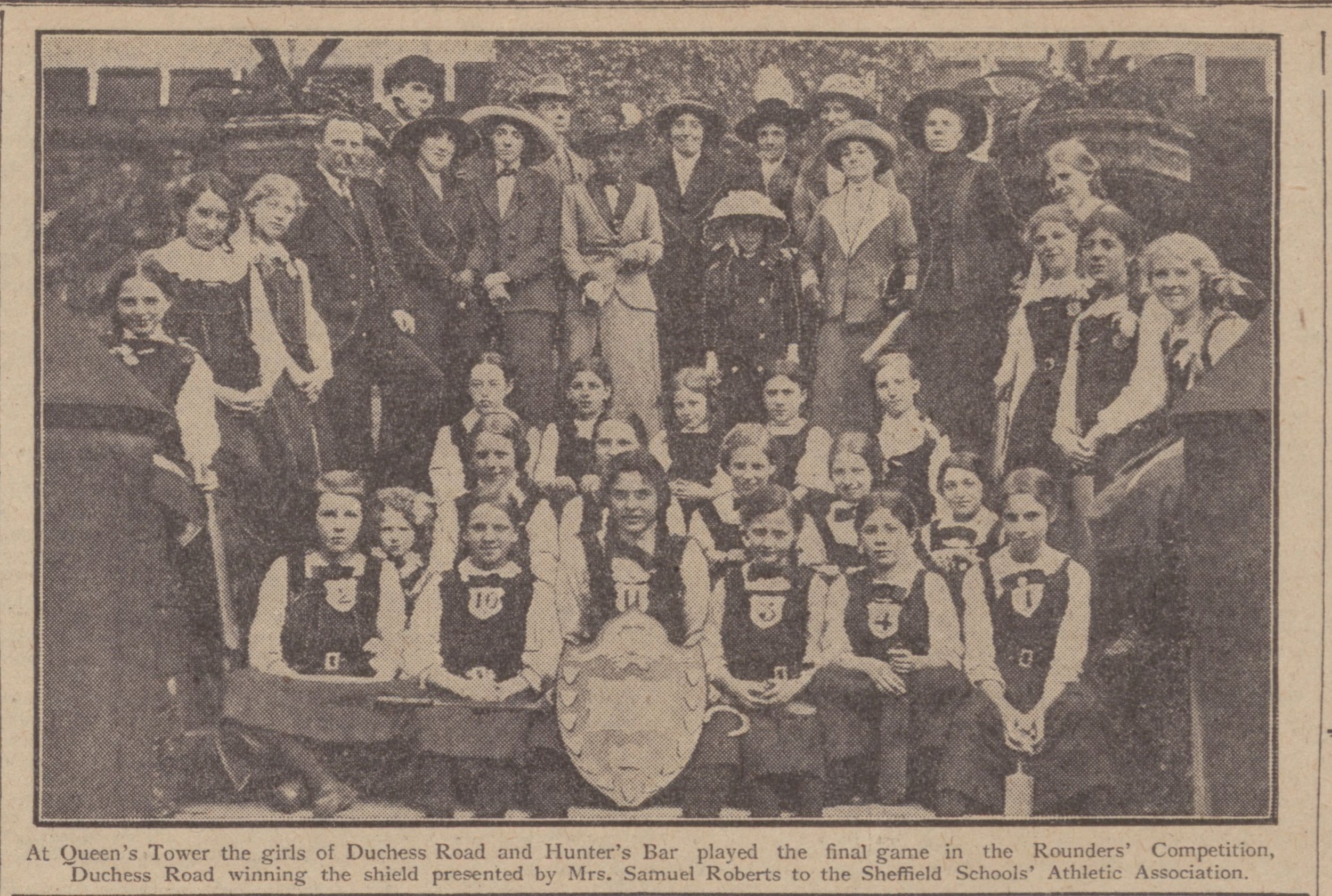
The Liverpool game spreads to Yorkshire. Sheffield Daily Telegraph, 10 October 1913, 9. Image created by the British Library Board. No known copyright holder.
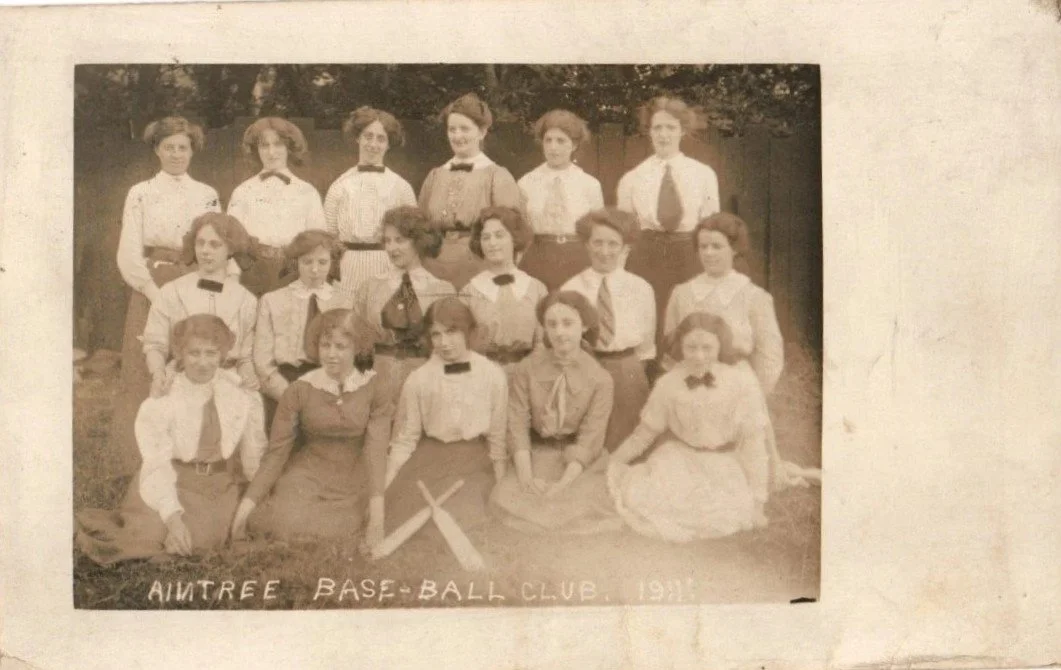
The Aintree Base-Ball Club, 1911. Postcard. Author's own collection.
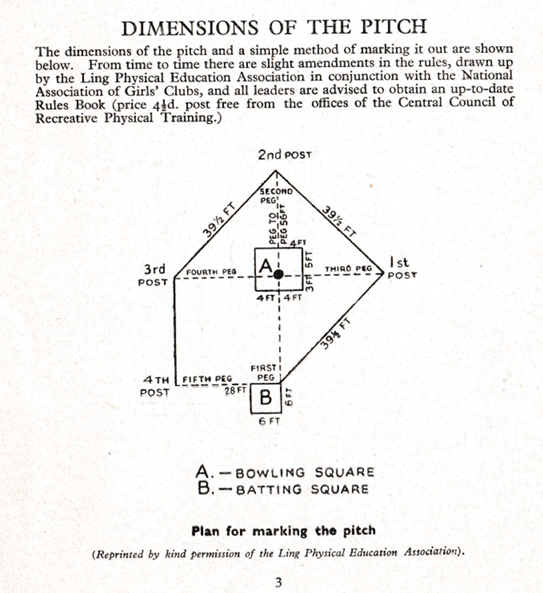
Layout of the Ling game. The Rules of the Game of Rounders, 1936–37 (London: Ling Association, 1937). Author's collection.
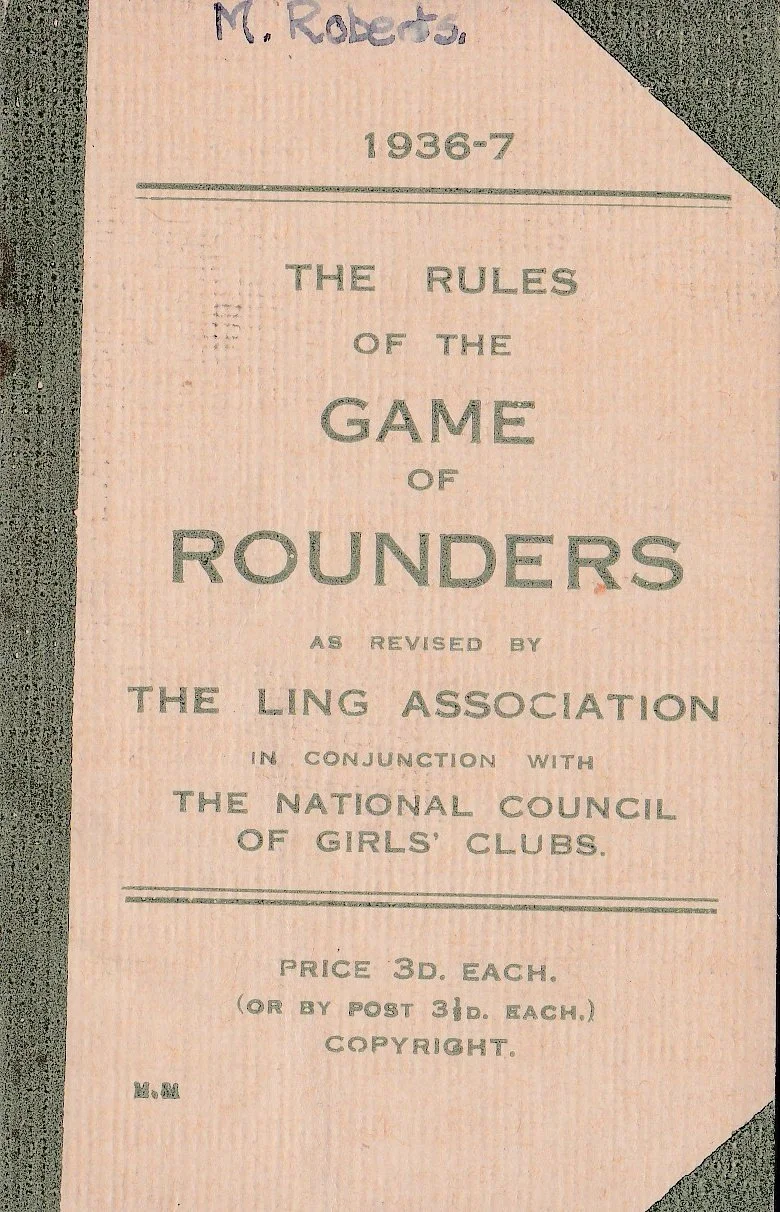
The Rules of the Game of Rounders, 1936–37 (London: Ling Association, 1937). Author's own collection.
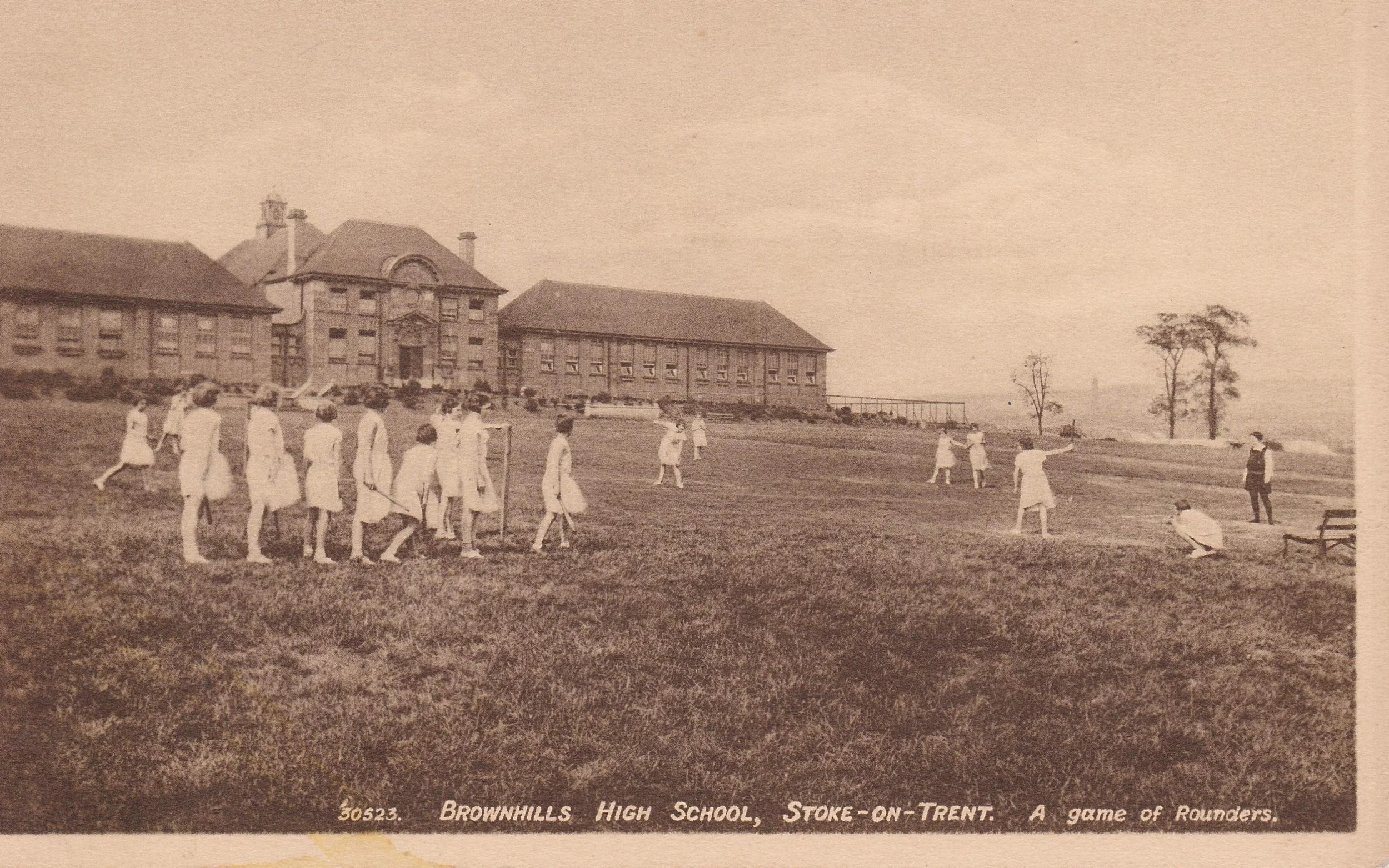
School-age girls playing the Ling game, Stoke-on-Trent, Staffordshire. Postcard. Author's own collection.
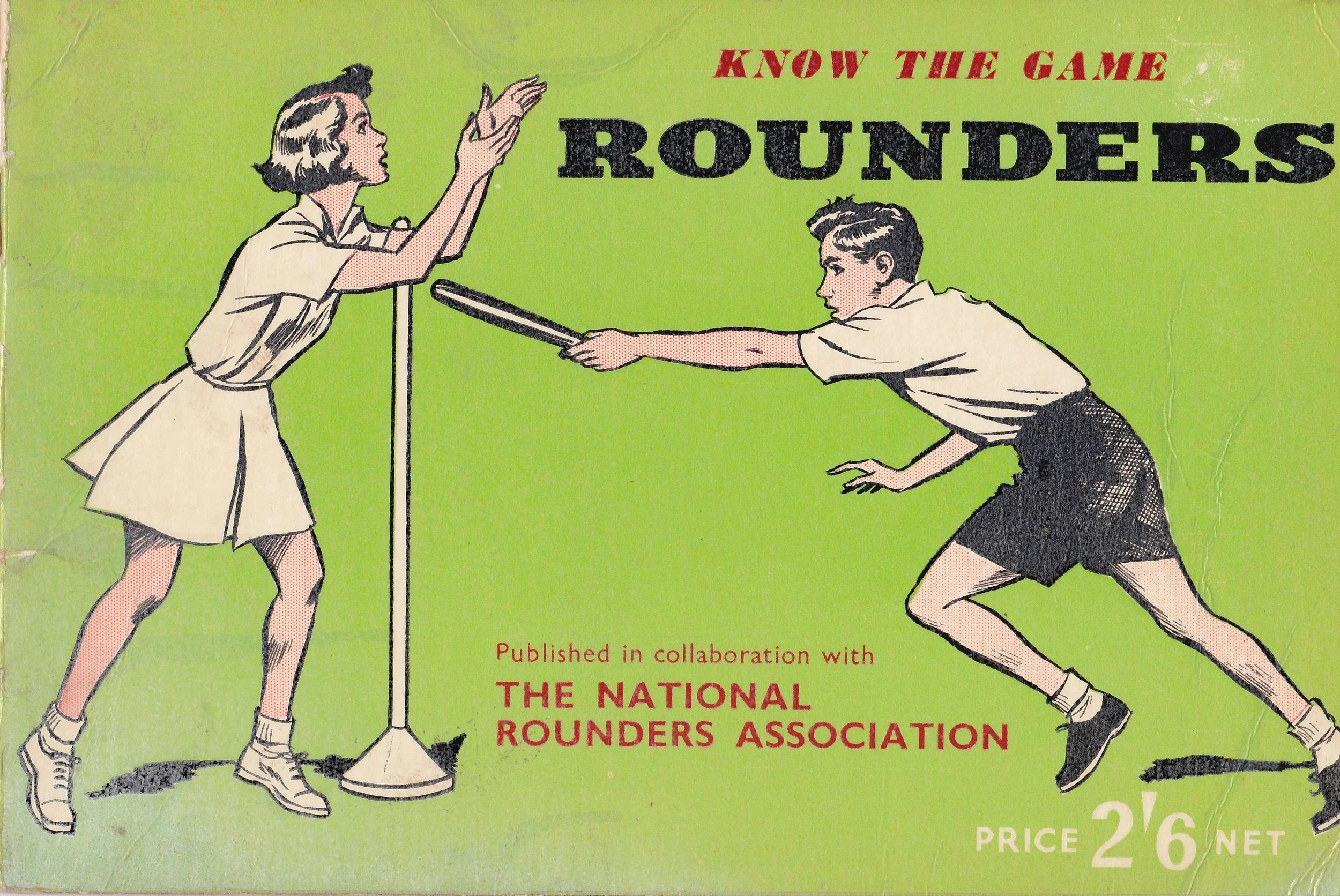
Know the Game: Rounders. Published in collaboration with the National Rounders Association, 1957. Author's own collection.