A New Baseball, A New Rounders.
1899—1918
Jamie Barras.
INTERNATIONAL BASEBALL. England and Wales met for the first time in an international encounter at Cardiff yesterday. The English team was composed practically of Liverpool players, while that of Wales was drawn from the Cardiff and Newport clubs. Wales batted first, and mainly owing to fine scores by Lewis and Wreford, who each made 18, they scored 102. England responded with 56, Williams, Barron, and Ramsay (10) being the highest scores. Following on with a deficit of 47, England scored 61, leaving Wales 17 to get to win, which they did for the loss of four men. Wales winning by seven men to bat.[1]
The 1908 England–Wales baseball international was the most important game played under the English code since the 1889 contest between a team of Liverpool rounder players and the visiting Spalding baseball tourists. It not only marked a new beginning for relations between the two centres for the English game, Liverpool and South Wales, but it also lifted the Liverpool scene out of a rut. By the time the England and Wales teams took the field at Cardiff in August 1908, the Liverpool scene had been going backwards for half a decade. Going off the number of people playing the game alone, it may have seemed in rude health, but this was deceptive. Most teams were connected to churches, faith-based organisations, and schools. To these, English baseball wasn’t a sport; it was a pastime that offered physical recreation and fellowship for their parishioners, members, and pupils. The game was in danger of becoming popular but non-competitive.
Baseballers in general, I am sure, will be sorry to learn that the old Excelsior Club has been disbanded. It seems strange indeed that a club with such a marvellous record should disappear so quietly, but such, however, is the case. With the disappearance of the Old Swan Club, the league has a very open appearance, and with some of the more prominent of the old Excelsior players assisting fresh clubs, the fight for top place this season is bound to be very interesting.[2]
One symptom of the game’s malaise was the disappearance of its best teams. Excelsior disbanded between the 1902 and 1903 seasons; the mighty, mighty Union would last only one year longer. However, this was just a symptom; behind it was a failure to organise so clubs could nurture new talent to replace retiring players. This lack of organisation also translated into a lack of resilience: the Union disbanded after a 1903 season that was wrecked by bad weather (the English summer of 1903 was one of the wettest on record). The senior league boasted six teams going into the 1903 season; only one of those six teams would return for the following season (Breckside). The Liverpool association promoted three teams from its junior division to join them, to make for a four-club senior league. There weren’t any other clubs still around capable of the necessary standard of play.[3]
Meanwhile, the 1904 season boasted an eight-club Junior League and an eight-club Church League, in addition to school leagues. Enthusiasm for the game as a means of physical recreation and fellowship remained undimmed. It was only at the top that there were institutional and structural problems. Having healthy grassroots support is vital to the success of any sport, but all that is for nought if there is a lack of real competition at the top of the game. The Liverpool game wasn’t moving forward; it was spreading out. It was stagnating.[4]
T.A.—The clubs in the South Wales district, including Newport, Grangetown, Cardiff, Caerphilly, and a host of minors, play baseball according to the rules of a code slightly variant from that observed in this district. The tendency is to proximate more and more to the American code, as played now so largely in the London district. If the local officials were more enterprising the possibilities of the game, like those of football, would be boundless.[5]
One reason for the stagnation was a lack of innovation in how the game was played. From 1892 to 1908, the game in South Wales adapted and evolved, adopting a two-handed grip on the bat and a heavier bat as a consequence; moving from “feeding” the ball to the batter for them to hit to attempting to prevent them getting a hit; and generally, speeding up play. Meanwhile, the Liverpool game remained so rooted in its origins that it retained a single-handed grip on the bat despite the rules of the game—written in Liverpool—permitting a double-handed grip as far back as 1889. The Liverpool association’s solution to speed up play was to reduce the number of good balls a batter could face before having to either hit or run from three to two. This further diminished the influence the bowler/pitcher could have on the game—a particular obsession of the Liverpool association—but at the expense of making batters reckless in their strokeplay, more prone to errors, and fielders, as a consequence, complacent.[6]
This stagnation would be brutally exposed when a Liverpool team—playing as “England”—travelled down to face a Welsh team at the Harlequins’ Ground, Newport Road, Cardiff, on 3 August 1908. The game, as historic as it undoubtedly was, was hardly a classic.
The game was not a very exciting one, the fielding of the Englishmen being rather slack, and, apart from Williams’s, Allen’s, and Hall’s displays, not one of the players deserves special credit. Wales, on the other hand, fielded cleanly, except at rare intervals. The two-umpire game was not a success. Several times they seemed to disagree, and the spectators resented decisions which at times appeared unfair to both sides.[7]
Two umpires were needed to reconcile differences in the two codes—English and Welsh—as they now existed. As the game was played in Cardiff, it was agreed to follow the Welsh rules more or less (two-handed batting allowed; three good balls, not two, before a need to hit or run, etc.), which naturally put the Liverpool/England players at a disadvantage. However, this only exposed how far behind the curve the Liverpool game had fallen. The misstep in trying to speed up play by having the batter face only two good balls was particularly obvious in how poorly the Liverpool/England team fielded. It relied too much on batters making errors; with one extra chance to find the right ball to hit, there were fewer of those.
It would be another six years before a Liverpool team would risk taking on a South Wales team a second time. However, it was a lesson learned.
CRAWFORD’S ROUNDERS COMPETITION. Play up, the Bag-making! Won the semi-final by 98 runs. The fine victory was chiefly due to Horner, who put Icing Table out for 1 run in the second inning. She is the finest player in Crawford’s. Elliot played a grand game, and so did Wilson, being the last hitter in the second innings. Now, then, Bag-makers, if you win next match you have won those medals.[8]
The other big news of the 1908 season in Liverpool was the return of rounders. This was in the form of a challenge competition played by teams of female workers from different departments of Crawford’s Biscuit Factory, one of Liverpool’s most famous employers. That same summer, a member of the Walton St. Mary’s Rounders Club wrote to the Liverpool Evening Echo, expressing an interest in forming a league. The club’s members were boys of around 16 years old. Alas, the Echo’s response was to inform these young rounder enthusiasts that the game they should be playing was English Baseball.[9]
These two events—the Crawford’s women’s challenge competition and the pushing of the Walton rounder boys towards English Baseball—were evidence of a gender-based division between the two sports that had begun with the National Rounders Association’s metamorphosis into the English Baseball Association and was reinforced by the very masculine image of the American version of the game. It would be further reinforced within a year of the Crawford competition with the formation of the “Liverpool Ladies Rounders League”.
The league drew its teams largely from factory and shop workers (which, in line with the employment practices of the time, included girls as young as 13). The 1912 season, for example, consisted of six teams: Ogden’s, New Liverpool Rubber, Johnson’s, Shinio, Crawford’s, and Hignett’s, all works teams of one form or another. (‘Shinio’ was a brand of metal polish manufactured by Reckitt and Sons, the company behind the much more famous ‘Brasso’.)[10]
This is not to say that there was not pushback against this artificial division. A photograph survives of the “Aintree Base-Ball Club”, a women’s baseball club (or club with a women’s section), in Liverpool in 1911. As we will see in a future entry in this series, by the 1920s, there would be both men’s and women’s baseball leagues under the English and Welsh codes.[11]
There is good reason to believe that the women’s rounders club in Liverpool in this period played under a modification of the old 1883 National Rounders Association rules—the rules that formed the foundation of what would become English Baseball. Photographs of Liverpool-based rounders clubs from this period show that the game was played with a flat bat, something akin to a miniature cricket bat. As I have hypothesised elsewhere, this was likely the type of bat Liverpool rounder enthusiasts used when they began turning the children’s game into a sport in the 1870s, and represented the type of bat used in the local Lancashire variant of the children’s game.[12]
A Lancashire variant of rounders that uses a flat bat survives to this day, in “Bolton Rounders”, played in a mill town around 30 miles from Liverpool. Although the Bolton and Districts Rounders Association was created as late as the 1930s, it brought together clubs and leagues that were far older. It drew most of its players, like the Liverpool rounders league of the 1910s, from female factory workers, in this case, mill workers. In its historical form, the Bolton game featured a flat bat, a soft ball, and “corking”—putting out runners by hitting them with a thrown ball—all features of the 1883 NRA rules. It seems reasonable to suppose that the Bolton women’s rounders scene inherited these rules from the nearby Liverpool women’s rounders scene, which played by something close to the 1883 NRA rules but with a lighter bat and ball. Modern Bolton Rounders is still played with 11 players a side, as in the Liverpool game (c.f. 6 to 9 players in the game played elsewhere); its field layout is a pentagon, but differs in the position of the fourth base from the layout of the game played elsewhere.[13]
Women’s rounders in Liverpool continued into the First World War, with the league replaced by a knock-out competition, the “Lancashire Ladies’ Rounders Tournament”. Works teams in the war years included Bibby’s and the old staple, Crawford’s. We can speculate that women who played rounders in the summer competition played Association Football in the winter. Like the men’s game, it would have its golden age in the interwar years.[14]
LIVERPOOL SOLDIERS TURN TO BASEBALL. In consideration of Tommy's sport when he gets to the front, one has always to remember that the baggage must be kept to the lowest possible weight, and his sport must played in small areas. Therefore, sirs, baseball is essentially " THE " game for soldiers. It is a game that will suit him, because it is easily equipped, does not take up much room, and played on any sort of ground, pitches being possible on uneven turf, whereas cricket, for instance, must be played on reasonably good turf, unless injuries to players are to be numerous.[15]
Baseball in Liverpool had a good First World War. Critically, unlike cricket, baseball’s only serious local rival as a summer team sport, baseball’s playing fields did not require a level of care that was an unaffordable luxury in wartime; nor did games keep essential workers from their jobs for several days. County cricket was suspended for the duration. Baseball played on.[16]
The snappy gameplay and lack of a need for a carefully maintained playing field, coupled with little beyond a bat and ball being needed in the way of equipment, factored into another bright spot in baseball’s war: its adoption by soldiers at the front. Soldiers of Liverpool regiments wrote home requesting equipment to be sent to them in France; Liverpool sporting goods manufacturers were happy to comply. The same phenomenon was observed in the game’s second home, South Wales. In this, English baseball was unconsciously echoing the story of both its American cousin, which had seen an explosive growth in popularity during the American Civil War for much the same reasons, and its progenitor, rounders, which had been played by British soldiers in the Crimea during the Crimean War.[17]
(As an aside, a game that mixed “baseball and rounders” was played in at least one internment camp in Germany, at Ruhleben, with one team captained by footballing great Steve Bloomer, who had played American baseball in the 1890s for the Derby club. Bloomer was one of a number of English football players based in prewar Germany who were interned at the start of the war. Another baseball/rounders team at Ruhleben was formed of merchant seamen of African/African-Caribbean heritage.[18])
Teams featuring soldiers also became a feature of the game in Liverpool itself. These included both Liverpool baseball players home on leave, turning out for their old clubs, and regimental teams. There was, of course, a melancholy side to the story of English baseball in the First World War. On 22 May 1915, the Liverpool baseball club took on a side from the “Liverpool Pals” (the King’s (Liverpool) Regiment) at the Stanley Athletic Ground. Every name on the Pals’ team list would feature on lists of soldiers killed in action by war’s end. Although in some cases we cannot be sure if the dead were the players of the 22 May game or a relative, even those latter cases highlight the extent to which death touched almost every family in Liverpool in the First World War.[19]
There would be deaths in battle among the baseball community itself, prominent among them Jack Brayton of the Everton Baseball Club and Alf Moore of the Northern. Both men had been among the many Liverpool baseball players who combined playing baseball in the summer with playing association football in the winter.[20]
Baseball, far as Liverpool is concerned, will be kept on, because most of its players are men engaged on war munitions. There can be no doubt that the sport-interest of the city during this summer will be large and keen[...][21]
On the civilian side, the baseball scene could rely on essential workers for players and supporters. As with other sports, dock and munitions workers were especially important in this regard. The story of the First World War women’s football leagues, which owed much to women munitions workers, is now well-known.[22] Much less well-known is the story of the women’s rounders scene in Liverpool in the First World War.
The availability of “…munition workers [and] a sprinkling of old hands and the boys on leave from the colours” meant that the English Baseball Association could run a full programme of men’s leagues and knockout competitions all through the war, albeit with a reduced number of teams.[23] This was in line with the continuation of association football in the city. After controversially continuing with the 1914/15 season, the Football Association suspended the leagues for the rest of the war, but the game continued in the form of regional competitions. The two big Liverpool clubs, Liverpool FC and Everton FC, played in the “Lancashire Section”. As before the war, the two clubs also contributed players to the local baseball scene, most notably future Liverpool FC captain, Donald McKinlay (1891–1959).[24]
However, the English game did not have things all its own way.
U.S. BASEBALL PLAYERS TO GIVE AN EXHIBITION AT GOODISON PARK. One result of the American invasion of Liverpool is the arrangement of a baseball match to be played at Goodison Park tomorrow week for the Lord Mayor's Million Shilling Fund. The cream of the American and Canadian teams happen to be located in England just now, and arrangements have been made for a particularly strong pair of sides to contest on the local football ground. The international is styled U.S.A. v. Canada, and the game will be the first of its kind played in this city by other than local players.[25]
The entry of the USA into the First World War brought American baseball back to Liverpool once more. The game arranged for 25 May 1918 was, of course, not the “first of its kind played in this city by other than local players”—touring US teams had played in the city in both 1874 and 1889—but it was the first time that Liverpool crowds familiar with this style of base-running bat-and-ball game got to see it played the American way. The game was arranged by Everton FC chairman William R. Clayton (1862–1941). One of Clayton’s predecessors, George Mahon, had been involved in the 1894 effort to bring American baseball to Liverpool, and knock-out championship finals under the English code were sometimes played at Goodison Park, too.[26]
In the event, the Canadian team had to drop out, and the game was played between US Army and Navy teams, resulting in a 3–2 victory for the US Army team. The attendance was reported as 7000, and £251 was raised for the Prisoner of War Fund. There would be further games at Goodison Park later in the summer, thanks in no small part to someone with a long association with both English and American baseball in Liverpool.
BASEBALL TOURNAMENT AT GOODISON PARK. From the point of view of popular interest the baseball games that have been recently played in this district have been so successful, that a number of gentlemen, including Mr. F. Sugg, have arranged a cup competition for American baseball teams. It is hoped by this to bring out the best possible skill, and draw forth the utmost energy on the part of the competing sides.[27]
“F. Sugg” was Frank Sugg (1862–1933)[28], the Lancashire county cricket player and Derby and Everton footballer. Sugg was the pitcher for a Liverpool team that took on the Spalding tourists at baseball in Liverpool in March 1889 (he was playing for Everton FC at the time).
Like Spalding, Sugg owned a sporting goods company. Frank Sugg Limited was headquartered in Liverpool—Alfred John Bailey (1870–1943)[29], who would serve as chairman of the English Baseball Association throughout the 1920s and 1930s, was the company secretary. In his company advertising, Sugg described himself as an All-England and county cricketer and an “international baseball player (England v. All-America)”. Frank Sugg, through his company, sponsored many sporting competitions, including English baseball in both Liverpool and South Wales, and had done so since at least 1909. He was also an early supporter of women’s football, refereeing one of the earliest women’s football games to be played in Liverpool. This was a match played in January 1896 and featured former members of the pioneering British Ladies Football Club, including its star player, Daisy “Tommy” Allen.[30]
A NOVEL PROPOSAL TO AID WAR CHARITIES. Mr. J. Robinson, captain of the Everton Baseball Club writes:— I do not wish to hinder the good work that is being done by the American baseball teams for a good cause, my only thought being how to help in same[...]I would like to suggest, if possible before the season closes, a match between teams representing English and American baseball, say about four innings American and one innings English styles. If they do not care to play our game could find a team plav them own game, and give them a good run.[31]
With the American baseball teams receiving all the press, Jack Robinson of Everton Baseball Club felt the need to remind readers that the English game was also carrying out a full programme of games that summer. He did this in the form of a challenge to play a North American team issued through the Liverpool Echo on 2 August 1918. The challenge was accepted, and a game was scheduled for Saturday, 10 August 1918, at the Police Athletic Ground, Fairfield, between a Canadian and an English team, the game to be played under American rules. Alas, I can find no record of the game.[32]
With the November 1918 Armistice, Liverpool’s soldiers started to come home, and its American and Canadian visitors started to depart. American baseball would, however, return to the city for one last flourish the following summer. The U.S. Government offered grants to U.S. military personnel to study at British universities for a semester; over 1000 men accepted. This led to a single season of varsity baseball involving teams of American servicemen studying at the likes of King’s College London and the Universities of Edinburgh, Birmingham, Manchester, and Liverpool. When those students left Liverpool, American baseball did too. It would be 14 years before it would make a return.[33]
This is not to say it did not leave a legacy. When English baseball returned for its own 1919 summer season, it was with altered rules. As with the mooted “boys societies and works” league of 1918, the English game in Liverpool adopted the American system of counting only a full circuit of the bases as a run (albeit with a “home run” scoring 2 runs). It did this as observation of the American game in 1918 had shown that the American approach made for “tighter basework”. Alas, the innovation did not last. By 1921, the Association had reverted to the old scoring system—fans and players both found low-scoring games monotonous. This was, of course, one of the reasons an English code existed in opposition to the American code in the first place.[34]
Still, this showed a game far more willing to evolve than it had been a decade earlier. The stage was set for it to enter its golden age.
Jamie Barras, August 2026
Back to The Rounders
Notes
[1] “International Baseball”, Edinburgh Evening News, 4 August 1908, 5.
[2] “Baseball Notes”, Liverpool Evening Express, 9 May 1903, 2.
[3] “Baseball”, Liverpool Echo, 16 April 1904, 8; “Baseball Notes”, Liverpool Echo, 11 July 1903, 7; “English Baseball”, Liverpool Mercury, 18 April 1904, 10; “Baseball Notes”, Liverpool Echo, 16 July 1904, 8.
[4] Note 3 above, final reference.
[5] “Baseball”, South Wales Weekly Argus and Monmouthshire Advertiser, 8 August 1908, 9.
[6] “English Baseball Association”, Liverpool Mercury, 18 April 1899, 10.
[7] “Baseball Notes”, Liverpool Echo, 1 June 1907, 1.
[8] “Crawford’s Rounders Competition”, Liverpool Echo, 13 June 1908, 8.
[9] Baking History: William Crawford & Sons, https://letslookagain.com/tag/crawfords-biscuits-liverpool/. Accessed August 23, 2026; “Baseball Budget”, Liverpool Echo, 15 May 1908, 11.
[10] “Baseball and Rounders”, Liverpool Echo, 30 July 1910. 1912 season: ‘Baseball and Rounders’, Liverpool Echo, 25 May 1912. Shinio: https://www.gracesguide.co.uk/Reckitt_and_Sons, accessed 12 April 2026. The Liverpool Rounder League featured two divisions, an “open” division for “girls” older than 13 ½ and a “junior” division for “girls” aged 13 ½ to 17: insert on organizational structure of rounders in Liverpool, The Rules of the Game of Rounders, 1930 (London: Ling Association, 1930).
[11] Aintree Base-Ball Club, postcard, posted Liverpool 1911. Author’s own collection.
[12]https://www.ishilearn.com/the-rounder-years, accessed 23 August 2026.
[13] “Voices from Spindle and Loom: Bolton”, Cotton Factory Times, October 3, 1930, 4; “Origins of Bolton Rounders Game Sought by University,” BBC News, https://www.bbc.co.uk/news/uk-england-manchester-13977360; rules of the modern Bolton game: https://www.westhoughton-high.org/wp-content/uploads/Rounders-KO.pdf, accessed August 10, 2026.
[14] “Rounders Final at Aigburth”, Liverpool Daily Post, 10 July 1915; “Bee’s Sports Notes”, Liverpool Echo, 6 March 1917.
[15] ‘Bee’s Sports Notes’, Liverpool Echo, 20 May 1915.
[16] Andrew Taylor, ‘Did Canada Save British Baseball?’, Journal of Canadian Baseball, 2022, 1(1). https://doi.org/10.22329/jcb.v1i1.7699.
[17] ‘Baseball in France’, Liverpool Echo, 16 March 1916; Debbie Schaefer‑Jacobs, “Civil War Baseball,” National Museum of American History, https://americanhistory.si.edu/explore/stories/civil-war-baseball. Accessed August 2, 2026.; “From a Soldier of the 21st to His Brother in Glasgow”, Glasgow Herald, 1 June 1855, 5.
[18] ‘Seven Months a German Prisoner’, Evening News (London), 9 June 1915; ‘Ex-Teessiders in Germany’, Tees-side Weekly Herald, 20 March 1915; ‘English Footballers’ Life in Germany’, Evening News (London), 28 January 1915; Paul Brown, The Ruhleben Football Association: How Steve Bloomer’s Footballers Survived a First World War Prison Camp (Goal Post Books, 2020).
[19] ‘An Ideal Game for Soldiers’, Liverpool Echo, 24 May 1915. The Liverpool Pals’ team comprised the following: T. Horner, F. Goodman, C. Longley, G. Carroll, C. Jowett, A. Sowerby, P. Smith, W. Moorcroft, A. Dodd, H. Hartley, and T.H. Jones. These names can be checked against the names of the men of the Liverpool Pals killed in action: https://astreetnearyou.org/regiment/218/The-King's-(Liverpool-Regiment), accessed 12 April 2026.
[20] Jack Brayton: ‘Footballer Killed in Action’, Liverpool Echo, 26 October 1918. Alf Moore: ‘Bee’s Sports Notes’, Liverpool Echo, 11 July 1916. Death: ‘Died from Wounds’, Liverpool Daily Post, 28 May 1918.
[21] ‘Bee’s Sports Notes’, Liverpool Echo, 30 April 1915.
[22] The most prominent women’s football team of the First World War in Liverpool was the Aintree Filling Factory munitions workers' team. The sport was popular all over Lancashire, and the biggest game locally was probably the June 1918 game between the Aintree Filling Factory and Dick, Kerr Limited from nearby Preston. The Dick, Kerr team was the most important women’s team to emerge in this period, and would continue playing even after the Football Association banned women from the game in 1921. ‘Lady Footballers’, Liverpool Echo, 2 November 1917. Aintree Filling Factory vs Dick Kerr Ltd: ‘Lady Footballers’, Liverpool Echo, 24 June 1918. Dick, Kerr: Patrick Brennan, ‘The Dick, Kerr Ladies’ FC’, https://www.donmouth.co.uk/womens_football/dick_kerr.html, accessed 12 April 2026.
[23] ‘Bee’s Notes’, Liverpool Echo, 22 February 1916.
[24] Richard Foster, “When Football Played On During World War One and Inflamed a London Derby,” The Guardian, https://www.theguardian.com/football/the-agony-and-the-ecstasy/2020/mar/24/when-football-played-world-war-one-north-london-derby. Accessed April 13, 2026; Donald McKinlay and baseball: ‘Promises to Play’, Liverpool Echo, 5 August 1915.
[25] ‘U.S. Baseball Players’, Liverpool Echo, 17 May 1918.
[26] William R. Clayton: https://www.liverpoolfootprint.co.uk/clayton-w-r, accessed 13 April 2026. George Mahon: https://www.liverpoolfootprint.co.uk/mahon-g, accessed 13 April 2026. Mahon and baseball in 1894: ‘Baseball’, Music Hall and Theatre Review, 20 July 1894. Clayton and 25 May 1918 game: ‘Baseball Champions’, Liverpool Evening Express, 22 May 1918. Goodison Park and English baseball: ‘English Baseball’, Liverpool Mercury, 19 August 1895; ‘English Baseball’, Liverpool Mercury, 2 September 1895
[27] ‘Baseball Tournament at Goodison Park’, Liverpool Echo, 25 July 1918.
[28]https://www.espncricinfo.com/cricketers/frank-sugg-20407, accessed 12 April 2026. Frank Sugg joins Everton F.C.: ‘Football’, Bolton Daily Chronicle, 5 October 1888; game against old club Derby: ‘Everton vs. Derby County’, Sporting Life, 17 March 1890. Pitching for Liverpool against Spalding tourists: ‘The American Baseball Teams at Liverpool’, Sporting Life, 25 March 1889. Sugg Challenge Competition, English baseball, Liverpool: ‘Baseball Budget’, Liverpool Echo, 31 July 1909. South Wales: ‘Baseball’, Western Mail, 2 October 1924.
[29] Years of birth and death: Alfred John Bailey, secretary, sports goods manufacturer, 1911 England Census, Poulton district, ancestry.co.uk. Ancestry.com Inc. (Operations), accessed 12 April 2026; ‘A Notable Figure’, Liverpool Echo, 30 March 1943. Chairman, English Baseball Union: ‘Will This Come True’, Athletic News, 27 June 1927. Bailey, secretary of Frank Sugg Limited: https://www.gracesguide.co.uk/1908_Stock_Exchange_Year-Book:_Miscellaneous_Companies:_F, accessed 12 April 2026.
[30] Sugg referee in women’s football match: ‘The “Original” Lady Footballers’, Birkenhead News, 11 January 1896. British Ladies FC and Daisy “Tommy” Allen: ‘Ladies’ Football Match’, Totnes Weekly Times, 30 March 1895; Patrick Brennan, “The British Ladies’ Football Club,” https://www.donmouth.co.uk/womens_football/blfc.html. Accessed April 12, 2026. Sugg advert “international baseball player”: advert for Frank Sugg Limited, in Sheffield Independent, 13 March 1913.
[31] ‘A Novel Proposal to Aid War Charities’, Liverpool Echo, 2 August 1918.
[32] ‘International Baseball’, Liverpool Echo, 8 August 1918.
[33] ‘University Baseball’, Liverpool Evening Express, 13 May 1919. The London-based Anglo-American Baseball League also continued for a further season in the summer of 1919.
[34] ‘Baseball Revival’, Liverpool Echo, 26 April 1919; ‘Baseball Jottings’, Liverpool Echo, 7 June 1919. Runs rule abandoned, discussed in: ‘Baseball In Wales’, South Wales Argus, 16 July 1921.
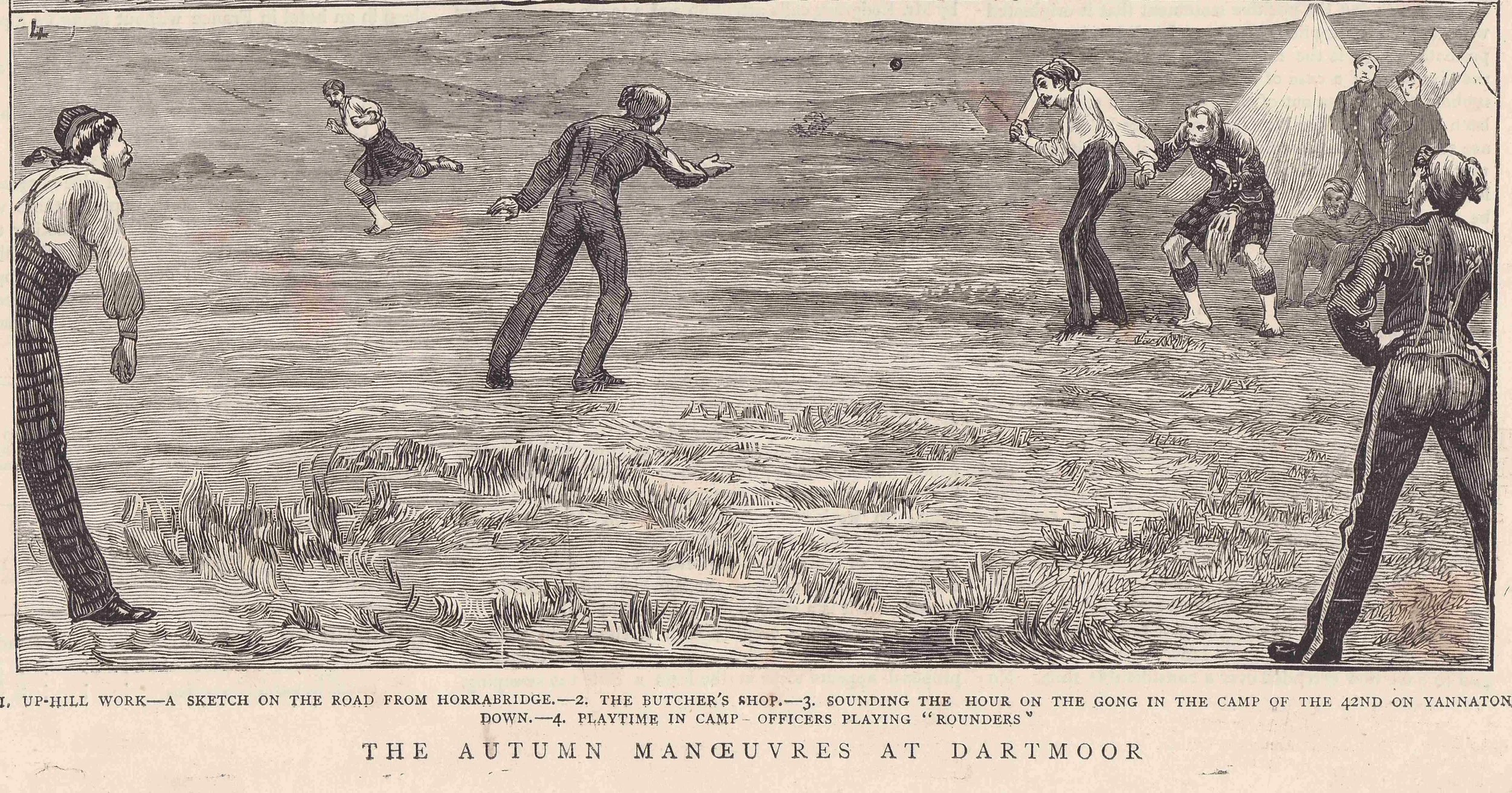
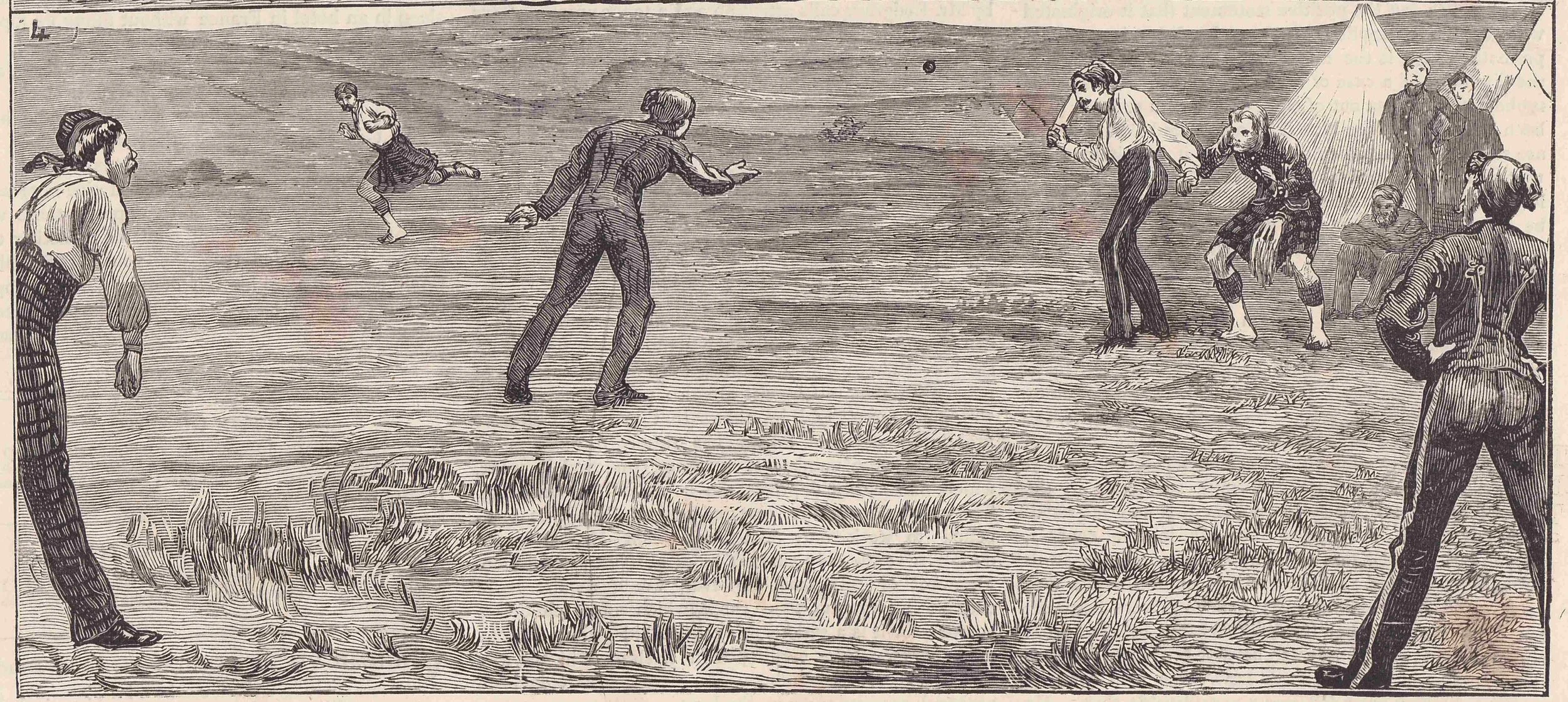
The Autumn Manoeuvres at Dartmoor, The Graphic, 16 August 1873, 1. Author's own collection.
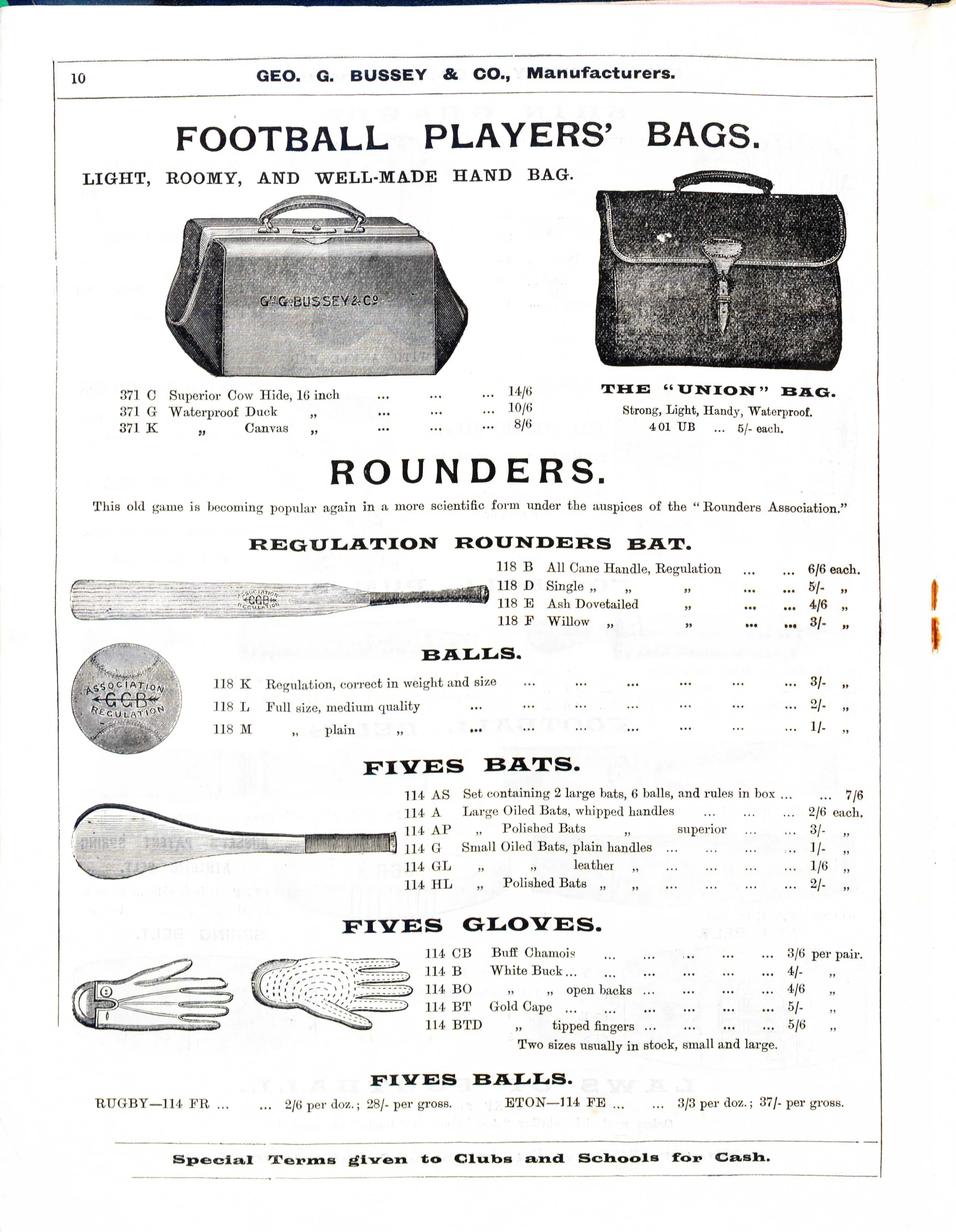
Listing for rounder equipment, Geo. G. Bussey, 1894/95 Winter Sports Catalogue. British Library. Author's own scan.
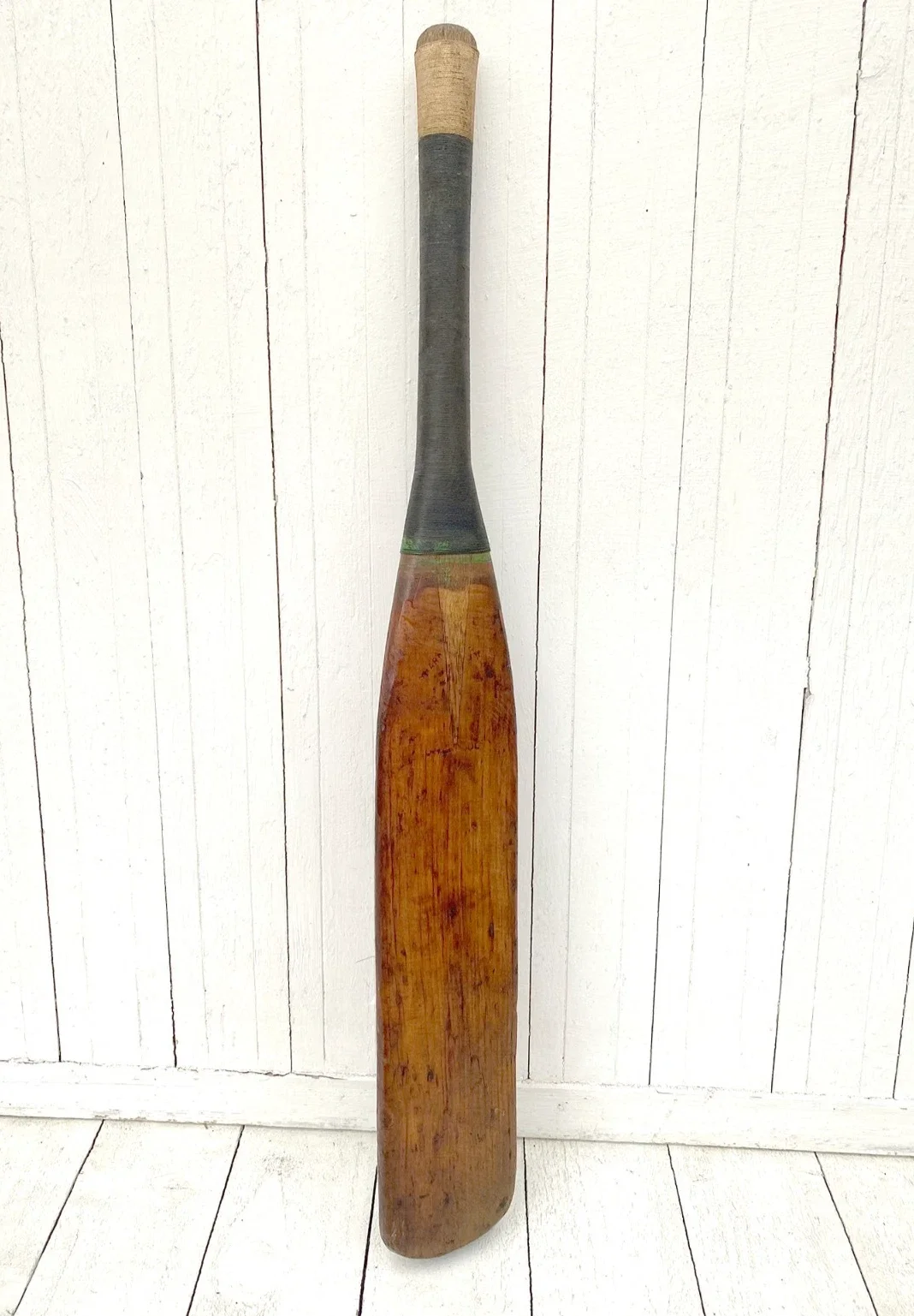
Bat for English Baseball, Jack Sharp, sports goods manufacturer, Liverpool. eBay listing. Copyright undetermined.
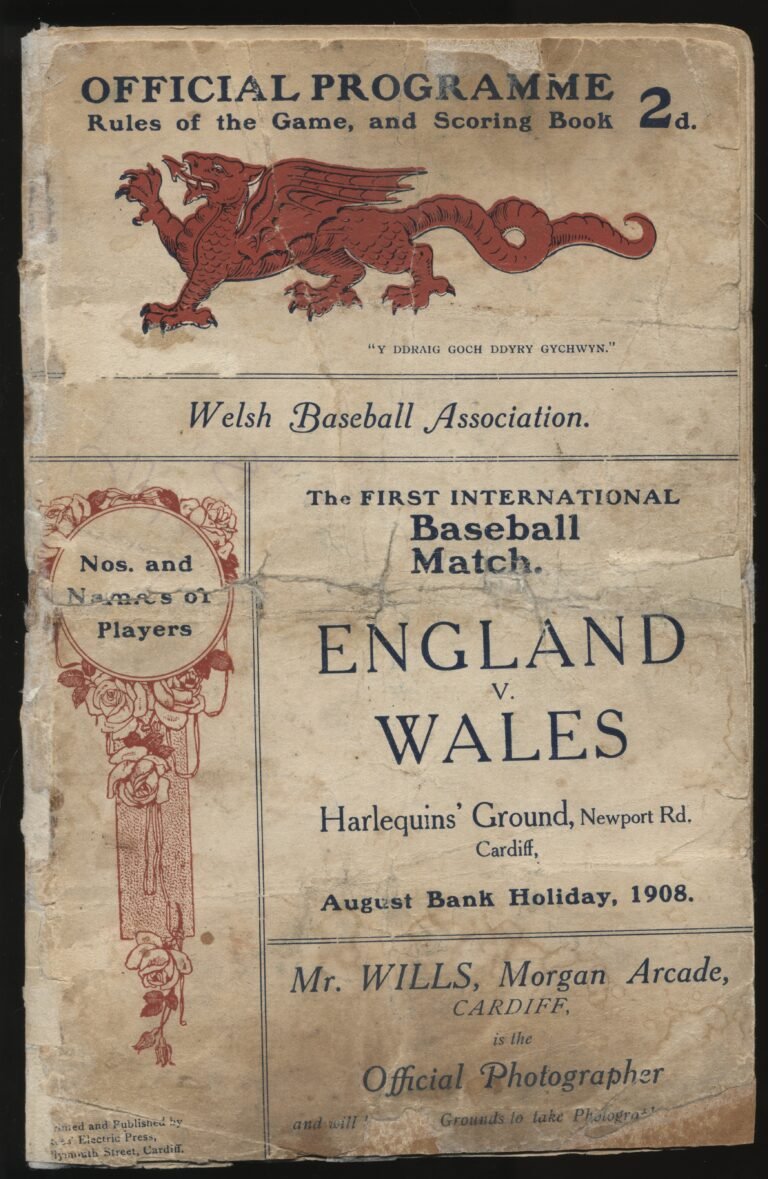
Programme, England v Wales Baseball International, 3 August 1908. Cardhawk UK listing. Copyright undetermined.
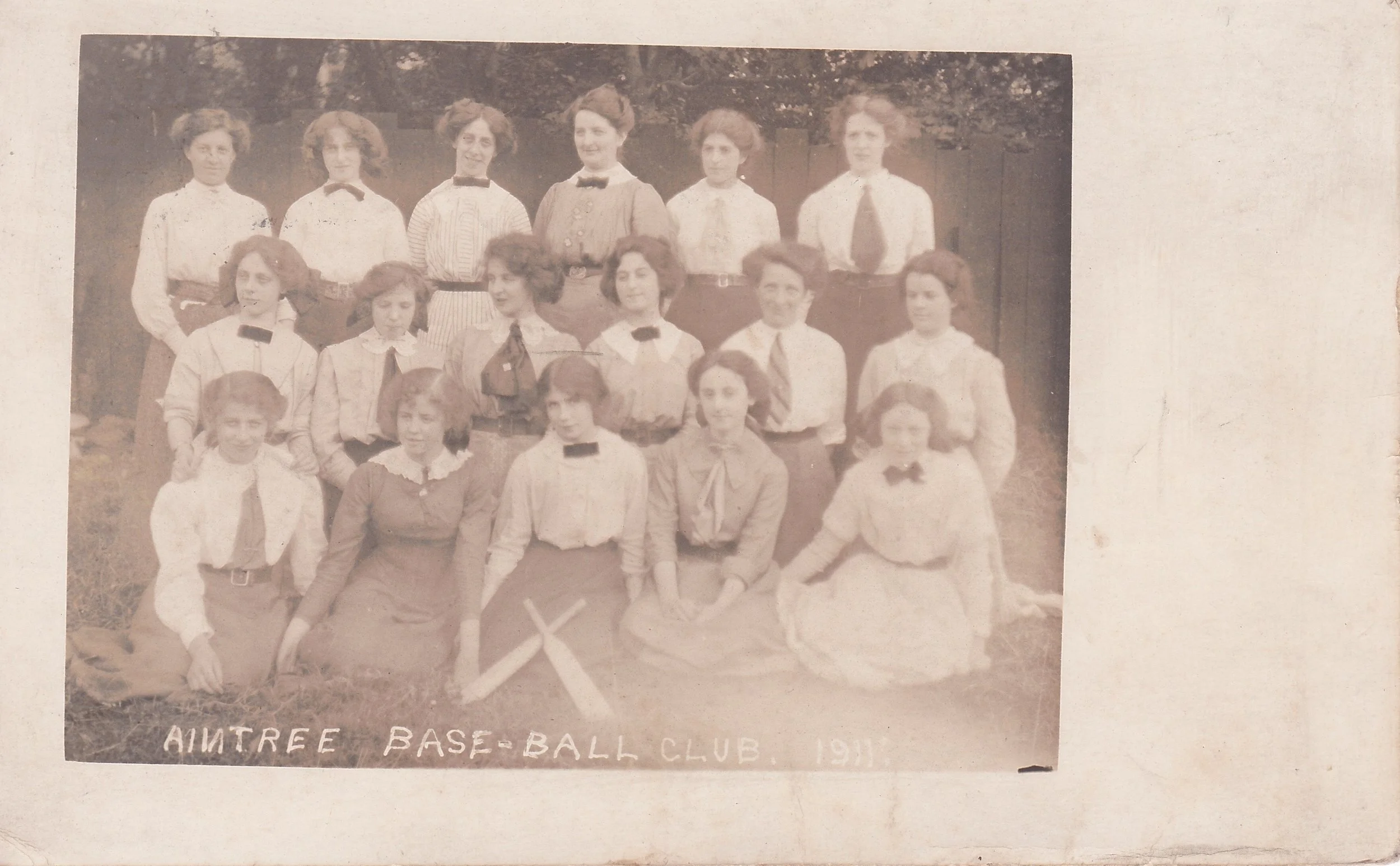
Aintree Base-Ball Club, 1911. Postcard, author's own collection.