Base Ball Sticks and Rounder Bats.
Jamie Barras.
Base Ball Sticks and Rounder Bats
Jamie Barras, August 2026
In 1883, the Liverpool Rounders Association (LRA) produced its first set of rules for rounders as a competitive sport for adults. Those rules show that the LRA had opted for a flat “bat” over a round “stick”. At one time, I assumed this was something the LRA had ported over from cricket along with 11 players a-side, two innings per game, and everyone gets a turn at bat—none of which were a feature of the children’s game of rounders. However, once I had read a wider selection of older references discussing rounders and other base-running bat-and-ball games, I came to recognise that, historically, in some parts of Great Britain, the game now known as rounders was played with a flat bat. Indeed, a version of the game with a flat bat survives to this day in Bolton, not far from Liverpool, and is known as “Bolton” or “flatbat” rounders.
In this article, I present a non-exhaustive timeline of sources and developments regarding the use of flat bats versus round sticks in bat-and-ball games relevant to the paired stories of rounders and baseball.
1. 1796: Spiele zur Uebung und Erholung des Körpers und Geistes: für die Jugend, ihre Erzieher und alle Freunde unschuldiger Jugendfreuden (“GutsMuths”) includes a description of “das Englische base-ball”, in which the game is described as employing a bat just under two feet long, four inches wide, and one inch thick; there is also an illustration of the bat showing that it has a flat striking surface, as those dimensions suggest, and is shaped something like a large knife. The associated description of “das Deutsche ballspiel” describes instead the use of a stick that tapers towards the end held in the hand.
2. 1801: Joseph Strutt, The Sports and Pastimes of the People of England (London: T. Bensley for J. White, 1801). In his description of “Northern Spell”, Strutt writes “Northen-spell is played with a trap, and the ball is stricken with a bat or bludgeon at the pleasure of the players, but the latter, I believe, is most commonly used”.
3. 1805: The engraving of trap ball shown in The Book of Games shows a flat bat very similar to that shown in GutsMuths (1796 entry). (The Book of Games, Or, A History of Juvenile Sports: Practised at Kingston Academy (London: Tabart, 1805).)
4. 1841: The Every Boy’s Book includes the following in its section on rounders: “A smooth round stick is preferred by many boys to a bat for striking the ball with”. Earlier in the same section, it refers to the bat/stick as a “bludgeon”. In its section on Essex Trap Ball, it states “A trap like the one last described [for trap, bat, and ball] is used in this game, but instead of a broad bat, a round stick, about three feet long, and as thick as a mopstick, is used.” (Every Boy’s Book of Sports and Amusements (London: Grieves, 1841), 64–65.)
5. 1857: Charles Dickens, in an article about judges showing leniency to young men as if they are infants, bemoans that “An onyx-handled bamboo-cane, which taps the neatest of boots on the lounge in Rotten-Row, is now, in the eyes of the law, a mere rounder stick or implement used in guiding a hoop.” (Quoted in “Infants in Law”, Atlas, 28 November 1857, 11.)
6. 1863: Prince Alfred and his fellow officers of H.M.S. Raccoon play an improvised game of rounders/bat and ball on a ground adjacent to Kessock Inn, north of Inverness. This is the first of several examples in this list of cricketers improvising a game of rounders/bat and ball when they find the ground unsuitable for cricket. In at least one of those games, the cricketers used a cricket bat to play rounders (see entry for 1897 below). It is easy to imagine a cricket stump serving the same function (“Prince Alfred in the Highlands”, Inverness Courier, 9 July 1863, 5; “Prince Alfred on his Cruise”, Aberdeen People’s Journal, 11 July 1863, 3).
7. 1866: On arriving at their chosen ground to find it too muddy to play on, the Dramatic Cricket Club of London opt for a game of rounders instead (“Cricket: The Dramatic Club”, Morning Advertiser, 2 April 1866, 6).
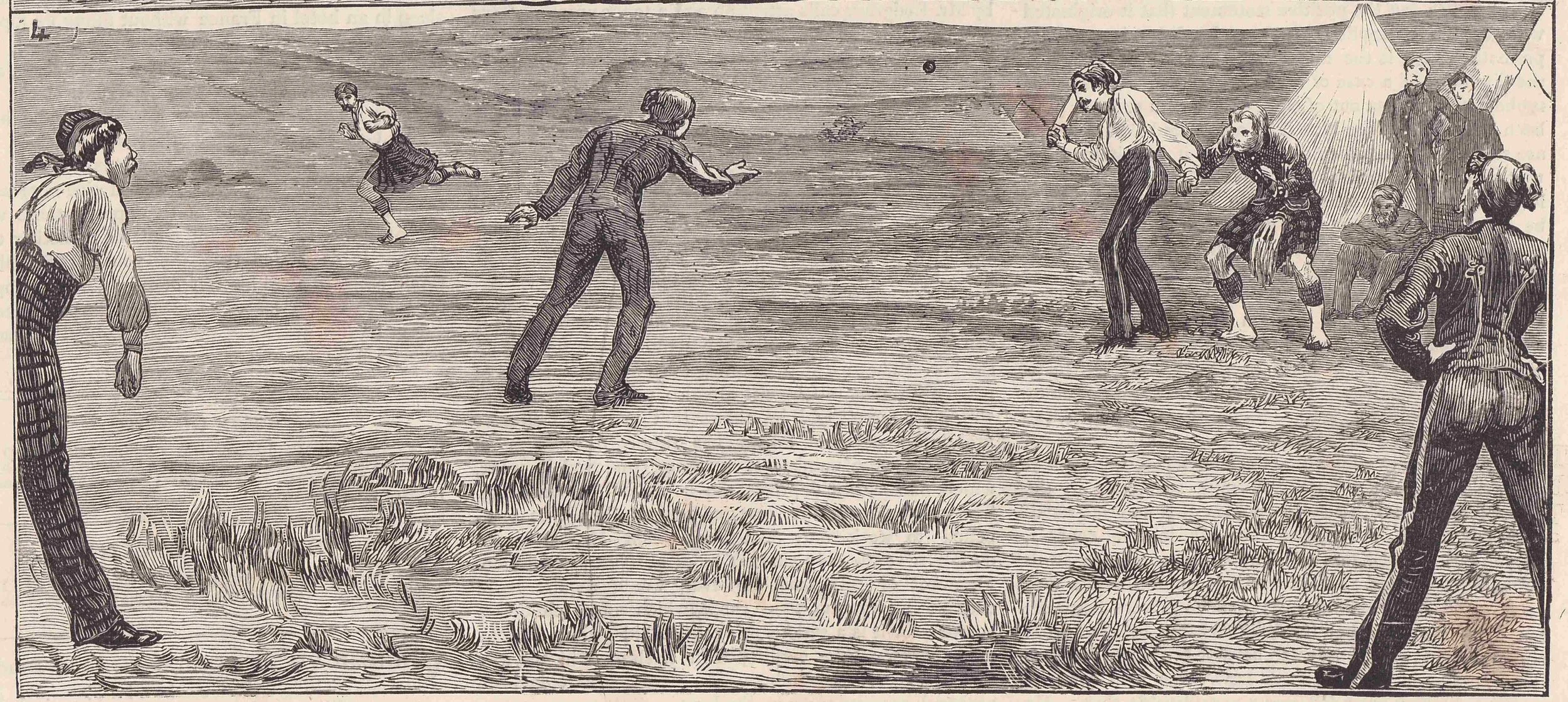
8. 1873: The Graphic illustrated newspaper publishes a sketch of members of a Highland regiment playing a game of rounders on Dartmoor during manoeuvres. The batter is holding a truncheon-like rounders stick (“The Autumn Manoeuvres at Dartmoor”, The Graphic, August 16, 1873, 1).
9. 1882: Cassell’s Book of Sports and Pastimes includes the following in its section on the rounders-related game feeder: “A round stick or a small bat may be used by the players for striking, but this is not necessary, the open hand being a more ready and a sufficiently serviceable weapon.” (Cassell’s Book of Sports and Pastimes (London: Cassell, 1882), 222.)
10. 1882: Cassell’s Book of Sports and Pastimes includes the following in its section on rounders: “A bat somewhat of the shape of a battledore but smaller should be provided with which the striker is to hit the ball.” (Cassell’s Book of Sports and Pastimes (London: Cassell, 1882), 225). A battledore was something akin to a squash racket in shape but often with a solid striking surface. Some versions of stool ball use a bat something akin to a battledore. Interestingly, the version of stool ball described in Cassell’s is played without a bat, the flat of the hand being used to hit the ball (Cassell’s Book of Sports and Pastimes (London: Cassell, 1882), 221, 280).
11. 1883: the Liverpool Rounders Association (LRA) publishes its first set of rules on rounders as a competitive sport for adults. The bat is described as measuring “…2ft. 6in. long, blade 3½in., double-handed batting being prohibited.” (“The Game of Rounders”, Burnley Express, July 14, 1883, 3.) A later example of this type of bat survives: https://www.ebay.co.uk/itm/278242541162, accessed August 10, 2026.
12. 1889: The National Rounders Association (formerly the LRA) modifies its rules as a reaction to its encounter with American baseball during the Spalding world tour. Among other changes, the permitted length of the bat is increased to 35 inches to permit two-handed batting; however, the width is kept at no more than 3½in. (James Manders Walker, “Modern Rounders,” in Rounders, Quoits, Bowls, Skittles and Curling (London: George Bell and Sons, 1892), 7–17.) Examples of these bats survive, and, indeed, they are still being made [in small numbers] for the Welsh version of the game (https://sportantiques.co.uk/cricket-1/bats/vintage-welsh-baseball-bat; https://www.maceysports.co.uk/products/wbu-county-baseball-bat?variant=39638110666833, accessed August 10, 2026).
13. 1889: English cricketers on tour in the United States of America are described as using a “base ball stick” when trying out the latter game (“Cricket Notes”, Rochdale Observer, June 11, 1889, 5).
14. 1889: In an article discussing the upcoming tour of England by two baseball teams, an anonymous author writes “…the “dog stick” of half a century ago has now become the bat of the baseball player” (“Ball Games”, Field, 9 March 1889, 18). This is a reference to the game of “dog stick and splent”, a variant of trap, bat, and ball played in Derbyshire (“The Plaindealer: An Ashburnian’s Notebook”, Ashbourne Telegraph, 22 May 1936, 3). See also second entry for 1892 below.
15. 1892: the NRA changes its name to the “English Baseball Association” and the name of the men’s game to “English Baseball” (“English Baseball”, Liverpool Mercury, April 25, 1892, 7). The women’s game retains the name “rounders”—at least for now (see entry for 1920s below). Later evidence (entry for 1930 below) suggests the rules used in the women’s game were the 1883 LRA rules.
16. 1892: In The Boy’s Modern Playmate, there is a description of the game of “dog-stick and splent” accompanied by an illustration showing a bat very much like a short baseball bat. It is described in the text as “a rounded piece of wood called a dog stick”. (J. G. Wood, The Boy’s Modern Playmate (London: Frederick Warne and Co., 1893, 110). In the same book’s description of “trap-bat”, the bat is described as “a short bat, like a small cricket bat” (J. G. Wood, The Boy’s Modern Playmate (London: Frederick Warne and Co., 1893, 113).
17. 1892: James Manders Walker, Rounders, Quoits, Bowls, Skittles and Curling (London: George Bell and Sons, 1892) is published. The cover shows a boy/youth holding a rounder stick, not a bat.
18. 1897: Midshipmen of the Royal Navy play an improvised game of rounders using cricket equipment, including a cricket bat as the bat, on Crete. There is a sketch published in the British press illustrating the game, with the cricket bat shown on the ground beside the stumps being used as the batter’s post. (“The Blockade of Crete: British Officers Playing Rounders in Suda Dockyard”, Graphic, 10 April 1897, 5)
19. 1900s: In Australia, the Victorian State Schools’ Amateur Athletics Association is formed. The VSSAAA promotes rounders as a school sport, and a flat bat is used. (https://victoriancollections.net.au/items/537ec6682162ef1a2cc3d9f1, accessed 13 August 2026.)
20. 1910: a women’s rounders league is introduced in Liverpool. The players are mostly factory workers. Contemporary photographs show that flat bats are used. At least one women’s club in the area refers to itself as a “base-ball club”: the Aintree Base-Ball Club. (“Baseball and Rounders”, Liverpool Echo, May 28, 1910. 10; https://jbarchive.co.uk/products/la-3481-liverpool-college-rounders-club-lancashire?_pos=1&_sid=d2281f24a&_ss=r, accessed August 10, 2026)
21. 1911: In a charity cricket match of men versus women, the men are described as “batting first, left-handed, and with baseball sticks”. (“Cricket: Ladies v. Gentlemen”, Hartlepool Northern Daily Mail, 26 June 1911, 6).
22. 1920s: Women’s baseball leagues under the English code are introduced first in Wales and then in Liverpool (“Baseball: Cardiff Ladies’ League Trophies Presented”, Western Mail, October 2, 1923, 4; “Baseball for Girls”, Liverpool Echo, March 18, 1931, 4).
23. 1930: The Bolton and District Rounders Association is formed, bringing existing schools and workplace rounders competitions in the area under one banner. The game is played using 1883 LRA rules, including 11 players a-side, flat bats, soft balls, and putting out runners by hitting them with a thrown ball (“soaking”). This game minus the “soaking” survives to the present day. (“Voices from Spindle and Loom: Bolton”, Cotton Factory Times, October 3, 1930, 4; “Origins of Bolton rounders game sought by university”, https://www.bbc.co.uk/news/uk-england-manchester-13977360, https://www.westhoughton-high.org/wp-content/uploads/Rounders-KO.pdf, accessed August 10, 2026.)
24. 1935: The Ling Association publishes the “Rules of the Games of Rounders” in association with “the National Council of Girls’ Clubs including the Rounders League Constitution of National Council of Girls’ Clubs”. According to these rules, “All matches shall be played with a regulation Rounder ball and stick, except in the case of clubs and colleges, which may use a bat if preferred.” (The Ling Association, Rules of the Game of Rounders (London: The Ling Association, 1935), 3.)
25. 1941: Per Maigaard publishes “Battingball Games” (Per Maigaard, “Battingball Games,” Genus: Journal of the Comitato Italiano per lo Studio dei Problemi della Popolazione 5, nos. 1–2 (1941): 57–72), a historical survey of bat-and-ball games. The accompanying illustration shows flat bats and sticks used, according to Maigaard, for games such as longball, rounders, and cricket; the sources of the images include some of the works on this list (e.g., GutsMuths, Strutt). (John Thorn, Battingball Games, https://ourgame.mlblogs.com/battingball-games-985dff84169b. accessed 13 August 2026.)
26. 1943/4: A new National Rounders Association is formed by school teachers to create a unified set of rules for the game as it now largely is: a school sport. (Rounders England, the successor to the new NRA, gives the date of its founding as 1943; articles from 1944 place it in the latter year. https://www.roundersengland.co.uk/about-us/our-journey/, accessed 13 August 2026; “Rounders Catches On”, Nottingham Evening Post, 1 May 1944, 4).
27. 1957: the first edition of “Know the Game: Rounders” is published by Educational Productions Ltd in collaboration with the National Rounders Association. The rules it presents are the Ling Association Rules (entry for 1935 above). However, in the section on equipment, only a “rounders stick” is mentioned, which the book says should be no more than 18 inches long and no more than 6 ¾ inches in maximum circumference.
28. Modern Day: The “rounder stick” of old is, these days, referred to as a “rounders bat”. The flat bat survives in Rounders circles outside Bolton as a training bat for newcomers to the game. (https://kitlocker.com/product/aresson-image-rounders-bat/¸https://kitlocker.com/product/aresson-flatty-rounders-bat/, accessed 13 August 2026.)
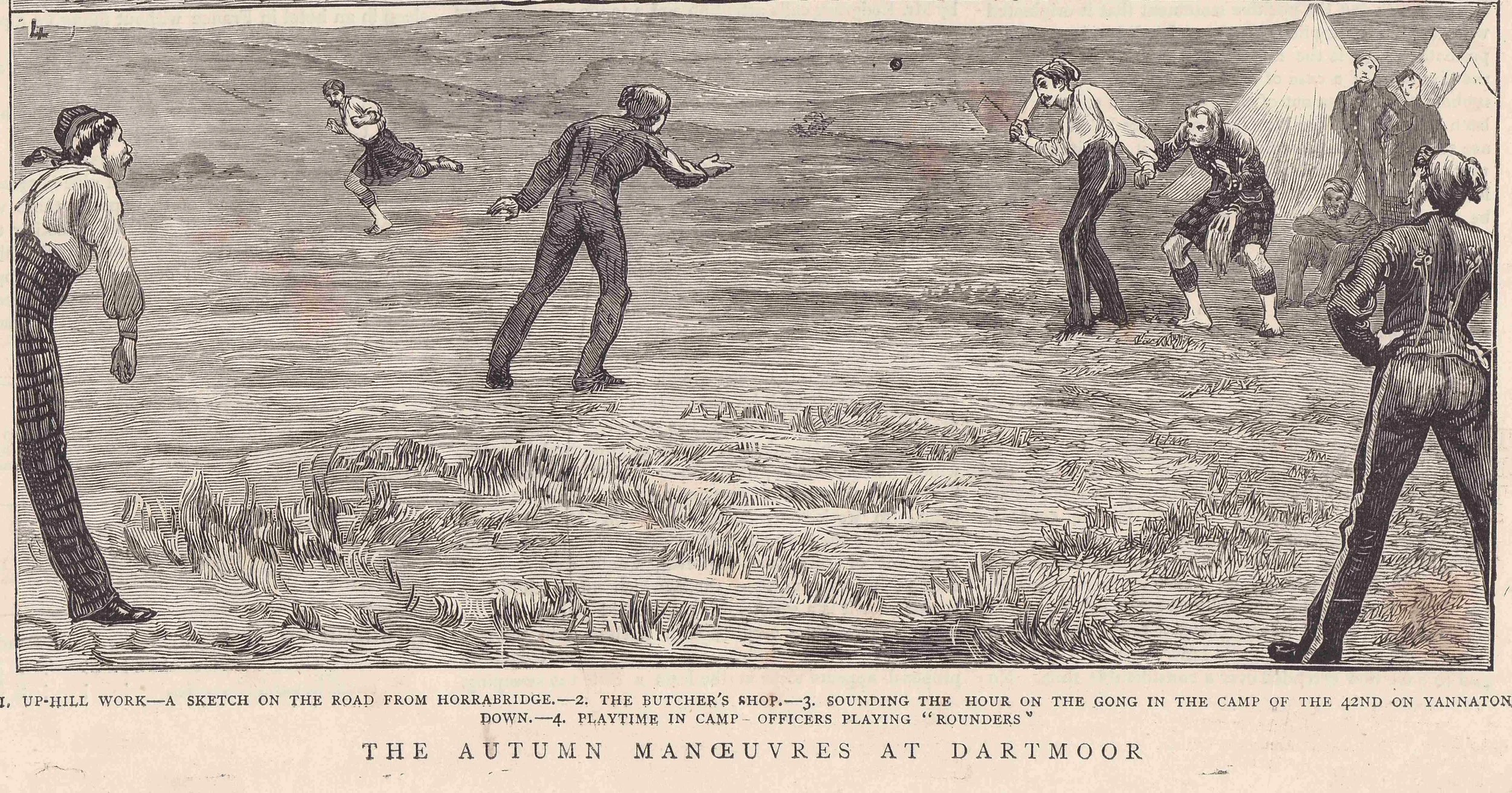
The Autumn Manoeuvres at Dartmoor, Graphic, 16 August 1873. Author's own collection.
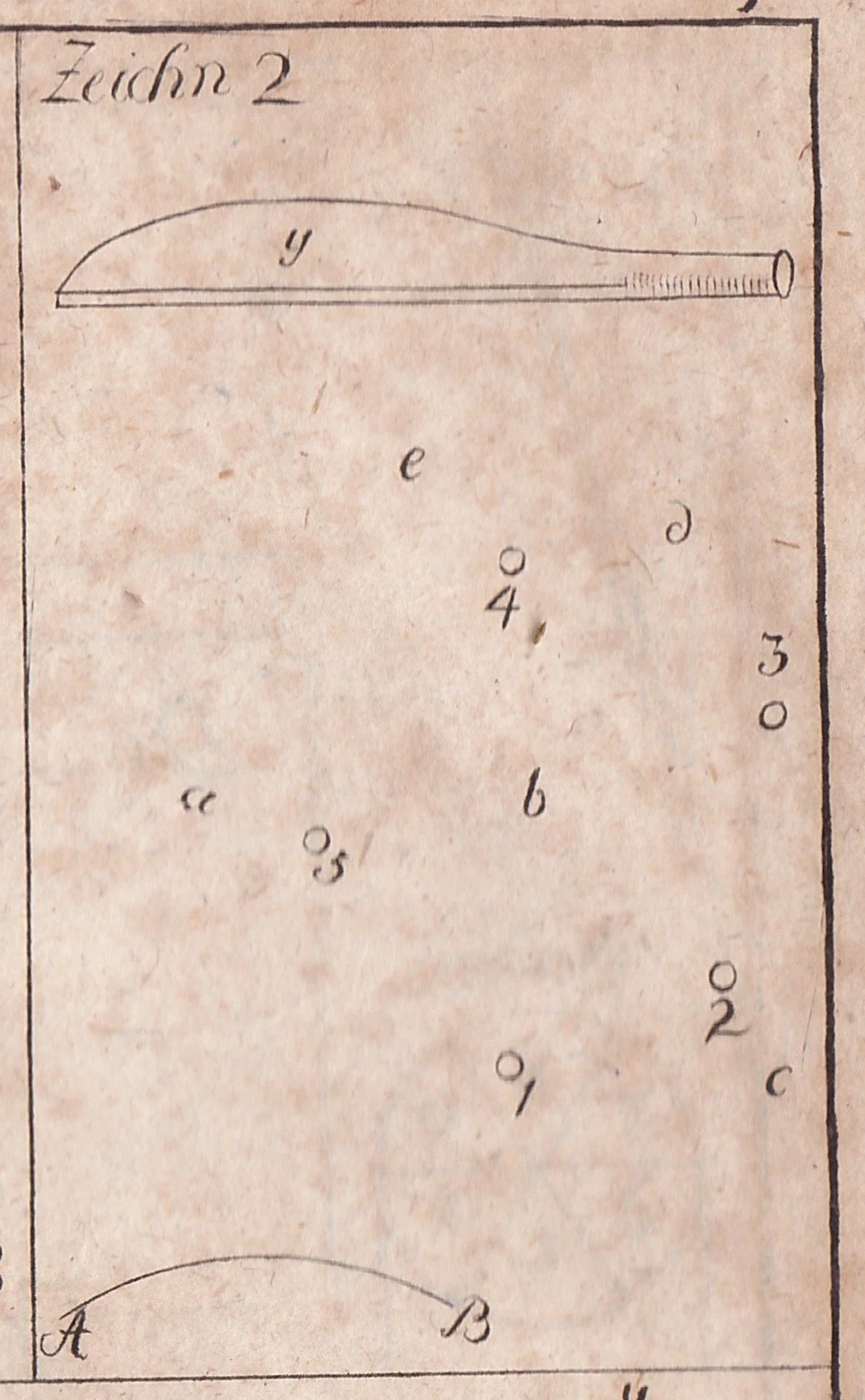
"Englische Base-Ball", Spiele zur Uebung und Erholung des Körpers und Geistes ("GutsMuths"), 1802 edition. Author's own collection
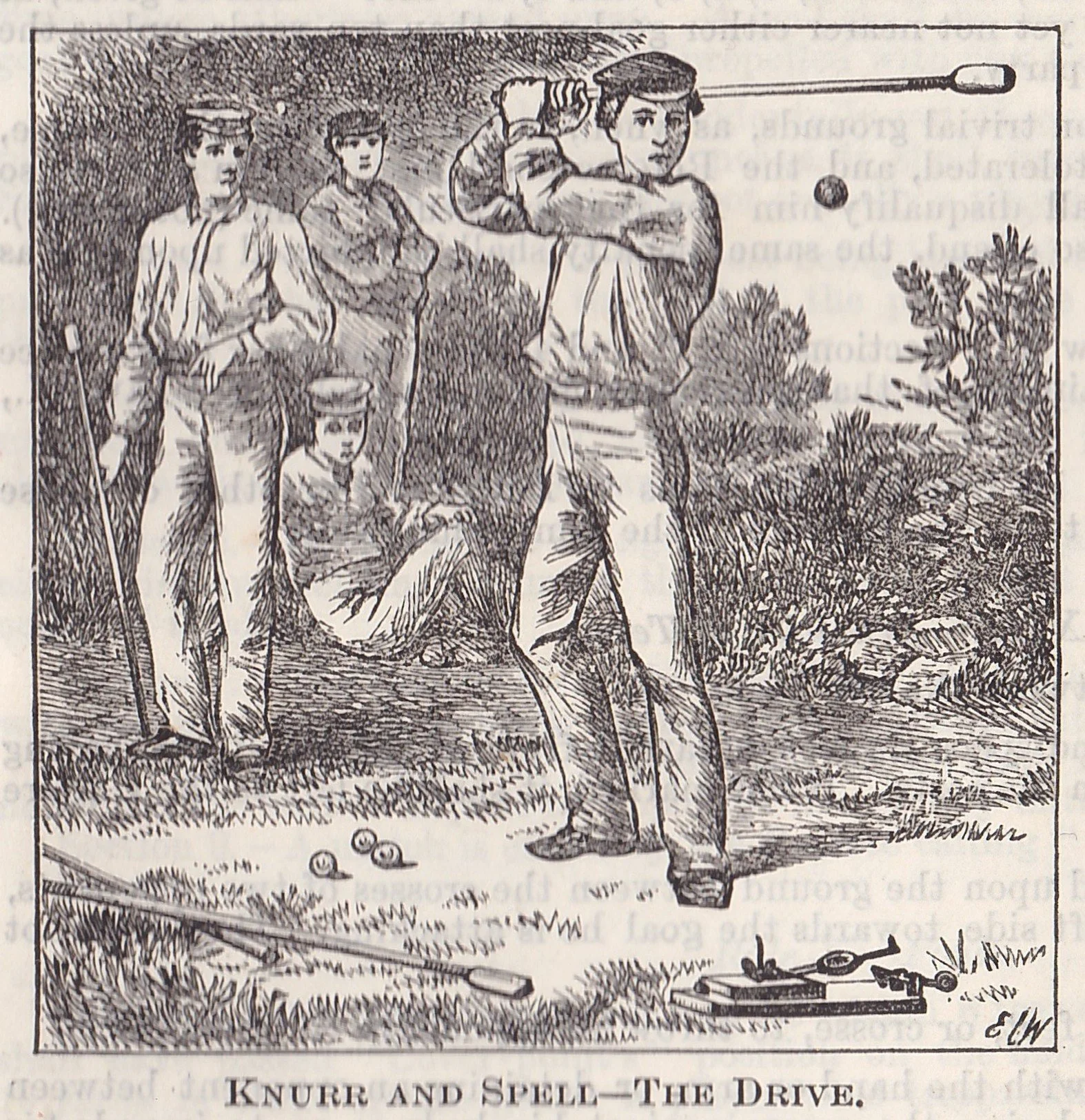
Knurr and spell, Cassell's Book of Sports and Pastimes, 1882. Author's own collection.
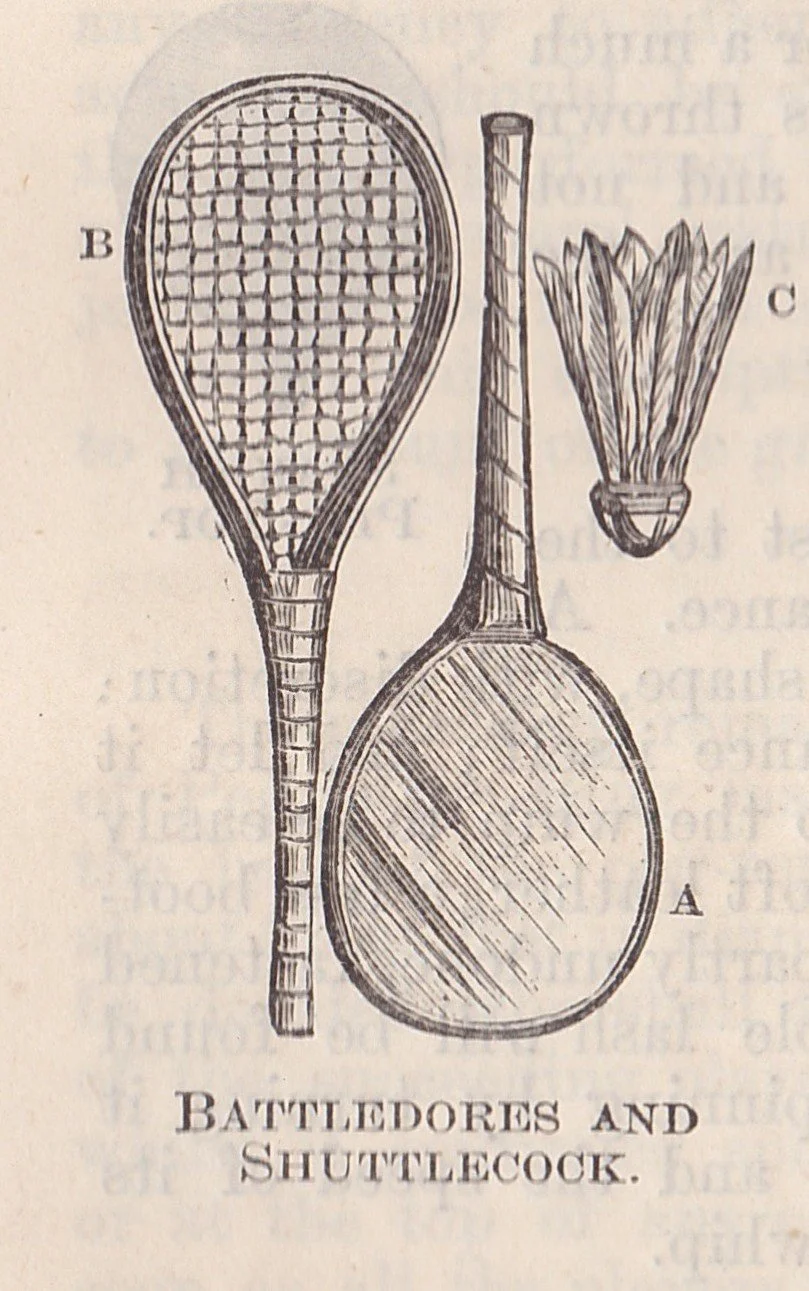
Battledores and Shuttlecock, Cassell's Book of Sports and Pastimes, 1882. Author's own collection.
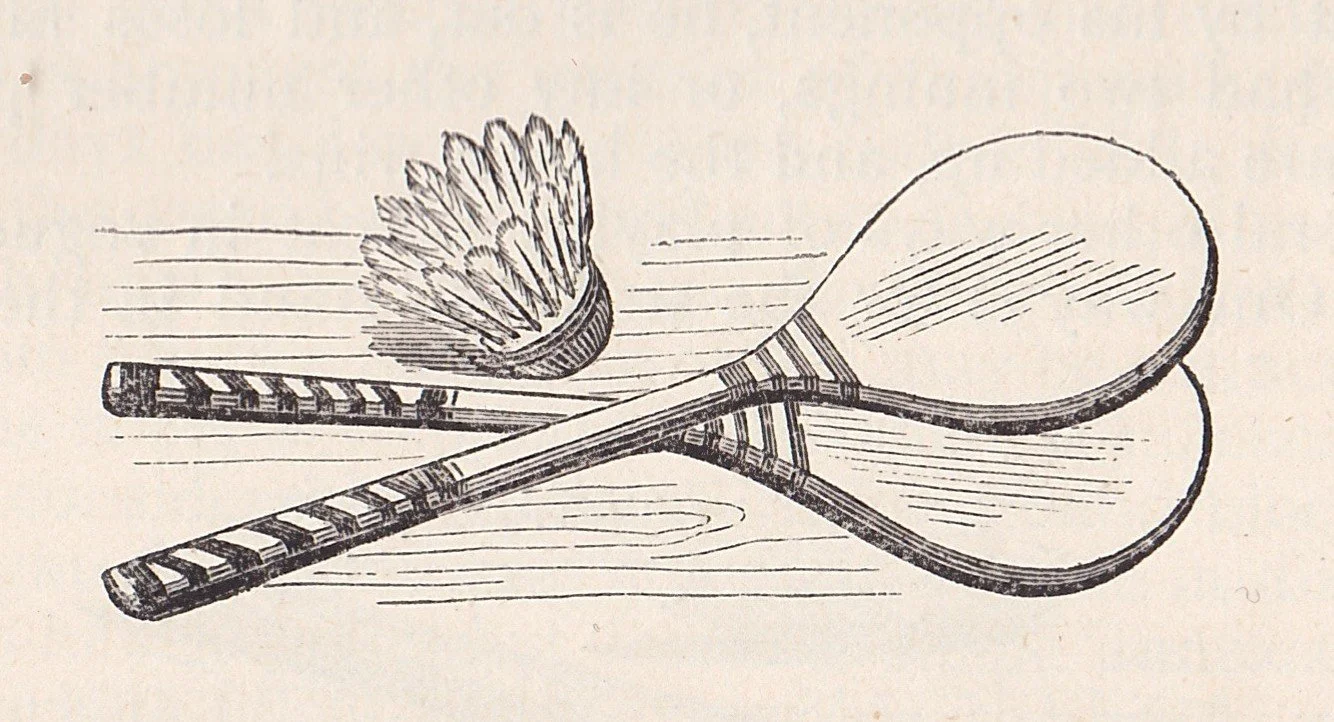
Battledores and shuttlecock, Boy's Modern Playmate, 1892. Authors own collection.
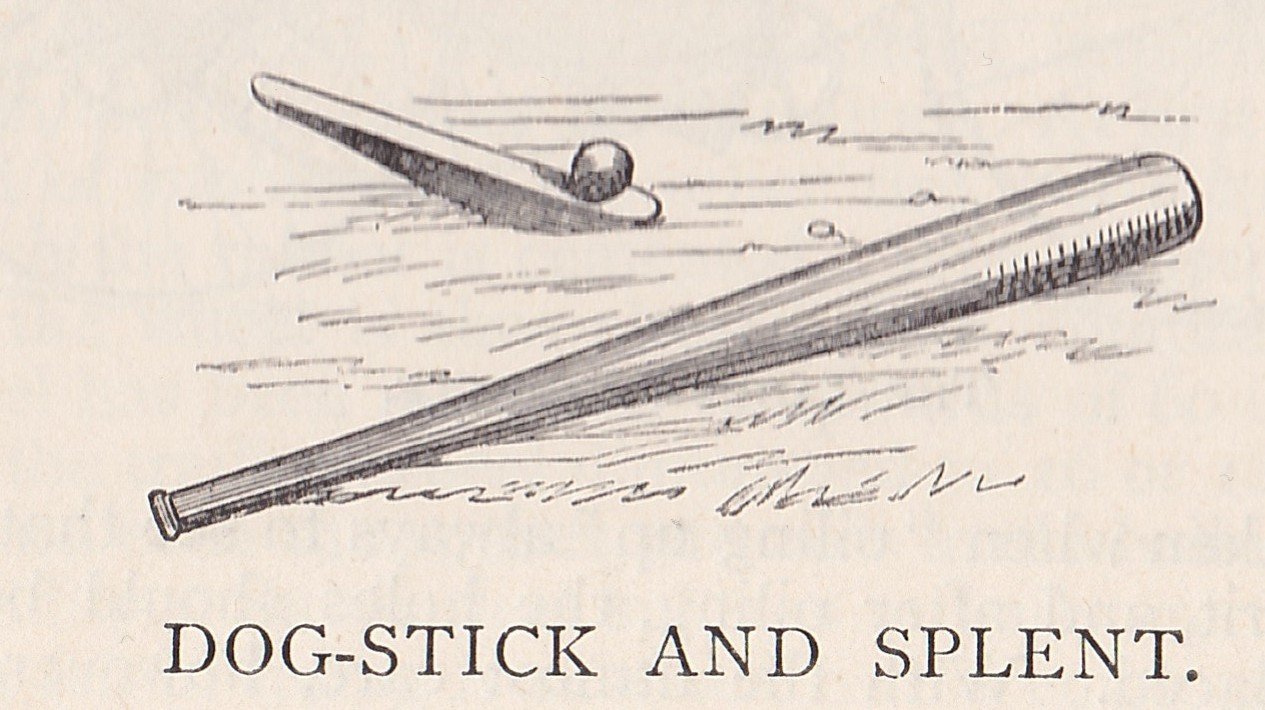
Dog-stick and splent, Boy's Modern Playmate, 1892. Authors own collection.
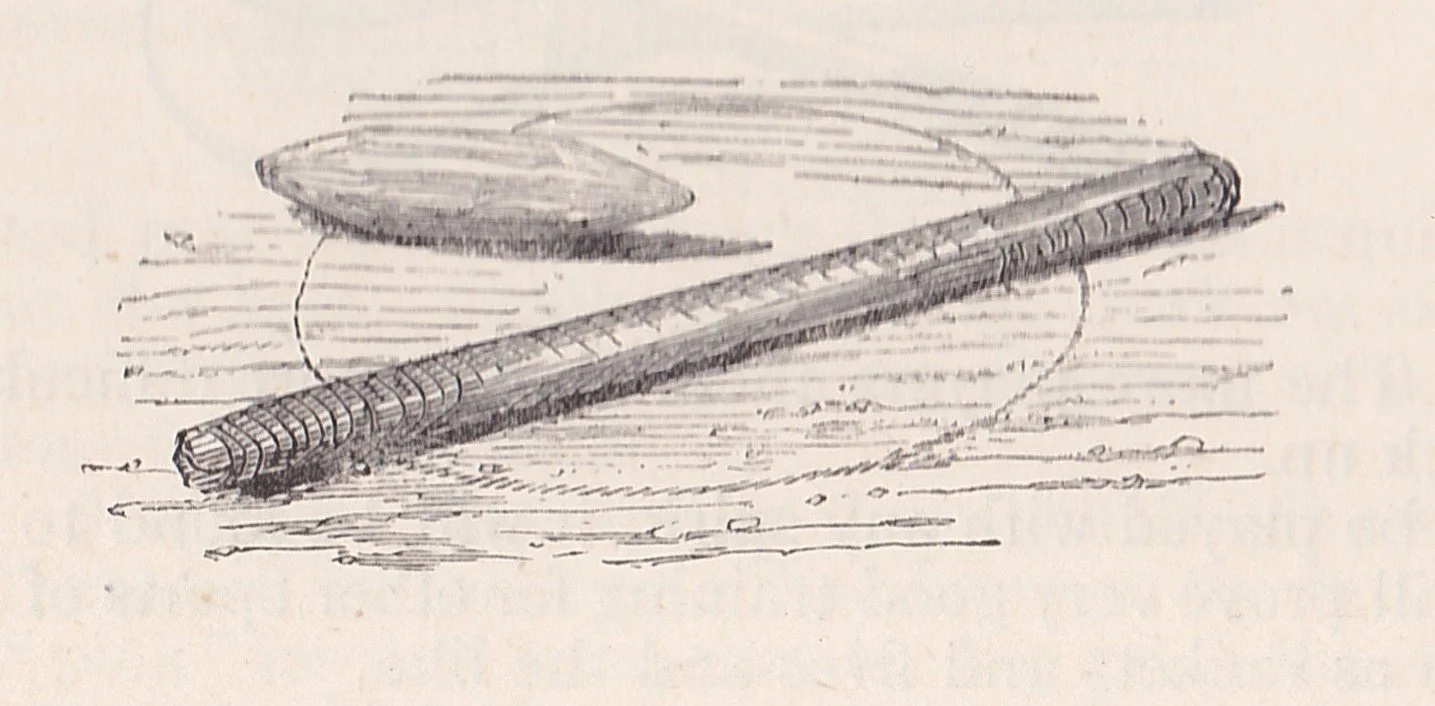
tip-cat, Boy's Modern Playmate, 1892. Authors own collection.
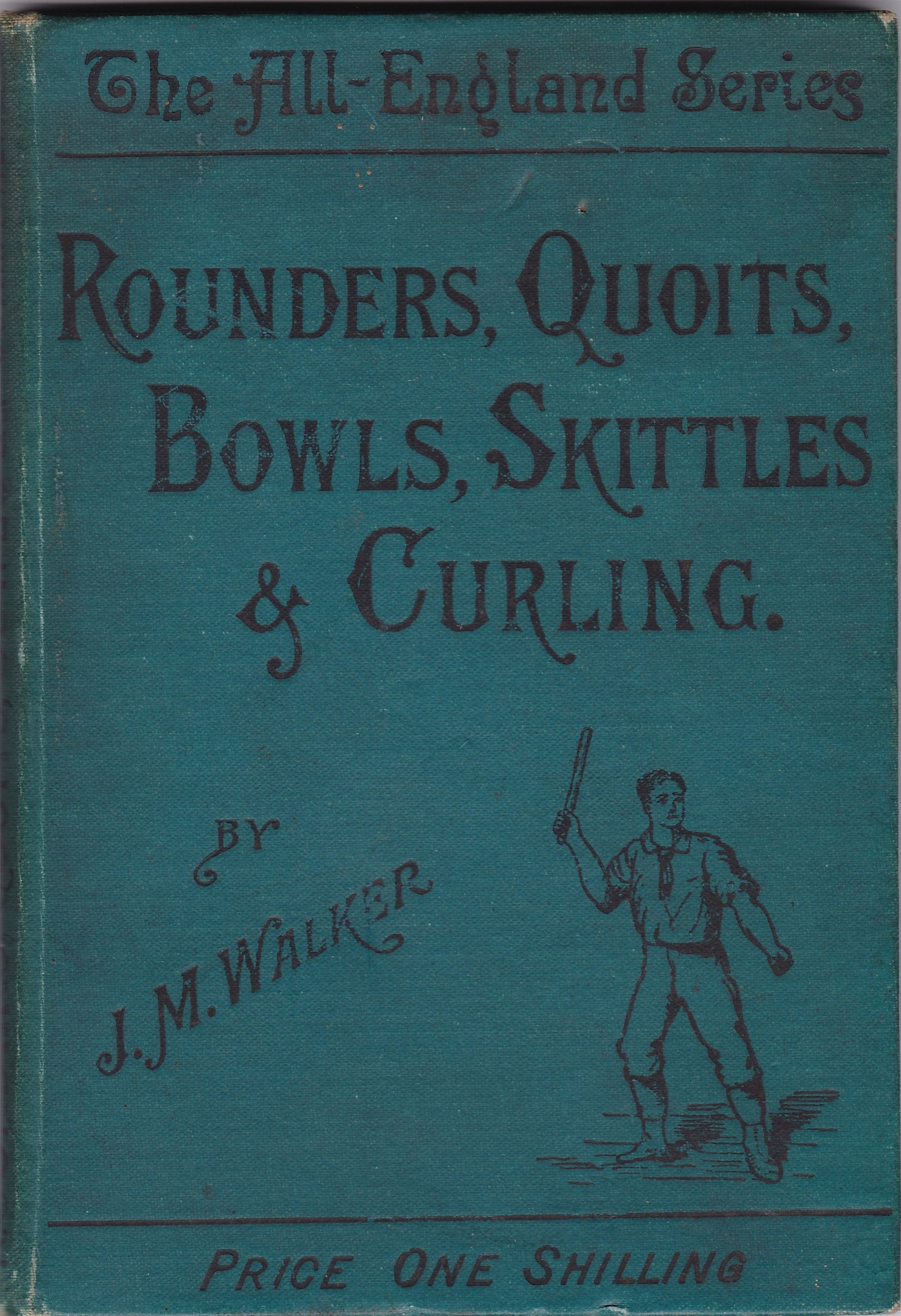
Rounders, Quoits, Bowls, Skittles and Curling , 1892. Author's own collection.
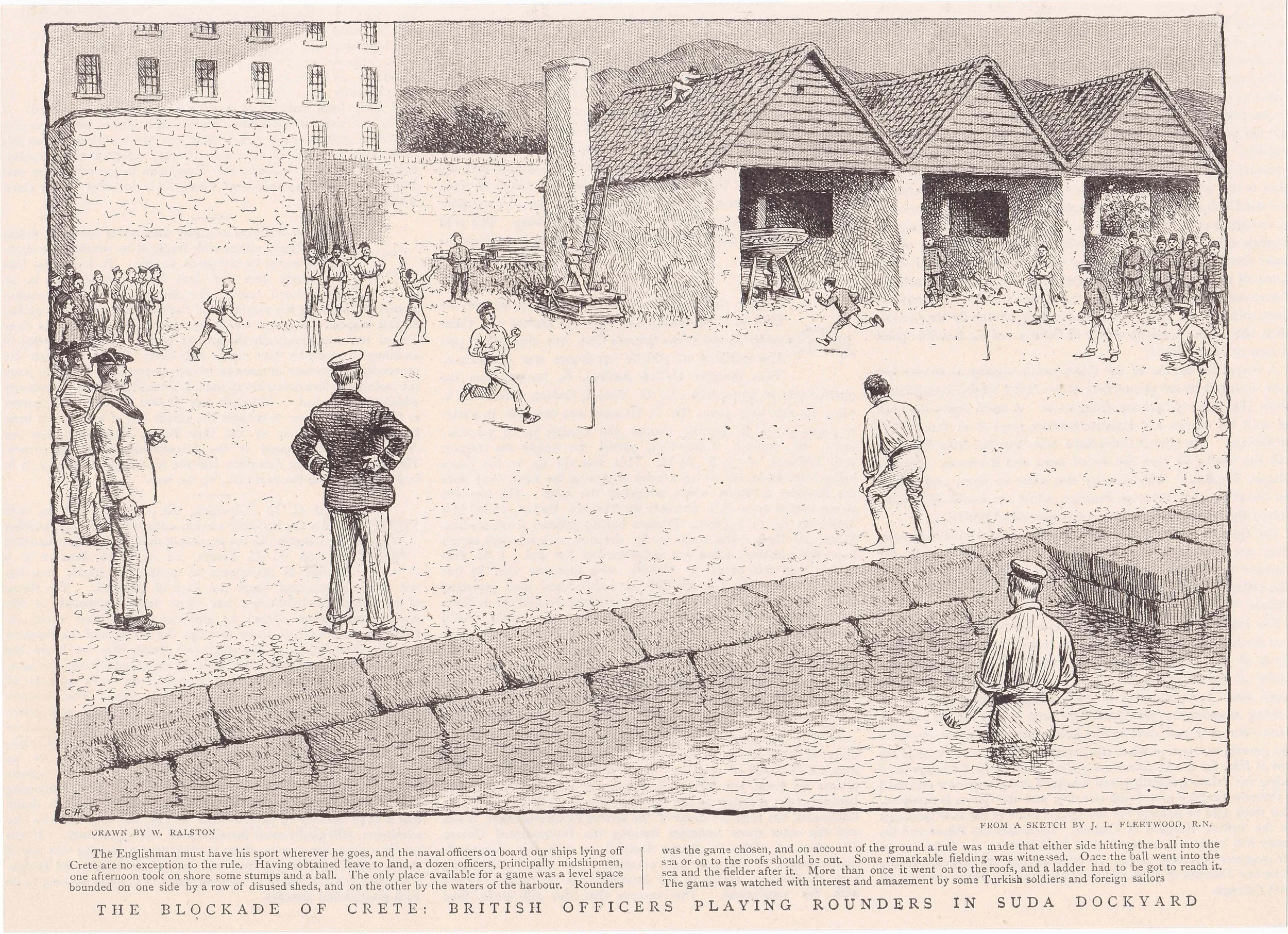
British Officers Playing Rounders in Suda Dockyard, Graphic, 10 April 1897. Author's own collection.
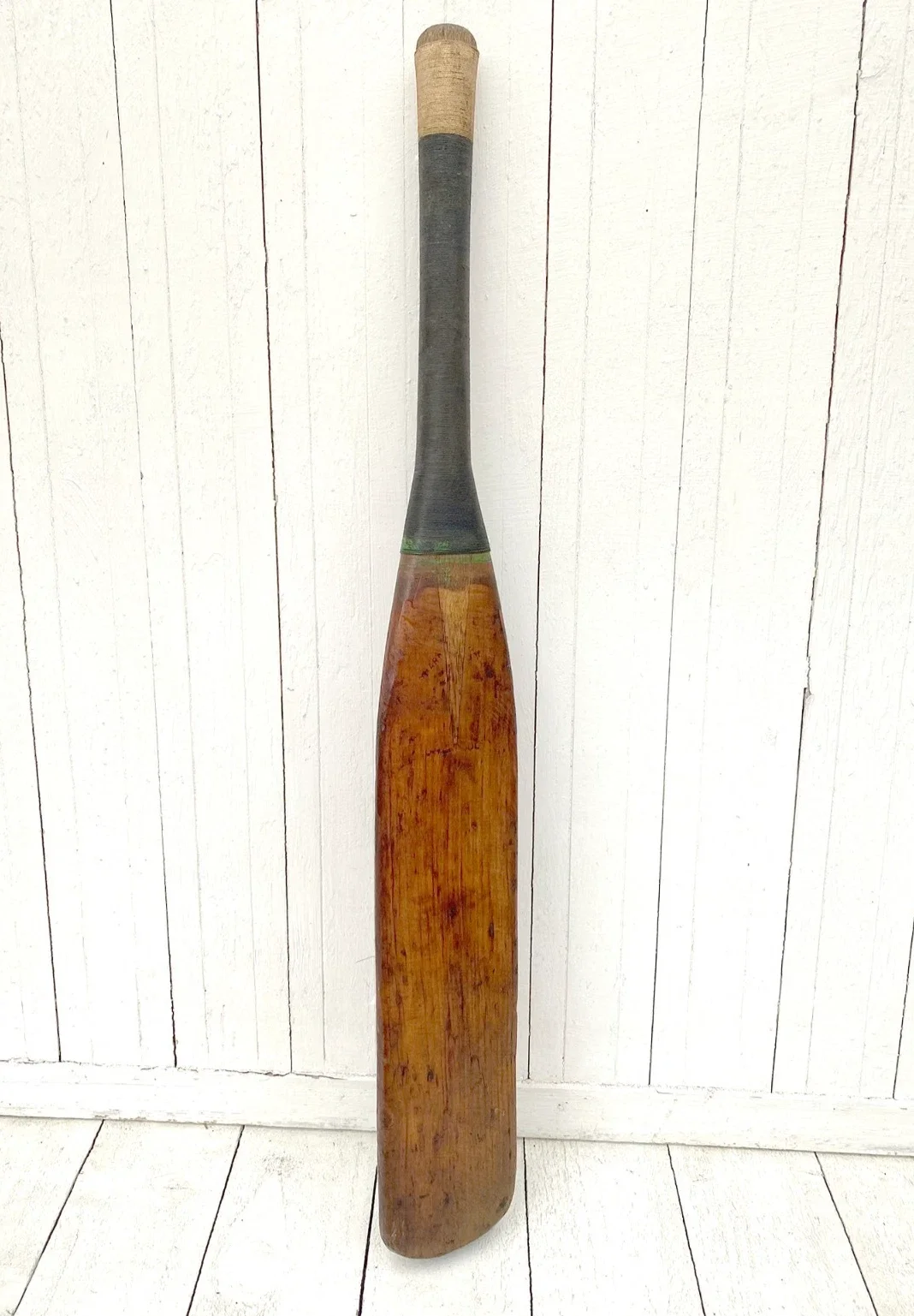
Bat for English Baseball, Jack Sharp, sports goods manufacturer and retailer, Liverpool. Date unknown. eBay listing. Copyright underdetermined.
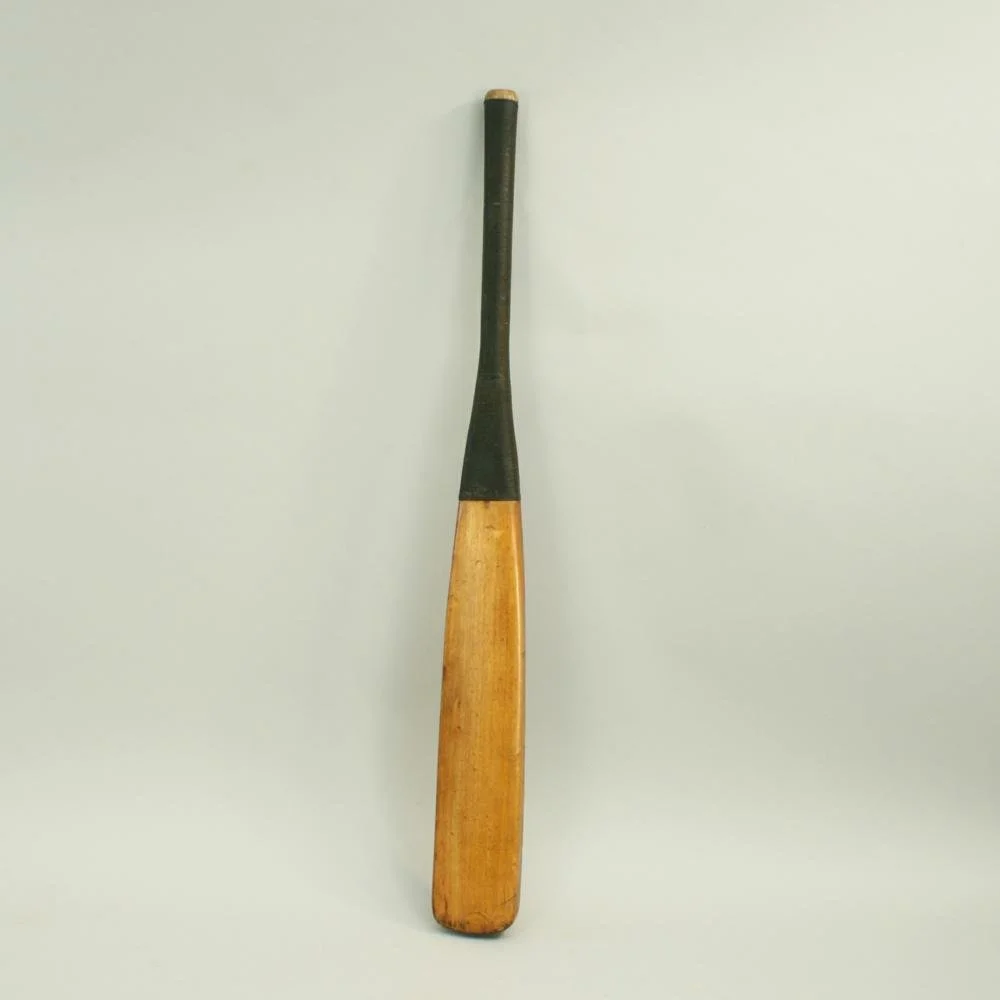
Bat for Welsh Baseball, date unknown. Sports Antiques listing. Copyright undetermined.
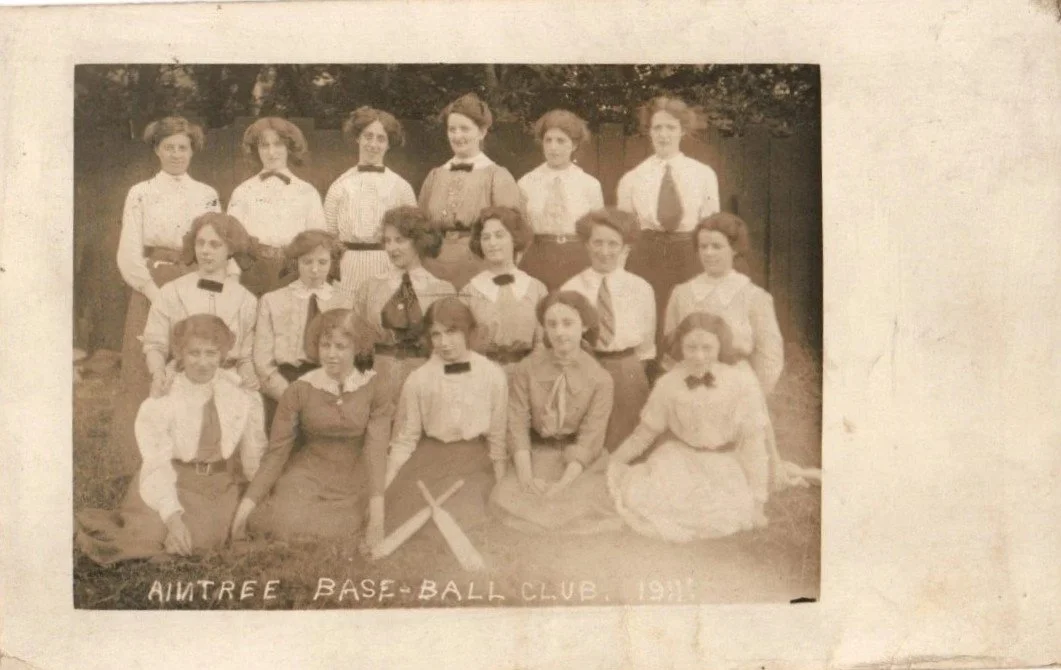
Aintree Base-Ball Club (Liverpool), 1911. Postcard. Author's own collection.
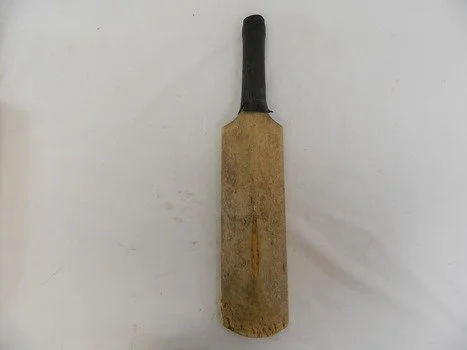
bat for Rounders, early 20th Century, Victoria Museums Collection. Fair use exception.